10 Midcentury Modern Living Room Decor
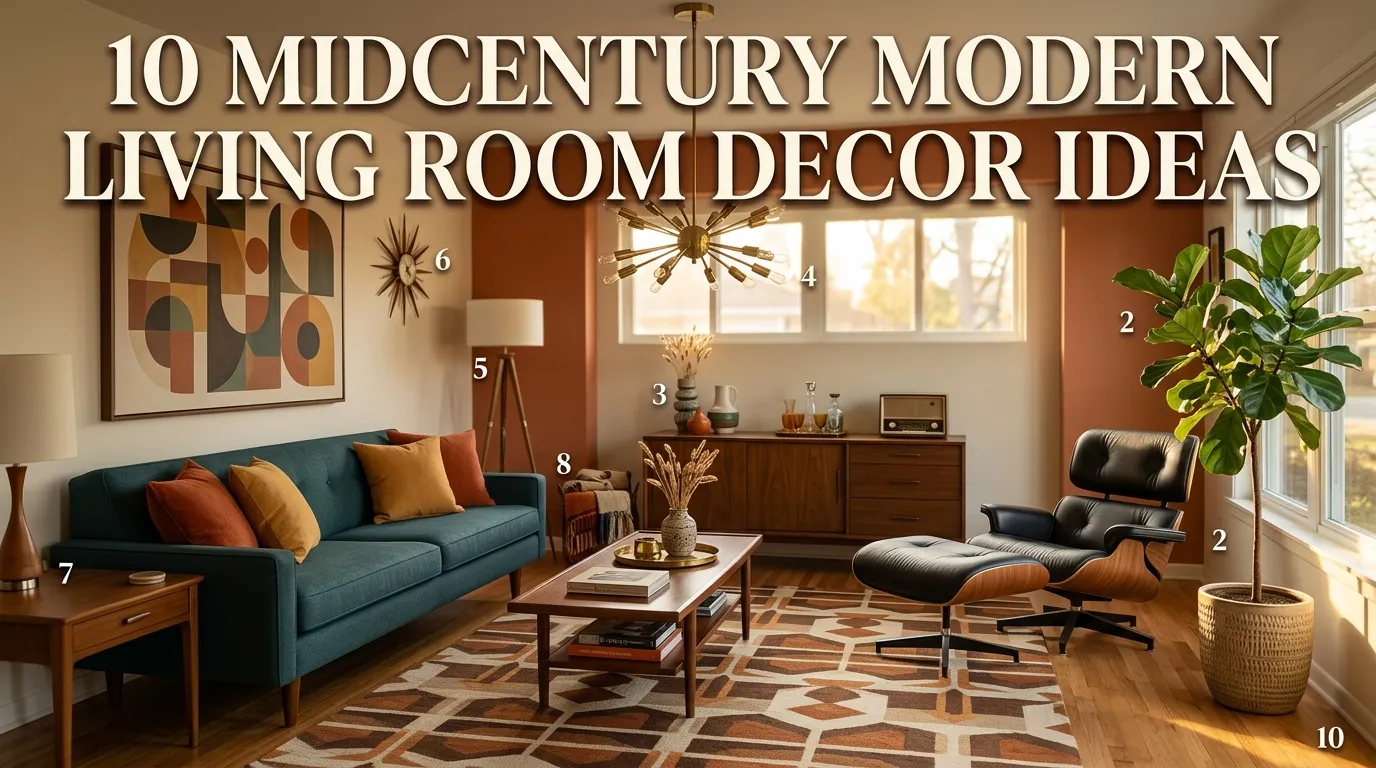
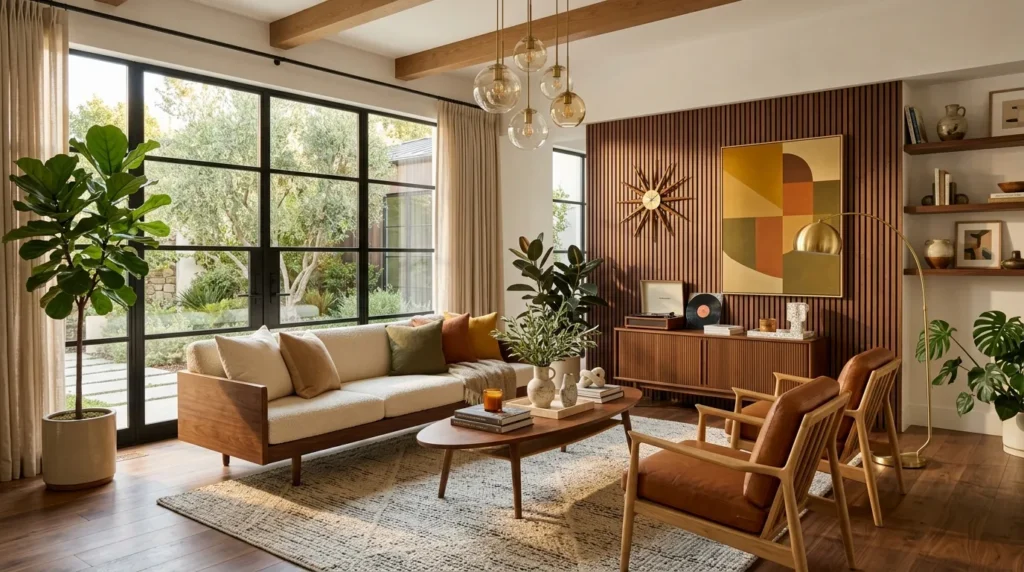
Midcentury modern living room décor continues to be one of the most timeless interior design styles, blending clean lines, organic materials, and functional furniture into spaces that feel both sophisticated and welcoming. Originally inspired by the design movement of the 1940s through the 1960s, today’s midcentury interiors combine vintage charm with modern comfort, making them perfect for contemporary homes.
I’ve found that the beauty of midcentury modern design lies in its simplicity. Rather than filling a room with excessive decorations, every piece serves a purpose while contributing to a cohesive aesthetic. Warm wood tones, iconic furniture silhouettes, earthy color palettes, and carefully selected décor create interiors that feel balanced and uncluttered.
Whether you’re redesigning an entire living room or simply adding a few signature pieces, embracing midcentury modern style can instantly elevate your home with timeless elegance.
These midcentury modern living room décor ideas will help you create a stylish, functional, and inviting space that never goes out of fashion.
Table of Contents
- Choose Walnut Wood Furniture
- Add Iconic Lounge Seating
- Use Warm Earth-Tone Colors
- Incorporate Geometric Patterns
- Style with Minimalist Lighting
- Display Vintage-Inspired Artwork
- Add Indoor Greenery
- Layer Natural Textures
- Mix Modern and Vintage Pieces
- Keep Décor Clean and Functional
1. Choose Walnut Wood Furniture
Quick Benefits
- Creates timeless warmth
- Defines the midcentury style
- Extremely durable
- Easy to pair with modern décor
- Adds natural character
Why It Works
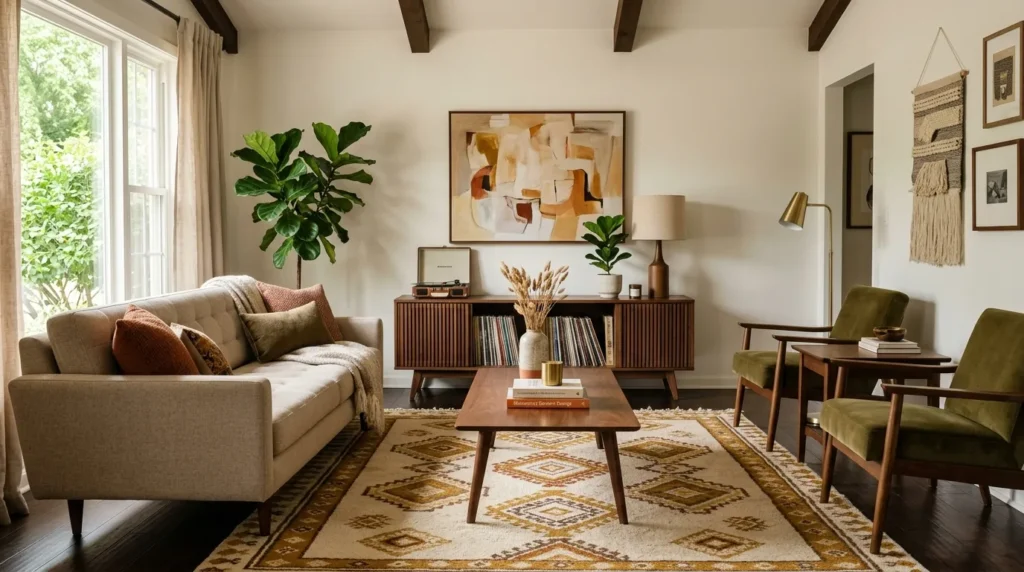
Walnut furniture is one of the defining features of midcentury modern interiors. Its rich wood grain adds warmth while maintaining the clean, streamlined appearance that makes this style so recognizable.
I’ve found that investing in one or two quality walnut pieces instantly gives a living room an authentic midcentury feel without overwhelming the space.
How To Style It
Choose walnut coffee tables, media consoles, sideboards, or side tables with tapered legs. Pair them with neutral upholstery, black accents, and simple decorative accessories.
2. Add Iconic Lounge Seating
Quick Benefits
- Creates a designer focal point
- Comfortable for everyday use
- Adds timeless character
- Elevates the room
- Works with many layouts
Why It Works
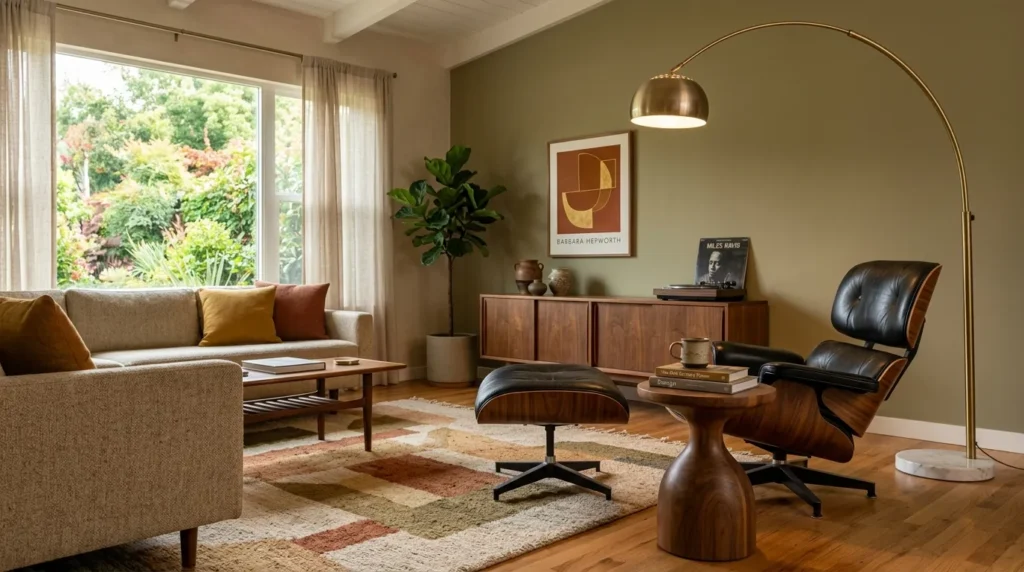
Midcentury furniture is celebrated for combining beauty with functionality. Sculptural lounge chairs become statement pieces while maintaining the minimalist principles of the style.
I’ve found that a single iconic chair can completely transform the personality of a living room.
How To Style It
Pair a leather or boucle accent chair with a walnut side table, floor lamp, and textured rug. Keep surrounding furniture simple to let the chair stand out.
3. Use Warm Earth-Tone Colors
Quick Benefits
- Creates warmth
- Feels inviting
- Timeless color palette
- Complements wood furniture
- Easy to accessorize
Why It Works
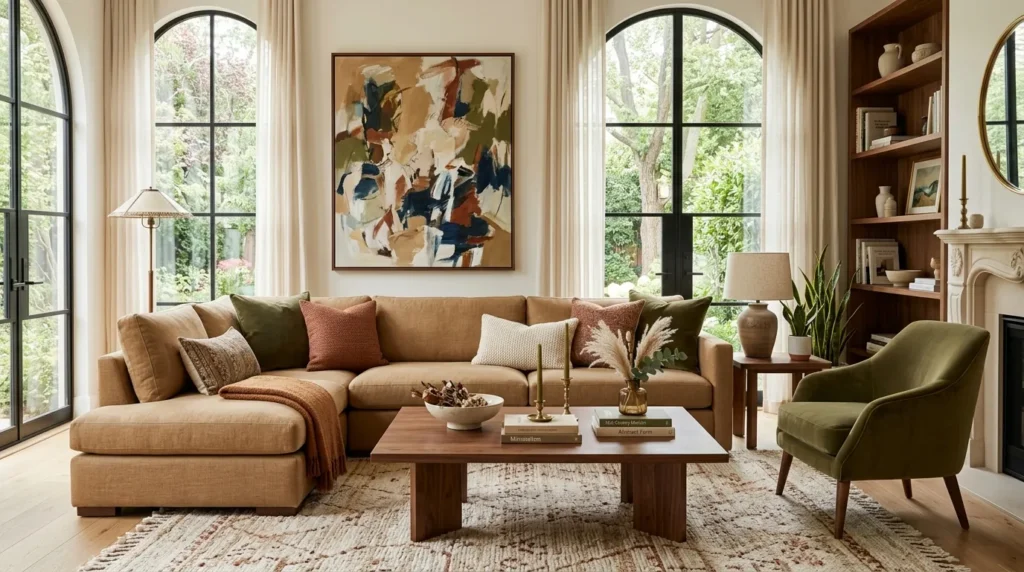
Earthy colors provide the perfect backdrop for midcentury interiors. Warm neutrals combined with muted accent colors create visual harmony while highlighting natural materials.
I’ve found that limiting the palette creates a more authentic and sophisticated appearance.
How To Style It
Use camel, olive green, rust, mustard, terracotta, cream, charcoal, and walnut tones throughout furniture, artwork, textiles, and accessories.
4. Incorporate Geometric Patterns
Quick Benefits
- Adds visual interest
- Reinforces midcentury style
- Creates subtle contrast
- Works in small doses
- Easy seasonal updates
Why It Works
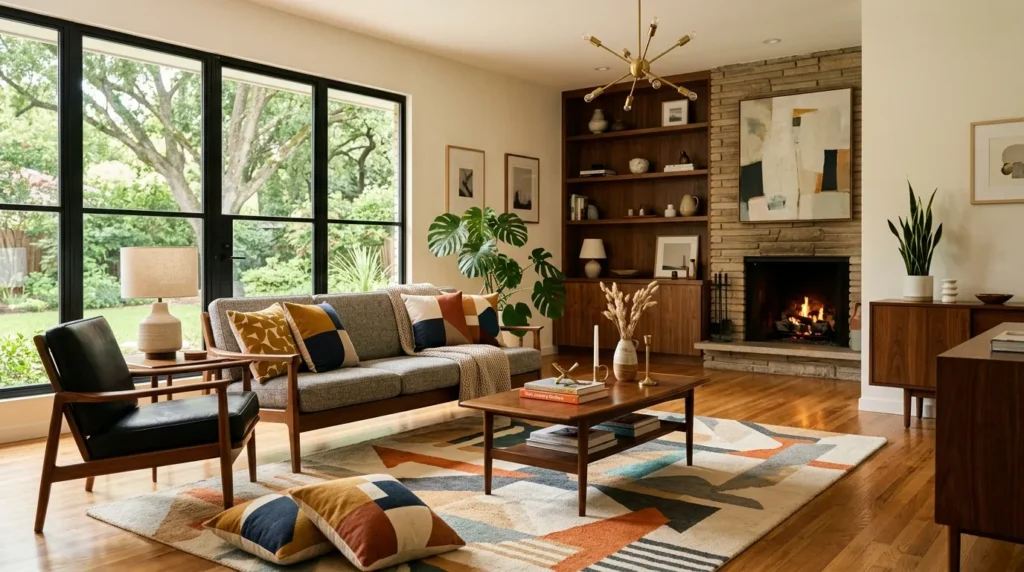
Geometric prints bring energy to minimalist interiors without creating clutter. Simple repeating patterns reflect the design language of classic midcentury homes.
I’ve found that using patterns sparingly keeps the room feeling balanced and elegant.
How To Style It
Introduce geometric cushions, area rugs, artwork, or throws featuring diamonds, circles, or abstract linear designs in muted colors.
5. Style with Minimalist Lighting
Quick Benefits
- Provides functional illumination
- Creates sculptural interest
- Enhances modern style
- Makes rooms feel larger
- Timeless appearance
Why It Works
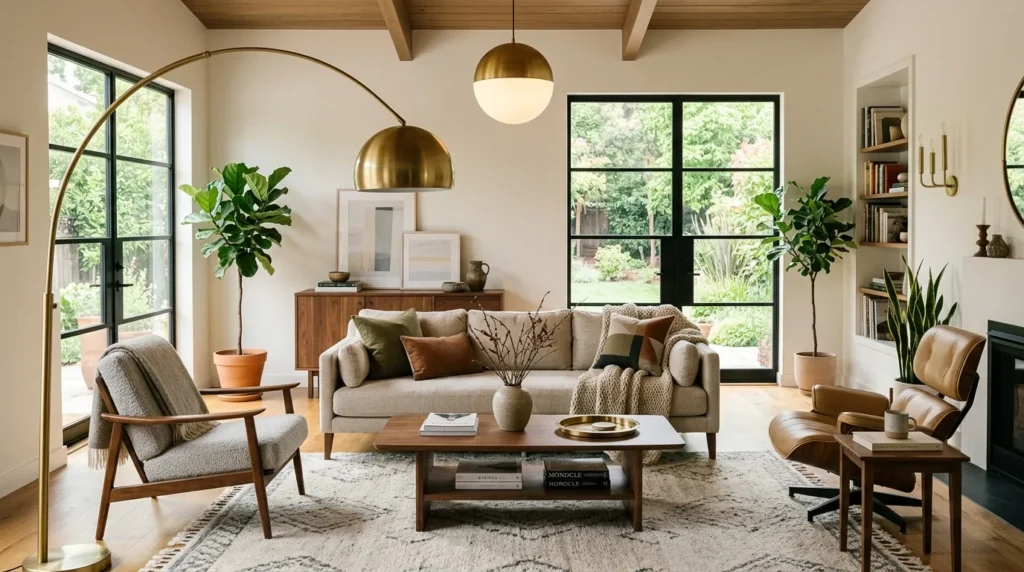
Lighting acts as both décor and function in midcentury interiors. Clean silhouettes and brass or matte black finishes reinforce the minimalist aesthetic.
I’ve found that a statement floor lamp often becomes one of the most eye-catching elements in the room.
How To Style It
Choose arc floor lamps, globe pendants, tripod lamps, or brass sconces with warm white bulbs to create soft ambient lighting.
6. Display Vintage-Inspired Artwork
Quick Benefits
- Adds personality
- Creates a focal wall
- Reinforces the midcentury aesthetic
- Brings color into the room
- Easy to update
Why It Works
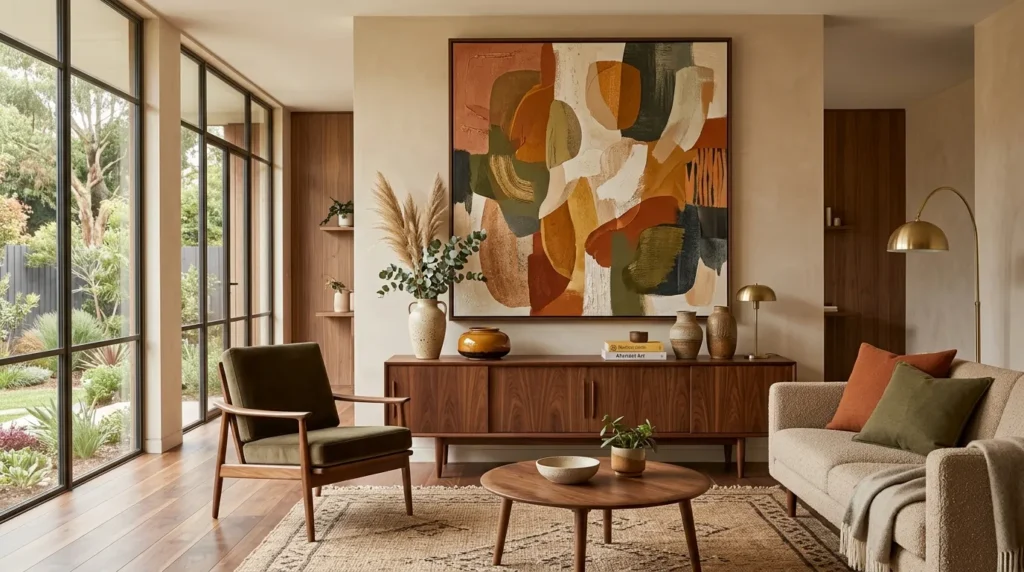
Artwork is one of the easiest ways to capture the spirit of midcentury modern design. Abstract compositions, geometric prints, and minimalist illustrations complement clean-lined furniture without overwhelming the space.
I’ve found that a few oversized pieces often make a stronger statement than filling every wall with smaller frames.
How To Style It
Hang abstract artwork featuring warm earth tones, mustard, olive green, burnt orange, cream, and charcoal. Use slim walnut or black frames and keep gallery walls symmetrical for a polished appearance.
7. Add Indoor Greenery
Quick Benefits
- Brings nature indoors
- Softens modern furniture
- Improves visual balance
- Adds organic texture
- Freshens the room
Why It Works
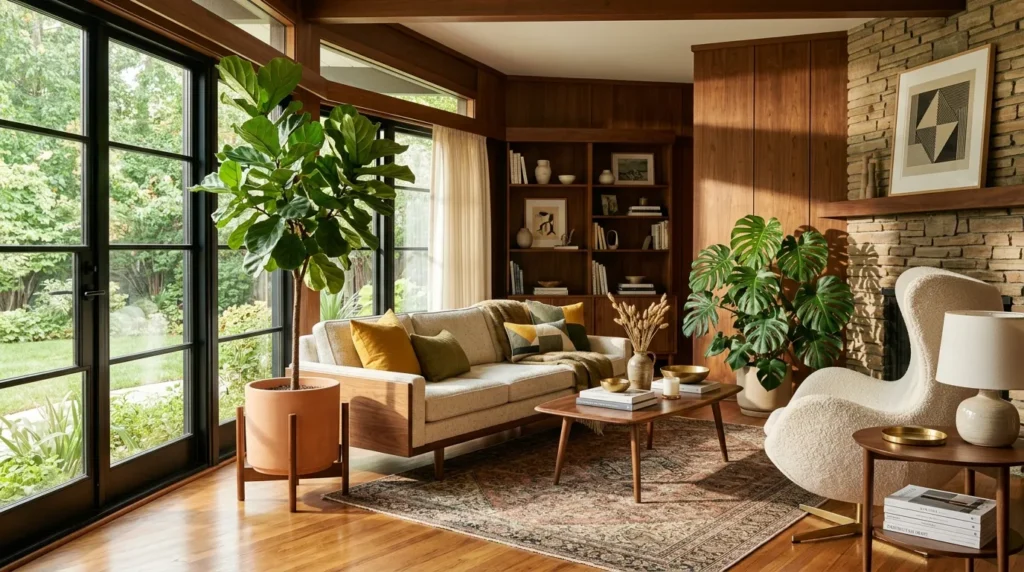
Midcentury modern interiors embrace the connection between indoor and outdoor living. Green plants introduce natural color while contrasting beautifully with wood furniture and neutral textiles.
I’ve found that one large statement plant often has more impact than several small ones scattered around the room.
How To Style It
Decorate with fiddle-leaf figs, rubber plants, monstera, snake plants, or bird of paradise in ceramic or matte planters. Position them beside windows, sofas, or media consoles for maximum visual impact.
8. Layer Natural Textures
Quick Benefits
- Creates warmth
- Adds depth
- Makes minimalist spaces cozy
- Enhances comfort
- Timeless styling
Why It Works
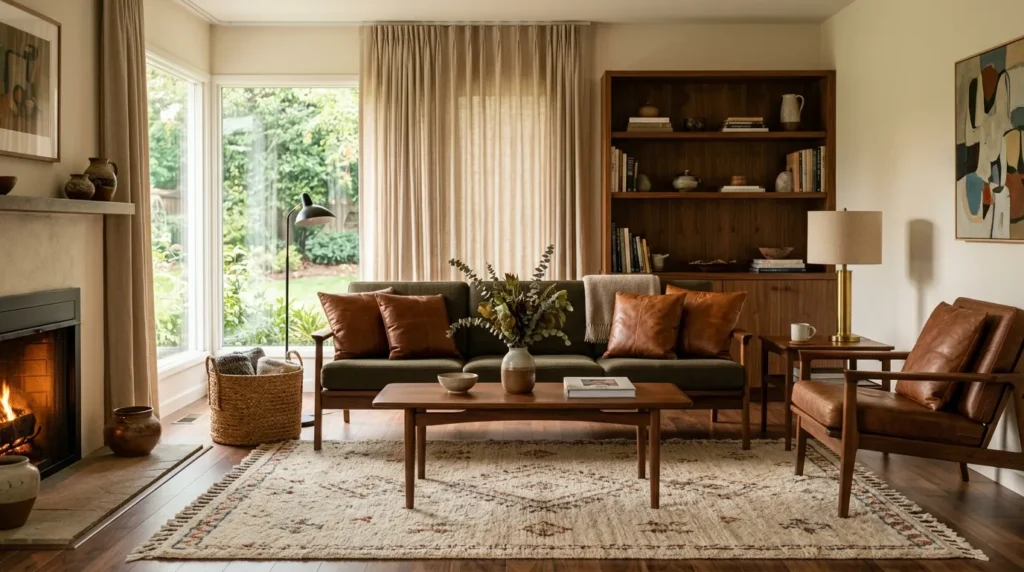
Texture prevents minimalist rooms from feeling cold. Mixing wood, leather, boucle, wool, linen, and woven materials creates visual richness while maintaining the simplicity of midcentury design.
I’ve found that texture often contributes more to comfort than adding extra decorative accessories.
How To Style It
Layer a wool area rug, linen curtains, boucle accent chairs, leather cushions, woven baskets, and ceramic décor to create a balanced, inviting atmosphere.
9. Mix Modern and Vintage Pieces
Quick Benefits
- Creates a collected look
- Adds character
- Prevents a showroom feel
- Personalizes the room
- Timeless appeal
Why It Works
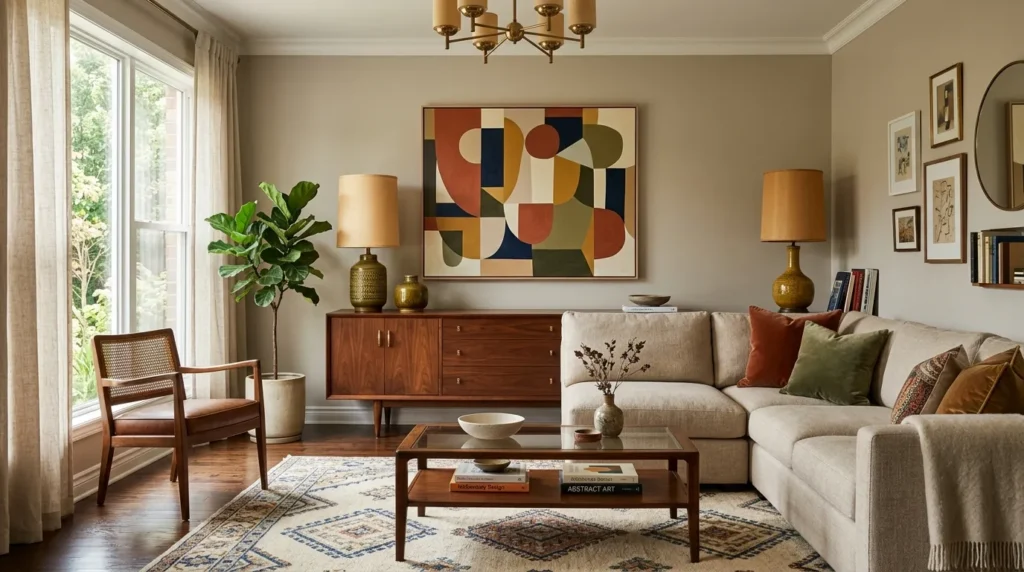
Combining authentic vintage finds with contemporary furniture keeps a midcentury living room feeling fresh and unique. The blend of old and new creates depth while preserving everyday functionality.
I’ve found that mixing just a few vintage pieces with modern furnishings produces the most natural and sophisticated result.
How To Style It
Pair a modern sofa with a vintage walnut coffee table, retro ceramic lamps, classic record storage, and minimalist décor. Keep the overall color palette cohesive to unify the space.
10. Keep Décor Clean and Functional
Quick Benefits
- Reduces visual clutter
- Makes rooms feel larger
- Highlights quality furniture
- Easy to maintain
- Reflects authentic midcentury design
Why It Works
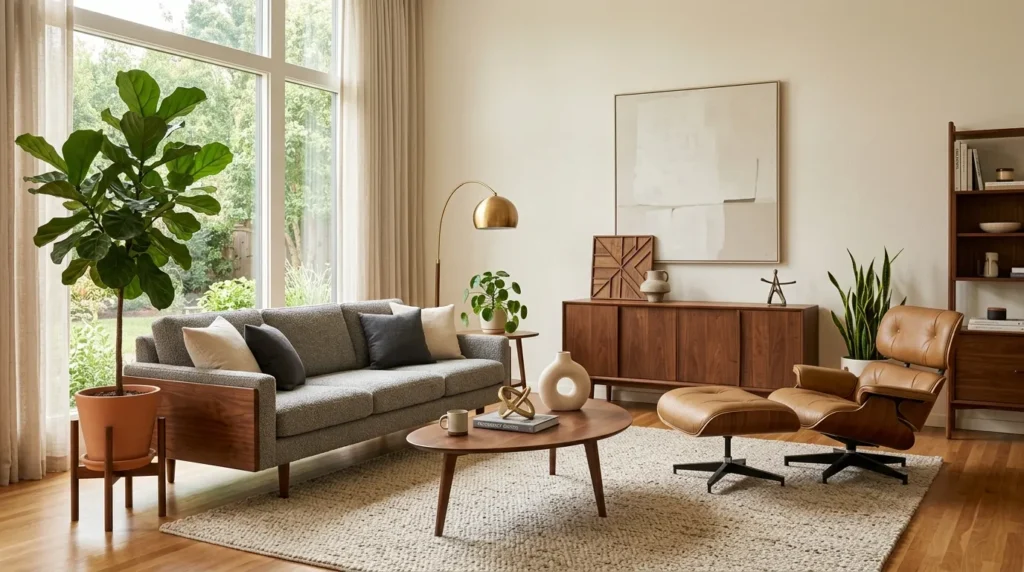
One of the defining characteristics of midcentury modern interiors is intentional simplicity. Every decorative piece should contribute to the overall design while maintaining an open, uncluttered environment.
I’ve found that carefully editing décor creates a far more luxurious appearance than filling every available surface.
How To Style It
Limit accessories to a few meaningful items, such as sculptural vases, ceramic bowls, books, candles, and framed artwork. Leave open space around furniture to emphasize clean architectural lines.
Frequently Asked Questions
What defines midcentury modern living room décor?
Midcentury modern décor features clean lines, tapered-leg furniture, warm wood tones, functional layouts, geometric accents, organic materials, and a minimalist approach to decorating.
What colors work best in a midcentury modern living room?
Warm neutrals paired with mustard yellow, olive green, rust, terracotta, camel, walnut brown, cream, charcoal, and muted blues create an authentic midcentury palette.
What type of furniture fits this style?
Walnut coffee tables, streamlined sofas, tapered-leg media consoles, sculptural lounge chairs, minimalist sideboards, and functional storage pieces work beautifully in midcentury interiors.
How do I make a living room feel more midcentury modern?
Focus on quality wood furniture, simple silhouettes, iconic lighting, abstract artwork, indoor plants, natural textures, and a restrained color palette.
Is midcentury modern still popular?
Yes. Its timeless furniture, functional layouts, and clean aesthetic continue to make it one of the most popular interior design styles for both new homes and renovations.
Conclusion
Midcentury modern living room décor remains a favorite because it combines timeless design with everyday comfort. Clean-lined furniture, warm walnut finishes, natural textures, and thoughtfully chosen accessories create spaces that feel elegant without appearing overly decorated.
The beauty of this style lies in its balance. Rather than relying on excessive ornamentation, every piece contributes to a harmonious, functional environment that feels welcoming and sophisticated.
Whether you’re redesigning your entire living room or simply incorporating a few signature elements, these midcentury modern living room décor ideas will help you create a stylish home that stands the test of time.
Related Articles
- 10 Modern Living Room Ideas with Soft Color Palettes
- 10 Small Living Room Ideas That Blend Comfort and Style
- 10 Minimalist Living Room Ideas
- 10 Scandinavian Living Room Ideas
- 10 Neutral Living Room Decorating Ideas