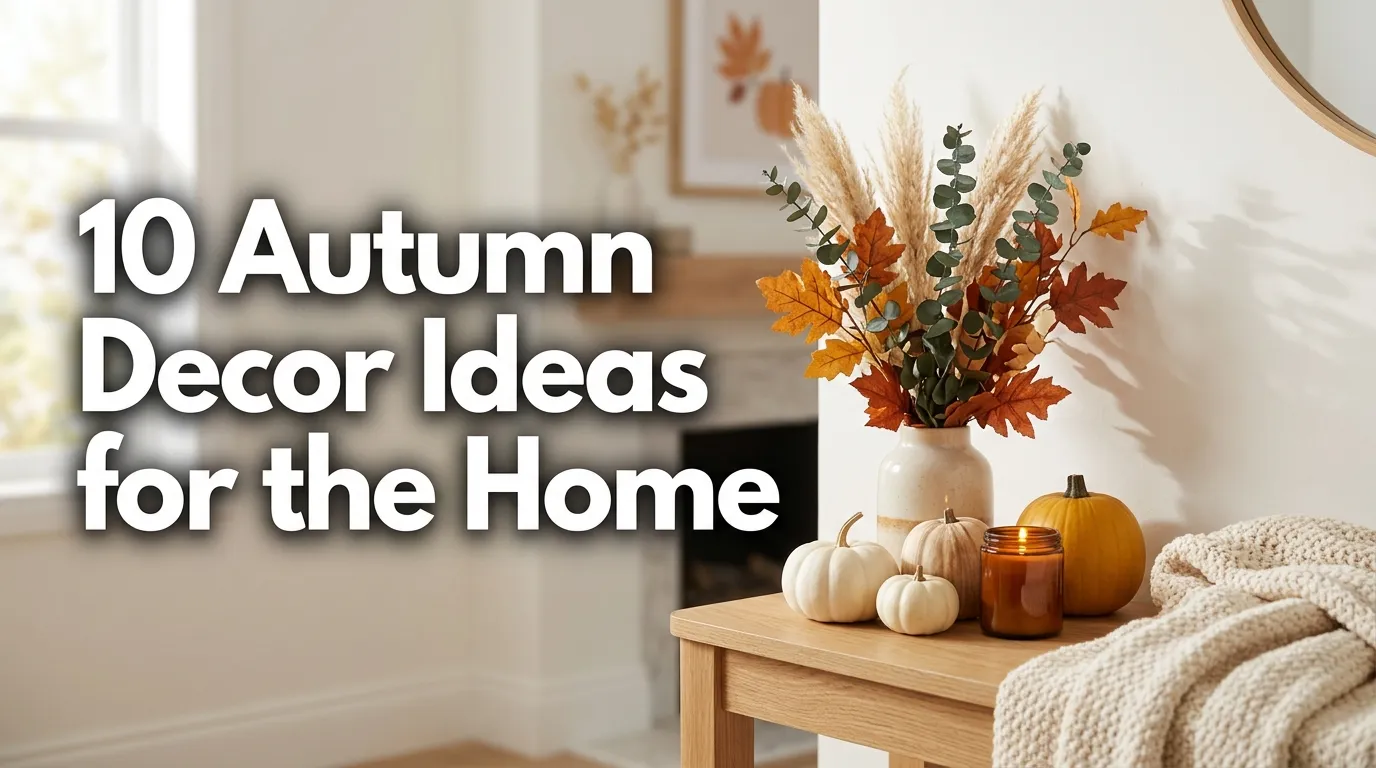
10 Autumn Decor Ideas for the Home
Autumn has a way of making a home feel instantly more inviting. As the days become shorter and the air turns crisp, many of us naturally start reaching for warmer colors, softer textures, candles, cozy blankets, and seasonal accents. The good news is that you don’t need to completely redecorate your house to capture that feeling.
The most beautiful seasonal homes usually aren’t filled with autumn decorations from floor to ceiling. Instead, they use a few thoughtful details in the right places. A warm-toned throw over a sofa, a bowl of pears on the kitchen island, a collection of pumpkins on the porch, or a simple fall arrangement on the dining table can completely change the atmosphere.
If you’re decorating for the season on a budget, you can also work with pieces you already own. Natural materials such as wood, woven baskets, dried grasses, linen, ceramic, and greenery make excellent foundations because they can transition easily from early fall through Thanksgiving and even into winter.
In my experience, the easiest way to create a polished seasonal look is to choose one color story and repeat it throughout the rooms you decorate. Think rust with cream, caramel with warm white, olive with brown, or muted orange with natural wood. This creates a cohesive home without making every room look identical.
Below, you’ll find ten approachable ideas for bringing autumn warmth into your home. Whether you live in a small apartment, a suburban house, or a spacious open-concept home, these ideas can be adjusted to fit your space, budget, and decorating style.
Table of Contents
1. Warm Entryway Layers
Create an inviting first impression with warm textiles, baskets, seasonal branches, and subtle autumn accents.
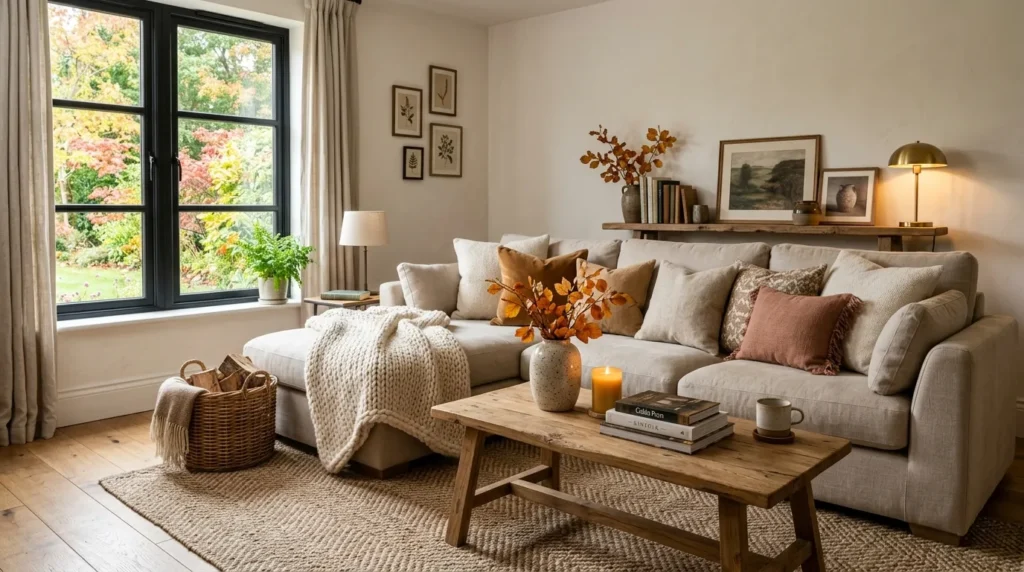
2. Cozy Living Room Textures
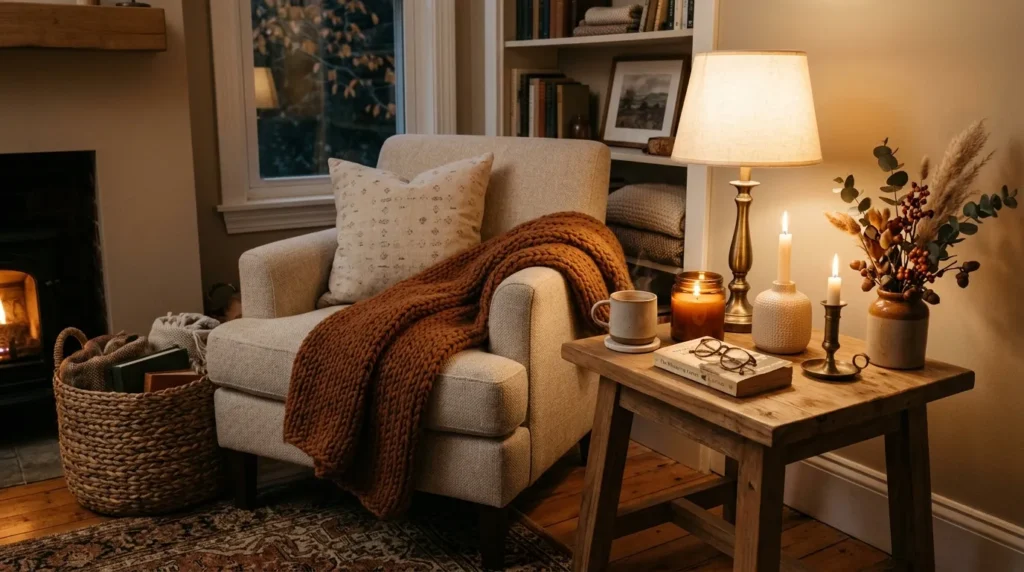
Layer blankets, pillows, wood, and natural materials to make the living room feel comfortable and seasonal.
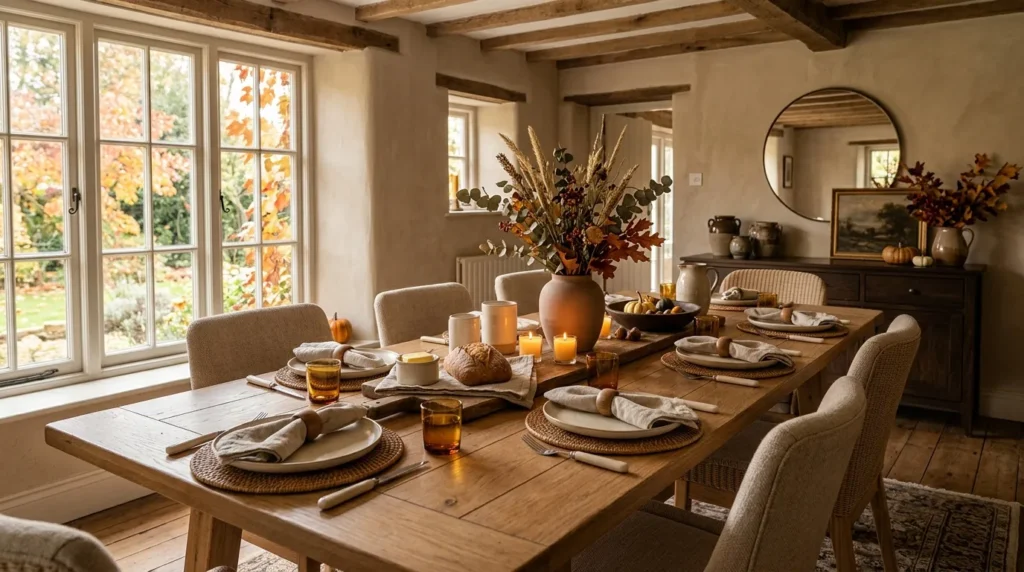
3. Rustic Dining Table
Use natural textures, warm tableware, candles, and simple seasonal greenery to create an autumn-inspired tablescape.
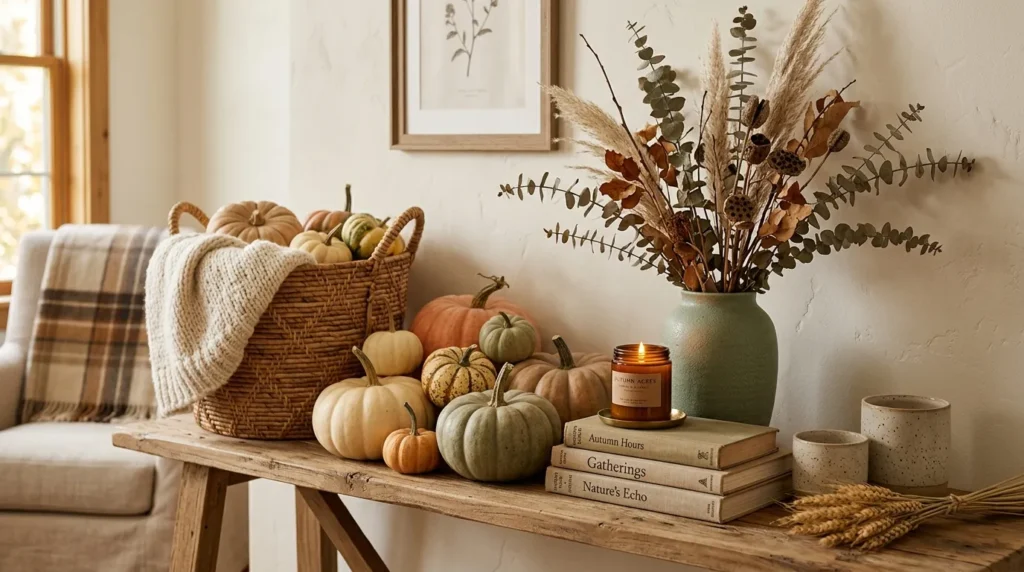
4. Pumpkin Accent Styling
Use pumpkins in restrained groupings to add recognizable seasonal charm without overwhelming the room.
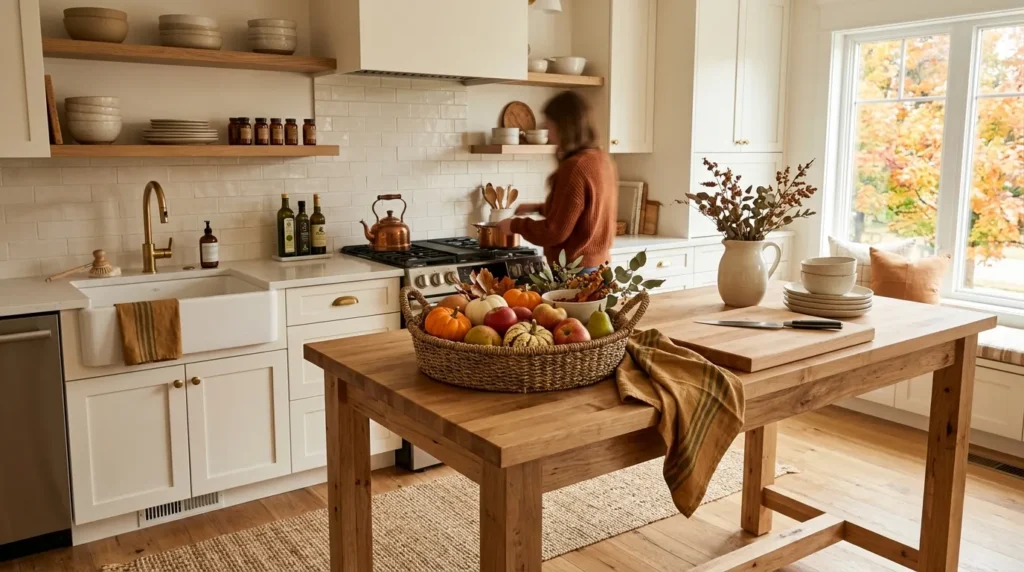
5. Autumn Kitchen Details
Bring the season into the kitchen through produce, ceramics, textiles, wood accessories, and small decorative touches.
6. Natural Mantel Decor
Build a balanced mantel with branches, candles, pottery, and seasonal objects in warm neutral tones.
7. Layered Bedroom Comfort
Introduce autumn through bedding, soft throws, pillows, warm lighting, and tactile materials.
8. Welcoming Front Porch
Turn your entrance into a seasonal focal point with pumpkins, planters, wreaths, lanterns, and layered doormats.
9. Harvest-Inspired Centerpieces
Create simple dining or coffee-table arrangements using fruit, foliage, flowers, wood, and ceramic vessels.
10. Warm Candlelit Corners
Use candles and soft lighting to give everyday spaces the cozy glow associated with autumn evenings.
1. Warm Entryway Layers
Quick Benefits
- Creates an inviting first impression
- Adds seasonal warmth without clutter
- Works well in small entryways
- Uses practical storage pieces
- Transitions easily into late fall
Why It Works
The entryway sets the emotional tone for the entire home. When guests walk through the door and immediately see warm textures and earthy colors, the house feels more welcoming before they even reach the living room. An autumn-inspired entry doesn’t need obvious seasonal decorations everywhere. A combination of natural wood, woven materials, warm textiles, and a few carefully selected accents can be enough.
One of the easiest approaches is to work vertically and horizontally at the same time. A mirror or artwork creates height, while a bench, console, or basket grounds the arrangement. Warm brown, cream, muted rust, olive green, and natural beige work particularly well because they resemble the colors found outdoors during the season.
A mistake many homeowners make is filling an entryway with too many small objects. Instead, choose a few larger pieces that have texture and visual weight. The result feels intentional rather than crowded.
How To Style It
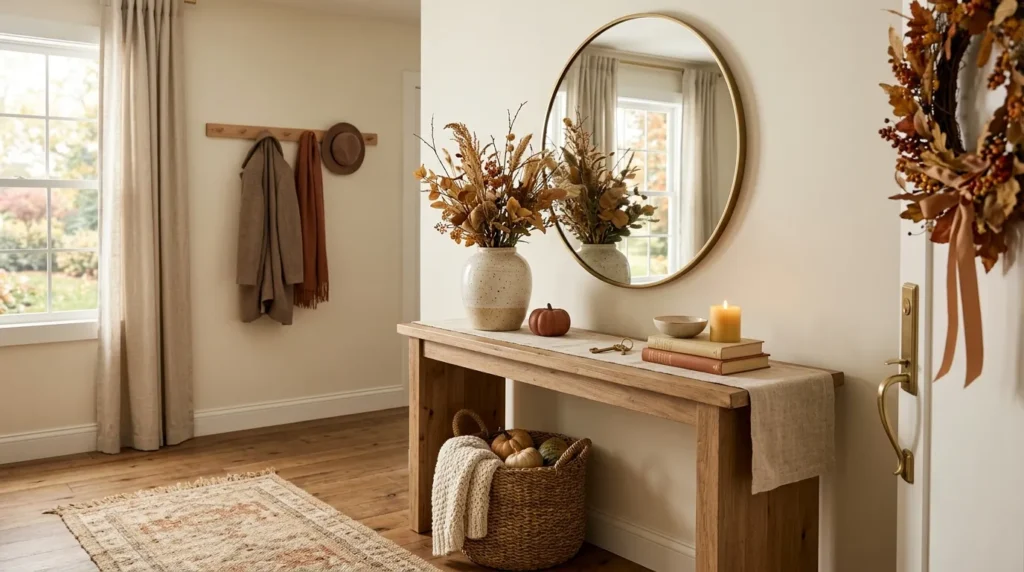
Start with a narrow console table, bench, or floating shelf if your entryway is compact. Add a woven basket underneath for shoes, scarves, or extra throws. On top, place a ceramic vase filled with dried branches, eucalyptus, wheat stems, or other seasonal foliage.
Layer a round mirror or framed landscape artwork above the console. A small amber glass candle or ceramic bowl can provide another layer without taking up much space. If you have room for a bench, add a neutral cushion and one textured throw.
For a stronger autumn palette, introduce one rust or caramel accent rather than several competing colors. A vintage-style runner can also visually connect the entryway with nearby rooms.
Keep the floor area practical. Autumn is a busy season, and entryways need to handle boots, jackets, bags, and everyday traffic. Beautiful storage is therefore just as important as decoration.
2. Cozy Living Room Textures
Quick Benefits
- Makes the room feel warmer
- Adds comfort without major changes
- Works with modern and traditional furniture
- Creates Pinterest-friendly layers
- Easy to update throughout the season
Why It Works
Texture is one of the simplest ways to make a room feel ready for autumn. You don’t necessarily need to replace furniture or repaint your walls. Instead, concentrate on the surfaces that people see and touch most often: sofas, chairs, coffee tables, rugs, and blankets.
Soft textiles contrast beautifully with harder materials such as wood, metal, glass, and stone. This contrast creates depth and prevents a neutral living room from looking flat. Warm ivory, oatmeal, camel, cinnamon, tobacco brown, and muted green are particularly useful colors because they feel seasonal without looking overly themed.
I’ve noticed that rooms tend to look more sophisticated when autumn color is introduced in small doses. Rather than covering the sofa with orange pillows, for example, use one rust pillow alongside cream, brown, or textured neutral cushions.
The goal is to create a room that feels comfortable enough for everyday living while quietly reflecting the season.
How To Style It
Begin with your existing sofa and add two or three pillows in different textures. Try linen, boucle, chunky knit, velvet, or woven fabric. Keep the colors within one coordinated palette.
Drape a soft throw over the arm of the sofa or the back of an accent chair. A camel, oatmeal, warm gray, or muted rust blanket can instantly make the room feel cozier.
On the coffee table, use a low ceramic bowl, a stack of design books, a wooden tray, or a small vase with dried foliage. Avoid covering the entire surface because you’ll still need room for drinks and everyday use.
A textured area rug can further anchor the space. If you already have a neutral rug, don’t replace it simply for the season. Instead, let smaller accents provide the autumn character.
For a more elevated look, mix three types of texture: something soft, something woven, and something natural such as wood or stone.
3. Rustic Dining Table
Quick Benefits
- Creates an inviting dining atmosphere
- Works for everyday meals and entertaining
- Uses affordable natural materials
- Complements farmhouse and modern styles
- Easy to refresh for Thanksgiving
Why It Works
The dining table naturally becomes one of the most important seasonal decorating areas because it is already a gathering place. Autumn is closely associated with shared meals, entertaining, baking, and gathering around the table, so even a simple tablescape can make the season feel more meaningful.
A rustic-inspired table works especially well because natural materials already carry an autumn feeling. Wood, linen, ceramic, stoneware, dried foliage, and woven textures create warmth without requiring elaborate decorations.
The secret is restraint. You don’t need a complicated centerpiece that prevents people from seeing across the table. A low arrangement keeps the table functional while still creating a beautiful focal point.
If you’re decorating for everyday use, choose objects that can stay on the table without getting in the way. A wooden bowl filled with pears or apples, for example, can be both decorative and useful.
How To Style It
Start with a natural wood table or a neutral tablecloth. If your table is already beautiful, leave the surface exposed and add linen runners or individual placemats instead.
Use cream or off-white dinnerware with warm-toned napkins. Tie the palette together with ceramic, wood, or brass accents.
For the centerpiece, choose a low vessel filled with dried grasses, branches, eucalyptus, or muted seasonal flowers. Surround it with a few small candleholders for evening meals.
For a more rustic appearance, add woven chargers or wooden serving boards. For a modern interpretation, keep the table mostly neutral and introduce only one or two warm autumn colors.
If you’re hosting Thanksgiving later in the season, this same foundation can be updated with pumpkins, pears, candles, or deeper-colored flowers. That makes the initial styling investment useful for several months rather than a single occasion.
4. Pumpkin Accent Styling
Quick Benefits
- Instantly communicates the season
- Works indoors and outdoors
- Available in many colors and materials
- Easy to arrange in groups
- Suitable for many decorating styles
Why It Works
Pumpkins are one of the most recognizable symbols of autumn, but using them effectively is more about composition than quantity. A few thoughtfully arranged pumpkins can add seasonal personality while maintaining a sophisticated appearance.
Traditional orange pumpkins are beautiful, especially in rustic and farmhouse homes, but they aren’t the only option. Cream, sage, muted green, tan, white, and soft terracotta pumpkins can blend naturally with neutral interiors.
Size variation is another important consideration. A collection of pumpkins that are all exactly the same size can look flat. Mixing large, medium, and miniature forms creates a more organic arrangement.
I’ve found that pumpkins look particularly attractive when paired with materials already found throughout the home. Wood, woven baskets, aged pottery, linen, and dried foliage make them feel like part of the decor rather than temporary decorations.
How To Style It
Choose one main pumpkin color based on your existing room palette. If your home has lots of warm wood, traditional orange and cream can look beautiful. For a lighter neutral room, consider white, beige, or muted green pumpkins.
Create groupings of three or five pieces rather than spreading single pumpkins randomly around the room. Place larger pumpkins behind smaller ones to create depth.
A large woven basket filled with pumpkins works beautifully beside a fireplace or console. On a coffee table, use miniature pumpkins inside a wooden bowl or shallow ceramic vessel.
For shelves, combine one or two small pumpkins with books, pottery, candles, and greenery. This keeps the arrangement visually interesting.
If you’re using real pumpkins, place them somewhere dry and stable. Decorative faux pumpkins are useful when you want the same look to last throughout September, October, and November.
5. Autumn Kitchen Details
Quick Benefits
- Brings seasonal personality into an everyday space
- Uses functional objects as decoration
- Easy to change without remodeling
- Works in small kitchens
- Creates attractive food-styling moments
Why It Works
The kitchen is often the heart of the home, so seasonal decorating shouldn’t stop at the living room. Fortunately, the kitchen is one of the easiest places to introduce autumn because many seasonal elements are already associated with food: apples, pears, pumpkins, bread, spices, wood cutting boards, and ceramic serving pieces.
Rather than filling counters with decorative objects, choose pieces that can actually be used. A wooden cutting board leaning against the backsplash, a bowl of apples on the island, or a stack of neutral linen towels can provide seasonal character while remaining practical.
Warm metals also work well. Brass, aged bronze, and copper can complement autumn colors without looking overly seasonal.
One simple trick I always suggest is styling open shelves or countertop areas with a mixture of everyday pieces and one or two seasonal accents. This creates a lived-in appearance instead of a staged kitchen.
How To Style It
Begin with the countertop areas that naturally attract attention. Place a wooden cutting board against the backsplash and layer a ceramic bowl or small vase in front of it.
Fill a large bowl with apples, pears, or small pumpkins. Fresh produce adds authentic color and can be replaced as needed.
Swap bright kitchen towels for linen or cotton towels in cream, tan, rust, olive, or brown. If you have open shelving, add warm-toned mugs, ceramic pitchers, wooden bowls, and one small seasonal object.
A tray can help group smaller pieces together. This is especially useful if your kitchen has limited counter space because the entire arrangement can be moved when you need the surface.
For a subtle autumn scent, use seasonal baking rather than relying entirely on decorative fragrance products. Cinnamon, apples, vanilla, and roasted spices naturally make a kitchen feel connected to the season.
6. Natural Mantel Decor
Quick Benefits
- Creates a strong seasonal focal point
- Works with fireplaces and shelves
- Combines natural textures beautifully
- Can be styled symmetrically or organically
- Easy to update for different holidays
Why It Works
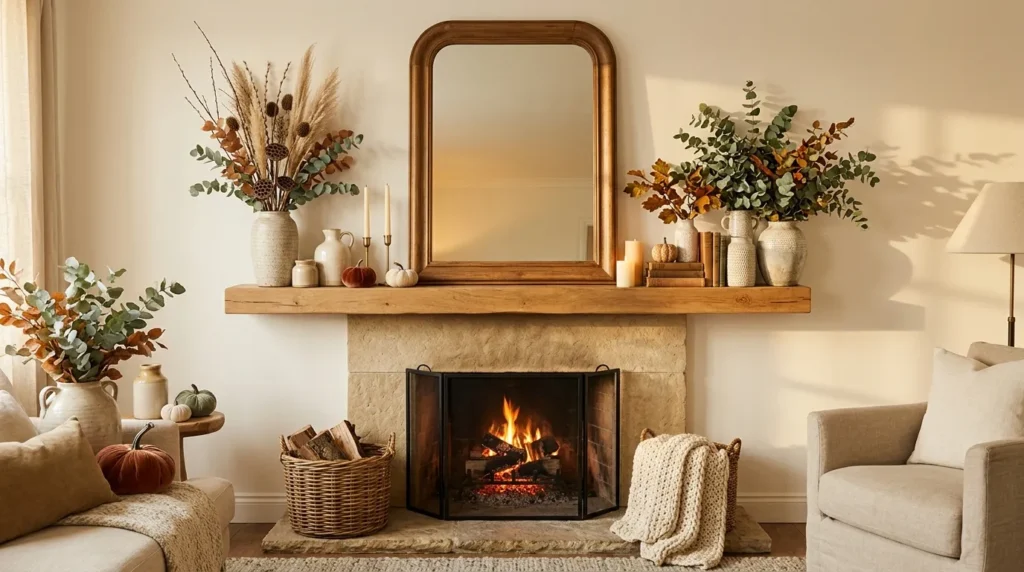
A mantel provides a natural horizontal line that makes decorating easier. Because it is already a visual focal point, a relatively small collection of objects can have a major impact.
For autumn, natural materials are especially effective. Dried branches, grasses, leaves, wood, pottery, woven baskets, and candles introduce color and texture without requiring highly themed decorations.
The best mantel arrangements usually have a clear sense of height. Taller objects anchor the ends or center, while shorter pieces fill the spaces between them. This prevents everything from sitting at exactly the same level.
If your home has a modern fireplace, you don’t need to make the mantel rustic. A neutral palette with sculptural ceramic objects and a few branches can create a contemporary autumn look.
How To Style It
Start with a large mirror, framed artwork, or architectural object as the background. Then introduce one taller decorative element such as a vase filled with branches.
Build the arrangement outward using smaller pottery, candles, books, or seasonal objects. If your mantel is narrow, resist the temptation to use too many pieces.
For a traditional autumn palette, combine cream, rust, brown, and muted green. For a modern neutral approach, stay with ivory, beige, warm gray, and natural wood.
A garland of eucalyptus, olive branches, or dried foliage can soften the mantel and connect the objects together. Make sure any greenery is positioned safely away from heat sources.
For homes without fireplaces, recreate the same concept on a console, floating shelf, or media cabinet. The principle remains the same: establish a focal point, vary the heights, and balance texture with open space.
7. Layered Bedroom Comfort
Quick Benefits
- Makes the bedroom feel warmer
- Adds softness and visual depth
- Easy to change seasonally
- Supports restful atmosphere
- Works with neutral bedding
Why It Works
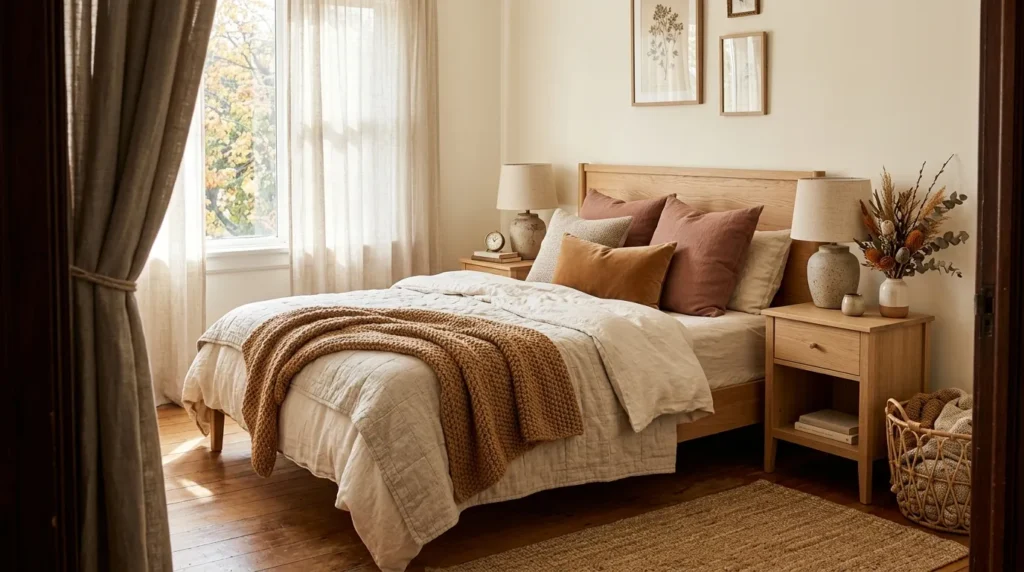
Bedrooms don’t need obvious seasonal decorations to feel ready for autumn. In fact, comfort is often more effective than themed decor. As temperatures begin to cool, adding layers to the bed naturally changes the mood of the room.
Think about the sensory experience first. Soft bedding, a knitted throw, textured pillows, warm lighting, and natural materials can make the bedroom feel like a retreat.
Neutral bedding is particularly useful because it provides a flexible background for seasonal accents. Instead of replacing an entire bedding set, you can simply add a heavier quilt, throw, or a couple of warm-toned cushions.
Warm lighting is equally important. Cool white bulbs can make autumn colors feel harsh, while warmer lighting creates a softer evening atmosphere.
How To Style It
Start with neutral sheets and a duvet or quilt in white, cream, oatmeal, or soft beige. Add a textured blanket folded across the lower third of the bed.
Layer two or three pillows in complementary textures. Linen, cotton, velvet, and chunky knit fabrics can work together as long as the colors remain coordinated.
For color, consider caramel, cinnamon, muted terracotta, olive, or warm brown. You don’t need all of them. One accent shade repeated twice or three times is usually enough.
On the nightstand, use a ceramic lamp, small vase, book, or candle. Keep the surface uncluttered so the bedroom remains restful.
A woven basket at the foot of the bed can hold extra blankets while adding another natural texture. Finish the room with a small rug or soft runner if the existing floor feels too bare.
8. Welcoming Front Porch
Quick Benefits
- Creates instant seasonal curb appeal
- Makes the entrance feel welcoming
- Works with small porches
- Easy to customize on a budget
- Can transition into Thanksgiving decor
Why It Works
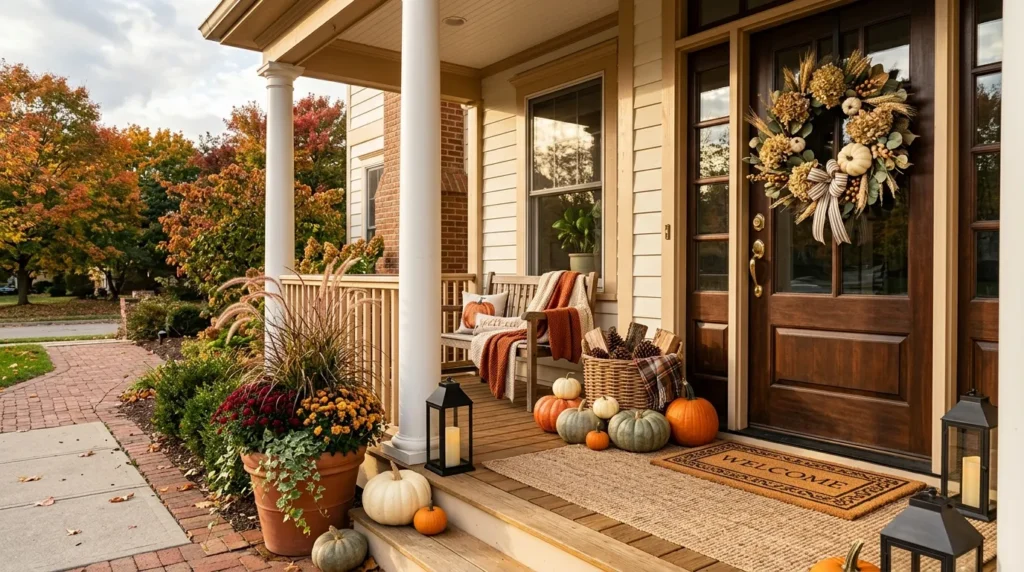
The front porch is one of the first places where autumn decorating can make a noticeable difference. You don’t need a huge porch to create an attractive seasonal display. Even a small entrance can accommodate a wreath, a few pumpkins, a planter, and a layered doormat.
The key is to decorate vertically as well as horizontally. A wreath draws the eye toward the door, while planters and pumpkins anchor the display near the ground.
Natural materials tend to look especially good outdoors. Wood, dried grasses, wicker, stone, and real pumpkins blend with the surrounding landscape and don’t feel overly manufactured.
For a polished appearance, repeat one or two colors from the door or exterior. This makes the seasonal accents feel connected to the house.
How To Style It
Begin with a fall wreath featuring leaves, eucalyptus, dried grasses, berries, or subtle seasonal flowers. A simple wreath can work from early September through Thanksgiving.
Add two or three pumpkins near the door. Mix shapes and sizes instead of creating a perfectly symmetrical arrangement.
If space allows, use a planter filled with ornamental grasses, mums, or other seasonal plants suited to your climate. A tall planter can provide valuable height on a narrow porch.
Layer a neutral doormat over a larger outdoor rug for additional texture. This creates a more finished look and gives the entrance a welcoming feel.
For evening appeal, add lanterns with safe battery-operated candles. Place them where they won’t interfere with foot traffic.
Keep the path clear, especially if you live somewhere with wet autumn weather. Beautiful porch decor should never make the entrance difficult to use.
9. Harvest-Inspired Centerpieces
Quick Benefits
- Works on dining and coffee tables
- Uses inexpensive natural materials
- Looks beautiful in photographs
- Can be customized to any color palette
- Easy to refresh with fresh produce
Why It Works
A centerpiece doesn’t have to be elaborate to become the star of a room. Some of the most attractive autumn arrangements are built from ordinary natural materials arranged thoughtfully in a bowl, vase, tray, or basket.
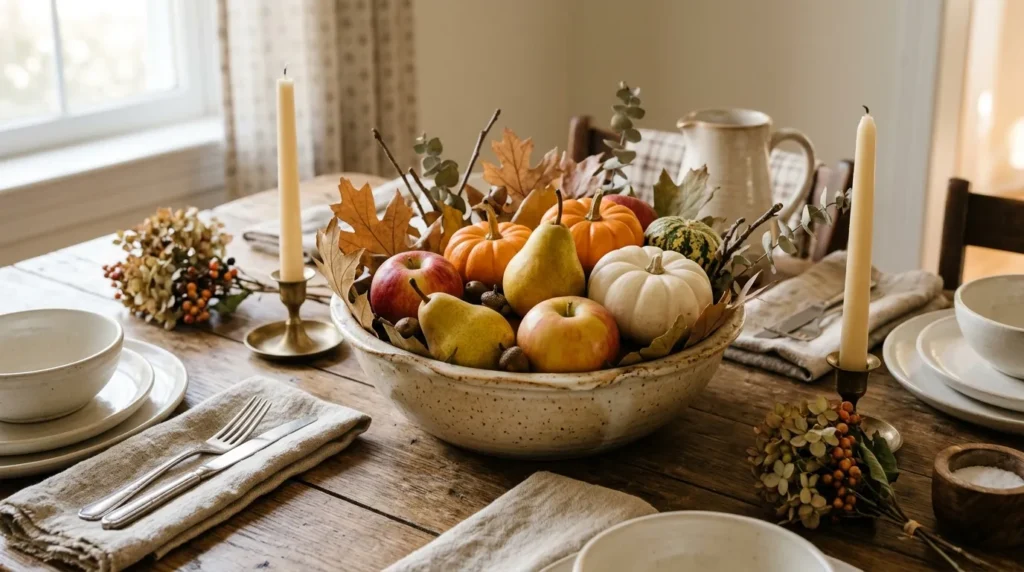
Fruit is especially useful because it introduces color and shape while remaining practical. Apples, pears, figs, and small pumpkins can all create a harvest-inspired arrangement.
Dried foliage also has an advantage: it lasts much longer than fresh flowers and requires little maintenance. Branches can provide height, while smaller objects fill the base of the arrangement.
The most important principle is proportion. A centerpiece should fit the size of the table. A huge arrangement can overwhelm a small dining table, while a tiny vase may disappear on a large surface.
How To Style It
Choose a vessel that complements your existing decor. A rustic wooden bowl works beautifully in a farmhouse space, while a simple ceramic vase can suit a modern home.
For a dining table, keep the arrangement low enough that people can comfortably see across it. Fill a bowl with pears, apples, miniature pumpkins, and a few dried leaves.
For a coffee table, place the arrangement on a tray so it can easily be moved when you need the table for everyday use.
You can also create a simple floral arrangement using dried grasses and branches in shades of tan, cream, brown, and muted rust.
Add one or two candles around the arrangement for evening warmth. Avoid making every component seasonal. Combining autumn accents with everyday objects such as books, pottery, and wood pieces makes the styling feel more natural.
10. Warm Candlelit Corners
Quick Benefits
- Creates a cozy evening atmosphere
- Works in every room
- Requires minimal decoration
- Inexpensive way to change ambiance
- Complements other autumn accents
Why It Works
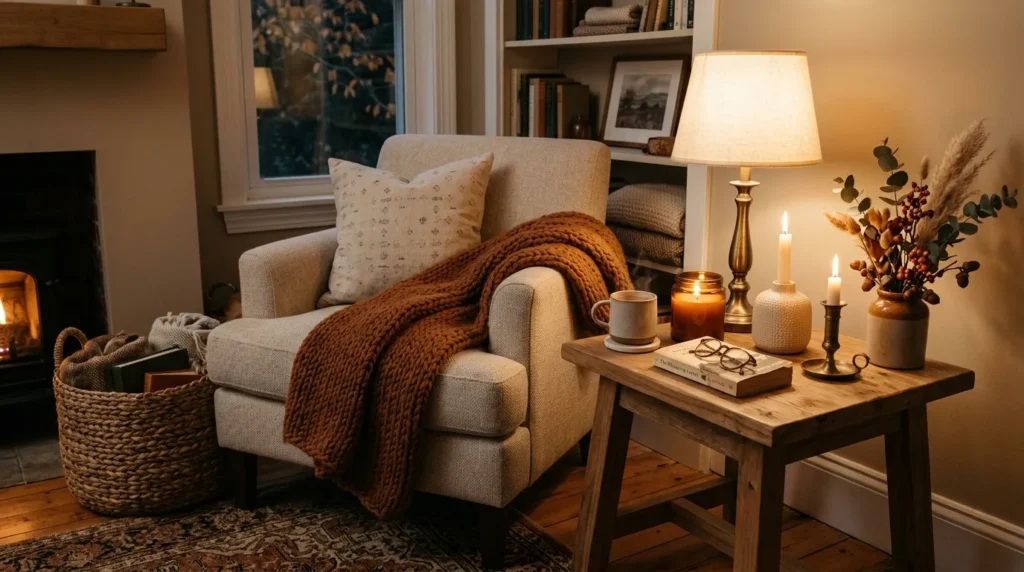
Lighting can completely change how a room feels, especially during autumn when evenings arrive earlier. Even a beautifully decorated room can feel cold if it relies entirely on bright overhead lighting.
A combination of lamps, candles, lanterns, and other warm sources creates layers of illumination. Instead of lighting the entire room evenly, you can highlight specific corners and surfaces.
This is particularly effective in living rooms, bedrooms, dining rooms, bathrooms, and entryways. The warm glow also makes natural materials such as wood, woven baskets, ceramic, and linen look richer.
I’ve noticed that lighting is often the finishing layer that makes seasonal decorating feel complete. You can have only a few autumn accents, but warm illumination can make the entire space feel more intentional.
How To Style It
Start by identifying darker corners that could benefit from a small table lamp or floor lamp. Choose warm-toned lighting rather than overly cool bulbs.
Place candles in ceramic, glass, or metal holders on coffee tables, dining tables, mantels, or nightstands. Group candles in varying heights for more visual interest.
For a safer everyday setup, battery-operated flameless candles can provide a similar glow without an open flame. They are particularly useful in homes with children or pets.
Use amber glass, smoked glass, cream ceramic, or brass candleholders to complement an autumn palette.
For a dining area, several small candleholders can create an intimate atmosphere without blocking conversation. In a bedroom, one warm lamp combined with a small candle can make the room feel especially relaxing.
Always follow the manufacturer’s safety instructions for candles and keep open flames away from fabrics, foliage, children, and pets.
Frequently Asked Questions
What colors work best for autumn home decor?
Warm neutrals and earthy colors are especially versatile for autumn. Popular choices include cream, beige, caramel, terracotta, rust, olive green, warm brown, muted orange, and soft gold. You don’t need to use all of them. Choose two or three shades that complement your existing furniture and repeat them throughout the room for a cohesive look.
How can I decorate for autumn without making my home look cluttered?
Focus on a few larger, intentional accents rather than many small decorations. Add seasonal texture through pillows, throws, rugs, baskets, and natural materials. Then choose one focal point in each room, such as a mantel, coffee table, entryway, or dining table. Leaving some open space helps seasonal decorations feel curated rather than crowded.
How can I decorate for autumn on a budget?
Use items you already own and introduce inexpensive natural materials. Branches, dried grasses, apples, pears, pinecones, wood, baskets, and simple candles can all contribute to an autumn atmosphere. Instead of buying an entire collection, invest in a few versatile pieces that can transition from early fall through Thanksgiving and into winter.
Can autumn decor work in a modern home?
Absolutely. Modern autumn decorating works best when you emphasize texture and restrained color rather than traditional seasonal patterns. Try cream, warm beige, walnut wood, muted olive, ceramic, linen, sculptural branches, and simple pumpkins. Keeping the palette limited creates a sophisticated seasonal look that complements clean-lined furniture.
When should I start decorating my home for autumn?
Many homeowners begin adding early autumn touches in late August or September, then introduce richer colors and more obvious seasonal decorations during October. If you enjoy decorating gradually, begin with neutral textures and natural materials before adding pumpkins, deeper colors, and harvest-inspired accents later in the season.
How can I make autumn decorations last through Thanksgiving?
Choose decorations that aren’t tied specifically to Halloween. Natural foliage, pumpkins, warm textiles, candles, wood, ceramic, neutral wreaths, and harvest-inspired centerpieces can work throughout the entire season. After Halloween, simply remove any spooky or strongly themed pieces while keeping the neutral autumn foundation.
What natural materials are good for autumn decorating?
Wood, dried grasses, branches, linen, cotton, woven fibers, ceramic, stone, and natural foliage are excellent choices. They add visual and tactile warmth without requiring bright seasonal colors. Natural materials also tend to blend well with existing home decor, making them useful for homeowners who prefer subtle seasonal changes.
Conclusion
The best autumn homes don’t necessarily have the most decorations. They have the most thoughtful layers.
A warm entryway, textured living room, natural dining table, carefully arranged pumpkins, seasonal kitchen accents, cozy bedroom, inviting porch, and soft candlelight can all contribute to an atmosphere that feels comfortable and welcoming. The beauty of these ideas is that you don’t have to tackle them all at once.
Start with the room where your family spends the most time. Add a few tactile layers, introduce one warm accent color, and bring in something natural such as wood, branches, dried grasses, or seasonal produce. Once that space feels right, repeat a few of the same colors and materials elsewhere in the home.
If you’re decorating on a budget, remember that seasonal style is more about atmosphere than quantity. A single basket of pumpkins, a beautiful throw, or a warm table arrangement can have more impact than a room packed with decorations.
Autumn is ultimately about creating a home that feels inviting enough to linger in. So light a candle, add another blanket to the sofa, bring a little warmth to the dining table, and let the season become part of your everyday surroundings.