
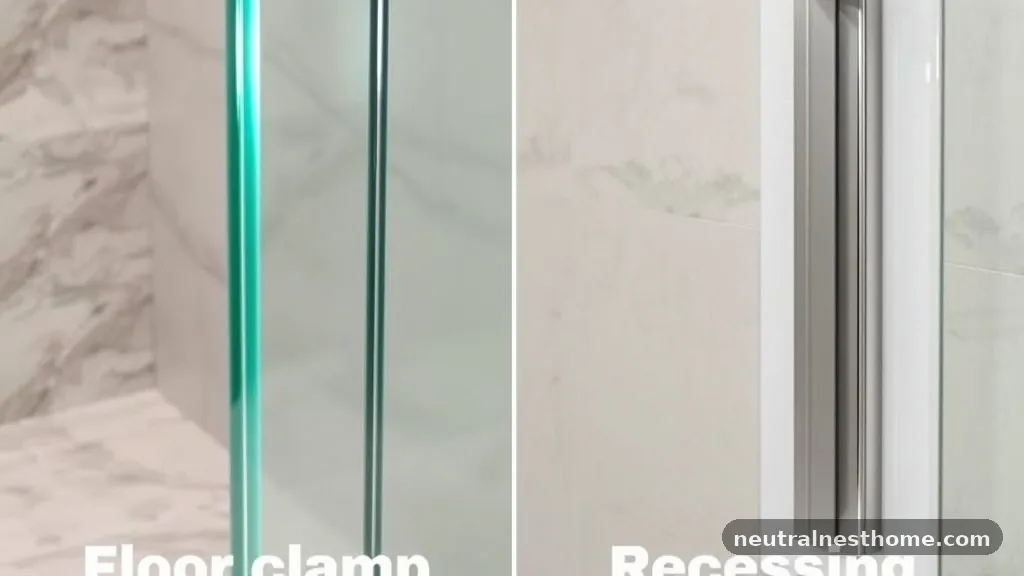
Floor Clamp Brackets vs Recessed U-Channel for Securing Walk-In Glass
Choosing between floor clamp brackets and recessed U-channel for securing walk-in glass is a critical decision that influences both the aesthetic outcome and the structural integrity of your bathroom renovation. While both methods effectively hold stationary panels in place, they offer distinct visual profiles and installation requirements that cater to different design preferences.
Understanding the trade-offs between these two systems allows you to match your hardware selection with your specific tile layout and desired level of transparency. This article breaks down the technical differences, installation challenges, and long-term maintenance implications of using these two popular methods for your frameless shower project.
Which method provides a more secure hold?
If you are looking for a definitive answer on which method is stronger, the reality is that both systems are engineered to be highly secure when installed correctly. Recessed U-channel acts as a continuous support mechanism that distributes the weight of the glass along the entire length of the base, whereas floor clamp brackets provide localized, high-tension support points.
For most standard residential shower glass panels, both options exceed the necessary safety requirements for structural stability. The primary difference lies in the distribution of stress; U-channel offers a more uniform grip that can be slightly more forgiving if your floor surface is not perfectly level.
Aesthetic Differences in Frameless Showers
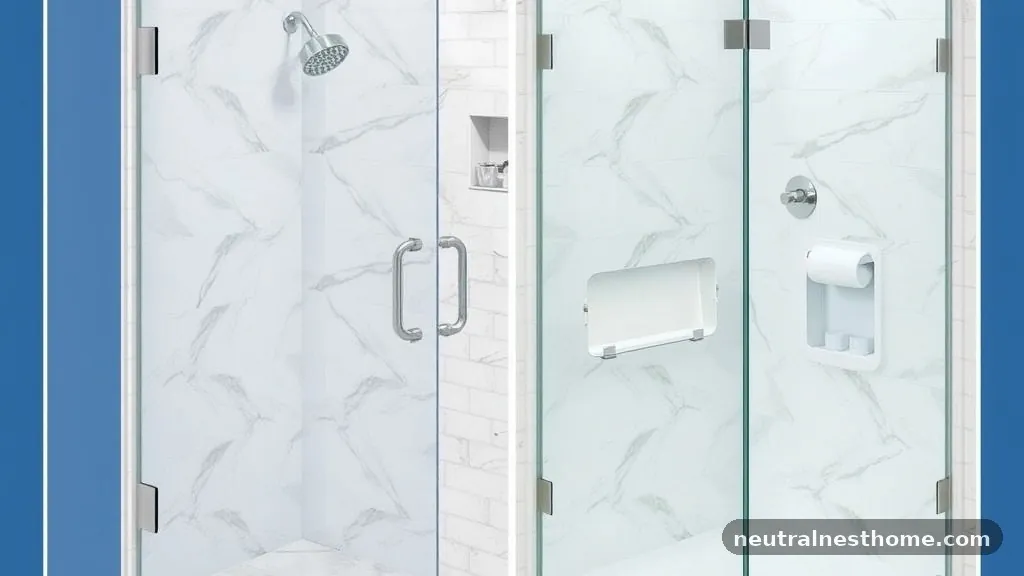
The most immediate distinction between these two hardware types is their visual footprint. Recessed U-channel is designed to be hidden within the floor tile, creating a look where the glass appears to emerge directly from the surface. This creates a truly minimalist, frameless appearance that is highly sought after in modern bathroom designs.
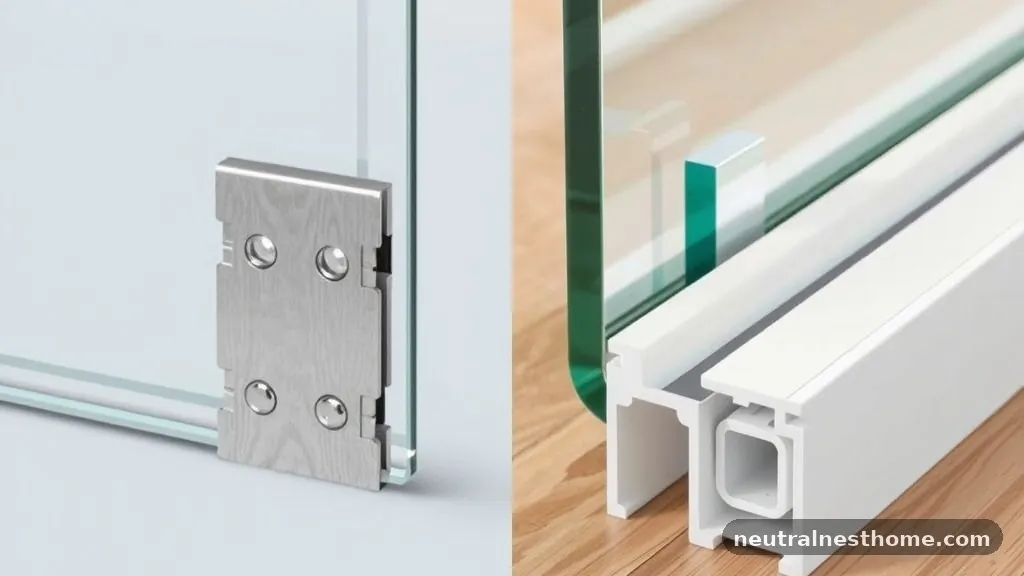
Conversely, floor clamp brackets remain visible as small metal fixtures at the base of the glass. While these are often manufactured in sleek finishes like brushed nickel, chrome, or matte black, they undeniably break the clean line of the glass-to-floor transition.
Choosing between them depends on how much you value a “floating” aesthetic versus the industrial look of high-quality hardware. If you want the glass to feel like a seamless extension of the room, the recessed channel is the superior choice.
However, if you prefer to highlight the craftsmanship of your installation, a set of high-end clamps can act as a subtle design accessory. Always consider the color of your tile; if you have a busy or patterned floor, a recessed channel can look cleaner, whereas clamps might add visual clutter to an already complex surface.
Installation Requirements and Complexity
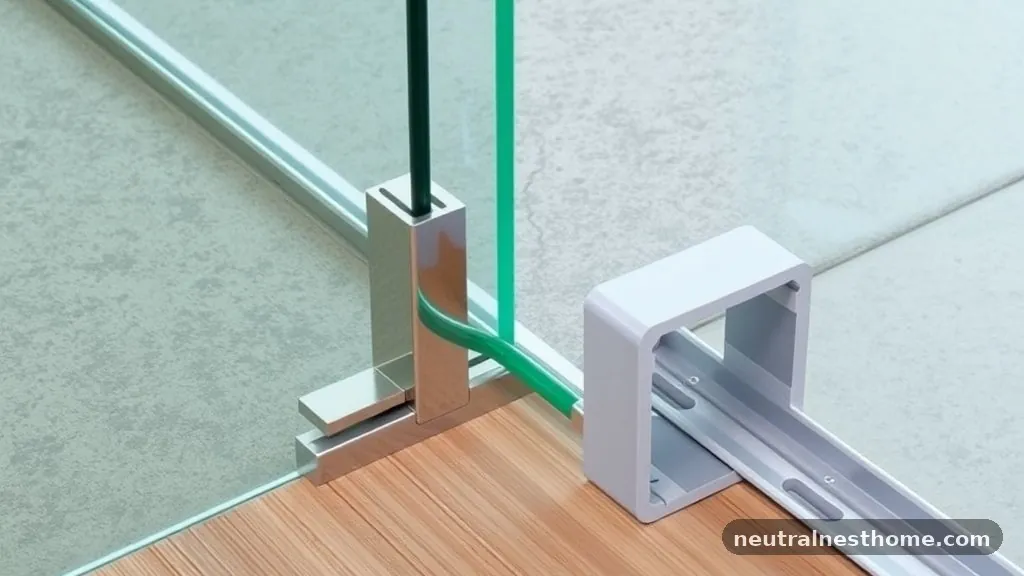
Installing a recessed U-channel is significantly more involved than mounting floor clamps. To achieve a recessed look, you must plan your tile layout in advance, leaving a precise gap or “trench” in the flooring where the channel will sit.
This requires careful coordination with your tiler to ensure the depth and width of the channel are perfectly accounted for during the thin-set application. If you have already finished your tiling, retrofitting a recessed channel is nearly impossible without damaging the surrounding floor surfaces.
Floor clamp brackets are much more flexible in terms of installation timing. They are typically surface-mounted, meaning they can be installed after the tile is set and grouted, provided you have a solid substrate beneath the tile to anchor the screws. This makes them a preferred choice for renovations where the floor is already complete.
You simply mark the locations, drill through the tile into the subfloor, and secure the clamps. While this is less labor-intensive, it does require precision drilling into expensive tile, which carries a risk of cracking if you are not using the correct diamond-tipped drill bits.
Water Management and Maintenance
One of the most frequent concerns with frameless shower enclosures is the prevention of water leakage. A recessed U-channel provides a continuous barrier that, when properly filled with high-quality silicone, creates a very tight seal against the floor.
Because there is no gap between the glass and the channel, water has a harder time finding a path to escape the enclosure. This makes the U-channel an excellent choice for high-traffic showers where water spray is frequent and heavy.
Floor clamp brackets, by their nature, leave small gaps between the clamps. While the glass is still sealed with silicone, the transition between the clamp and the floor can sometimes become a collection point for water or debris.
You may find yourself spending more time cleaning around the small metal fixtures to prevent the buildup of mildew or soap scum. Because the glass is held by individual clips, there is a slightly higher reliance on the quality of the silicone bead to maintain a watertight seal along the entire length of the panel.
Comparing Hardware Characteristics
To better understand how these two methods stack up against each other, consider the following comparison table. It highlights the key factors that typically influence a homeowner’s final decision during the planning phase of a bathroom renovation.
| Feature | Recessed U-Channel | Floor Clamp Brackets |
|---|---|---|
| Visual Impact | Minimalist, hidden | Visible, industrial accent |
| Installation Timing | Must be planned pre-tiling | Can be installed post-tiling |
| Floor Leveling | High tolerance for variance | Requires very flat surfaces |
| Cleaning Effort | Lower (fewer nooks) | Higher (cleaning around clips) |
| Structural Support | Continuous, distributed | Point-load support |
Managing Mildew and Sanitation
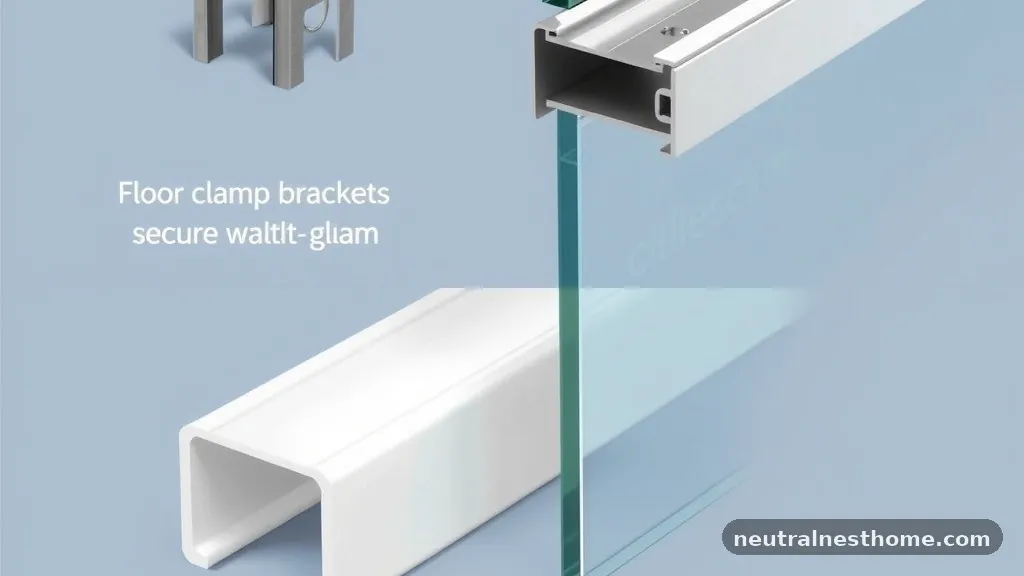
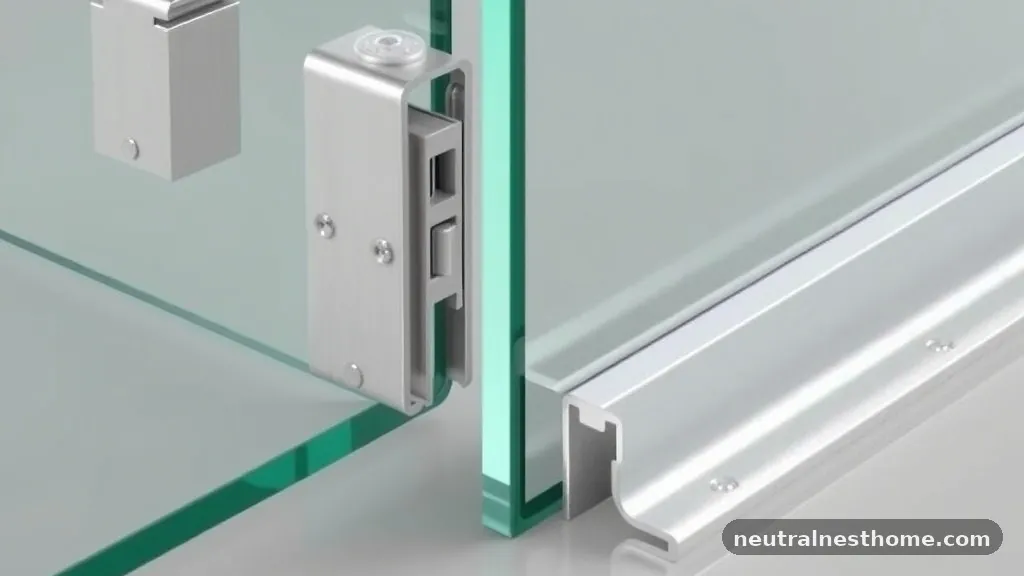
Sanitation is a vital aspect of shower design that is often overlooked until after the installation is complete. Because recessed U-channels house the bottom edge of the glass inside a metal trough, they can become a hidden environment for moisture if not sealed perfectly.
If the silicone seal fails, water can seep into the channel, creating a dark, damp space that is ideal for mildew growth. It is essential to use a high-quality, anti-microbial silicone sealant and to ensure that the channel has small weep holes or proper drainage if required by the manufacturer.
Floor clamps generally provide better airflow around the base of the glass. Since the glass is not sitting inside a trough, there is no enclosed space for water to stagnate.
While you still need a silicone bead between the glass and the floor for water retention, the area is much more accessible for cleaning. If you are particularly concerned about long-term maintenance and the potential for mold, the accessibility of a clamp-based system often proves more practical for the average homeowner.
Structural Considerations for Glass Panels
The weight of tempered glass is substantial, and the hardware you choose must be capable of supporting it safely over the lifetime of the shower. Recessed channels offer an advantage in structural stability because they support the entire bottom edge of the stationary panel.
This prevents the glass from bowing or shifting over time due to thermal expansion or house settling. If you are installing a very large or heavy floor-to-ceiling glass panel, the continuous support of a channel is often recommended by contractors.
Clamps are perfectly adequate for standard-sized panels, but they require a very rigid anchor point. If your floor tile is installed over a flexible subfloor, the clamps can eventually loosen, which might cause the glass to vibrate or shift.
Always ensure that the mounting surface for your clamps is reinforced with blocking or a solid concrete slab. For further guidance on safety and structural standards, you can refer to the National Fenestration Rating Council, which provides resources regarding the performance of glass systems in residential and commercial environments.
Design Flexibility and Future Renovations
When considering floor clamp brackets vs recessed U-channel for securing walk-in glass, it is worth thinking about the future. Trends in bathroom design change, and what looks modern today may feel dated in a decade.
If you use a recessed channel, you are committing to that specific glass placement for the long haul. Changing the layout later would require re-tiling the area where the channel was embedded, which is a major renovation project.
Clamps offer more flexibility. Because they are surface-mounted, you could theoretically remove the glass, replace the floor tile, and reinstall the same clamps or switch to a different style of hardware without significant structural work.
If you are the type of person who likes to refresh your bathroom finishes every few years, clamps provide a level of modularity that recessed channels simply cannot match. This makes them a safer choice for homeowners who value the ability to pivot their design decisions in the future.
Frequently Asked Questions
Is it possible to use a combination of both methods for a single shower?
While you could technically use a channel for the wall-side and clamps for the floor-side, most professionals recommend sticking to one system for a consistent look. Mixing them often creates visual asymmetry that can distract from the clean lines of a frameless enclosure.
Do I need to worry about the glass cracking with floor clamps?
As long as the clamps are installed with the provided rubber gaskets, the glass will be protected from direct contact with the metal. Always ensure the glass is not touching the tile directly; the gasket and the silicone bead act as a cushion to absorb vibrations and thermal movement.
Which option is more budget-friendly?
Floor clamps are generally more affordable, both in terms of the cost of the hardware itself and the labor required for installation. Recessed channels require extra time during the tiling phase, which often translates to higher labor costs from your contractor.
Can I install a recessed channel in an existing shower?
Retrofitting is possible only if you are willing to cut out a channel in your existing floor tile. This is a messy and delicate process that requires specialized tools, and it is rarely recommended unless you are already planning to replace the surrounding floor tile.
How do I know if my floor is level enough for clamps?
Use a long level to check the specific area where the glass will be placed. If you notice significant dips or peaks in the tile, you will need to either level the floor with a compound or opt for a U-channel, which can be shimmed and adjusted to compensate for minor floor irregularities.
Final Considerations for Your Project
Deciding between floor clamp brackets and recessed U-channel for securing walk-in glass involves balancing your aesthetic vision against the practicalities of installation and maintenance. The recessed channel provides a sleek, modern, and highly structural base that feels integrated into the architecture of the room. In contrast, floor clamps offer a simpler installation process, greater flexibility for future changes, and a classic hardware-focused appearance.
Both systems are reliable when installed with care and high-quality sealants. By evaluating your specific tile layout, your maintenance preferences, and your long-term design goals, you can select the mounting method that best supports your vision for a beautiful, functional, and durable shower space. We recommend consulting with your installer to ensure the chosen method aligns with your local building codes and the specific characteristics of your bathroom flooring.