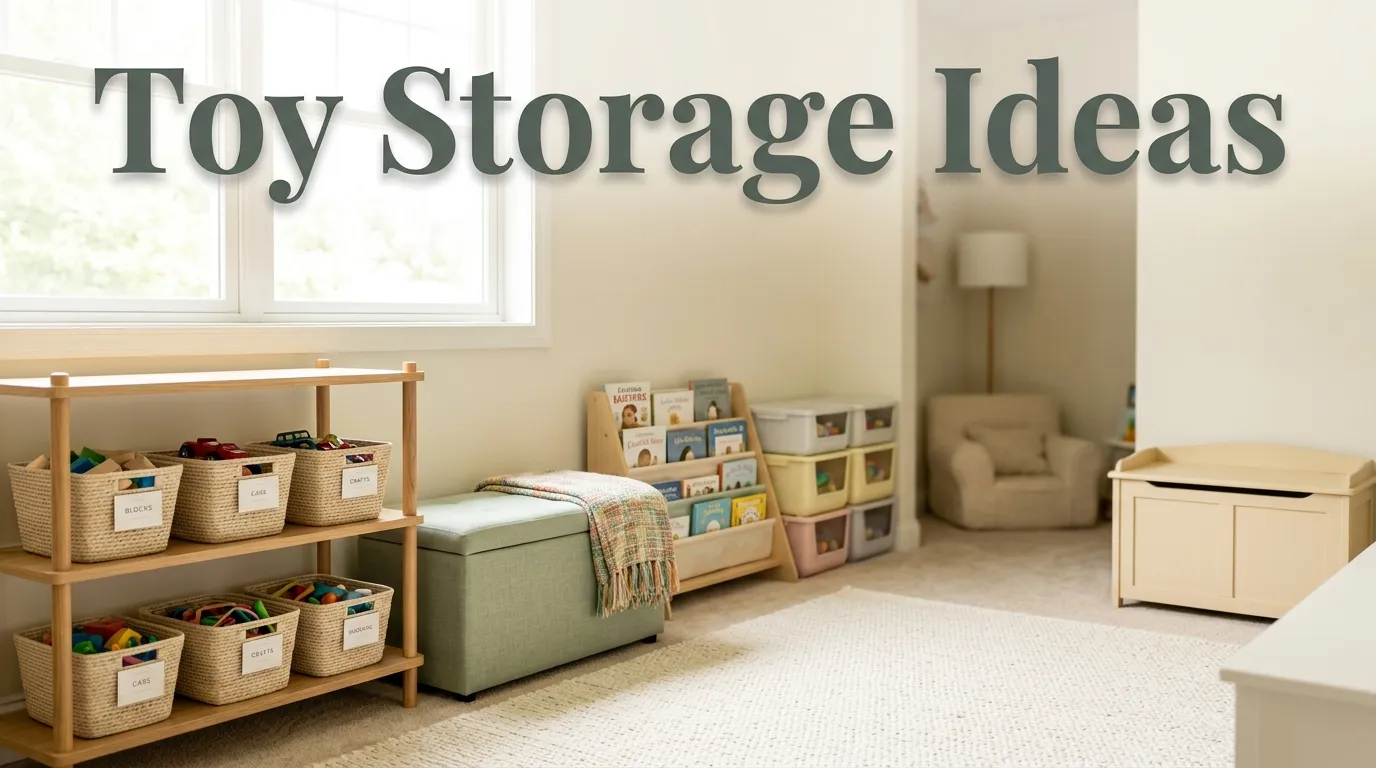
11 Toy Storage Ideas
Toys multiply faster than almost anything else in a home with kids, and in my experience, most toy storage frustration comes down to one core issue: the storage system doesn’t match how quickly kids actually play and move on to the next thing. A mistake many parents make is setting up a beautiful, Pinterest-worthy toy storage system that looks great on day one but requires too many steps for a five-year-old to actually use during cleanup time. The best toy storage systems are the ones simple enough for kids to maintain themselves, not just the ones that photograph well.
I’ve noticed that the households with the least toy clutter aren’t necessarily the ones with the most storage furniture — they’re the ones where storage matches how kids actually play, with open, easy-access bins for daily favorites and less accessible storage for things used less often. That’s why many designers recommend involving kids directly in setting up a toy storage system, since a system they helped design is one they’re far more likely to actually use during cleanup.
This article covers eleven toy storage ideas that work across playrooms, bedrooms, and shared living spaces, along with the reasoning behind each approach and practical guidance on materials and setup. Whether you’re organizing a dedicated playroom or fitting toy storage into a shared family space, these ideas are meant to be adaptable to different home layouts and budgets.
One thing that works especially well with toy storage specifically is designing for rotation rather than trying to have every toy out and accessible at once. That principle shows up throughout the ideas below, and it’s a big part of why these systems tend to stay manageable even as the toy collection grows.
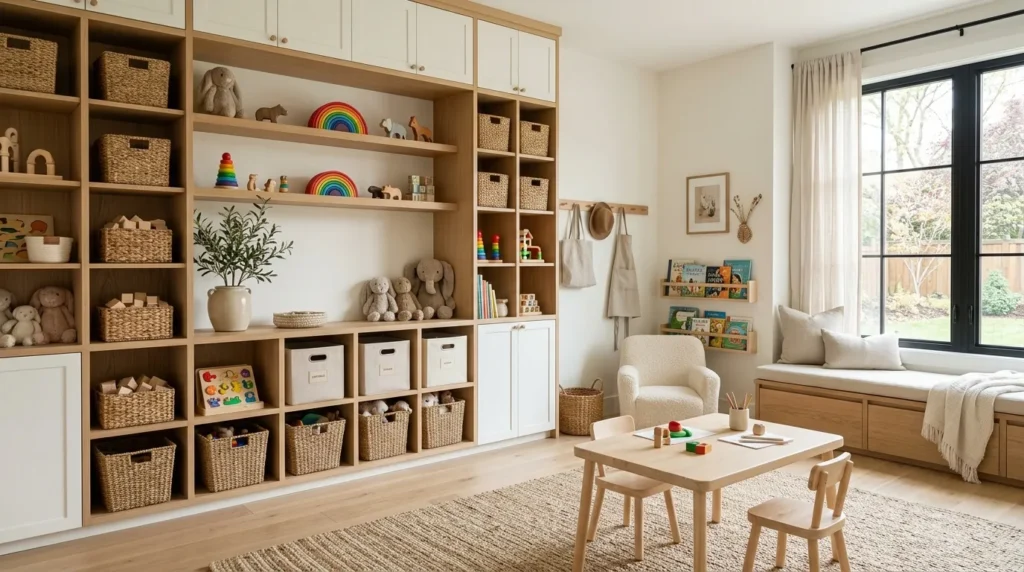
Table of Contents
- Open Bin Toy Stations — Easy-access storage kids can use independently.
- Toy Rotation Storage System — Keeping only a portion of toys out at a time.
- Labeled Category Bins — Clear sorting systems for consistent cleanup.
- Vertical Wall Storage for Toys — Using wall height to save floor space.
- Under-Bed Toy Storage — Making use of overlooked bedroom space.
- Multi-Functional Storage Ottomans — Seating and storage combined in one piece.
- Built-In Shelving Units — Custom storage suited to a dedicated playroom.
- Mesh Bag Storage for Small Pieces — Containing sets with many small parts.
- Display Shelving for Favorite Toys — Turning cherished items into decor.
- Portable Toy Storage Baskets — Flexible storage for shared living spaces.
- Art Supply Organization Stations — Dedicated storage for creative materials.
1. Open Bin Toy Stations
Quick Benefits
- Encourages independent cleanup, even for young children
- Provides quick visual access to favorite toys
- Reduces frustration during daily pickup routines
- Works well in playrooms, bedrooms, or shared spaces
- Available at a wide range of price points
Why It Works
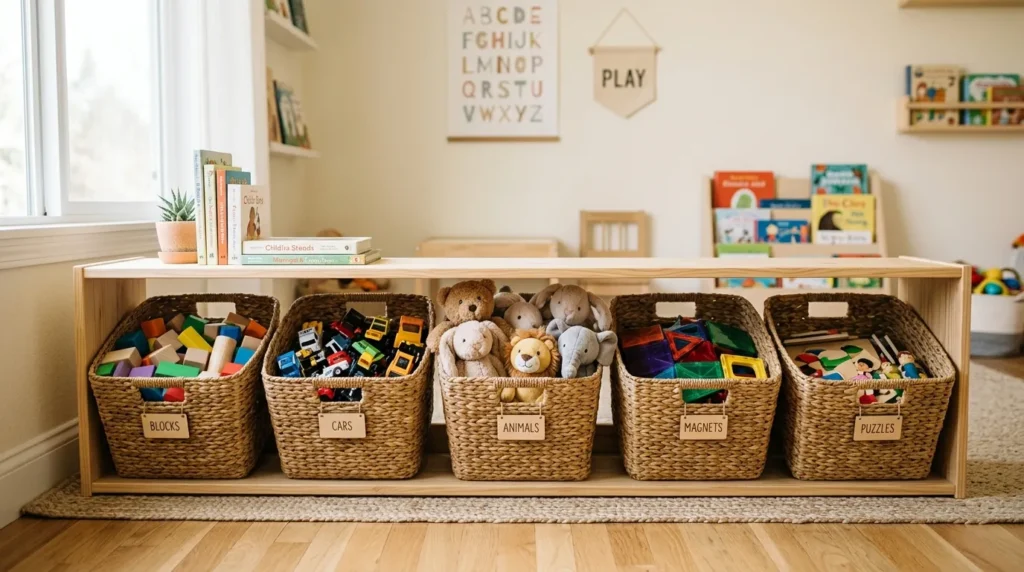
Open bins remove the extra step of opening a lid or a drawer, which makes a real difference for young children who are still developing the motor skills and patience for more complex storage systems. In my experience, a toy storage system with too many steps between “toy” and “put away” tends to break down quickly, especially with children under six, since the extra friction makes it easier to just leave things scattered instead. A mistake many parents make is choosing storage based on how tidy it looks with lids closed, without considering whether a young child can realistically manage opening and closing that same system multiple times a day.
How To Style It
Choose open bins without lids for the toys your children play with most frequently, positioning them at a height your child can reach and see into independently. Keep each bin dedicated to a specific, clearly differentiated category, such as blocks, cars, or stuffed animals, so children can develop a consistent habit of returning items to the right spot. Use bins with cutout handles or a shape that’s easy for small hands to grip and carry to different play areas of the room. Rotate the specific toys in open bins periodically, keeping the total number manageable enough that cleanup doesn’t feel overwhelming.
2. Toy Rotation Storage System
Quick Benefits
- Reduces overall visual clutter at any given time
- Keeps toys feeling fresh and interesting to children
- Extends the useful life of a toy collection
- Makes cleanup more manageable with fewer items out
- Works well alongside most other storage systems
Why It Works
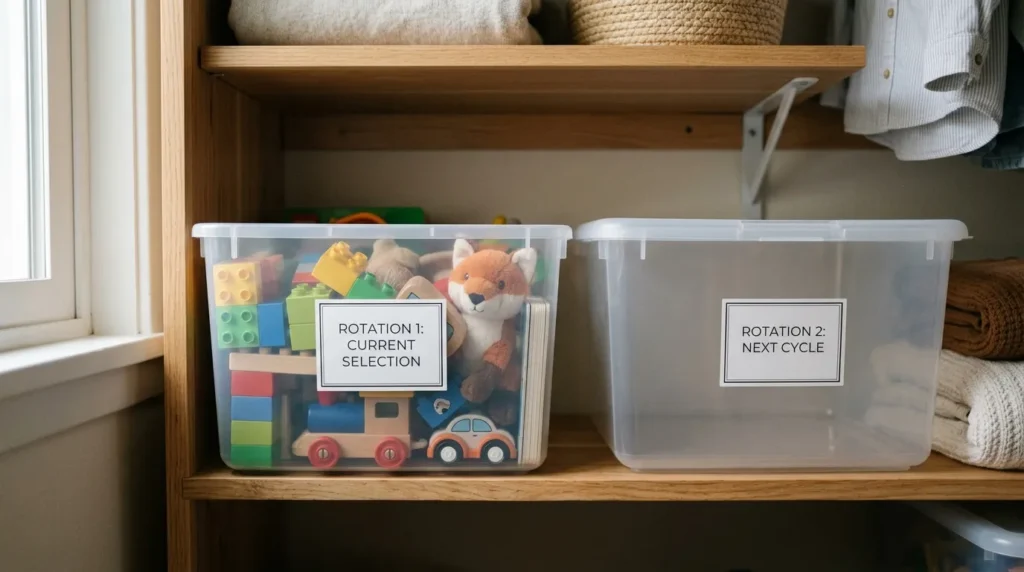
A toy rotation system, where only a portion of the total toy collection is accessible at any given time while the rest is stored away, addresses one of the most common sources of toy clutter: simply having too many toys out and available all at once. I’ve seen this idea genuinely transform playrooms that previously felt overwhelming, since reducing the volume of accessible toys makes cleanup faster and often increases actual engagement with the toys that are out, since children aren’t as overstimulated by choice. A mistake many parents make is assuming more toys out means more play value, when research on child development generally suggests the opposite tends to be true for sustained, engaged play.
How To Style It
Divide your child’s toy collection into two or three rotating groups, storing the inactive groups in bins or a closet out of daily reach. Swap the accessible group every few weeks, or whenever you notice engagement with the current toys starting to wane, reintroducing previously stored toys as if they’re new again. Store the inactive rotation in clearly labeled bins so you can quickly identify and swap groups without having to sort through everything each time. Involve your child in choosing which toys go into the next rotation cycle when they’re old enough, which builds a sense of ownership over the system.
3. Labeled Category Bins
Quick Benefits
- Creates a clear, consistent system children can learn
- Reduces parental involvement needed for daily cleanup
- Works well for both reading and pre-reading children
- Helps identify when a category has too many items
- Simple to maintain and reorganize over time
Why It Works
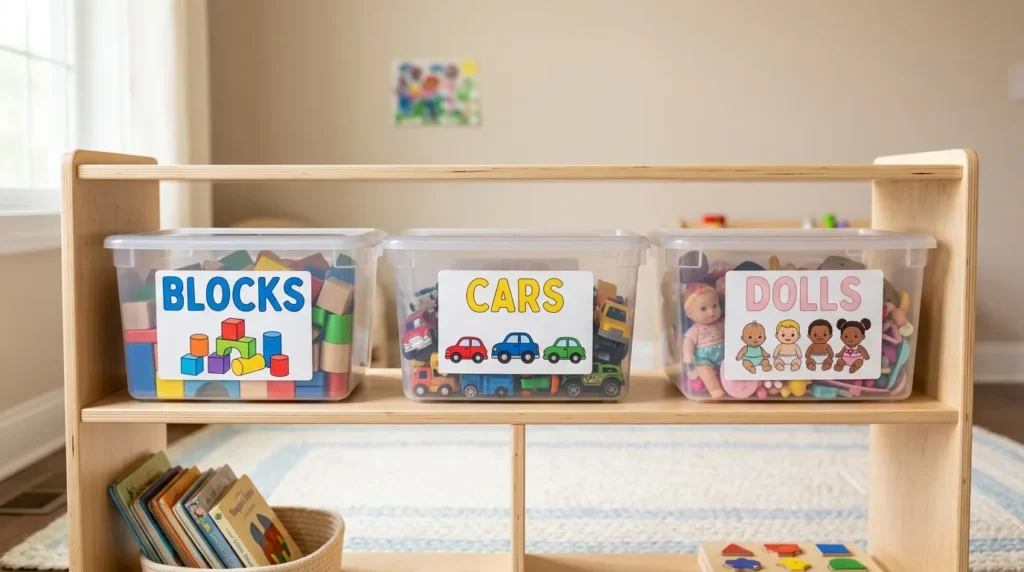
Labeled bins give children a clear, learnable system for where things belong, removing the guesswork that often leads to toys getting shoved into whatever container happens to be nearby during a rushed cleanup. That’s why many designers recommend picture labels in addition to or instead of text labels for children who aren’t yet reading independently, since a simple image of a block or a car communicates the category just as effectively as a word. A mistake many parents make is skipping labels entirely, assuming a child will simply remember where everything goes, which often works initially but breaks down as the number of categories grows.
How To Style It
Use both a picture and a word on each label for younger children, transitioning to text-only labels as reading skills develop, which keeps the system useful across a wider age range over time. Keep category definitions broad enough to be practical, such as “building toys” rather than separate bins for every individual brand or type of block. Position bins at a height appropriate for your child to both reach and see the label clearly without adult help. Reassess and adjust categories periodically as your child’s toy collection and interests shift, since a labeling system designed for a toddler may need updates as that same child grows into new types of play.
4. Vertical Wall Storage for Toys
Quick Benefits
- Frees up floor space for actual play
- Works well in smaller playrooms or shared bedrooms
- Keeps favorite items visible and accessible
- Budget-friendly compared to large storage furniture
- Adds a decorative element to the room
Why It Works
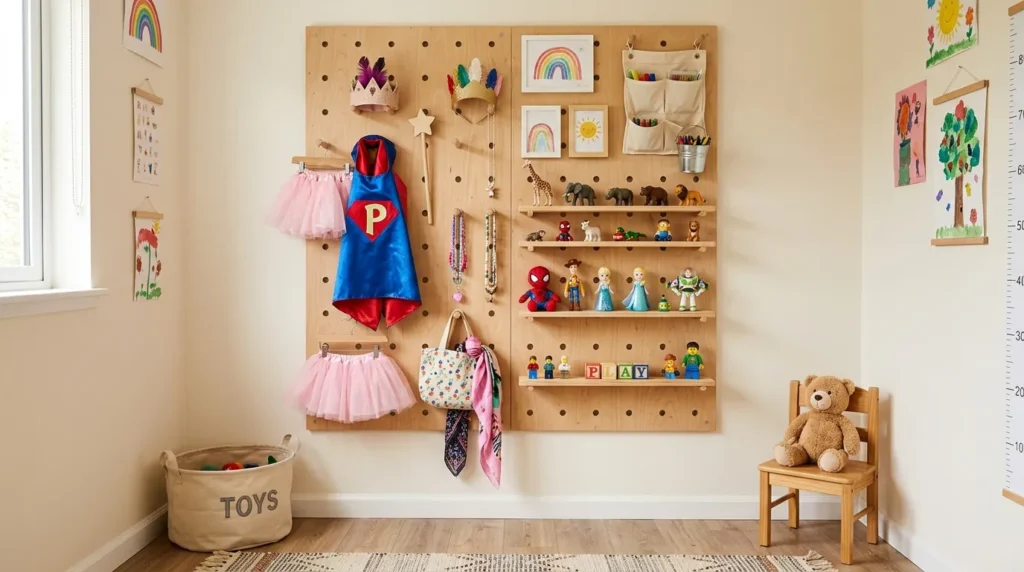
Floor space in a playroom is valuable for actual play, which makes vertical wall storage an especially good option for keeping toys organized without sacrificing the open floor area kids need to build, spread out, and move during play. A mistake many parents make is filling a playroom with large floor-based storage furniture, which can quickly eat up the exact space meant for playing. I’ve noticed that wall-mounted solutions, from pegboards to floating shelves, tend to work particularly well in smaller rooms where every square foot of floor space genuinely matters for how the room functions day to day.
How To Style It
Install floating shelves at a child-appropriate height for frequently used toys, books, or displayed favorites, keeping higher shelves for items that need adult supervision or aren’t in daily rotation. A wall-mounted pegboard with hooks and small shelves offers flexible storage for items like dress-up accessories, art supplies, or small toy vehicles. Wall-mounted fabric pockets or a hanging organizer work well for smaller, lightweight items like stuffed animals or dolls. Keep the overall wall storage simple and not overcrowded, since too many items competing for wall space can start to feel visually overwhelming in a smaller room.
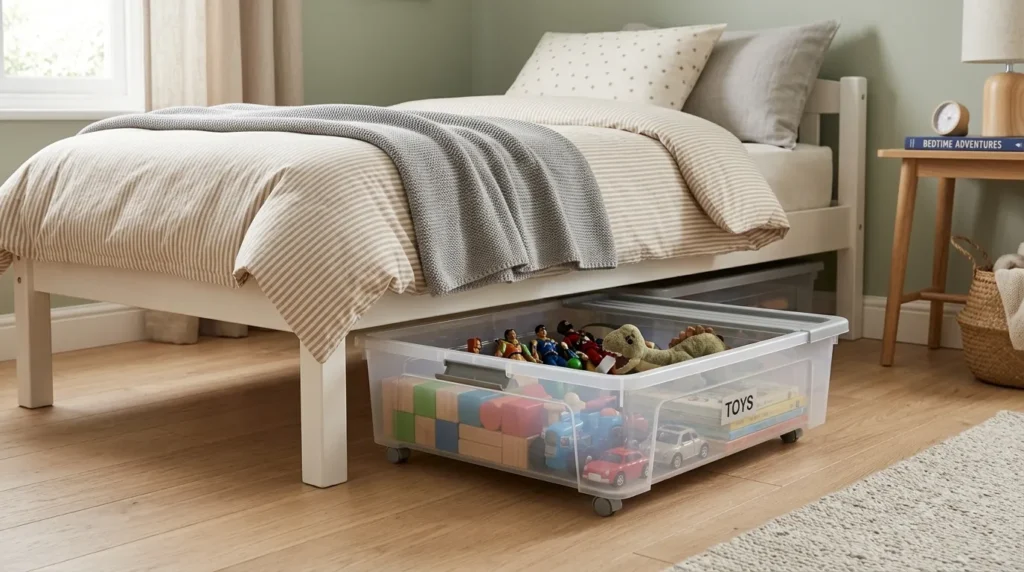
5. Under-Bed Toy Storage
Quick Benefits
- Makes use of an often-overlooked storage area
- Works well in smaller bedrooms with limited floor space
- Keeps less frequently used toys accessible but out of the way
- Available in a range of sizes and price points
- Simple to maintain with minimal ongoing effort
Why It Works
The space beneath a child’s bed frame is frequently unused, making it a practical spot for toy storage, particularly for items that don’t need to be part of the daily, active rotation. In my experience, this works especially well in smaller bedrooms where floor space for a full toy chest or shelving unit simply isn’t available. A mistake many parents make is either ignoring this space entirely or turning it into an unorganized catch-all, which defeats much of the purpose since finding a specific toy later becomes just as difficult as before.
How To Style It
Choose flat, rolling storage bins specifically designed to fit under a standard bed frame, ideally with a lid to keep dust out and handles or wheels for easy access. Reserve this space for toys that are part of a rotation system or used less frequently, rather than daily favorites that would require constant bending down to retrieve. Label bins clearly, either with words or pictures depending on your child’s age, so specific toys can be located without pulling out every container. Encourage older children to manage this storage themselves as part of their regular room tidying routine, since the process is straightforward enough for reasonably independent use.
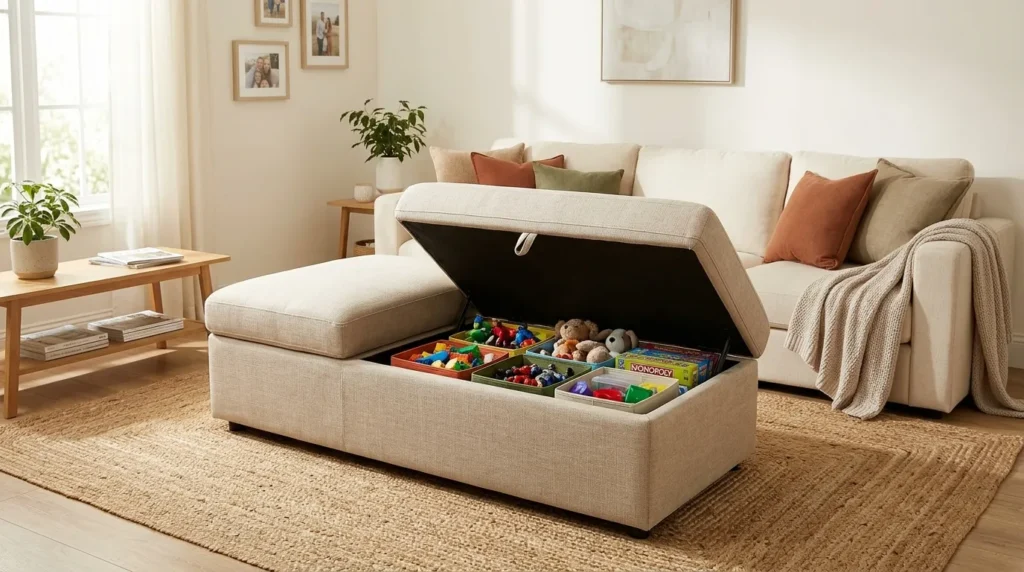
6. Multi-Functional Storage Ottomans
Quick Benefits
- Combines seating and toy storage in one furniture piece
- Saves space compared to separate seating and storage furniture
- Works well in shared living rooms and playrooms alike
- Keeps toys concealed for a tidier overall room look
- Available in a range of styles and price points
Why It Works
A storage ottoman gives a room dual function, providing extra seating for reading time or guests while also concealing a meaningful amount of toy clutter beneath a flat, usable lid. This is particularly useful in shared living spaces, where parents may not want an obvious toy storage system dominating the room’s aesthetic. I’ve seen this idea work well specifically for households where the playroom and living room are the same space, since the ottoman blends in as regular furniture while still serving a genuinely practical storage function for the household’s toys.
How To Style It
Choose a storage ottoman with a sturdy, flat lid that can comfortably support weight for seating, along with an interior large enough to hold a reasonable volume of toys without becoming overstuffed and hard to close. Use the ottoman for bulkier toys or items used less frequently, since retrieving something from beneath a lid takes slightly more effort than an open bin. Choose an upholstery material that’s easy to clean, since ottomans in family rooms tend to see plenty of everyday wear and occasional spills. Position the ottoman within easy reach of the main seating or play area so it gets used consistently rather than becoming an overlooked corner piece.
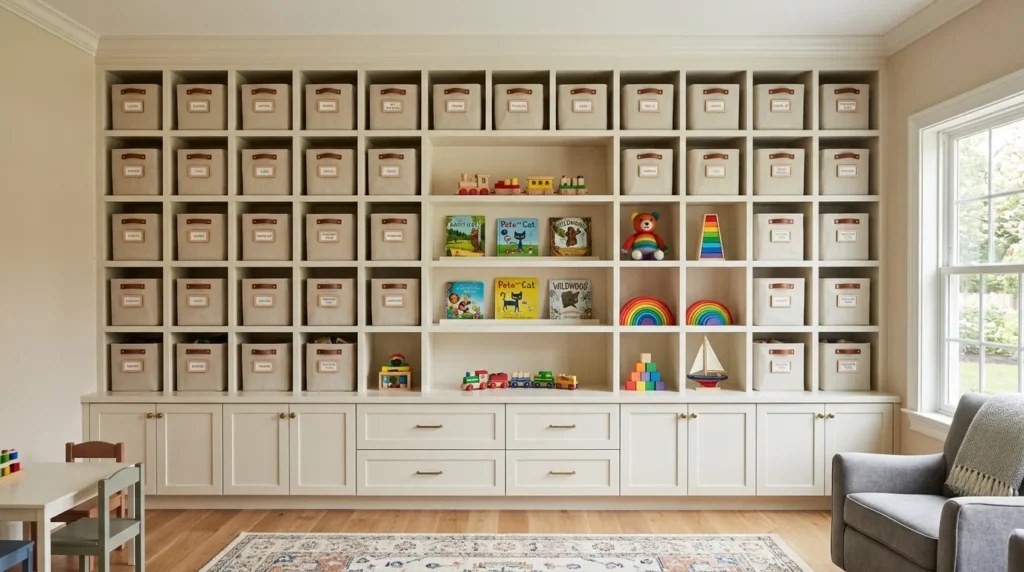
7. Built-In Shelving Units
Quick Benefits
- Provides substantial, customized storage capacity
- Suits a dedicated playroom particularly well
- Can be designed around your specific toy categories
- Long-lasting investment that grows with the family
- Adds a polished, finished look to the room
Why It Works
Built-in shelving offers the kind of substantial, customized storage capacity that freestanding furniture often can’t match, and it’s particularly well-suited to a dedicated playroom where you can design the exact configuration of shelves, cubbies, and bins around your family’s specific toy categories and volume. A mistake many parents make is under-planning storage capacity when setting up a playroom, only to find within a year that the toy collection has outgrown the available space. Built-in shelving, while a bigger upfront investment, tends to accommodate this kind of growth better than smaller, piecemeal storage solutions added over time.
How To Style It
Plan built-in shelving with a mix of open cubbies for bins, closed cabinet storage for less visually tidy items, and a few open display shelves for favorite toys or books. Size cubby openings to fit standard bin dimensions, which makes it easier to source matching bins later without needing custom sizing. Include lower shelving within a child’s reach for daily-use items and reserve higher shelving for less frequently accessed toys or items requiring adult supervision. Work with a professional installer for a fully custom built-in, though semi-custom modular shelving systems can achieve a similar look with a more moderate budget and installation timeline.
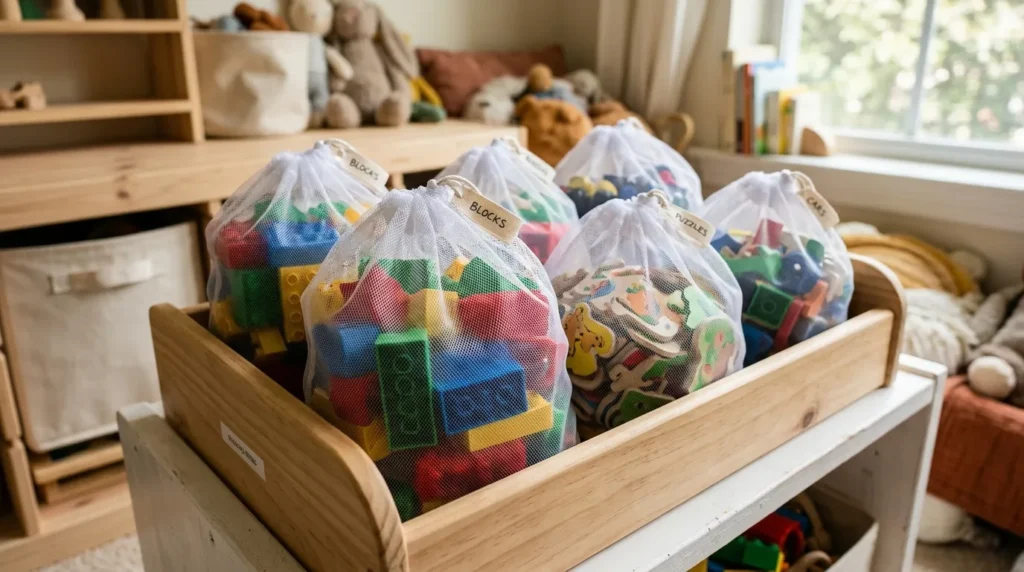
8. Mesh Bag Storage for Small Pieces
Quick Benefits
- Keeps toy sets with many small pieces contained
- Prevents loose parts from scattering throughout the house
- Allows visibility of contents without opening the bag
- Inexpensive and widely available
- Reduces frustration from missing or lost pieces
Why It Works
Toys with many small pieces — building sets, puzzles, games with multiple components — are notoriously prone to pieces scattering and getting lost, and mesh storage bags solve this by keeping an entire set contained in one washable, see-through bag. I’ve noticed that this specific solution addresses a frustration that bins alone often can’t fully solve, since a bin can still allow small pieces from different sets to mix together over time. A mistake many parents make is storing multi-piece toy sets loosely in a general bin, which almost guarantees some pieces will eventually go missing or get mixed with unrelated toys.
How To Style It
Use a mesh bag sized appropriately for each specific toy set, whether that’s a small pouch for a deck of cards or a larger bag for a building set with dozens of pieces. Choose bags with a secure drawstring or zipper closure to prevent pieces from spilling out during storage or transport. Store multiple mesh bags together in a larger bin or on a shelf, using the see-through mesh to quickly identify which bag holds which set without needing to open each one individually. Encourage children to return all pieces to the correct bag immediately after finishing play, since this habit is much easier to maintain consistently than trying to sort mixed pieces later.
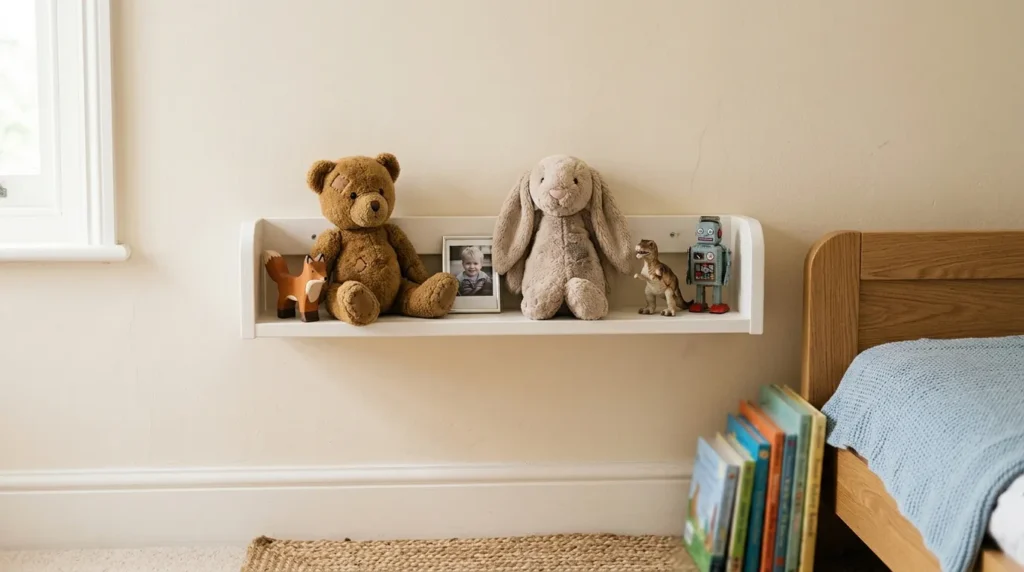
9. Display Shelving for Favorite Toys
Quick Benefits
- Turns cherished toys into an intentional decor element
- Encourages care and pride in favorite possessions
- Frees up bin or closet space for everyday toys
- Creates a personal, meaningful focal point in the room
- Works well in both bedrooms and shared playrooms
Why It Works
Not every toy needs to be stored the same way, and a small display shelf specifically for a child’s favorite or most cherished items — a special stuffed animal, a collection of figurines, a handmade craft project — treats these items with a bit more intentionality than tossing them into a general bin. That’s why many designers recommend a dedicated display area specifically for these standout pieces, since it also tends to encourage children to take a bit more care with items they clearly value and see displayed prominently. If you’re anything like me, you’ve noticed how kids often develop genuine pride in a small curated collection displayed this way, rather than treating those same items as just part of a larger pile.
How To Style It
Choose a small shelf or dedicated shelving section at a height where your child can both see and access the displayed items, positioning it somewhere prominent in their room or the playroom. Rotate items on the display periodically based on current favorites, moving pieces that have fallen out of favor back into general storage to make room for new favorites. Keep the display relatively curated rather than crowded, since a smaller, well-chosen collection tends to feel more special than an overcrowded shelf. Involve your child in choosing what goes on display, since their sense of what’s currently special may differ from what a parent would initially assume.
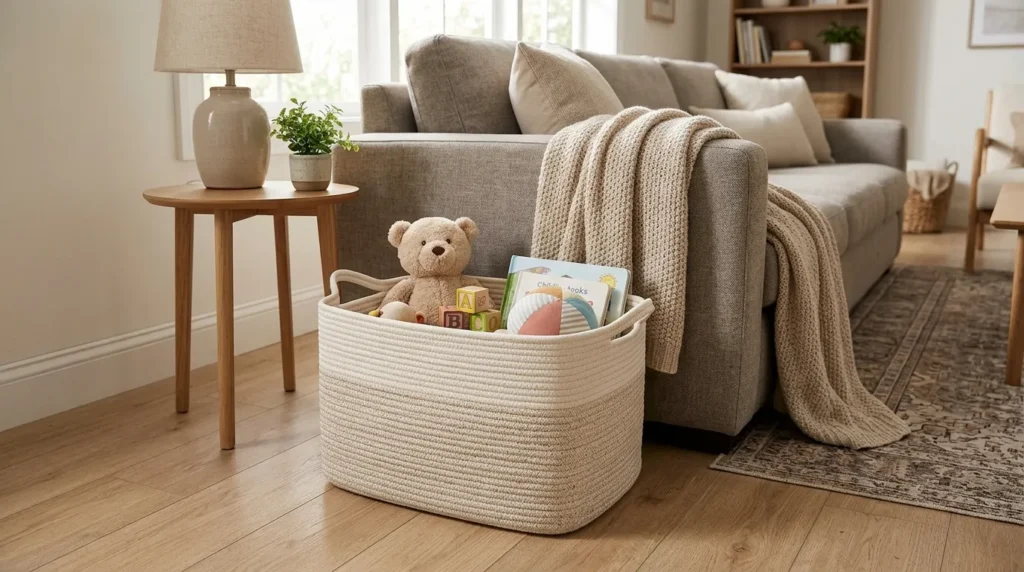
10. Portable Toy Storage Baskets
Quick Benefits
- Provides flexible storage for shared living spaces
- Easy to move between rooms as play needs change
- Simple to tuck away when guests visit
- Available at a wide range of price points
- Works well for households without a dedicated playroom
Why It Works
For households without a dedicated playroom, where toys need to coexist with the family’s shared living space, portable baskets offer a flexible storage solution that can be filled during play and quickly relocated or tucked away when the room needs to look tidy for guests or evening downtime. I’ve seen this idea work particularly well for smaller apartments or open-concept homes, since the baskets themselves function as a piece of decor while still serving a genuinely practical storage need. A mistake many parents make is trying to force a dedicated playroom storage system into a shared space that simply isn’t structured that way, when a more flexible, portable solution often suits the actual living pattern better.
How To Style It
Choose baskets in a material and finish that complements your living room’s existing decor, such as a woven natural fiber basket that blends in visually as a decorative piece even when not overtly signaling “toy storage.” Keep one or two portable baskets specifically for the toys most likely to be played with in the shared space, while storing the bulk of the toy collection elsewhere in a bedroom or closet. Move baskets to a bedroom or closet at the end of the day or before guests arrive, using their portability as a genuine feature rather than working against the system. Choose a size that’s manageable for your child to carry and empty independently, encouraging their participation in daily cleanup.
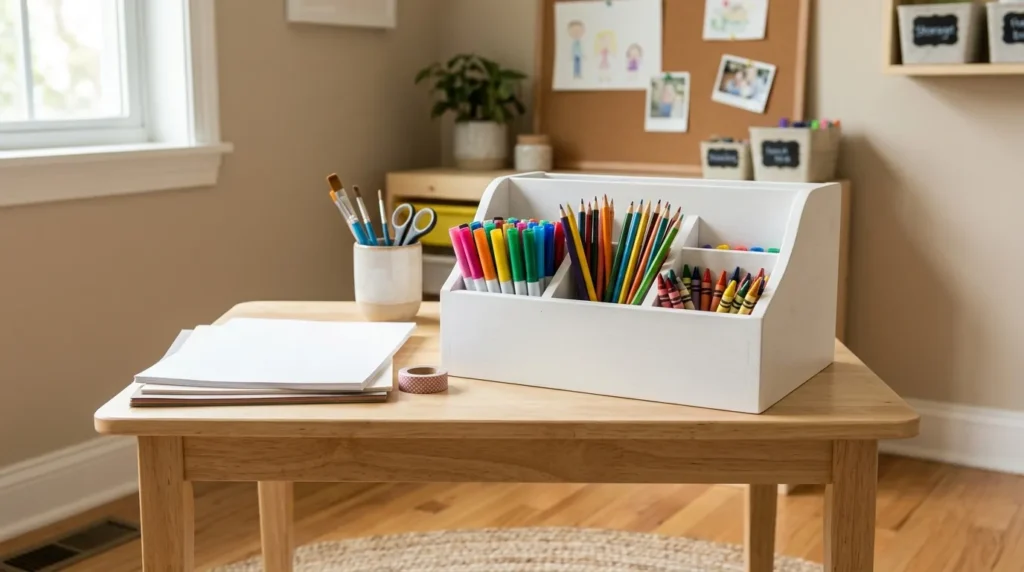
11. Art Supply Organization Stations
Quick Benefits
- Keeps creative materials contained and easy to access
- Reduces mess from markers, crayons, and paper scattering
- Encourages independent creative play
- Works well combined with a dedicated craft table
- Simple to maintain with consistent daily use
Why It Works
Art supplies present a somewhat different organizing challenge than typical toys, since they involve many small, similarly shaped items — markers, crayons, colored pencils — that benefit from a more specific organizational approach than a general toy bin. A dedicated art supply station, with clear sections for different supply types, makes it easier for children to find what they need and, just as importantly, to put everything back correctly when they’re finished. A mistake many parents make is storing art supplies mixed in with general toys, which tends to result in supplies scattered throughout the toy storage system rather than staying together as a complete, functional set.
How To Style It
Use a caddy or divided organizer with separate compartments for markers, crayons, colored pencils, and other supply types, positioned near a dedicated craft table or art area if space allows. Store paper and coloring books in a flat, easily accessible spot separate from the writing and coloring tools themselves. Include a designated spot for finished artwork, whether a simple folder, a clip display on the wall, or a rotating gallery space, so completed projects have a clear next step rather than accumulating in a pile. Restock and check supplies periodically, discarding dried-out markers or broken crayons so the station stays genuinely functional rather than cluttered with unusable items.
Frequently Asked Questions
What’s the best toy storage solution for a small bedroom?
Under-bed storage bins and vertical wall shelving are both particularly effective in smaller bedrooms, since neither requires additional floor space that a young child needs for active play. A toy rotation system also helps significantly in a small room, since it reduces the total volume of toys that need to be stored and displayed at any given time. Combining a couple of these space-conscious solutions usually works better than relying on a single large storage furniture piece.
How do I get my kids to actually put their toys away?
Choose open, easy-access bins for daily favorites, since removing extra steps like lids or drawers makes cleanup considerably more manageable for young children. Clear labels, whether picture-based or text, help children learn a consistent system for where specific categories belong. Involving children in setting up the system, including choosing categories and labels, tends to improve buy-in and consistency significantly.
Should I organize toys by type or by child?
For households with multiple children, organizing by type generally works better for shared toys, while personal or age-specific items may warrant separate storage per child. A hybrid approach, with shared categories for communal toys and a small personal shelf or bin for each child’s individual favorites, tends to work well for most families. The right balance ultimately depends on how much toy overlap exists between your specific children’s ages and interests.
What should I do with toys my child has outgrown?
A toy rotation system provides a natural checkpoint for identifying outgrown toys, since items that don’t get chosen or engaged with during a rotation cycle are good candidates for donation or storage elsewhere. Consider donating gently used toys to local charities, family members with younger children, or community organizations rather than simply discarding them. Keeping a small, sentimental selection of especially meaningful toys while donating the rest is a reasonable middle ground for many families.
How many toys should be accessible at once?
There’s no universal number, but many child development experts and organizers suggest that a smaller, curated selection tends to support more engaged, sustained play than having an entire toy collection out at once. A rotation system, where only a portion of the total collection is accessible at any given time, is a practical way to manage this without needing to permanently reduce the overall toy collection size. Paying attention to how your specific child engages with a smaller versus larger selection can help you find the right balance for your household.
What toy storage solution works best for toy sets with many small pieces?
Mesh storage bags are specifically well-suited to sets with numerous small pieces, since they contain an entire set together in one washable, see-through container. This helps prevent pieces from mixing with unrelated toys or scattering loose within a general bin. Encouraging immediate cleanup of these sets into their designated bag, right after play finishes, helps prevent pieces from going missing over time.
Conclusion
Effective toy storage isn’t about finding the single most beautiful system — it’s about matching your storage approach to how your kids actually play and how much daily maintenance the system genuinely requires. From open bins and toy rotation to a dedicated art supply station and portable baskets for shared spaces, each of these ideas addresses a specific practical need while still keeping the room feeling tidy and considered.
If you’re setting up or refreshing your own toy storage system, start with whichever idea solves your household’s most persistent daily frustration, whether that’s an overwhelming playroom or scattered small pieces from favorite toy sets. These systems tend to improve with small adjustments over time, and involving your kids along the way helps ensure the system actually gets used, not just admired.
Start with one or two ideas and gradually build a space that reflects your style and supports everyday comfort.
Related Articles
- 10 Home Organization Ideas
- 11 Home Office Ideas for Women
- Small Living Room Ideas with Budget-Friendly Decor
- Neutral Home Styling Tips
- Renter-Friendly Storage Hacks