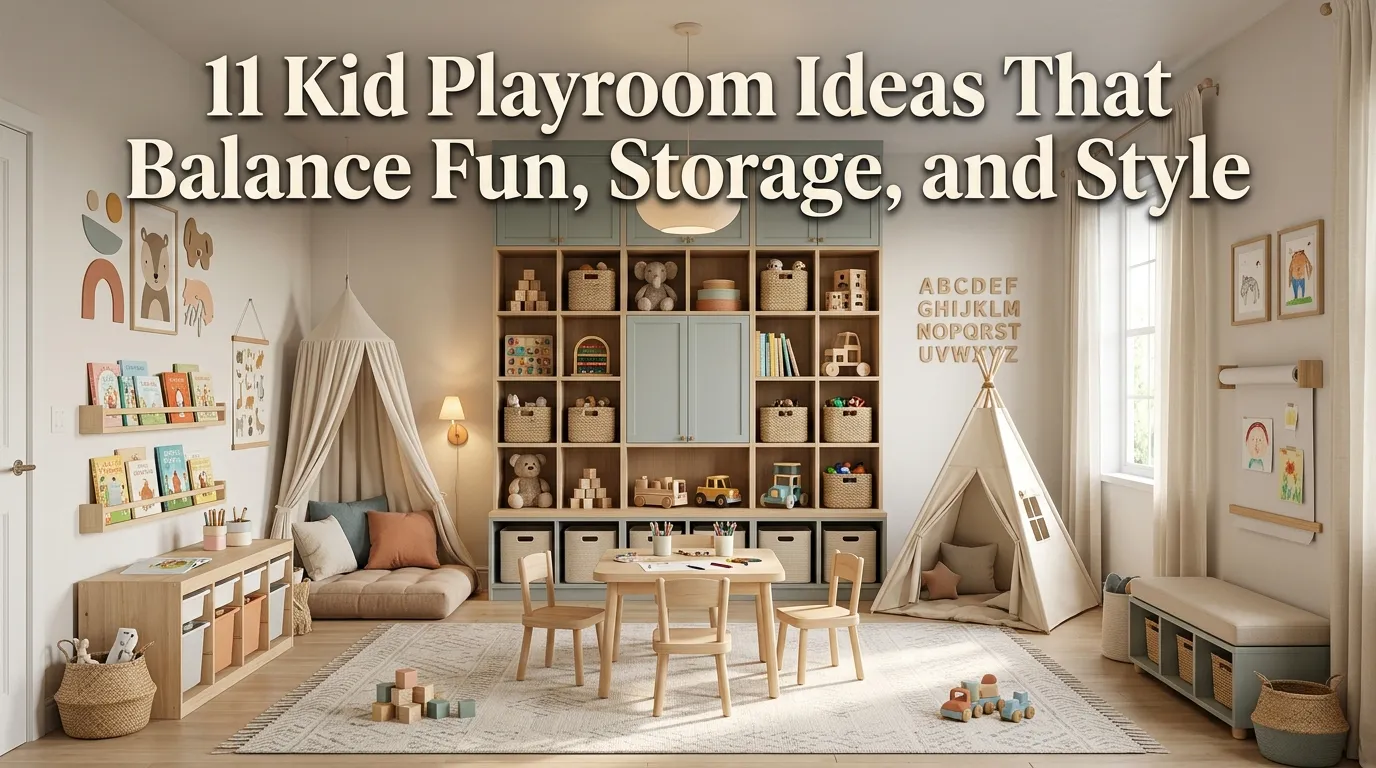
11 Kid Playroom Ideas That Balance Fun, Storage, and Style
Between scattered building bricks, overflowing bins of dress-up clothes, and half-finished art projects, a dedicated playroom can quickly transform from an inspiring play hub into the most chaotic room in your home. Finding the sweet spot between a dynamic, kid-friendly playground and an organized, aesthetic space that doesn’t clash with your overall home decor is one of the most common design challenges modern parents face. When playrooms lack intuitive organization or thoughtful flow, kids get overwhelmed by the visual noise and clutter, which often leads to shorter attention spans and messy cleanup battles.
Creating an engaging, functional playroom isn’t about buying expensive specialized furniture or filling every square inch with plastic organizers. In my experience, the most enduring playrooms are designed with flexible zones, accessible child-height storage, durable wipeable materials, and open floor space that invites open-ended, imaginative play. When you build a room that adapts as your children grow—transitioning effortlessly from toddler sensory play to grade-school homework and board games—you cultivate an environment where kids can play independently while cleanup remains quick and painless.
Whether you’re converting an unused formal dining room, finishing a basement, or refreshing a spare bedroom, these 11 kid playroom ideas provide practical, stylish blueprints for every footprint and budget. From smart built-in storage benches and dedicated craft corners to indoor sensory climbing features and cozy reading hideaways, each design concept is built to maximize everyday functionality without sacrificing beautiful design.
Table of Contents
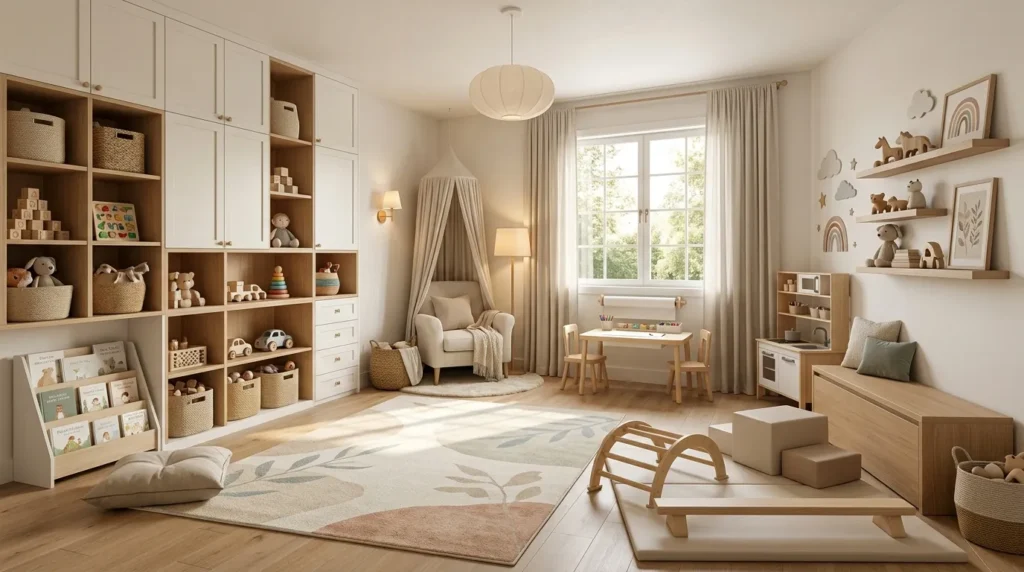
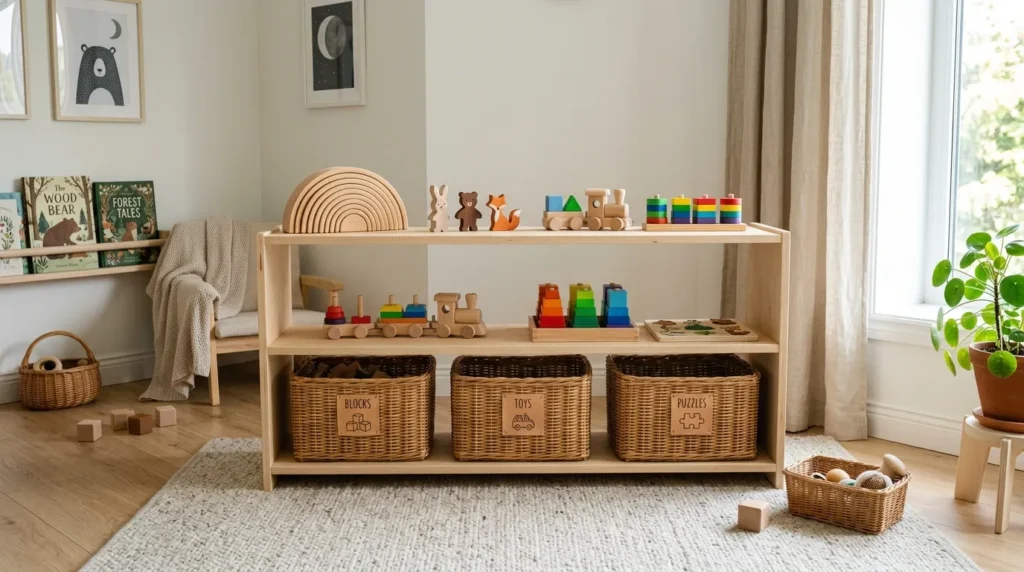
- Low Open ShelvingEncourage independent toy rotation and effortless cleanup using accessible, Montessori-inspired cube storage and labeled bins.
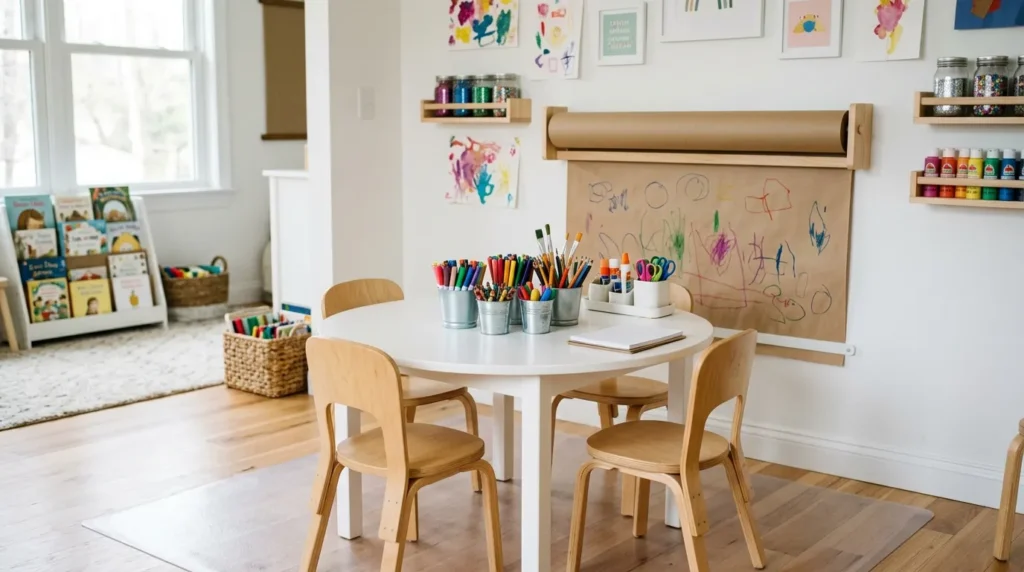
- Dedicated Art CornerFoster daily creativity with a wipeable craft table, wall-mounted butcher paper rolls, and organized art supply caddies.
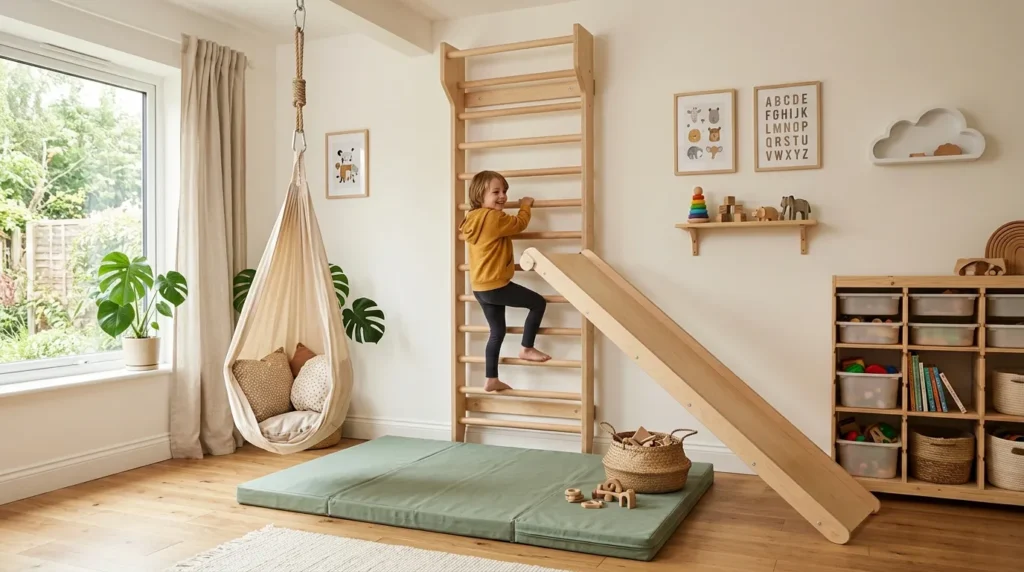
- Indoor Movement ZoneChannel boundless energy safely using wall-mounted Swedish ladders, indoor soft swings, and durable modular play mats.
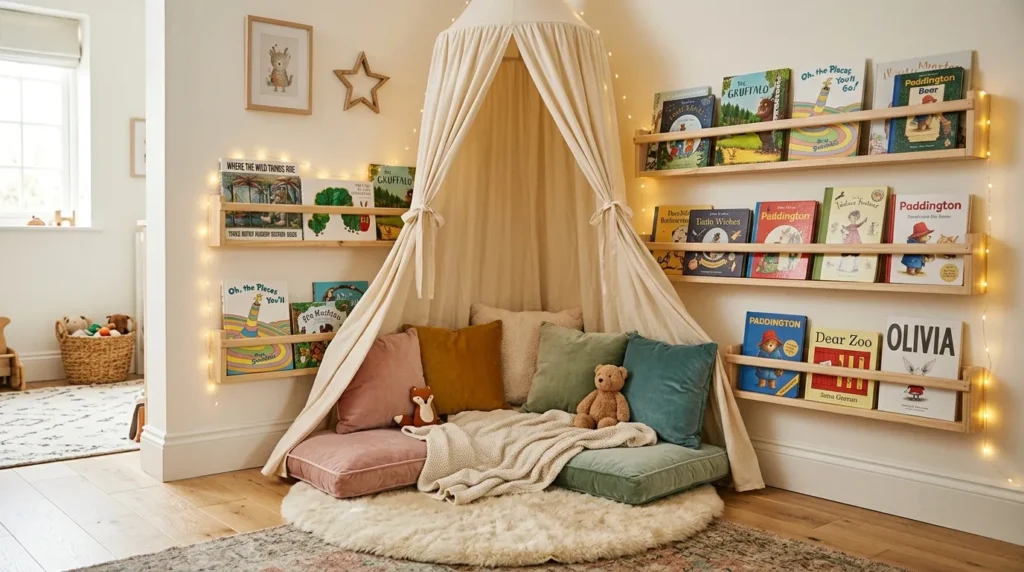
- Cozy Book HideawayCarve out a quiet decompression nook with floor cushions, canopy drapery, and forward-facing display book ledges.
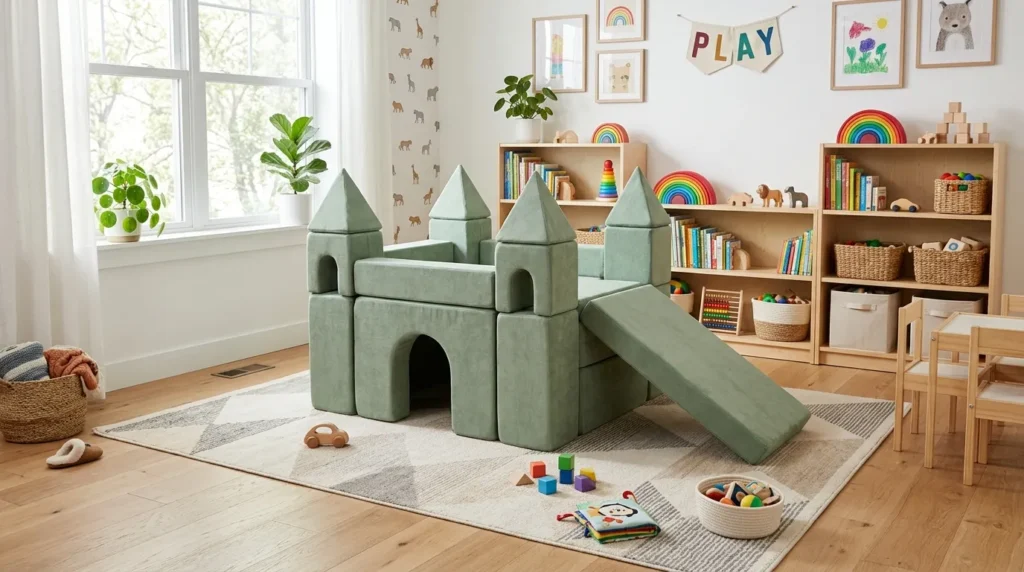
- Modular Play CouchMaximize flexible seating, fort building, and tumbling with versatile, washable foam modular cushions.
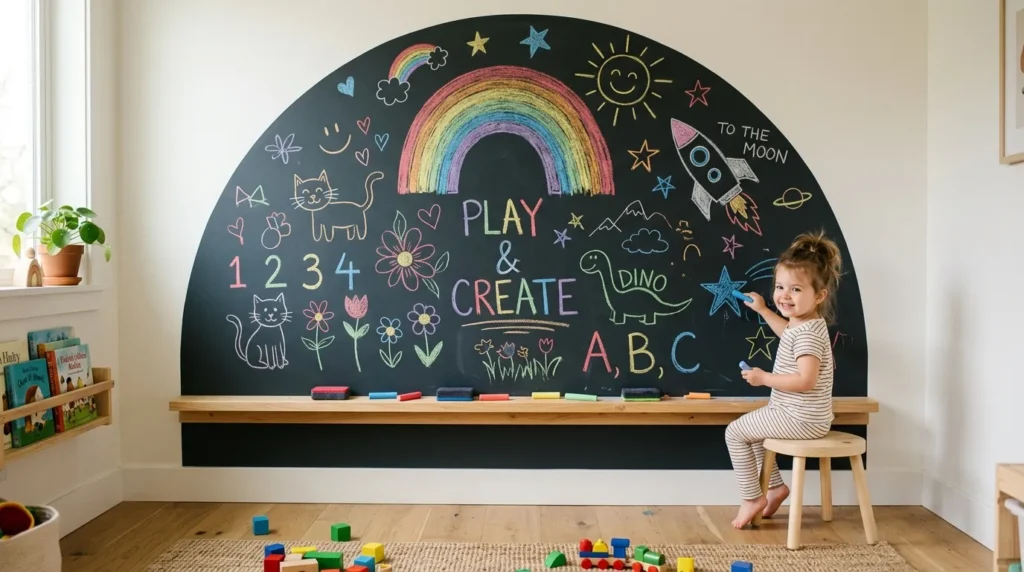
- Chalkboard Accent WallGive little artists an expansive canvas by coating a feature wall in magnetic chalkboard or erasable whiteboard paint.
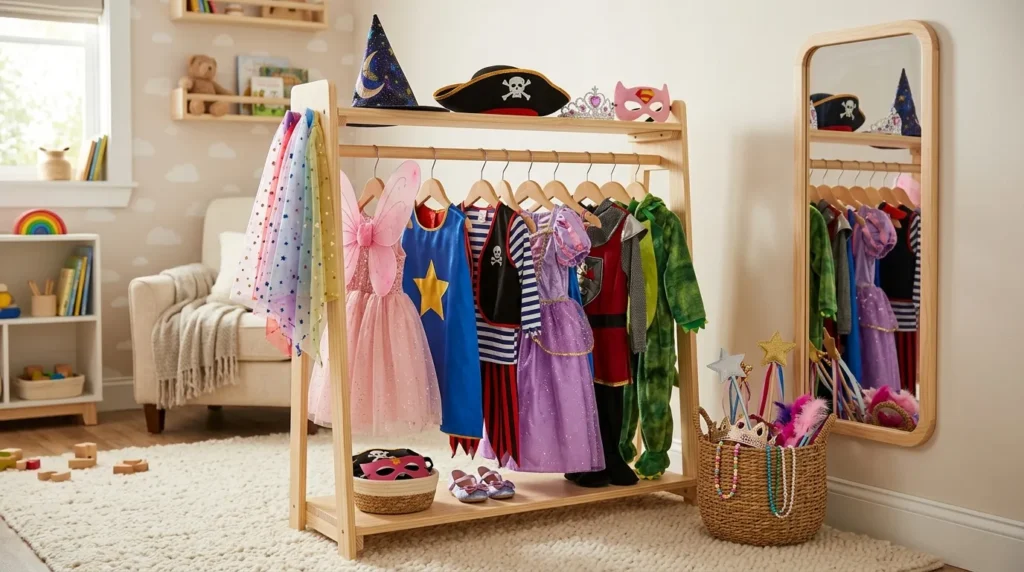
- Dress-Up Wardrobe StationOrganize imaginative costumes, hats, and accessories using open child-height clothing racks and acrylic vanity mirrors.
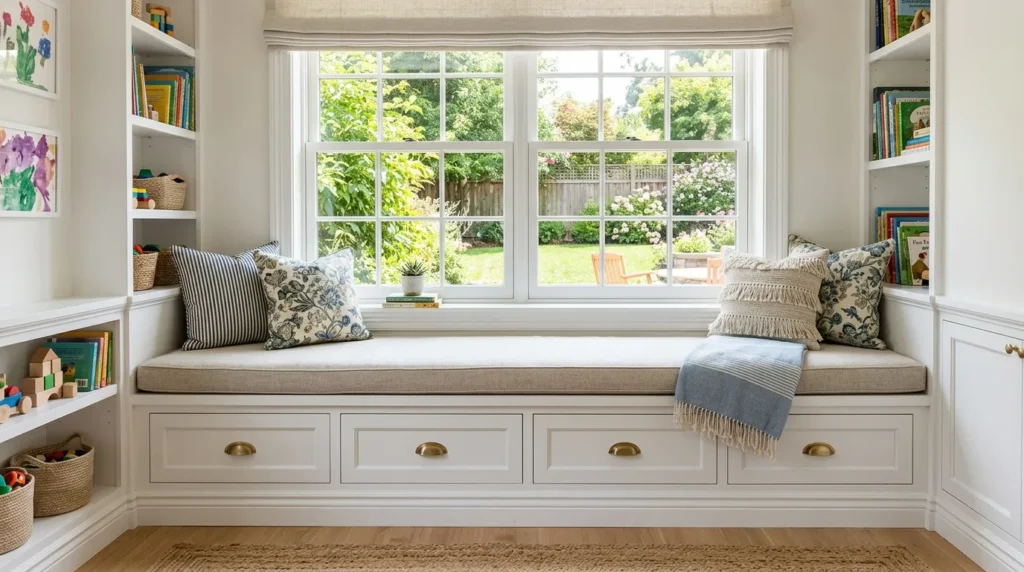
- Built-In Window BenchesAdd permanent architectural charm while hiding bulky toys inside deep under-seat storage drawers.
- Neutral Foundation PaletteKeep the visual baseline calm with warm, airy neutrals that allow colorful toys, books, and artwork to shine.
- Sensory Table StationSupport fine-motor development with dual-basin wooden sensory tables designed for kinetic sand, water, and loose parts.
- Creative Gallery WallCelebrate your child’s masterpieces with hinged front-opening frames and cable art-hanging display wire.
1. Low Open Shelving
Quick Benefits:
- Empowers toddlers to select and put away toys independently
- Reduces visual clutter and sensory overwhelm
- Facilitates seamless weekly toy rotation routines
- Keeps heavy bins safely grounded at floor level
- Adapts easily to hold books, puzzles, and bins of various sizes
Why It Works
Towering storage cabinets and deep toy chests often become black holes where small toys get buried, lost, and forgotten. Low open shelving—a staple of Montessori design—places a curated selection of toys directly at your child’s eye level. In my experience, when children can clearly see a manageable number of activities laid out with intention, their focus deepens and cleanup becomes an intuitive, self-directed habit rather than a daily chore.
How To Style It
Choose a sturdy, low-profile two-row cube organizer or solid birch shelving unit positioned along the main wall. Anchor the unit securely to wall studs for safety. Place woven rattan baskets or canvas bins on the bottom row for loose items like wooden train tracks or blocks, attaching visual picture labels for pre-readers. Use the top surface to display 3 to 4 open wooden trays featuring curated puzzles, matching games, or musical instruments.
2. Dedicated Art Corner
Quick Benefits:
- Keeps messy painting and crafting contained in one zone
- Encourages spontaneous daily creative expression
- Utilizes easy-to-clean, scrubbable materials
- Keeps sharp scissors and specialty supplies organized
- Protects surrounding floors from permanent stains
Why It Works
When art supplies are tucked away in a high hallway closet, kids rarely use them without extensive adult setup. Establishing a dedicated, permanent art station makes creative exploration a natural part of everyday play. One thing that works especially well is selecting washable, non-porous furniture surfaces that eliminate the stress of accidental stray marker strokes or spilled paint pots.
How To Style It
Place an easy-to-wipe solid wood or laminate play table paired with sturdy bentwood chairs atop a washable vinyl splash mat. Mount a metal kraft paper roll dispenser horizontally on the wall above the table, feeding paper down beneath a magnetic tear strip. Install a pegboard or a row of hanging metal cups on a rail to organize chunky crayons, washable markers, safety scissors, and glue sticks within easy reach.
3. Indoor Movement Zone
Quick Benefits:
- Channels gross motor energy safely during bad weather
- Builds core physical strength, balance, and spatial awareness
- Reduces roughhousing on living room furniture
- Keeps high-energy activities contained in a padded area
- Provides endless physical challenges for toddlers and grade-schoolers
Why It Works
Kids need frequent opportunities to climb, hang, and jump to develop gross motor skills and regulate their sensory systems. On rainy or freezing days when outdoor parks aren’t an option, an indoor active zone keeps cabin fever at bay. Integrating safety-tested climbing features directly onto playroom walls burns physical energy while keeping the center floor clear for other activities.
How To Style It
Securely bolt a wooden Swedish ladder (stall bars) with an attachable slide or pull-up bar directly into wall studs. Mount a ceiling-anchored sensory swing or fabric hammock chair rated for dynamic weight. Cover the landing zone directly underneath with high-density foldable tumble mats or interlocking non-toxic EVA foam tiles in neutral earth tones to protect against slips and falls.
4. Cozy Book Hideaway
Quick Benefits:
- Creates a quiet space for sensory decompression and rest
- Promotes independent reading habits from an early age
- Displays colorful cover art as functional room decor
- Fits neatly into awkward corners or under-stair spaces
- Encourages relaxing transition periods before naptime
Why It Works
Playrooms can easily become overstimulating environments filled with noise, movement, and bright stimulation. Carving out a quiet, enclosed micro-nook provides an essential retreat where kids can slow down, recharge, or get lost in a picture book. A soft, dimly lit corner signals relaxation, making it the perfect restorative decompression zone between active play sessions.
How To Style It
Drape an ivory cotton canvas bed canopy from the ceiling in an unused corner of the room. Layer the floor beneath with a plush circular sheepskin rug and an oversized velvet floor cushion or beanbag. Mount three to four shallow wooden book ledges along the adjacent wall, arranging children’s books with covers facing outward so little readers can quickly spot their favorite stories.
5. Modular Play Couch
Quick Benefits:
- Serves as open-ended building blocks for forts, slides, and obstacle courses
- Doubts as functional, comfortable seating for parents and kids
- Features durable, machine-washable fabric covers
- Replaces bulky, rigid traditional armchairs
- Lightweight enough for kids to reconfigure independently
Why It Works
Traditional children’s furniture is often rigid, static, and single-purpose. Modular foam play couches (like the Nugget or modular equivalents) revolutionize playroom design by serving as both comfortable loungers and open-ended building tools. Kids can construct castles, pirate ships, slides, and reading caves, exercising spatial reasoning and creativity without dismantling your living room couch cushions.
How To Style It
Position a modular foam couch against a long wall with ample open floor clearance in front of it. Choose a versatile, stain-resistant microsuede cover in a sophisticated hue like sage green, terracotta, or charcoal slate that complements your broader home decor. Add a couple of patterned cotton throw pillows that can be tossed aside during active fort-building sessions.
6. Chalkboard Accent Wall
Quick Benefits:
- Provides a huge vertical canvas that supports gross motor arm movement
- Eliminates the fear of accidental wall coloring
- Functions as a dynamic backdrop for pretend school or grocery play
- Inexpensive wall treatment that delivers massive creative payoff
- Easy to wipe down and refresh with a damp microfiber cloth
Why It Works
Toddlers and young kids are naturally drawn to drawing on vertical surfaces, which strengthens shoulder stability, wrist extension, and pencil grip. Instead of constantly redirecting kids away from walls, coating a dedicated section in high-quality chalkboard paint designates an approved, oversized canvas for drawing, practicing handwriting, and imaginative roleplay.
How To Style It
Tape off a large rectangular zone or a whimsical arched silhouette on an open wall and apply three coats of zero-VOC chalkboard paint or magnetic chalkboard primer. Frame the perimeter with a slim natural wood trim casing to catch chalk dust. Mount a small wall shelf or magnetic wooden caddy at child height to hold dustless chalk, chalk markers, and felt erasers.
7. Dress-Up Wardrobe Station
Quick Benefits:
- Prevents delicate costumes and capes from tangling in bins
- Fosters imaginative roleplay and self-expression
- Teaches kids how to hang clothes and manage accessories
- Keeps shoes, wands, and hats organized in one spot
- Adds whimsical, colorful visual interest to the room
Why It Works
Costumes and dramatic play gear are staples of early childhood imagination, but shoving them into deep storage tubs leads to crumpled outfits and frustrated kids dumping everything out just to find one cape. An open, kid-sized dress-up wardrobe puts pretend play on full display, encouraging children to independently dress up, style accessories, and return items to their hangers.
How To Style It
Incorporate a freestanding child-height clothing rail made from light pine or white-painted metal. Use uniform mini wooden hangers to display 8 to 10 favorite costumes, doctor coats, and superhero capes. Fasten an unbreakable, shatterproof acrylic full-length mirror safely to the wall beside the rack. Place a low basket underneath for tiaras, wands, hats, and play shoes.
8. Built-In Window Benches
Quick Benefits:
- Maximizes seating without consuming valuable central floor space
- Conceals large, awkwardly shaped toys inside deep pull-out drawers
- Adds upscale, permanent architectural character to the home
- Creates a sunlit perch for reading, puzzles, and daydreaming
- Transitions seamlessly into a refined teen seating area later
Why It Works
When designing a playroom, preserving open floor area for movement and expansive toy setups is critical. Built-in cabinetry beneath a window takes advantage of underutilized perimeter space while providing massive hidden storage capacity. A deep bench allows you to stash bulky board games, train tracks, or plush animals out of sight, instantly restoring visual calm to the room at the end of the day.
How To Style It
Install custom or semi-custom bench cabinetry beneath a window, opting for deep pull-out drawers on soft-close glides rather than top-lifting lids to avoid pinched fingers. Top the bench with a durable, foam cushion upholstered in a stain-resistant performance fabric like Crypton or Sunbrella in a warm neutral tone. Layer a few textured, patterned pillows in the corners to create an inviting window seat.
9. Neutral Foundation Palette
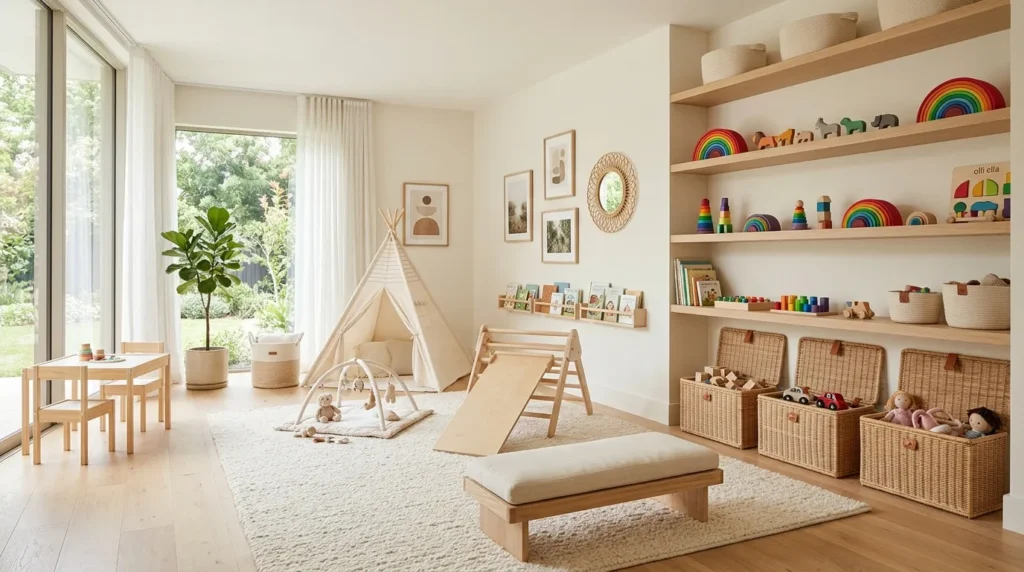
Quick Benefits:
- Prevents the sensory overstimulation caused by loud, primary wall colors
- Allows colorful toys and picture books to serve as natural accents
- Blends the playroom seamlessly with adjacent living spaces
- Eliminates the need to repaint when kids outgrow toddler themes
- Creates an airy, bright, and spacious backdrop for photography
Why It Works
Many parents assume playrooms require bright primary colors on every wall. However, because children’s toys, games, and books are inherently colorful, vibrant walls often create visual chaos and sensory fatigue. A neutral architectural base—featuring warm whites, soft greiges, pale taupes, or gentle sage tones—acts as a calming canvas that keeps the room feeling cohesive and peaceful.
How To Style It
Coat the walls in a scrubbable satin or eggshell finish using a soft, light-reflective neutral (such as Sherwin-Williams Alabaster or Benjamin Moore Pale Oak). Anchor the floor with a large, low-pile neutral wool rug featuring a subtle geometric or grid pattern. Introduce warmth and contrast through natural blonde wood furniture, woven seagrass storage baskets, and matte black or brushed brass hardware.
10. Sensory Table Station
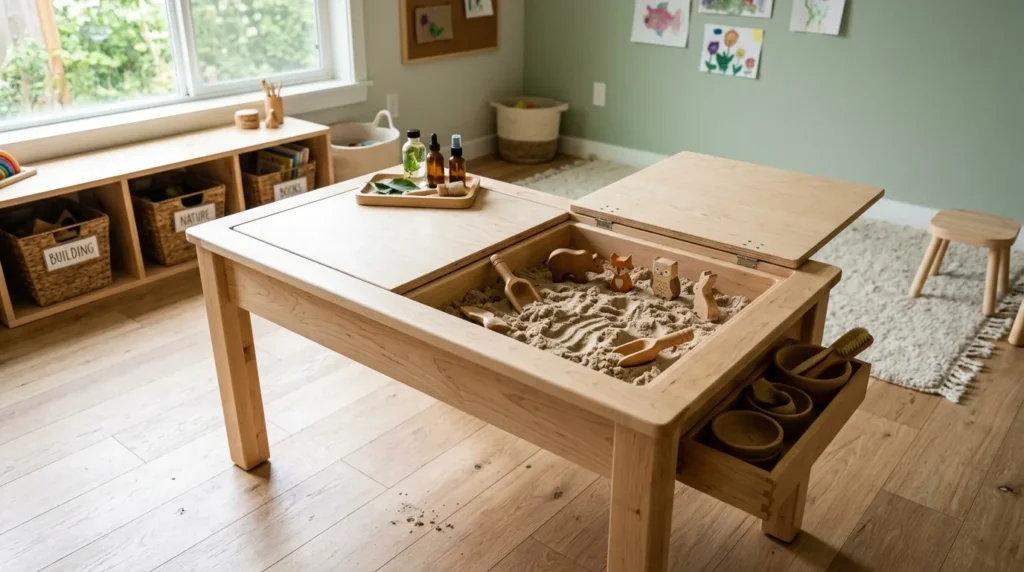
Quick Benefits:
- Supports tactile exploration, problem-solving, and fine motor skills
- Deep dual basins keep sensory fillers contained
- Removable tabletop lids instantly convert bins into a flat desk
- Easily customizable for seasonal themes and loose-parts play
- Keeps messy dry fillers off the main carpet
Why It Works
Sensory play is essential for cognitive development, self-regulation, and fine motor control in early childhood. A dedicated wooden sensory table with drop-in plastic bins allows you to rotate sensory bases—such as kinetic sand, dyed rice, dried beans, water, or water beads—with minimal prep. The raised lip and contained basins help kids keep messy materials contained within a designated play surface.
How To Style It
Invest in a solid wood sensory table with double removable lid panels (such as the classic IKEA Flisat or a solid birch alternative) placed on hard flooring or a wipeable mat. Equip the bins with wooden scoops, tongs, measuring cups, and silicone bowls. When sensory play is done, pop the tabletop lids back on to instantly transform the station into a smooth surface for coloring or building blocks.
11. Creative Gallery Wall
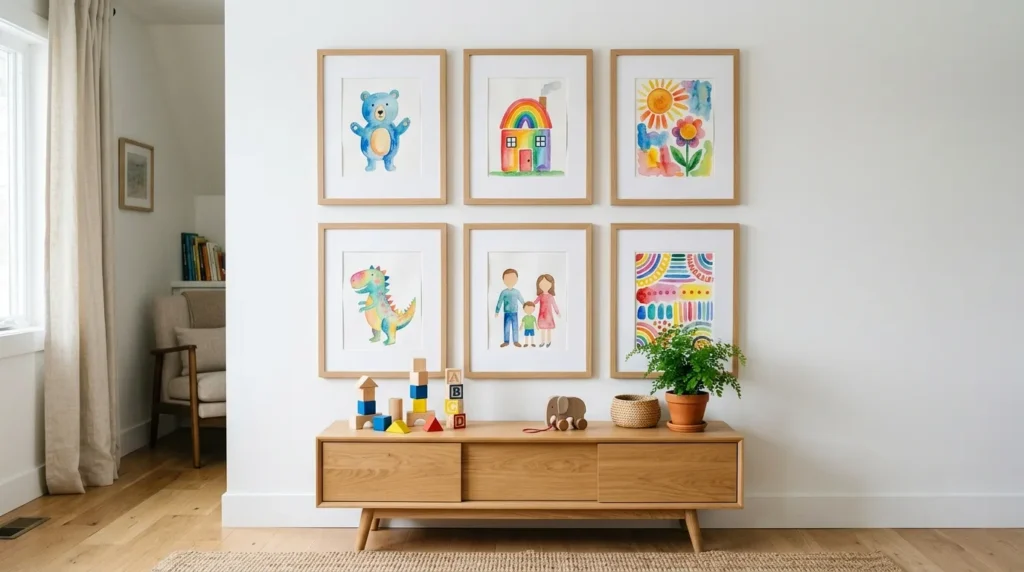
Quick Benefits:
- Boosts your child’s confidence and pride in their creativity
- Solves the clutter problem of loose paper artwork piling up on counters
- Features easy front-loading access to rotate art weekly
- Creates a rotating, modern, and personalized focal wall
- Inexpensive decor solution that changes dynamically over time
Why It Works
Kids generate a steady stream of drawings, paintings, and school projects, and sticking them haphazardly to the refrigerator with magnets often looks cluttered. A structured gallery wall gives children’s artwork the spotlight it deserves, validating their creative efforts while maintaining a clean, intentional interior aesthetic that keeps paper clutter neatly managed.
How To Style It
Hang a grid of 6 to 8 matching front-opening art frames that feature spring-loaded storage compartments inside to store up to 50 previous drawings behind the current display piece. Alternatively, mount a sleek stainless steel wire with hanging clips across one wall for a casual gallery feel. Let your kids pick which masterpieces to display each week, rotating their latest paintings, collages, and sketches.
Frequently Asked Questions
How do I keep a playroom organized without constant cleaning?
The key is implementing a toy rotation system and keeping storage low and accessible. Display only 8 to 12 active toys or activities on open shelves at one time, storing the rest in closed bins in a closet. When toys are limited, kids engage more deeply, and cleanup takes less than five minutes because every item has a clearly defined, labeled home.
What is the best flooring for a kid’s playroom?
Engineered hardwood, luxury vinyl plank (LVP), or laminate paired with a large, low-pile washable area rug provides the best balance of durability and comfort. Hard surfaces make cleaning spilled paint, marker lines, and kinetic sand effortless, while an oversized soft rug cushions falls, dampens acoustics, and provides warmth during floor play.
How do I design a playroom that grows with my child?
Focus on adaptable, neutral core furniture rather than hyper-specific toddler-themed pieces. Invest in adjustable-height play tables, modular foam seating, and neutral wall colors. As your child transitions into elementary school and beyond, you can swap out sensory bins for board games, exchange toy baskets for craft supplies, and add a study desk without needing a full room overhaul.
How much space do you need for an indoor climbing wall or ladder?
You need a clear wall space of roughly 4 to 6 feet wide by 8 feet high, with at least 5 to 6 feet of open floor clearance in front of the wall. Always secure climbing equipment directly into wall studs using heavy-duty lag bolts, and place a 4-to-6-inch thick folding safety tumble mat beneath the entire climbing footprint.
How do you balance bright toys with an aesthetic home design?
Anchor the room with neutral walls, natural wood furniture, and woven storage baskets, allowing the colorful toys, books, and children’s art to provide the vibrant accents. Using opaque canvas or rattan bins on lower shelves lets you conceal multicolored plastic toys when not in use, keeping the room visually peaceful.
Designing a playroom that sparks boundless imagination while maintaining order is all about creating intuitive systems that serve both you and your kids. Rather than tackling everything at once, start with one or two high-impact upgrades—like installing low open shelving to streamline toy access, laying down a modular foam couch for fort building, or setting up a front-opening art gallery wall. By grounding the space in durable materials, smart storage, and open play zones, you’ll create an inspiring haven where your kids can play freely and your home remains calm and clutter-free.
Related Articles
- How to Set Up an Easy Montessori Toy Rotation System
- The Best Washable Rugs for Playrooms and High-Traffic Spaces
- DIY IKEA Flisat Sensory Table Hacks and Organization
- Creative Shared Bedroom Layouts for Siblings
- Smart Storage Solutions for Small Kid Spaces and Closets