

10 Entryway Mudroom Ideas for an Organized, High-Traffic Home
If you have ever stepped through your front door after a long day only to trip over scattered sneakers, drop your mail on an overcrowded console, and struggle to find a spot for your jacket, you understand the frustration of an unorganized entrance. In busy households, the transition zone between the outdoors and your living area absorbs massive daily friction. When this space lacks a dedicated drop-off system, clutter quickly spills into adjacent hallways and living rooms.
In my experience designing high-traffic family homes, an entryway mudroom does not require a sprawling dedicated room or a custom luxury remodel to be effective. Whether you are outfitting a compact front foyer, a narrow garage breezeway, or an open-concept wall nook, smart design bridges daily utility with refined aesthetics.
These 10 entryway mudroom ideas combine heavy-duty storage, wipeable materials, and designer-approved styling tricks to help you create an organized, welcoming drop zone built for real life.
Built-in mudroom cabinetry with bench and baskets. Source: Closet Factory
Table of Contents
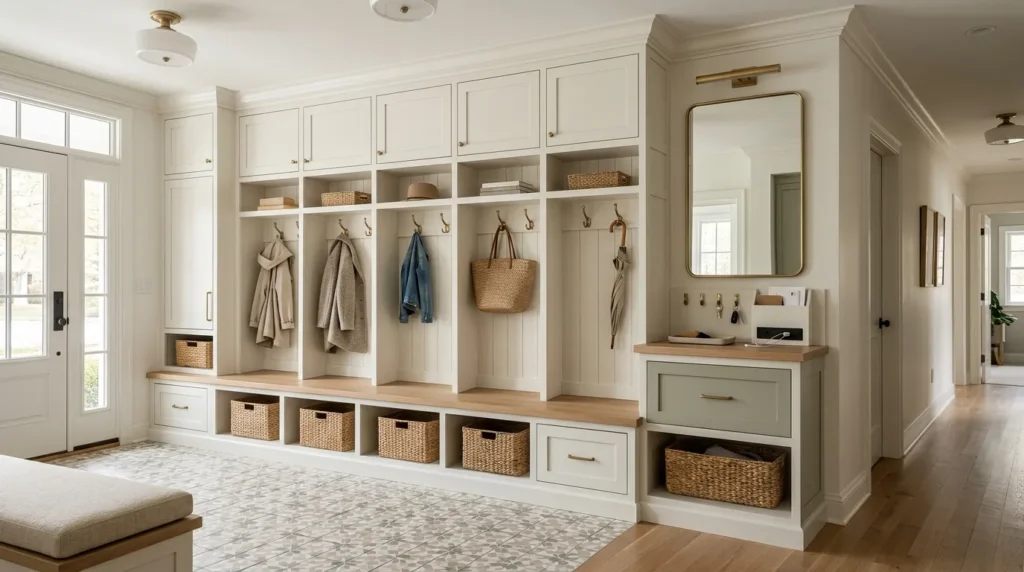
- Built-In Bench Storage UnitsSturdy seating with deep pull-out drawers provides dedicated storage for shoes while offering a comfortable perch for tying laces.
- Floor-to-Ceiling Board and BattenVertical wall millwork protects drywall from scuffs, hides heavy-duty double coat hooks, and adds architectural height.
- Heavy-Duty Herringbone Brick FlooringDurable, slip-resistant brick pavers handle muddy boots, pet paws, and wet umbrellas while bringing rustic historic character.
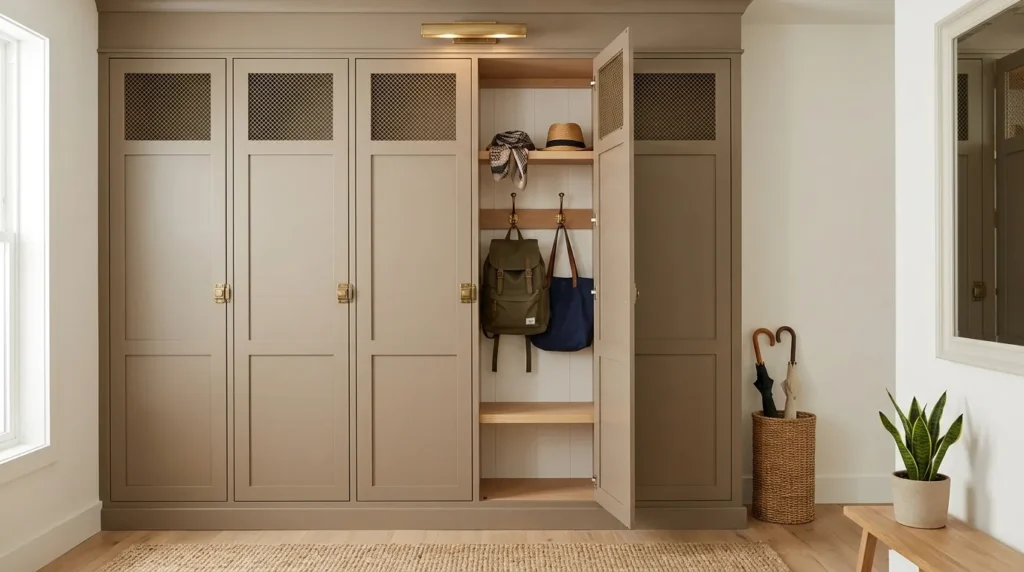
- Closed Cabinetry Locker TowersCustom or semi-custom tall wardrobe lockers conceal bulky winter parkas, sports gear, and backpacks completely behind closed doors.
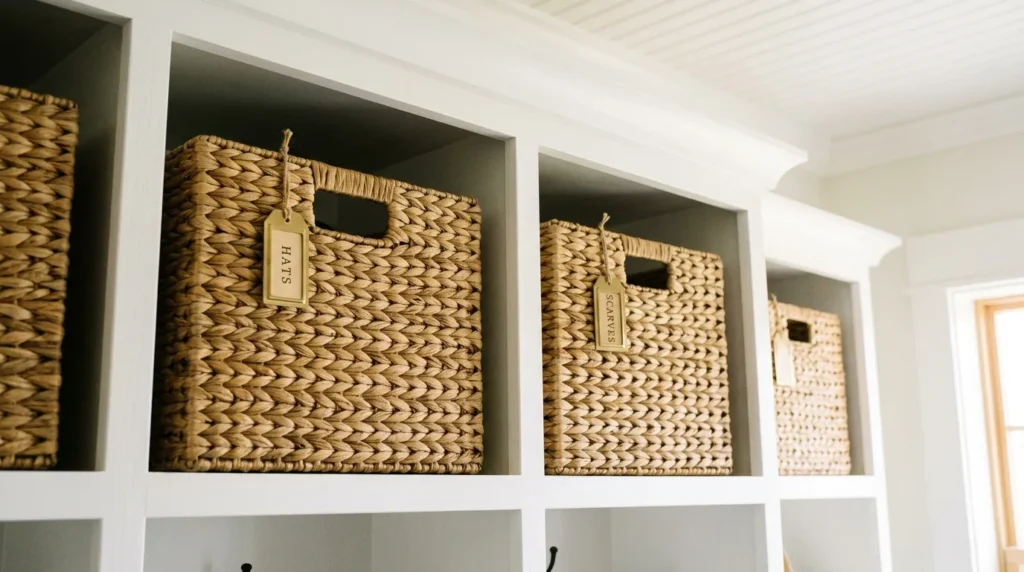
- Woven Seagrass Basket CubbiesStructured natural fiber baskets organize seasonal accessories like scarves, hats, and dog leashes while introducing warm earthy texture.
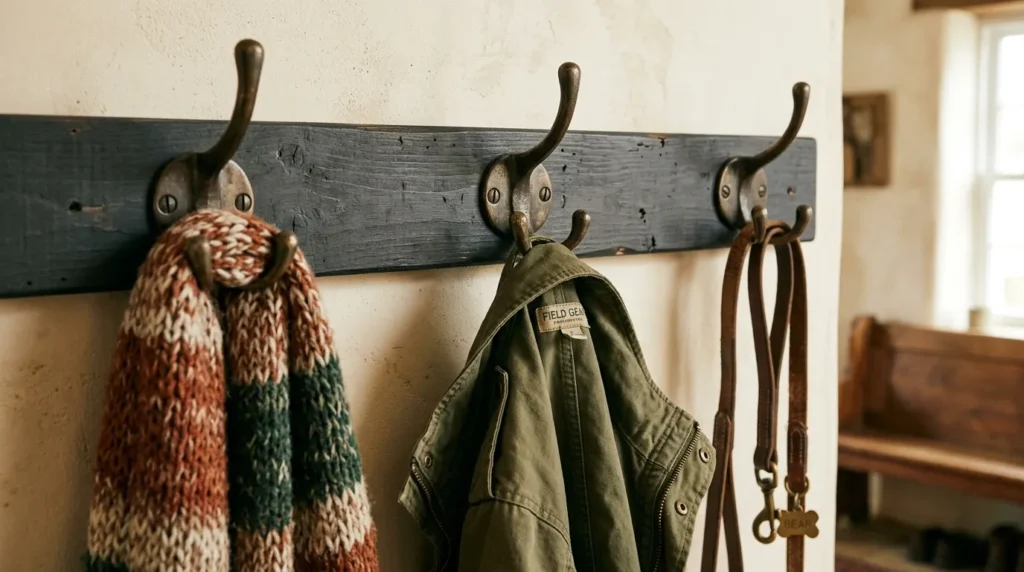
- Antiqued Brass Double HooksHigh-capacity wall hardware keeps everyday jackets, backpacks, and tote bags off the floor and arranged in clean rows.
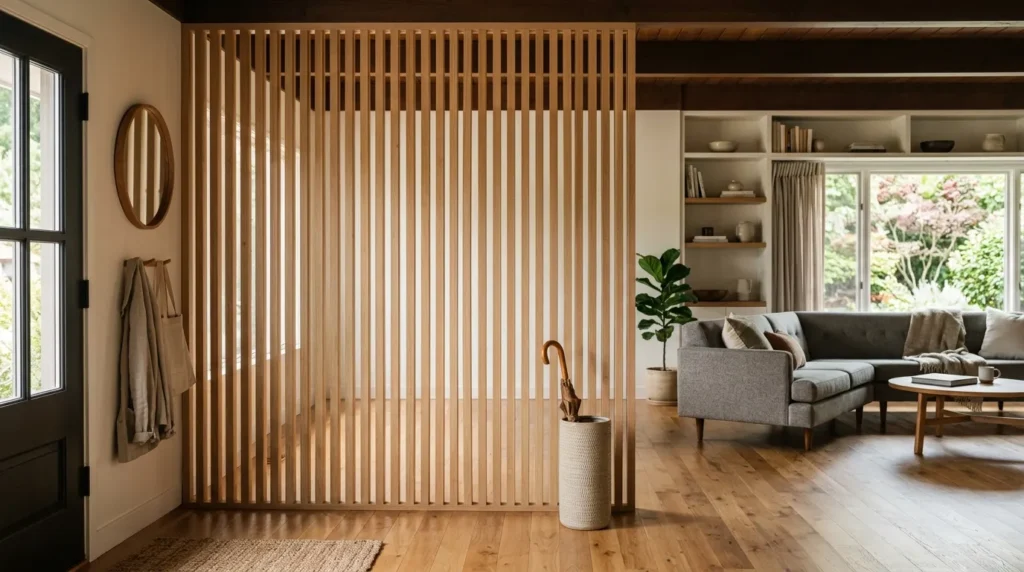
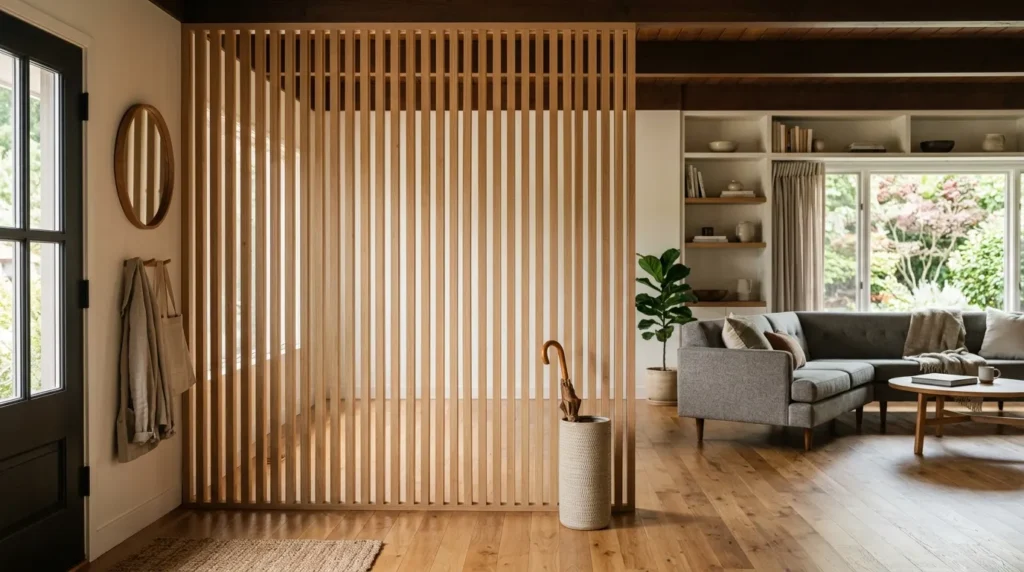
- Warm Wood Slat PartitionsVertical timber screen dividers carve out a dedicated mudroom zone in open-concept entryways without blocking natural daylight.
- Under-Bench Metal Boot TraysLow-profile brass or galvanized copper drip trays contain snow, gravel, and standing water before it reaches hardwood floors.
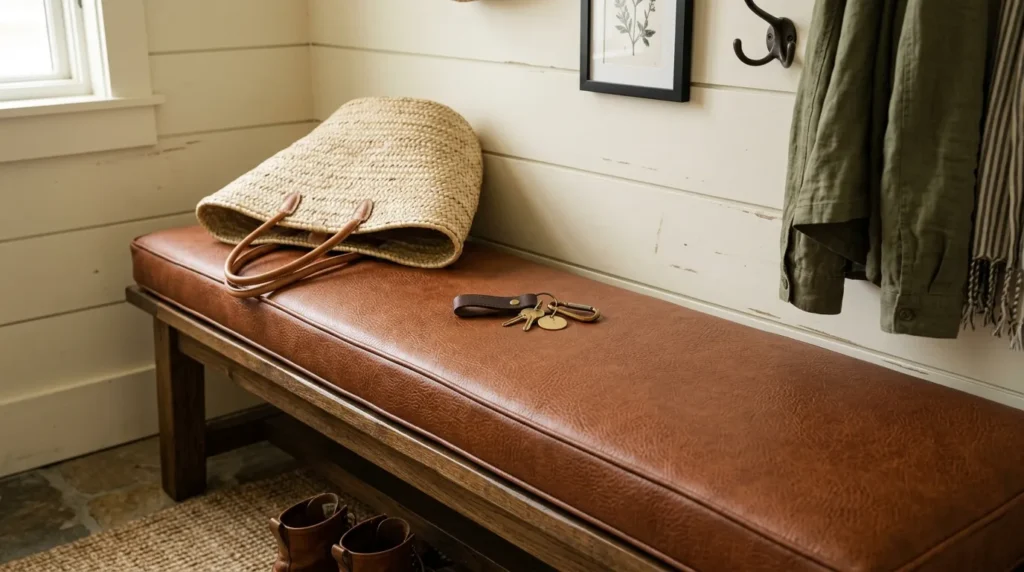
- Wipeable Performance Cushion SeatingCustom bench toppers upholstered in water-resistant performance linen or faux leather bring plush comfort that resists heavy staining.
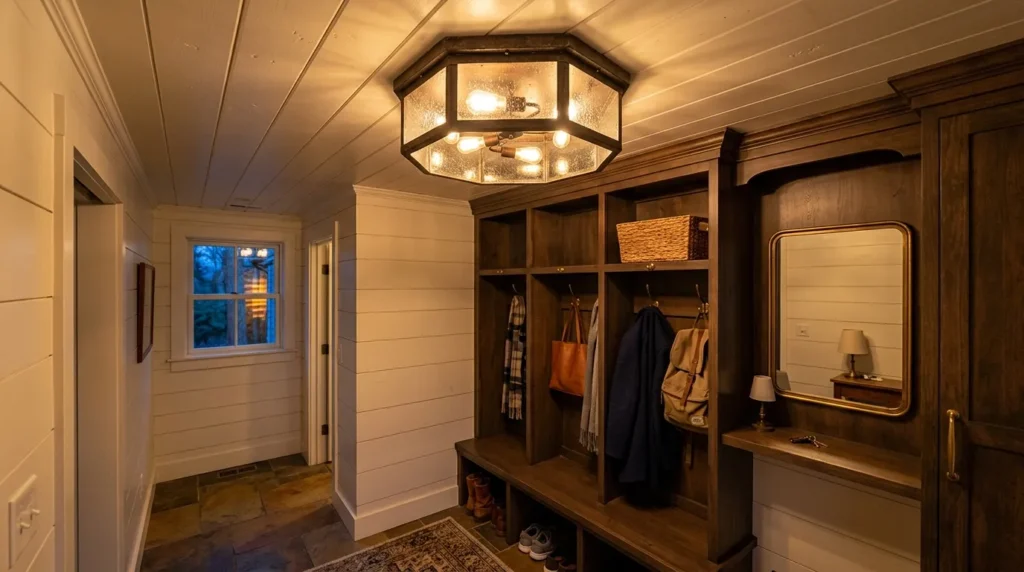
- Aged Iron Flush-Mount LightingCompact, warm ceiling fixtures provide bright task illumination in tight entryways without interfering with swinging upper cabinet doors.
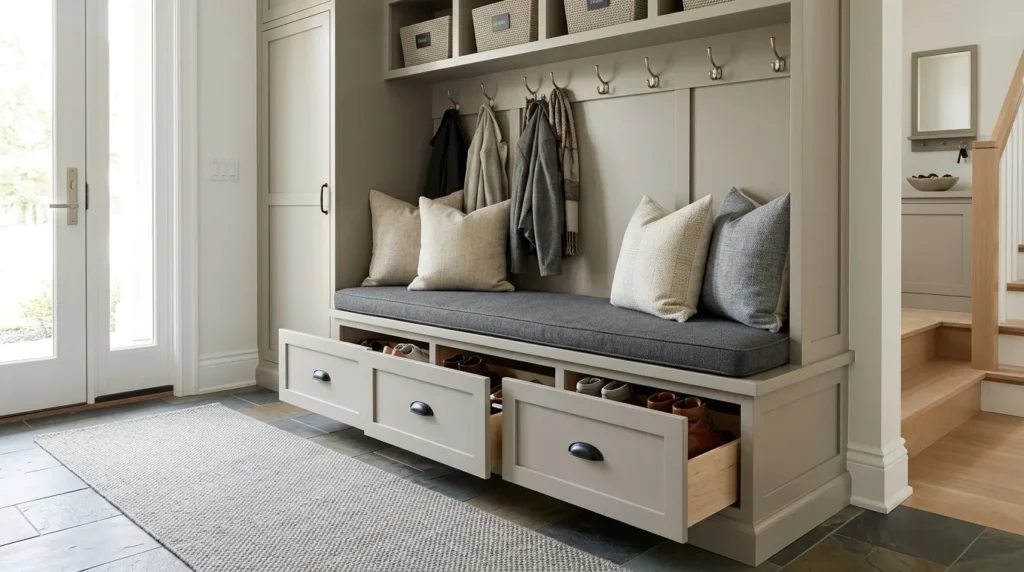
1. Built-In Bench Storage Units
- Quick Benefits
- Provides a dedicated seated spot for putting on and removing shoes comfortably.
- Deep base drawers or pull-out bins tuck bulky footwear out of sight.
- Maximizes every square inch of awkward alcoves or narrow entry walls.
- Serves as the central architectural anchor for surrounding cabinetry.
- Keeps high-traffic entry walkways completely clear of tripping hazards.
Why It Works
Nothing makes an entrance feel cluttered faster than piles of shoes scattered across the floor. A built-in bench creates an immediate boundary for footwear while giving family members a solid, comfortable place to sit. In my experience, open shoe cubbies often end up looking messy after a few days, whereas deep soft-close drawers or lift-top bench seats conceal everyday shoe chaos entirely. Because the bench stays anchored to the wall, it establishes a clean, streamlined footprint that visually organizes the entire room.
How To Style It
Build or install a 16-to-18-inch-deep bench base finished in a durable semi-gloss or satin paint that can be easily wiped down. Top the bench with a 2-inch thick tailored cushion wrapped in a performance-treated indoor/outdoor fabric like charcoal tweed or warm sand linen. For an organic touch, add a solid white oak or stained walnut wood cap directly under the cushion to create a rich contrast against painted cabinetry.
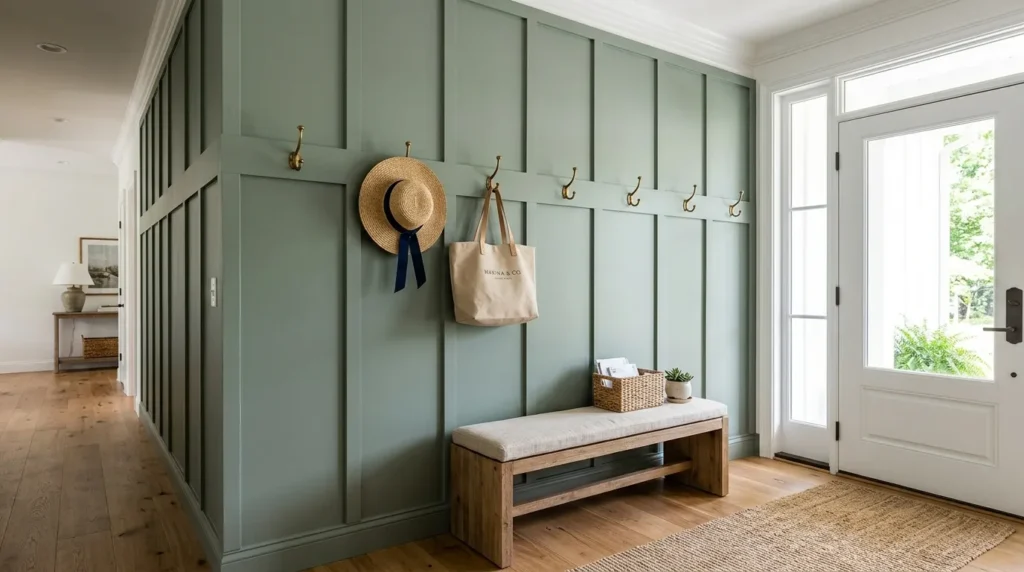
2. Floor-to-Ceiling Board and Batten
- Quick Benefits
- Shields lower drywall surfaces from dents, scratches, and backpack dings.
- Provides a solid timber base for anchoring heavy-duty coat and bag hooks.
- Draws the eye upward to make compact entryway ceilings feel taller.
- Adds custom architectural character to standard builder-grade entryways.
- Simple and cost-effective to install as a weekend DIY project.
Why It Works
Drywall in entryways takes an absolute beating from swinging backpacks, wet dog tails, and sharp umbrellas. Installing vertical board and batten millwork adds a durable, impact-resistant layer of protection where walls are most vulnerable. Furthermore, mounting heavy coat hooks directly into decorative MDF or solid wood batten boards provides far superior weight support compared to drywall anchors, ensuring hooks will not pull out over time when loaded with heavy winter coats.
How To Style It
Install vertical battens spaced 10 to 14 inches apart, extending the panelling either two-thirds up the wall (roughly 60 inches) or all the way to the ceiling moulding. Paint the millwork in an easy-to-clean satin sheen using a rich, grounding hue like deep slate, muted forest green, or creamy greige. Mount heavy-duty forged iron hooks along the top horizontal rail, alternating between double coat hooks and smaller utility hooks for dog leashes and keys.
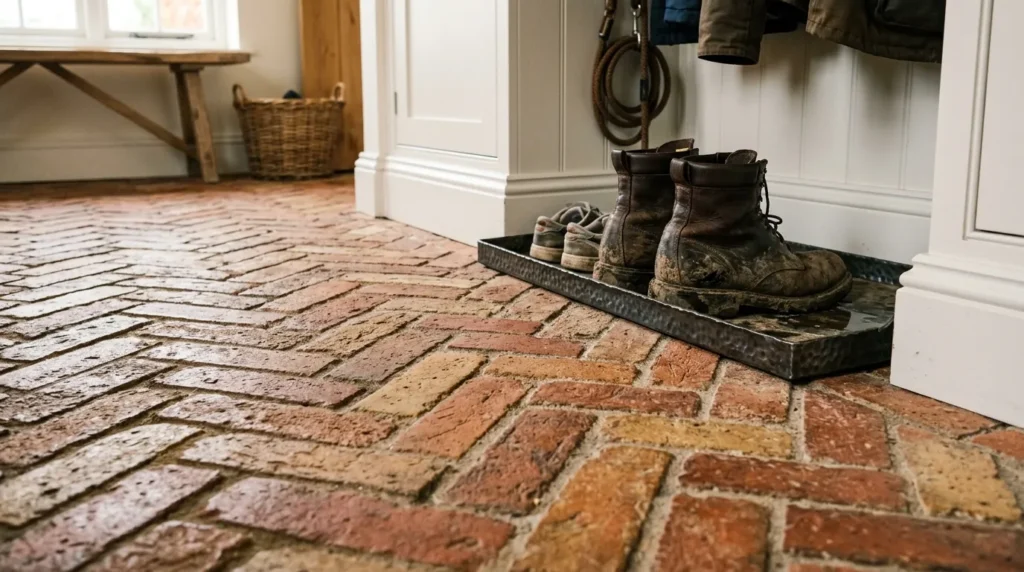
3. Heavy-Duty Herringbone Brick Flooring
- Quick Benefits
- Withstands wet boots, mud, rock salt, and heavy pet foot traffic effortlessly.
- Classic herringbone layout adds timeless, high-end European cottage charm.
- Textured, unglazed surface provides natural slip resistance when wet.
- Muted red, buff, or charcoal tones naturally disguise everyday dirt and debris.
- Seamlessly pairs with radiant underfloor heating systems for cozy winter drying.
Why It Works
Hardwood flooring near an entryway door is prone to water warping, discoloration, and scratching from trapped grit under shoes. Thin brick pavers or porcelain brick-look tiles provide an indestructible, waterproof floor that handles extreme weather transitions with ease. Laying brick in a classic 90-degree herringbone pattern breaks up the boxy geometry of built-in lockers, grounding the mudroom in rich, textured historic appeal that gets better with age.
How To Style It
Choose thin-cut interior brick pavers finished with a matte, penetrating stone sealer to resist oil and muddy water stains. Use a medium warm-gray grout to prevent dirty discoloration over years of foot traffic. Define the transition between your brick mudroom floor and adjoining hardwood living spaces with a clean solid oak or marble threshold saddle for a seamless, designer-approved transition.
4. Closed Cabinetry Locker Towers
- Quick Benefits
- Conceals brightly colored jackets, sports equipment, and clutter out of sight.
- Assigns dedicated individual storage zones for each family member.
- Integrates vertical charging outlets for power tools, tablets, and phones.
- Creates a uniform, high-end look that complements adjacent kitchen cabinetry.
- Upper transoms offer long-term storage for off-season gear and holiday decor.
Why It Works
Open mudroom cubbies look pristine in staged design magazines, but real-life coats, bulky sports bags, and mismatched lunch boxes quickly create visual clutter. Tall, closed locker cabinets provide full concealment, allowing your entryway to maintain a calm, serene aesthetic even during chaotic morning rushes. I’ve noticed that assigning a specific tall locker cabinet to each child gives them clear ownership over their belongings, dramatically cutting down on lost school gear.
How To Style It
Design or purchase tall shaker-style pantry or wardrobe cabinets equipped with interior double hooks, an adjustable upper shelf for hats, and a lower ventilated drawer for athletic footwear. Finish the cabinetry in a soft neutral tone like mushroom taupe or warm cream, and outfit the doors with unlacquered brass or matte black latches. Add mesh or perforated brass grille inserts on door panels to promote continuous air circulation and allow damp items to dry properly.
5. Woven Seagrass Basket Cubbies
- Quick Benefits
- Keeps smaller miscellaneous items like gloves, beanies, and sunglasses sorted.
- Introduces natural, tactile texture to balance painted wood surfaces.
- Handles make it effortless to pull down baskets from high overhead shelves.
- Inexpensive and flexible way to reconfigure storage as family needs evolve.
- Conceals visual clutter while keeping daily necessities within quick reach.
Why It Works
Upper mudroom shelves frequently become awkward catch-alls for loose winter accessories, sunscreen bottles, and pet gear. Woven seagrass, water hyacinth, or rattan storage baskets fit neatly into open cubbies, hiding small clutter behind uniform, organic textures. The warm, golden honey undertones of natural fibers break up solid expanses of painted millwork, giving your mudroom a relaxed, welcoming character.
How To Style It
Measure your open cubbies carefully and select structured rectangular baskets that fill roughly 85% to 90% of the shelf width and height for a custom, built-in appearance. Choose baskets with reinforced cutout metal handles or thick rope grips for durability. Attach small brass or leather label tags to each basket front—designating bins for “Winter Hats,” “Dog Walk,” “Sun & Rain,” and “Mail”—so everyone in the house knows exactly where items belong.
6. Antiqued Brass Double Hooks
- Quick Benefits
- Doubles your hanging capacity on a single vertical wall footprint.
- Warm brass tones add jewelry-like metallic elegance to painted millwork.
- Top hook holds wide-brimmed hats while the lower prong secures heavy coats.
- Keeps everyday backpacks and bags elevated off the floor away from dirt.
- Withstands heavy daily loads without bending or pulling loose from walls.
Why It Works
Single utility pegs often cause jackets to slip off and pile up on the floor, especially when loaded with bulky hoods or heavy strap handles. Double prongs—featuring an extended upper hook and a curved lower arm—allow you to hang multiple garments independently without overcrowding. The warm, unlacquered patina of aged brass softens utilitarian entryways and resists showing fingerprints better than high-polish chrome or standard plastic hardware.
How To Style It
Mount hooks along a solid wood backer board or horizontal wall batten, spacing them approximately 8 to 10 inches apart to allow coats to hang without bunching together. For multi-member households, install two staggered horizontal rows: a top row at 60 to 64 inches for adult coats and wide-brim hats, and a lower row at 36 to 40 inches so young children can independently hang their own backpacks and light jackets.
7. Warm Wood Slat Partitions
- Quick Benefits
- Defines a distinct mudroom entryway within wide-open floor plans.
- Maintains open airflow and allows natural sunlight to filter through.
- Adds contemporary mid-century or Scandinavian architectural texture.
- Creates a subtle privacy screen blocking views into the home from the front door.
- Takes up minimal floor space compared to a full drywall partition.
Why It Works
Many modern homes open directly into the main living room or kitchen with no foyer or architectural transition. Building a full drywall partition wall can make the front entrance feel cramped, dark, and claustrophobic. A floor-to-ceiling vertical wood slat screen solves this problem by defining a dedicated mudroom drop zone while allowing natural light to flow across both spaces. The repetitive vertical timber lines create visual rhythm and provide a natural surface on which to mount a low bench and floating drop shelf.
How To Style It
Construct the screen using 2″x2″ or 1″x3″ solid white oak or walnut slats, spacing them roughly 1.5 to 2 inches apart from floor to ceiling. Anchor the base securely into floor joists and the top into ceiling framing. Attach a low cantilevered oak bench to the entryway side of the slat wall, styling the surrounding zone with a slim umbrella stand and a textured ceramic vase filled with tall dried grasses.
8. Under-Bench Metal Boot Trays
- Quick Benefits
- Protects flooring from melting snow, road salt, mud, and pooling water.
- Raised lip edges contain liquid spills and loose outdoor gravel completely.
- Easily slides out from beneath the bench for quick rinsing and cleaning.
- Adds an intentional, metallic design accent to utilitarian shoe zones.
- Extends the lifespan of expensive entryway rugs and adjacent wood floors.
Why It Works
Leaving wet, muddy shoes directly on flooring or inside closed cabinets creates standing moisture, water damage, and mildew smells. A dedicated metal boot tray provides a heavy-duty containment zone directly underneath your seating bench. Metal trays made from spun copper, antique brass, or galvanized zinc look sophisticated while standing up to gritty dirt and water far better than cheap plastic alternatives.
How To Style It
Select a boot tray with a 1.5-to-2-inch raised rolled rim that fits neatly under the open base of your entryway bench. For extra drainage and a classic European estate aesthetic, fill the bottom of the tray with a layer of smooth, dark river pebbles. When wet boots rest on the stones, water drips down to the bottom of the pan, keeping boot soles dry and allowing footwear to air out quickly without sitting in dirty standing water.
9. Wipeable Performance Cushion Seating
- Quick Benefits
- Provides plush, inviting comfort without fear of everyday water or mud stains.
- Resists liquid penetration, pet hair cling, and friction pilling.
- Removable zippered covers make deep seasonal cleaning straightforward.
- High-density foam core maintains its structured shape without sagging.
- Custom piping and tufting details elevate simple benches to designer status.
Why It Works
An un-cushioned wooden bench can feel hard and uninviting, but standard decorative upholstery fabrics—such as raw cotton, velvet, or untreated linen—absorb wet raincoats and dirty handprints within minutes. Using commercial-grade performance fabrics or marine-grade vegan leather gives you the soft, tailored look of high-end upholstery with the wipe-clean durability of outdoor patio furniture. Spills and mud simply bead up on the surface, wiping away cleanly with a damp microfiber cloth.
How To Style It
Order a custom box-edge cushion cut from 2.5-inch high-density foam wrapped in Dacron for a tailored, plump silhouette. Specify a durable, textured performance weave in heathered charcoal, cognac faux leather, or warm olive green with contrasting French piping along the edges. Add non-skid rubber backing fabric to the underside of the cushion to prevent it from sliding forward when family members stand up from the bench.
10. Aged Iron Flush-Mount Lighting
- Quick Benefits
- Low profile prevents interference with opening tall locker doors and front entries.
- Provides bright, shadow-free illumination across all storage cubbies and mirrors.
- Dark iron or matte black finishes ground light-colored ceilings with contrast.
- Glass or seeded diffusers distribute warm ambient light evenly across the floor.
- Durable metal construction handles accidental bumps from tall coats or umbrellas.
Why It Works
A common mistake in entryway mudrooms is installing hanging pendants or low chandeliers that swing dangerously close to opening cabinet doors or get bumped by people carrying tall umbrellas. A flush-mount or semi-flush-mount fixture sits close to the ceiling plane, maximizing vertical clearance in compact hallways. Opting for aged iron or matte black finishes adds bold, industrial contrast that grounds neutral cabinetry while casting warm, inviting light over the entire entry zone.
How To Style It
Install a round or octagonal metal flush-mount fixture with clear seeded glass or milk glass diffusers centered along your entryway hallway. Pair the fixture with a warm 2700K dimmable LED bulb (producing around 800 to 1100 lumens) wired to an illuminated wall switch or smart motion sensor. When anyone steps through the door with arms full of groceries, the light turns on automatically, illuminating the bench and storage hooks safely.
Smart Mudroom Layout & Dimension Guidelines
When planning and building out these 10 entryway mudroom ideas, adhering to key architectural clearances ensures your entry remains functional and easy to navigate:
- Bench Height & Depth: Maintain a comfortable bench seating height between 18 and 19 inches from the finished floor (including the cushion). Aim for a minimum bench seat depth of 15 to 18 inches to accommodate adult seating comfortably.
- Walking Clearance: Ensure at least 36 inches of clear, unobstructed walkway space between the front of your bench and the opposite wall or open door swing to prevent traffic bottlenecks.
- Hook Spacing & Elevations: Mount adult coat hooks at 60 to 64 inches from the floor, and position children’s hooks between 36 and 42 inches. Leave 8 to 12 inches of horizontal spacing between each hook to prevent overlapping coats.
- Locker Depth: If installing tall closed cabinetry for coats and backpacks, design locker depth to at least 21 to 24 inches so that winter coats on standard hangers hang freely without crushing sleeves.
Frequently Asked Questions
What are the best mudroom ideas for small or narrow entryways?
For narrow entryways, utilize vertical wall space with high-mounted board and batten, shallow 12-to-14-inch storage benches, and floating coat hooks. Replace bulky swinging cabinet doors with open cubbies, sliding barn doors, or woven storage baskets that keep the walking path completely clear.
How do I keep my entryway mudroom from smelling like damp shoes?
Incorporate ventilation by using open wire shoe grates, porous wicker baskets, and metal boot trays filled with river rocks. Choose breathable performance fabrics for bench cushions, place natural cedar shoe trees or activated charcoal deodorizing bags in footwear bins, and ensure the room has adequate airflow.
Which flooring is most durable for an entryway mudroom?
Unglazed porcelain tile, slate stone, and thin-cut brick pavers are the top flooring choices for mudrooms. They offer superior water resistance, withstand abrasions from gritty outdoor dirt and road salt, and provide non-slip traction during wet rainy and snowy seasons.
What paint finish should I use for entryway mudroom walls and trim?
Use a satin, semi-gloss, or high-durability eggshell enamel paint finish for mudroom walls, millwork, and built-ins. Avoid flat or matte paints in this area, as they absorb dirty handprints, water splashes, and scuffs, and will burnish or peel when scrubbed with cleaning cloths.
How can I create a mudroom zone in an open-concept living space?
Carve out a dedicated mudroom zone by positioning an open vertical wood slat screen or an open-back bookcase perpendicular to the entrance. Define the floor zone using a durable vintage flat-weave runner rug, and install a compact storage bench with wall hooks directly adjacent to the front door.
Related Articles
- 10 Dining Room Decor Ideas for a Welcoming, Designer-Approved Space
- 11 Baby Nursery Ideas for Girls That Balance Timeless Style and Real-Life Function
- Small Space Entryway Organization & Closet Storage Hacks
- DIY Board & Batten Accent Wall Step-by-Step Guide
- How to Layer Organic Modern Home Decor in Every Room
Final Thoughts on Designing an Entryway Mudroom
Creating an organized entryway mudroom transforms how your entire home operates. When every family member has a dedicated, easily accessible spot to drop shoes, hang backpacks, and stash keys, morning departures become calm and evening arrivals feel like a breath of fresh air.
Start with one or two foundational updates that address your primary pain point—whether that is building a sturdy bench with shoe storage, installing durable brick flooring, or mounting heavy-duty brass double hooks. Build a functional, hardworking drop zone that welcomes your family, handles daily messes effortlessly, and keeps the rest of your home feeling tidy and serene.