
11 Master Bedroom Decor Ideas for a Calm, Luxurious Retreat
We spend roughly a third of our lives in bed, yet the primary suite is often the very last room in the house to receive thoughtful design attention. It’s easy to prioritize high-traffic living rooms, welcoming entryways, or bustling family kitchens while the bedroom becomes a quiet catch-all for laundry baskets, half-read books, and mismatched furniture collected over the years. When your primary retreat feels cluttered, chaotic, or disjointed, it subtly robs you of the restful, restorative evenings you deserve.
Designing a restful sanctuary is not about following rigid interior design trends or buying expensive matching furniture sets. In my experience, the most inviting bedrooms are layered over time with intention, tactile textures, functional storage, and soft, restorative lighting. A well-designed primary bedroom balances visual tranquility with practical, real-life durability. It should feel like an exhale the moment you walk through the door at the end of a demanding day.
Whether you are starting with a completely empty room, refreshing builder-grade finishes, or simply looking to elevate your current bedding and lighting, these 11 master bedroom decor concepts offer actionable inspiration for every budget and square footage. From moody saturated paint tones and custom-look architectural trim to tailored window treatments and serene reading nooks, each idea is designed to help you curate a space that feels personal, elevated, and deeply restorative.
Table of Contents
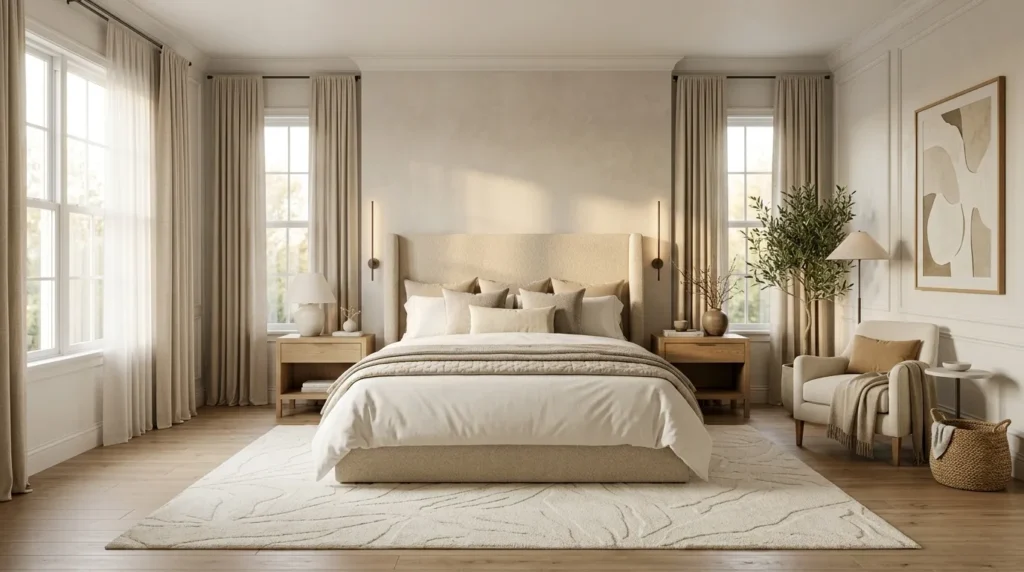
- Textured Layered BeddingCreate a boutique-hotel sleeping experience using mixed natural textiles, breathable linens, and tailored accent cushions.
- Warm Minimalist PaletteSoften your space with creamy off-whites, warm taupes, and gentle earthen neutrals that invite total relaxation.
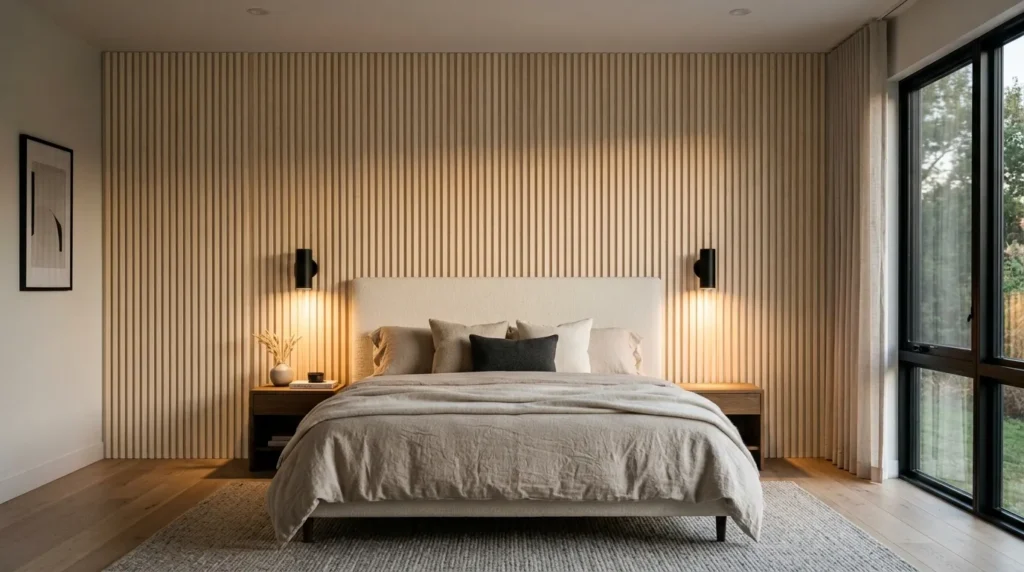
- Fluted Accent WallsAdd architectural depth, dimension, and bespoke character behind your headboard with modern wood slat detailing.
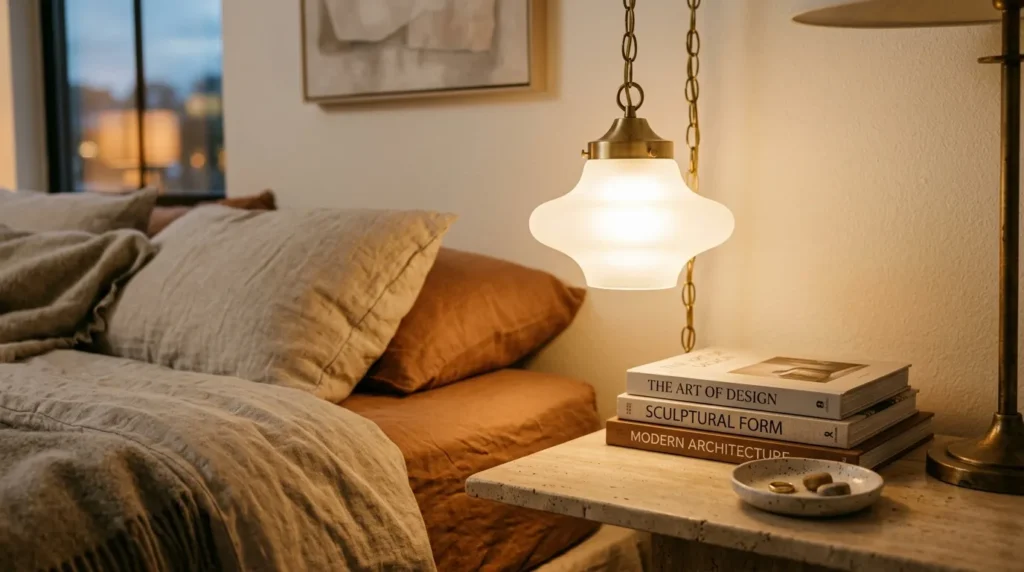
- Statement Pendant LightingFree up nightstand surface space while introducing sculptural brass, ceramic, or woven lighting elements overhead.
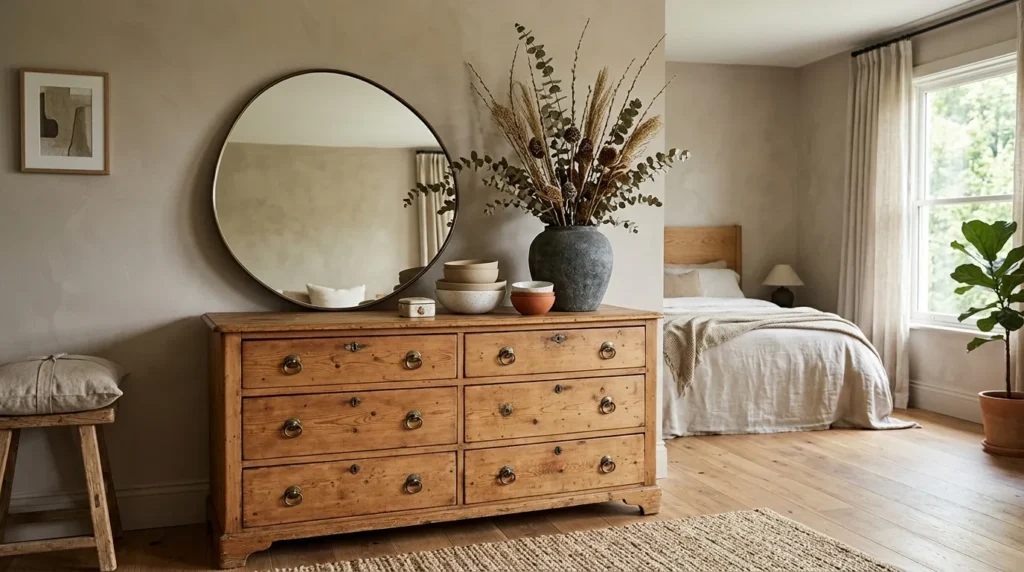
- Vintage Wood AccentsGround contemporary elements with reclaimed wood dressers, antique nightstands, and rich, time-worn patinas.
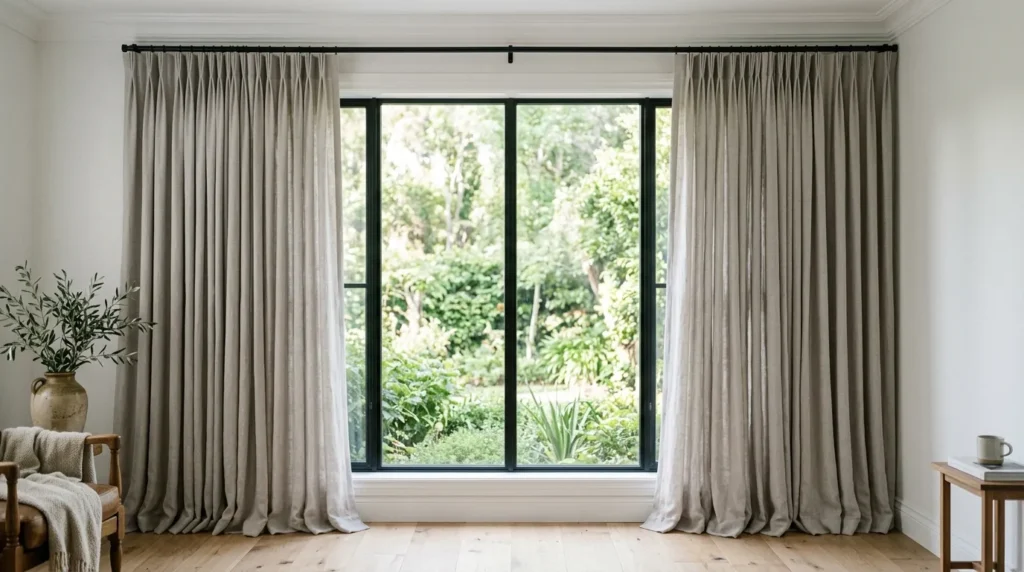
- Floor-To-Ceiling DraperyMaximize vertical height and soften window lines with linen blackout panels hung high and wide.
- Cozy Reading NookCarve out an intentional corner for quiet mornings with an upholstered armchair, floor lamp, and accent table.
- Oversized Area RugsAnchor the bed frame, frame your walkway, and provide plush underfoot comfort with properly scaled wool rugs.
- Moody Saturated ColorEmbrace cozy, intimate sophistication by wrapping walls and trim in deep olive, charcoal, or rich navy tones.
- Biophilic Greenery StylingBreathe life and natural movement into corners and tabletops with low-maintenance potted trees and structural branches.
- Curated Gallery WallPersonalize your retreat using coordinated frames, architectural sketches, muted landscapes, and cherished travel photography.
1. Textured Layered Bedding
Quick Benefits:
- Eliminates flat, uninviting bed styling instantly
- Adapts effortlessly to shifting seasonal temperatures
- Adds tactile richness without visual clutter
- Delivers five-star boutique hotel luxury at home
- Easy to refresh using interchangeable pillow shams
Why It Works
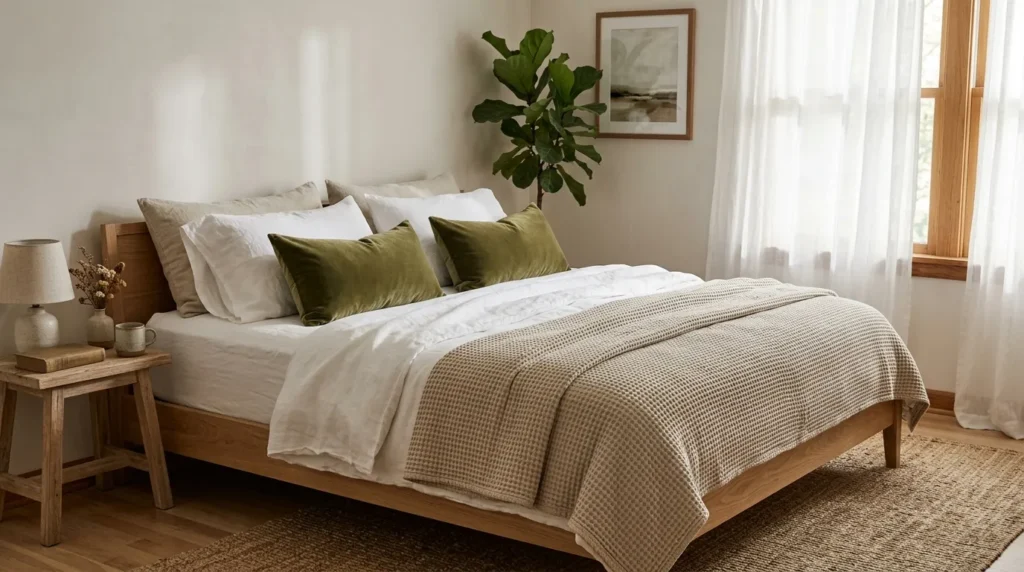
A flat comforter pulled over matching sheets instantly makes a bedroom look unfinished and stiff. Layered bedding works because it introduces depth, tactile contrast, and tailored volume to the central focal point of the room. In my experience, combining varied fabric weaves—such as washed Belgian linen, waffle-knit cotton, and plush velvet—tricks the eye into perceiving comfort before you even climb under the covers. The goal is a bed that looks plush, inviting, and effortlessly styled rather than rigidly formal. By building layers from breathable base sheets to structured decorative toppers, you achieve an elevated aesthetic that also supports deeper, temperature-regulated sleep every single night.
How To Style It
Begin with high-thread-count crisp percale or breathable washed linen sheets tucked neatly with hospital corners. Layer a medium-weight down or down-alternative duvet inside an oversized linen cover that drapes generously over the sides of the mattress. Fold a chunky waffle-weave blanket or quilted coverlet across the lower third of the bed for weighted texture. Arrange two firm sleeping pillows flat, front them with two standard shams matching your duvet, and finish with an oversized lumbar cushion (around 14×36 inches) in a contrasting textured wool or moody velvet. Stick to an understated tonal color palette—such as ivory, flax, and warm terracotta—to maintain visual calm.
2. Warm Minimalist Palette
Quick Benefits:
- Reduces sensory overload after long workdays
- Makes small or low-light bedrooms feel airy
- Complements both modern and traditional furniture
- Eliminates costly trend-chasing paint overhauls
- Creates an open, cohesive visual flow
Why It Works
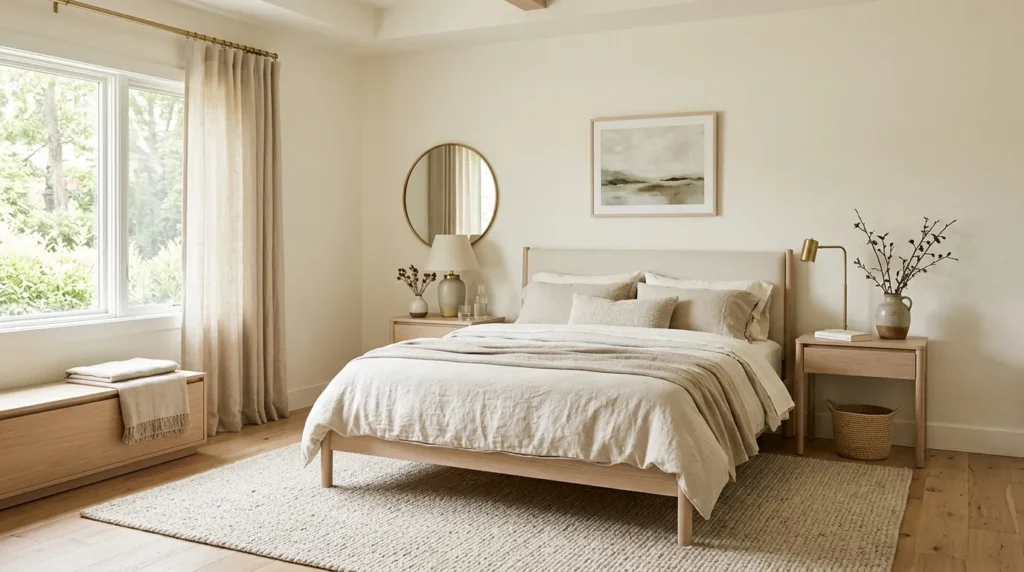
Cool, stark grays can leave a bedroom feeling cold, sterile, and uninviting, while overly bright primary colors can overstimulate the mind before sleep. A warm minimalist palette leans into creamy whites, mushroom beiges, soft oatmeal, and subtle camel undertones to generate gentle warmth. One thing that works especially well with this design philosophy is allowing the subtle variations between natural materials to provide visual interest instead of high-contrast color clashes. By keeping the background architecture soft and quiet, your eye moves smoothly across the room, which triggers a biological sense of ease, spaciousness, and restorative calm throughout the space.
How To Style It
Select a warm, light-reflective paint with yellow or red undertones for the walls and ceiling (such as Benjamin Moore Swiss Coffee or Sherwin-Williams Alabaster). Anchor the floor with an un-dyed jute or high-pile wool rug in an oatmeal shade. Layer in pale oak or ash wood nightstands to provide organic contrast against the neutral walls. Dress the windows in unlined flax-colored linen drapery that filters daylight softly. To keep the space from looking flat or washed out, introduce subtle black iron or aged brass hardware on nightstands and dressers. Add matte stoneware ceramic vases, ivory boucle accent stools, and sculptural cast-plaster table lamps.
3. Fluted Accent Walls
Quick Benefits:
- Adds permanent bespoke architectural value
- Eliminates the need for massive hanging wall art
- Draws the eye upward to enhance ceiling height
- Conceals subtle drywall imperfections cleanly
- Introduces clean linear rhythm behind the headboard
Why It Works
Standard flat drywall can make large primary bedrooms feel cavernous and generic. Fluted and slatted wood accent walls introduce crisp vertical lines that draw the eye upward toward the ceiling, creating an immediate illusion of grand architectural scale. In my experience, wood slat detailing introduces architectural depth that catches natural and artificial light dynamically throughout the day. It functions as a permanent, textured headboard alternative that anchors the entire room. The repetition of wood slats adds subtle rhythm and organic modern polish without overwhelming the room with loud patterns or busy decorative motifs.
How To Style It
Install vertical white oak, walnut, or paint-grade MDF slats directly onto the wall behind your bed frame, running them either floor-to-ceiling or capping them at three-quarter height with a slim picture ledge. If using natural wood, finish the slats with a matte clear coat to preserve the organic grain and tone. Position an upholstered low-profile platform bed against the slats to soften the hard linear edges. Install hardwired minimalist cylindrical wall sconces directly onto the fluted paneling at reading height. Keep surrounding decor minimal: a low, floating nightstand on either side and soft, layered neutral linens let the woodwork command attention.
4. Statement Pendant Lighting
Quick Benefits:
- Clears valuable usable space on small nightstands
- Provides dedicated, glare-free directional reading light
- Introduces sculptural design elements at eye level
- Modernizes outdated builder-grade lighting fixtures
- Creates cozy layered lighting zones across the room
Why It Works
Relying entirely on a single center ceiling fixture creates harsh overhead shadows, while large traditional table lamps can consume precious nightstand real estate. Hanging low statement pendants or hardwired articulating sconces on either side of the bed delivers targeted, functional illumination while framing the sleeping zone like a luxury resort suite. I’ve noticed this layout adjustment instantly elevates perceived room quality. By positioning lighting elements at eye level, you establish warm pools of localized light that signal to your brain it is time to wind down, dramatically improving the evening ambiance of the entire space.
How To Style It
Hang matching pendants or plug-in sconces roughly 20 to 24 inches above the surface of your nightstands so the bottom of the shade sits just above your shoulder while sitting up in bed. Choose fixtures with diffuse materials like opal glass, pleated fabric, brushed brass, or woven cane to prevent harsh glare. Equip every fixture with warm-dimming LED bulbs (2700K or lower) wired to accessible bedside dimmer switches. Coordinate the metal finishes with your drapery rods or drawer pulls for a curated look, while keeping the pendant scale proportionate—generally 8 to 12 inches in diameter for standard eight-foot to nine-foot ceilings.
5. Vintage Wood Accents
Quick Benefits:
- Breaks up sterile, matching-set furniture looks
- Introduces one-of-a-kind history and soulful character
- Highly durable construction built from solid hardwoods
- Eco-friendly decor choice that supports sustainability
- Develops a richer, more beautiful patina over time
Why It Works
Decorating an entire bedroom using furniture from a single retail catalog collection often makes the space feel generic, sterile, and showroom-stiff. Incorporating authentic vintage wood pieces introduces historical patina, structural soul, and rich natural imperfections that mass-manufactured modern items simply cannot replicate. That’s why many designers recommend balancing clean contemporary lines with aged furniture. A mid-century walnut credenza, a scrubbed antique pine chest, or a pair of 19th-century French nightstands grounds a modern bed frame, making the overall design feel curated, collected over time, and uniquely tailored to your personal aesthetic.
How To Style It
Scour local antique markets, estate sales, or vintage shops for a solid wood dresser with distinctive brass bail pulls, dovetailed joints, or hand-carved drawer details. Pair this vintage focal piece with a modern upholstered bed frame and sleek, contemporary metal lighting to strike a dynamic balance between old and new. Style the top of the vintage chest with a contemporary asymmetrical mirror, a stack of hardcover art books, a ceramic bowl for jewelry, and a textured stone lamp. Allow small scratches and worn edges to show; these authentic marks tell a story and infuse the room with warmth.
6. Floor-To-Ceiling Drapery
Quick Benefits:
- Dramatically elongates vertical room proportions
- Delivers essential light-blocking for deeper sleep
- Dampens outside noise and improves room acoustics
- Adds elegant movement and architectural softness
- Insulates drafty windows to regulate room temperature
Why It Works
Skimpy, short, or poorly hung curtains immediately make an otherwise beautiful bedroom feel cheap and unfinished. Hanging drapery panels high, wide, and kissing the floor pulls the eye upward toward the ceiling moldings and outward past the window casings, making windows look twice their actual size. Beyond the stunning visual impact, heavy, lined drapery panels perform critical functional duties: they block early morning sunlight that disrupts sleep cycles, soften ambient exterior noise, and introduce tall columns of tactile fabric that break up vast stretches of painted drywall.
How To Style It
Mount an oversized, sturdy metal drapery rod (1 to 1.25 inches in diameter) 2 to 4 inches below the ceiling crown molding, extending the rod 10 to 15 inches past the window frame on both sides. This allows the panels to stack off the glass when open, maximizing natural sunlight. Choose custom-length pinch-pleat or ripple-fold drapery panels sewn from heavyweight linen or textured wool blends, complete with thermal blackout lining. Ensure the hems just kiss the floorboards or settle with a gentle half-inch break. Opt for versatile tailored neutrals like warm stone, oatmeal, or muted slate grey.
7. Cozy Reading Nook
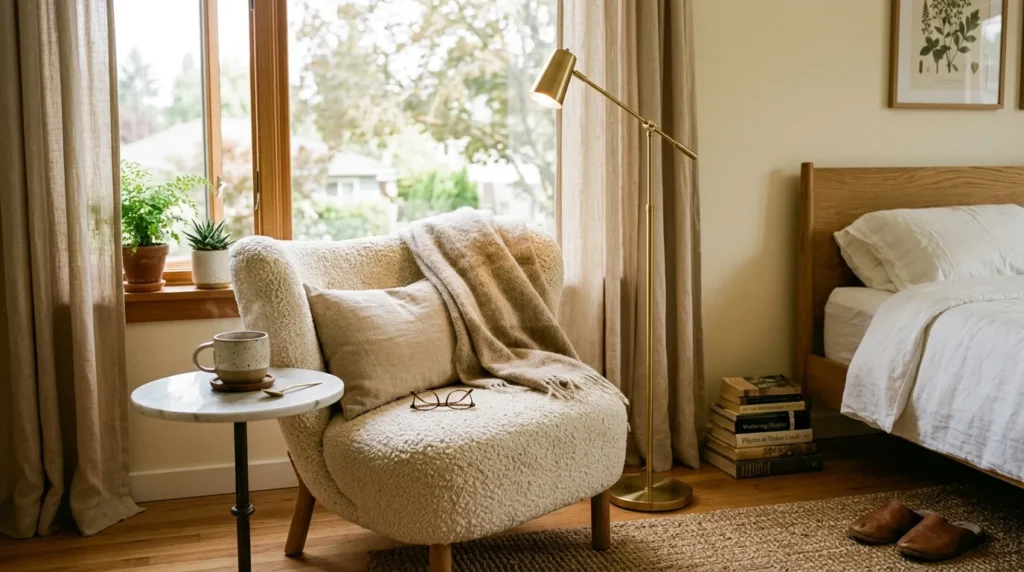
Quick Benefits:
- Creates a dedicated sanctuary away from household activity
- Fills awkward empty corner space with purpose
- Encourages screen-free wind-down habits before bed
- Provides extra functional seating for daytime lounging
- Layers additional decorative textiles into the room
Why It Works
A primary suite should serve as more than just a place to sleep; it should function as a private sanctuary where you can recharge without distractions. If you’re anything like me, having an inviting, dedicated zone away from screens changes how you experience your home. Transforming an unused corner or bay window into a styled reading nook adds functional depth to the floor plan. It separates relaxation from sleep, giving you a dedicated spot to read, journal, or enjoy morning coffee without disturbing a sleeping partner or cluttering the bed with daytime activities.
How To Style It
Anchor an empty corner with a comfortable, high-backed accent chair upholstered in a durable, textured fabric like boucle, olive velvet, or tailored linen. Angle the chair toward the center of the room or out toward a window view. Place a petite marble, ceramic, or solid oak drink table beside the armrest to hold a mug and book. Position an adjustable slim brass floor lamp behind the chair for warm directional reading light. Drape an ultra-soft cashmere or chunky alpaca throw blanket across the back, and place a small lumbar pillow in the seat for lower back support.
8. Oversized Area Rugs
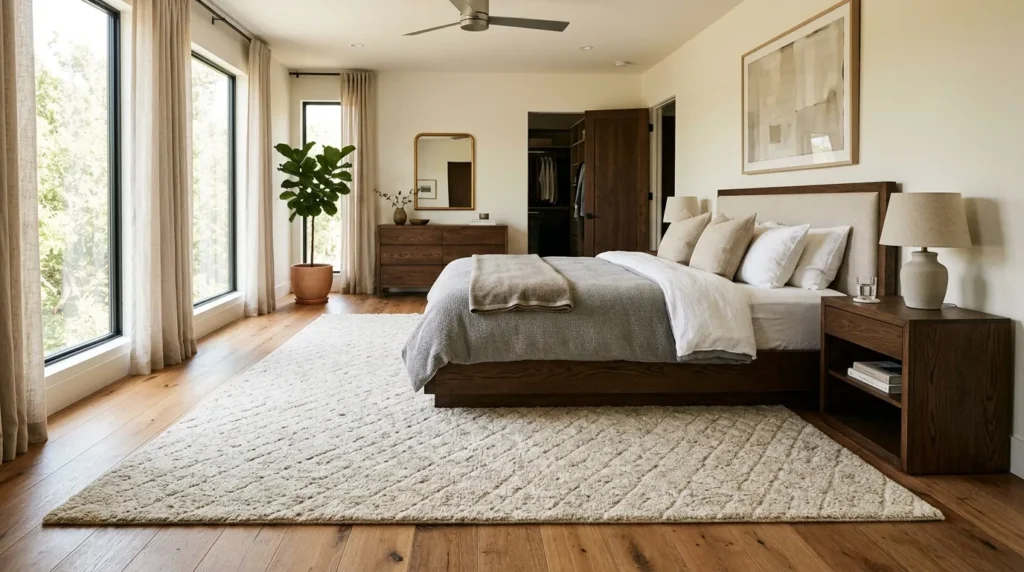
Quick Benefits:
- Grounds and visually unifies all furniture elements
- Cushions cold morning steps with plush softness
- Absorbs room echo for a quieter acoustic environment
- Protects expensive hardwood or luxury vinyl flooring
- Defines the primary suite’s central visual footprint
Why It Works
A common mistake many homeowners make is buying an area rug that is far too small for the room, leaving it floating awkwardly beneath the foot of the bed like a postage stamp. A properly proportioned, oversized area rug serves as the visual foundation for the entire bedroom, anchoring the heavy furniture and uniting disparate decor pieces into one cohesive layout. In addition to defining the room’s proportions, a thick, high-quality wool rug absorbs sound vibrations and provides an exceptionally soft, warm landing for bare feet the moment you step out of bed in the morning.
How To Style It
For a standard Queen or King bed, select an 8×10 or 9×12 rug, sliding it under the bottom two-thirds of the bed frame so it extends at least 24 to 36 inches on all sides and at the footboard. Alternatively, place the rug entirely under the bed and both nightstands for a grand, sprawling footprint. Look for 100% natural wool flat-weaves, hand-knotted low-pile designs, or subtle micro-grid Moroccan styles that offer longevity and texture underfoot. Pair the rug with a premium 1/4-inch felt rug pad beneath to prevent shifting, protect your subfloors, and add luxurious underfoot density.
9. Moody Saturated Color
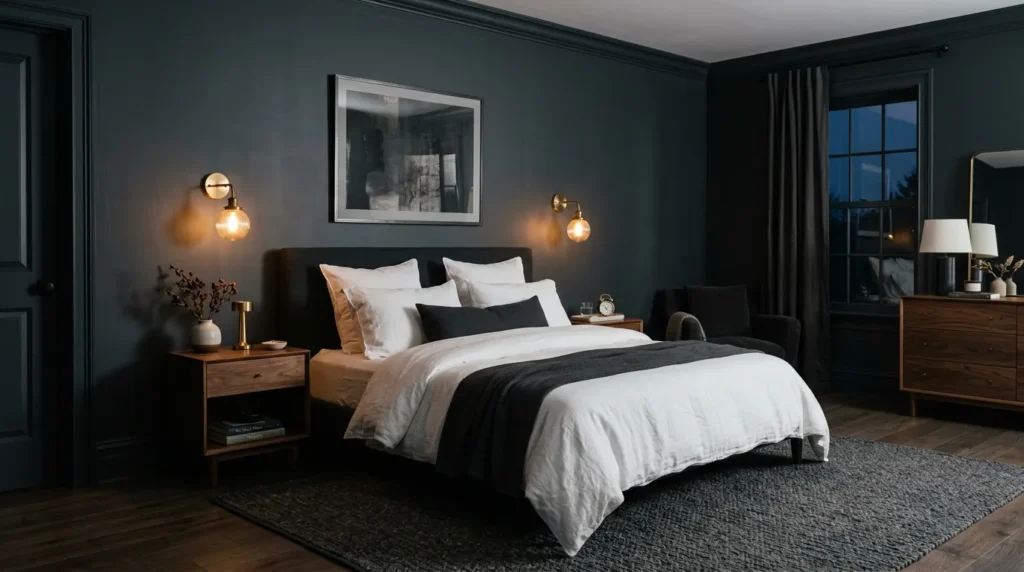
Quick Benefits:
- Envelops the room in an intimate, cocoon-like atmosphere
- Camouflages awkward angles, soffits, and ductwork
- Creates high-contrast drama against crisp bedding
- Delivers sophisticated, designer-grade visual impact
- Highlights warm wood grains and metallic accents
Why It Works
While light neutrals emphasize airy brightness, deep, saturated paint colors lean into the primary bedroom’s fundamental purpose: cozy, intimate retreat. Darker hues recede visually, blurring room boundaries and wrapping the space in a calming, cocoon-like ambiance that promotes deeper relaxation. I’ve seen this idea transform spaces that felt cold or disconnected into dramatic, luxurious suites. Saturated colors like deep forest green, charcoal slate, espresso brown, or rich midnight navy absorb harsh light, reduce optical stimulation, and provide an opulent backdrop that makes art, textiles, and warm metallic finishes pop dramatically.
How To Style It
Commit to color drenching by painting the walls, baseboards, door frames, and even the ceiling in a rich, saturated shade using a velvety matte or eggshell finish on walls and satin on trim. Try Benjamin Moore Hale Navy, Sherwin-Williams Peppercorn, or Farrow & Ball Studio Green. Contrast the dark envelope with crisp white or ivory linen bedding, unlacquered brass hardware, and warm honey-toned oak furniture. Keep window treatments light and airy, or match them directly to the wall color for seamless immersion. Install warm 2700K ambient lighting to prevent the dark colors from feeling sterile or muddy.
10. Biophilic Greenery Styling
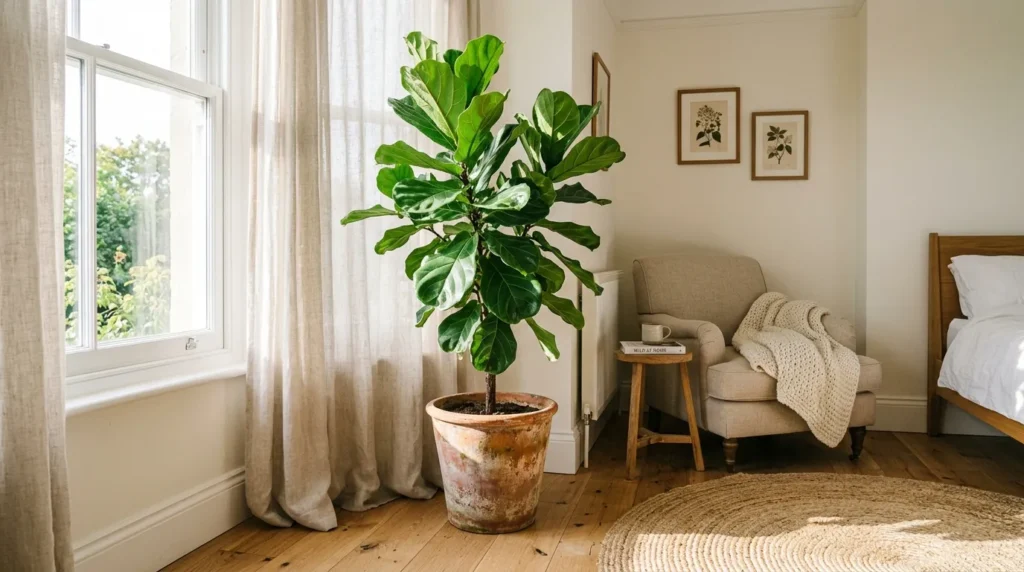
Quick Benefits:
- Introduces organic, sculptural silhouettes to rigid layouts
- Purifies indoor air and improves bedroom oxygen levels
- Injects refreshing, natural color without paint changes
- Boosts overall mood and lowers cortisol levels naturally
- Inexpensive styling tool that bridges indoor and outdoor spaces
Why It Works
Bedrooms filled with square dressers, rectangular mattresses, and rigid architectural angles can easily end up feeling static and stiff. Incorporating live or high-end botanical elements introduces organic curves, delicate movement, and vibrant freshness that softens hard surfaces. Biophilic interior design principles demonstrate that visual connections to nature lower heart rates and foster mental restoration. A tall, architectural tree or a vase of freshly clipped leafy branches breaks up monotony, drawing the eye upward and infusing the bedroom with vitality, natural texture, and serene life.
How To Style It
Place a large statement plant—such as a Fiddle Leaf Fig, Olive Tree, Rubber Tree, or Dracaena—in an empty, sunlit corner inside a heavy, textured terracotta or hand-thrown ceramic pot. For nightstands and dressers, skip tiny cluttered succulents in favor of a single substantial stoneware vase filled with tall, foraged branches (such as olive, eucalyptus, or seasonal cherry blossom clippings). If natural light is limited, opt for ultra-realistic faux branches or low-light tolerant varieties like the ZZ plant or Snake plant. Ensure planters have protective felt pads and deep trays beneath to prevent moisture damage to hardwood flooring.
11. Curated Gallery Wall
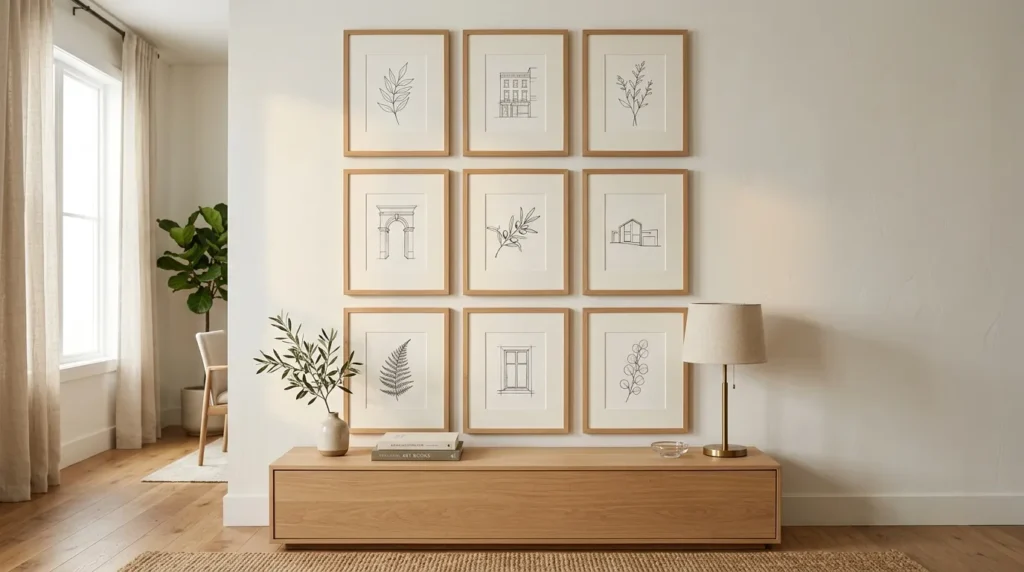
Quick Benefits:
- Transforms blank walls into meaningful visual storytelling
- Allows easy rotation of prints and personal memories
- Pulls together accent colors from rugs, drapes, and pillows
- Customizes builder-grade spaces without major renovations
- Adds elevated, collected-over-time artistic personality
Why It Works
Leaving walls completely bare can make a bedroom feel unfinished and cold, while hanging a single small, generic mass-produced canvas often looks disconnected from the rest of the decor. A thoughtfully arranged gallery wall gives you the opportunity to showcase personality, artistic taste, and meaningful travel memories in a cohesive, elevated format. When curated with consistent framing, unified color tones, and varied mediums, a gallery wall acts as a sophisticated focal anchor that draws the entire room’s decorative palette together into one curated visual statement.
How To Style It
Select a central theme and cohesive palette—such as sepia-toned vintage architectural sketches, minimalist modern abstract ink drawings, or muted landscape photography. Choose 6 to 9 matching wooden or thin gallery brass frames with wide white mat boards for a clean, symmetrical grid layout above a long dresser or blank wall. If you prefer an organic, collected look, mix vintage gilded frames with sleek black frames in varied sizes, ensuring you maintain a consistent 2-to-3-inch spacing between each piece. Keep the center of the overall arrangement at standard eye level (57 to 60 inches from the floor).
Frequently Asked Questions
What is the most calming color palette for a master bedroom?
Soft, low-saturation earth tones and muted neutrals create the most restorative bedroom environments. Designers consistently favor warm off-whites, gentle sage greens, muted slate blues, taupe, and soft mushroom beige. These shades have lower visual energy, which helps reduce ocular strain and promotes emotional calm. Avoid overly vibrant, high-energy primary colors like bright red, energetic yellow, or stark neon tones, which stimulate mental activity rather than relaxation.
How do I make a master bedroom feel like a five-star luxury hotel?
Focus on high-quality layered bedding, warm diffuse lighting, and decluttering all visible surfaces. Invest in high-thread-count cotton percale or pure linen sheets, an oversized down duvet insert, and structured decorative pillows. Hang floor-to-ceiling lined drapery, clear nightstand clutter into discreet drawers, and replace harsh central overhead lighting with warm bedside pendants or dimmable table lamps equipped with 2700K soft-white bulbs.
How big should an area rug be under a King bed?
For a King-size bed, the ideal rug size is 9×12 feet, though an 8×10 foot rug can work in smaller bedrooms. Position the rug horizontally under the bed, starting just in front of the nightstands and extending past the footboard. This leaves a comfortable 2 to 3 feet of plush soft rug exposed on both sides of the mattress and at the foot of the bed, comfortably framing your morning walkway.
Should all the furniture in a master bedroom match?
No, matching bedroom sets can make a room feel flat, rigid, and dated. Modern interior design prioritizes curated spaces that feel collected over time. Pair an upholstered headboard with rich wood nightstands, or combine a vintage timber dresser with sleek, contemporary metal lighting. Mixing complementary wood finishes, metals, and fabric textures adds depth, character, and bespoke visual interest to the room.
How high should I hang artwork above a bed or headboard?
Hang artwork so the bottom of the frame sits 4 to 6 inches above the top of your headboard. If you do not have a headboard, hang the center of the art piece or gallery collection at standard gallery eye level, which is 57 to 60 inches from the floor. Ensure the total width of the art spans roughly two-thirds the width of the bed frame for balanced visual proportions.
Creating a primary suite that balances high design with restful everyday comfort doesn’t require a total overhaul overnight. The most authentic, beautifully layered homes evolve gradually through thoughtful choices. Start by picking one or two foundational updates from this list—whether that means investing in breathable, textured linen bedding, hanging floor-to-ceiling drapery to soften your windows, or painting an accent wall in a cozy, saturated hue. Focus on functional comfort first, layer in tactile textures, and curate a serene environment that supports your daily rest and rejuvenation for years to come.
Related Articles
- Cozy Neutral Bedroom Styling Ideas for Fall
- How to Choose the Perfect Area Rug Size for Every Room
- Modern Farmhouse Master Bedroom Decor Guide
- DIY Wood Accent Wall Ideas on a Budget
- Small Primary Bedroom Layouts and Storage Hacks