
Sliding Bypass vs Pivot Shower Doors: Which Saves More Floor Space?
Choosing between a sliding bypass vs pivot shower doors often comes down to the physical constraints of your bathroom. If you are working with a tight floor plan, the sliding bypass configuration is the clear winner for saving space.
Because these doors move horizontally along a track rather than swinging outward, they require zero clearance in front of the shower enclosure. Pivot doors, conversely, rely on a swinging motion that demands open floor space to function.
Understanding these mechanical differences helps you avoid common layout mistakes during a renovation. While aesthetic preferences matter, the functional footprint of your fixtures dictates how usable your bathroom remains once the work is finished. This article explores the trade-offs involved in selecting your next glass shower installation.
The Verdict on Floor Space Efficiency
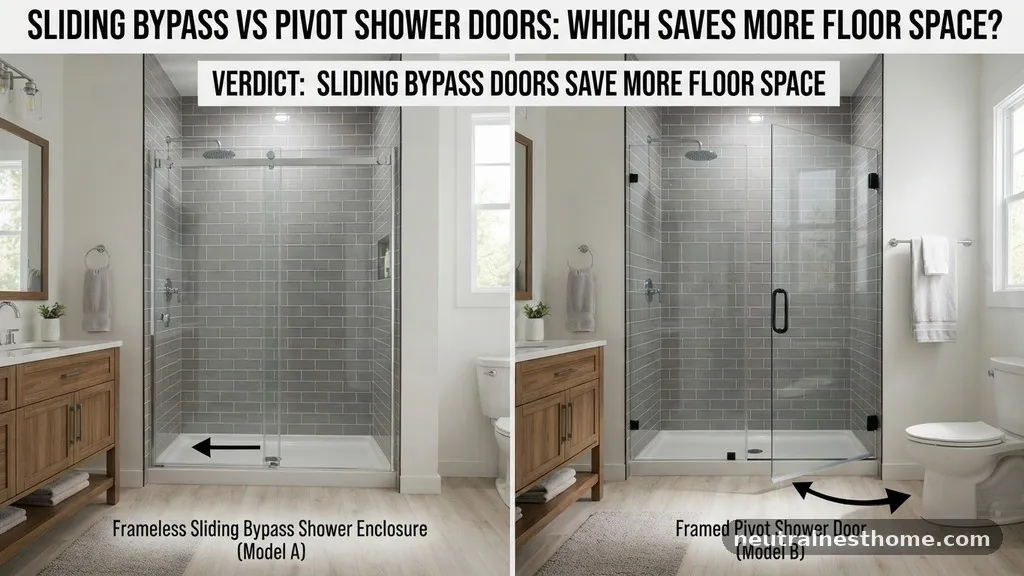
When evaluating a sliding bypass vs pivot shower doors for space, the bypass system is objectively superior for small rooms. A sliding door operates within the footprint of the shower tray itself. You do not need to account for a “swing zone” when placing bathroom furniture, vanities, or towel racks near the shower.
Pivot doors operate like a standard room door, requiring a clear arc of rotation to open fully. In a cramped bathroom, this can lead to collisions with other fixtures or even the bathroom door itself. If you have less than 30 inches of clearance in front of the shower, a pivot door will likely feel intrusive and awkward.
Bypass designs use two or more glass panels that slide past one another on a top or bottom track. Since the panels stay inside the shower threshold, the outward floor space remains completely unobstructed. This makes them the industry standard for alcove showers in smaller homes or secondary bathrooms.
Understanding the Mechanics of Bypass Doors

Bypass doors are defined by their horizontal movement. They typically consist of two panels that overlap, allowing you to enter from either the left or the right side. This design is highly effective for wide openings where a single swinging door would be too heavy or cumbersome.
The track system is the primary mechanical component here. Modern bathroom remodeling standards often favor top-hung rollers over traditional bottom tracks. Top-hung systems keep the rollers away from soap scum and water, which helps the doors slide smoothly for years without needing frequent maintenance.
Because these doors stay contained within the width of the shower, they are the most efficient option for narrow bathrooms. You can place a vanity or a toilet relatively close to the shower entrance without worrying about door interference. This is the primary reason why architects and designers choose them for small-scale layouts.
How Pivot Doors Function in Practice
Pivot doors, often referred to as hinged doors, rotate on a vertical axis. They are generally preferred for their clean, minimalist aesthetic, especially in frameless configurations. Unlike sliding systems, they provide a single, wide point of entry that feels more spacious when you step inside.
However, the “swing” is the critical factor to consider. You must ensure there is enough room for the glass to swing outward without hitting a sink, cabinet, or the bathroom entrance.
Some pivot doors can open inward, but this is rarely recommended due to safety concerns. If a person slips inside the shower, an inward-swinging door can be blocked by their body, making it difficult to reach them during an emergency.
If you have a large master bathroom with plenty of square footage, a pivot door is an excellent choice. It creates a sleek, high-end look that is easier to clean than a track-based system. The lack of tracks makes the glass appear to float, which can make the entire room feel larger and more open.
Comparing Maintenance and Cleaning Requirements
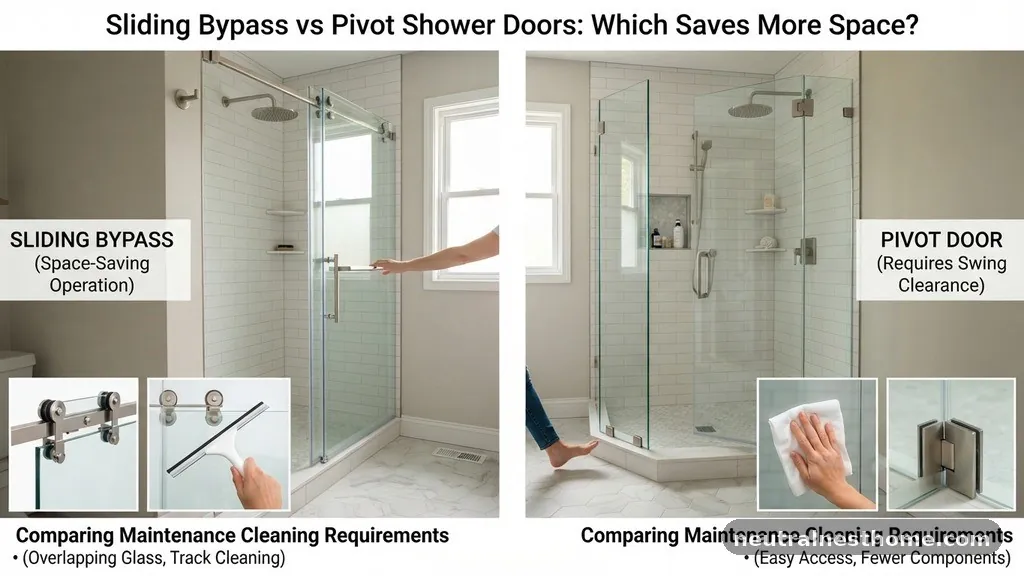
Maintenance is a significant differentiator between these two styles. Sliding bypass doors often feature a bottom track that can collect hair, soap, and hard water deposits. Cleaning this track requires a small brush and regular attention to prevent mildew buildup.
Pivot doors are much simpler to maintain. Since they lack a bottom track, there is nowhere for grime to hide.
You simply need to wipe down the glass and the occasional hinge. If you prioritize low-maintenance living, the lack of tracks in a pivot setup is a major advantage.
Frameless pivot doors are particularly easy to keep pristine. With fewer nooks and crannies, a squeegee can handle most of the daily cleaning. Sliding doors, even those with high-quality headers, will always have more hardware that needs to be polished and kept free of mineral deposits.
A Quick Comparison of Key Features
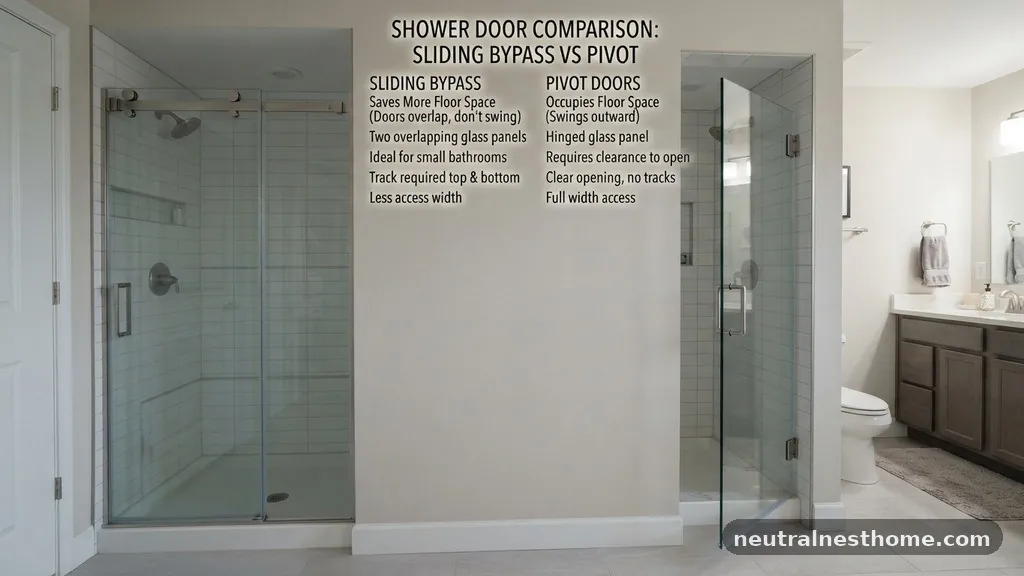
To help you visualize the differences, consider how these systems perform across four major categories. The following table highlights the trade-offs between the two common styles.
| Feature | Sliding Bypass | Pivot Door |
|---|---|---|
| Floor Space Required | Zero clearance | Swing arc clearance |
| Cleaning Effort | High (tracks) | Low (no tracks) |
| Entry Width | Limited by overlap | Full opening |
| Aesthetic Style | Functional/Classic | Modern/Minimalist |
Design Considerations for Your Space
When choosing between these options, you must also look at your wall construction. Pivot doors require heavy-duty hinges that must be securely anchored to a stud or a reinforced wall. If you are installing a heavy glass door on a tiled wall, you need to ensure the backing is strong enough to support the weight.
Sliding doors distribute their weight more evenly across the top header. This makes them a bit more forgiving if your wall alignment is not perfectly plumb. However, the installation of the track system must be precise to ensure the doors do not jump off their rollers.
You should also consider the “feel” of the entry. A sliding door creates a smaller opening because the panels must overlap to close the shower.
A pivot door swings fully open, allowing for a wider, more accessible threshold. If accessibility or ease of entry is a top priority, a wide pivot door or a single-panel sliding door might be better than a bypass system.
Common Pros and Cons
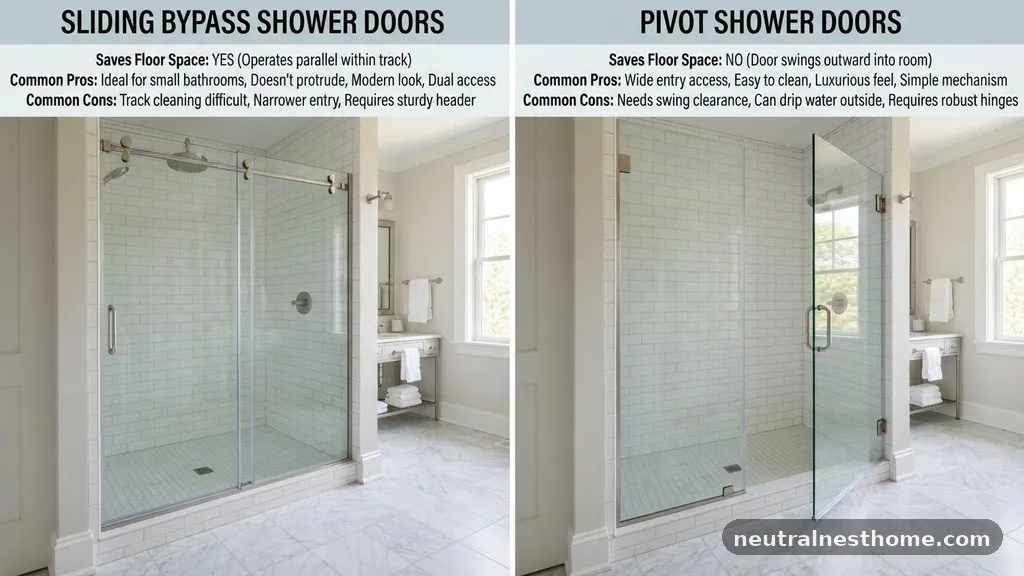
Every homeowner has different priorities, so evaluating the strengths and weaknesses is essential. Here are the most common factors that influence the final decision:
- Sliding Bypass Pros: Saves floor space, great for alcoves, stays contained in the shower footprint.
- Sliding Bypass Cons: Bottom tracks collect debris, limited entry width due to panel overlap.
- Pivot Door Pros: Minimalist design, full access to the shower interior, very easy to clean.
- Pivot Door Cons: Requires extra floor space for the swing, hinges require strong wall reinforcement.
Frequently Asked Questions
Is it better to have a sliding or pivot shower door?
The “better” choice depends entirely on your bathroom layout. If you are short on space, a sliding door is objectively better because it requires no clearance. If you have a larger bathroom and want a high-end, easy-to-clean look, a pivot door is usually the preferred option.
What is the biggest downside of a bypass door?
The primary disadvantage is the maintenance of the bottom track. Over time, soap scum and water minerals accumulate in the channel, which can be difficult to scrub out and may eventually affect how smoothly the doors glide.
Can I install a pivot door in a small bathroom?
You can, but only if the swing path is completely clear. You must measure the distance from the shower threshold to the nearest obstruction, such as a vanity or toilet. If the door hits anything during its arc, it is not a safe or practical choice for that specific space.
Are sliding doors harder to install than pivot doors?
Generally, sliding doors are considered more complex to install because the track system must be perfectly level to prevent the doors from sliding open or closed on their own. Pivot doors are simpler to mount, provided the wall is reinforced to hold the weight of the hinges.
Do frameless doors leak more than framed doors?
Frameless doors rely on tight tolerances and high-quality seals to prevent water from escaping. While framed doors are technically more “leak-proof” due to their metal channels, a professionally installed frameless pivot or sliding door should not leak if the seals are maintained properly.
Choosing the Best Fit for Your Renovation
Selecting between sliding bypass vs pivot shower doors is a fundamental step in designing a functional bathroom. By prioritizing your available floor space, you can immediately eliminate the options that won’t work for your specific layout. If your goal is to reclaim every inch of room in a tight space, the sliding bypass configuration remains the most effective solution.
However, if you have the luxury of space, the pivot door offers a cleaner look with significantly less maintenance. Take the time to measure your bathroom accurately before making a purchase. Consider both the hardware requirements and the long-term cleaning effort involved with your choice.
Whether you opt for the efficiency of a sliding track or the elegance of a pivot hinge, focusing on quality installation will ensure your shower remains a reliable part of your home for years to come. Feel free to re-evaluate your layout if you find that a custom glass solution might better solve a unique spatial challenge in your home.