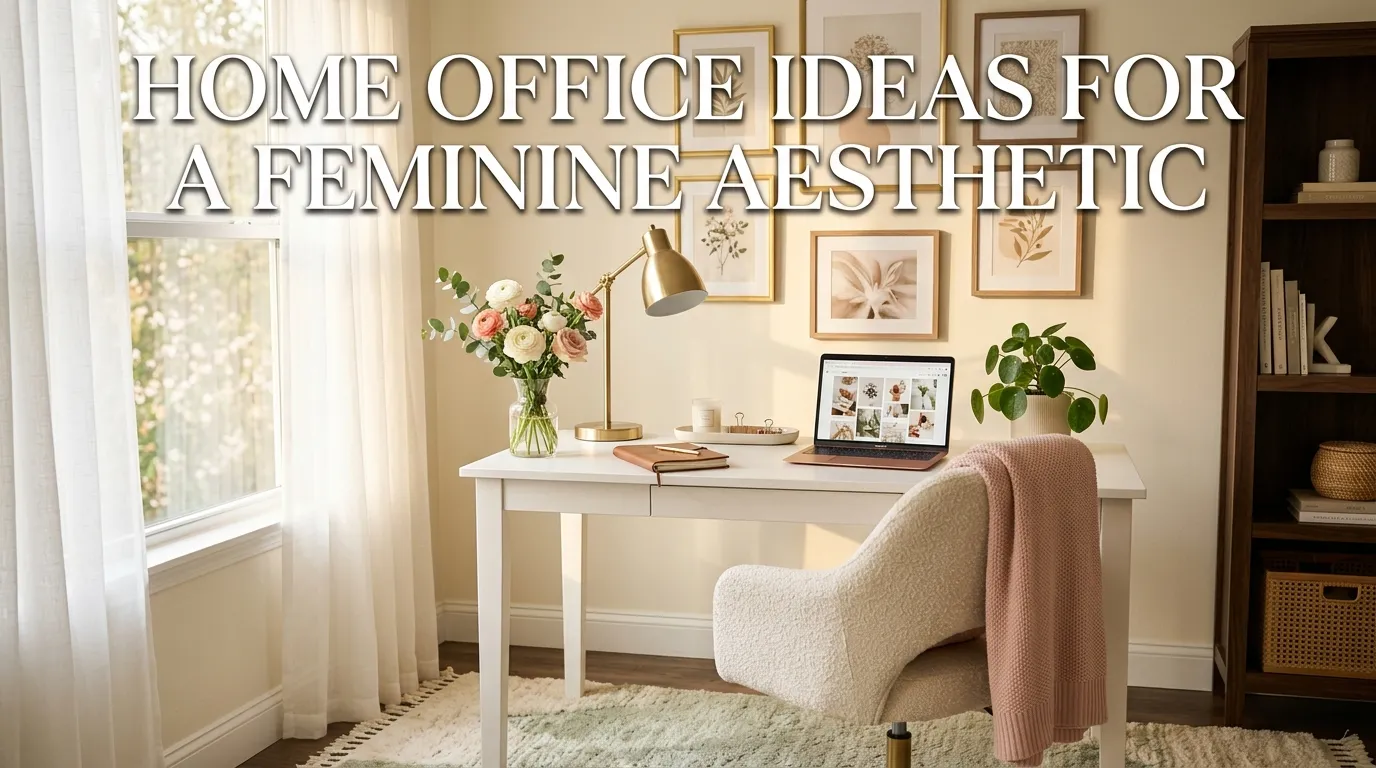
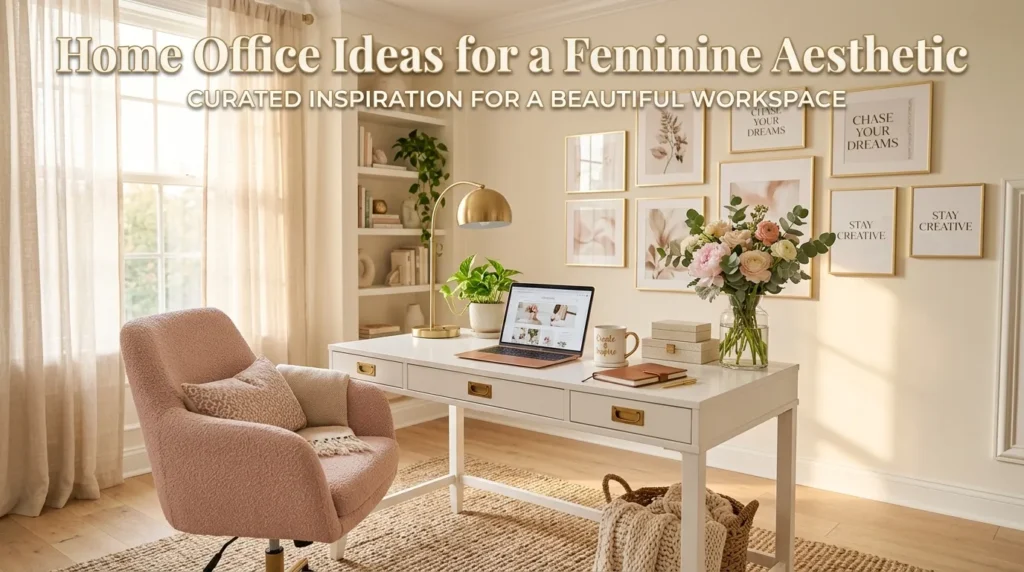
11 Home Office Ideas for Women
A home office has to do a lot of work these days — it needs to look put together for video calls, function well enough to get through a real workday, and still feel like a space you actually want to sit in for hours at a time. In my experience, a lot of home office advice skews either purely functional (ergonomics, storage, cable management) or purely aesthetic (mood boards with no thought to how the space actually gets used). The best home offices manage both at once.
I’ve noticed that women setting up a home office often end up with a leftover corner, a converted closet, or a shared space that was never really designed with focused work in mind. A mistake many homeowners make is trying to force a generic “office” look into that space, rather than designing around how the room is actually shaped and how they personally like to work. A home office built around your real habits — whether that’s needing good natural light, wanting a closed door, or preferring an open, airy feel — tends to get used far more consistently than one designed purely to look good in photos.
This article walks through eleven home office ideas specifically geared toward creating a space that’s both functional and genuinely beautiful, whether you’re working with a dedicated room, a converted nook, or a shared multi-purpose space. Each idea includes the reasoning behind why it works, along with practical guidance on layout, materials, and styling so you can adapt it to your own space and budget.
One thing that works especially well in a home office is choosing a color palette and furniture style that feels calming rather than corporate, since most of us are already spending enough hours in front of a screen without adding visual stress to the mix. That principle shows up throughout the ideas below.
Table of Contents
- Soft Neutral Color Palette — A calming backdrop for focused work.
- Natural Light Desk Placement — Positioning your workspace for better energy.
- Curated Bookshelf Styling — Storage that doubles as personal decor.
- Ergonomic Furniture Choices — Comfort that supports long work sessions.
- Layered Task Lighting — Lighting that supports both function and mood.
- Video Call Backdrop Styling — A considered background for virtual meetings.
- Hidden Storage Solutions — Keeping clutter out of sight and mind.
- Personal Vision Board Wall — A motivating, personal display area.
- Cozy Textile Layering — Softening a functional space with comfort.
- Greenery for Focus — Plants that boost mood and air quality.
- Multi-Purpose Room Dividers — Defining a workspace within a shared room.
1. Soft Neutral Color Palette
Quick Benefits
- Creates a calming, focused atmosphere for work
- Reduces visual fatigue during long screen sessions
- Photographs well for video calls and social sharing
- Pairs easily with a range of furniture styles
- Inexpensive to achieve with paint alone
Why It Works
Color has a real impact on how a workspace feels to sit in for hours at a time, and a soft neutral palette tends to support focus far better than bold or saturated wall colors. In my experience, a home office painted in a calming tone — warm white, soft sage, pale blush — feels noticeably less draining by the end of a workday than one in a high-contrast or overly bright color. A mistake many homeowners make is choosing an energetic, bold color specifically to feel “motivating,” when in practice a calmer backdrop tends to support sustained concentration better over the course of a full day.
How To Style It
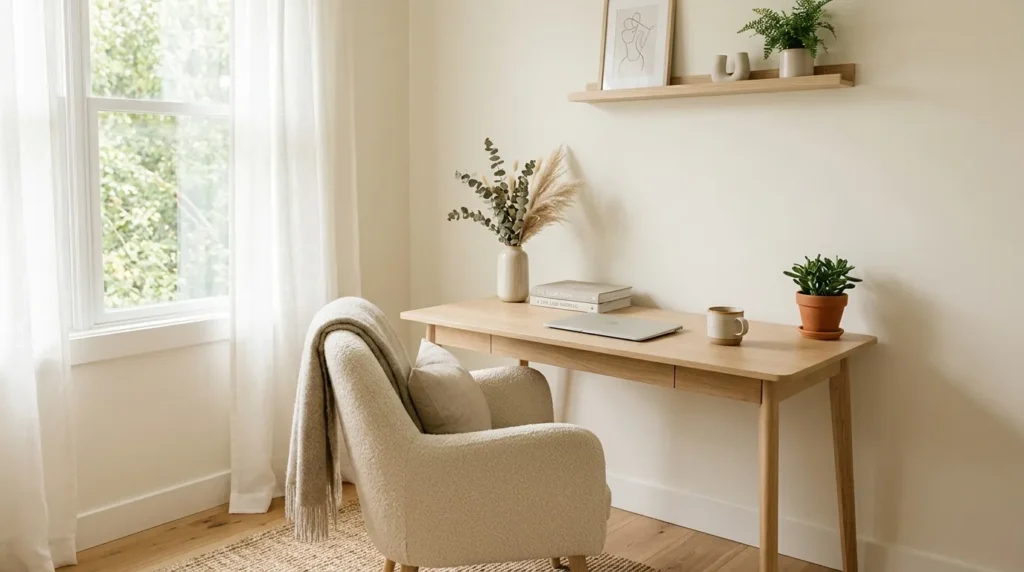
Choose a soft neutral or muted tone for the walls — warm white, soft greige, or a pale sage all work well and photograph beautifully on video calls. Keep large furniture pieces like the desk and any shelving in a similarly neutral or warm wood tone so nothing competes visually with your focus. Save bolder color for smaller accents, like a desk accessory or a piece of art, where it adds personality without overwhelming the space. If you rent and can’t paint, a large neutral rug or a fabric wall hanging can achieve a similar calming effect behind your desk.
2. Natural Light Desk Placement
Quick Benefits
- Improves mood and energy throughout the workday
- Reduces eye strain compared to artificial light alone
- Creates a more flattering setup for video calls
- Supports a healthier daily rhythm
- Costs nothing beyond rearranging existing furniture
Why It Works
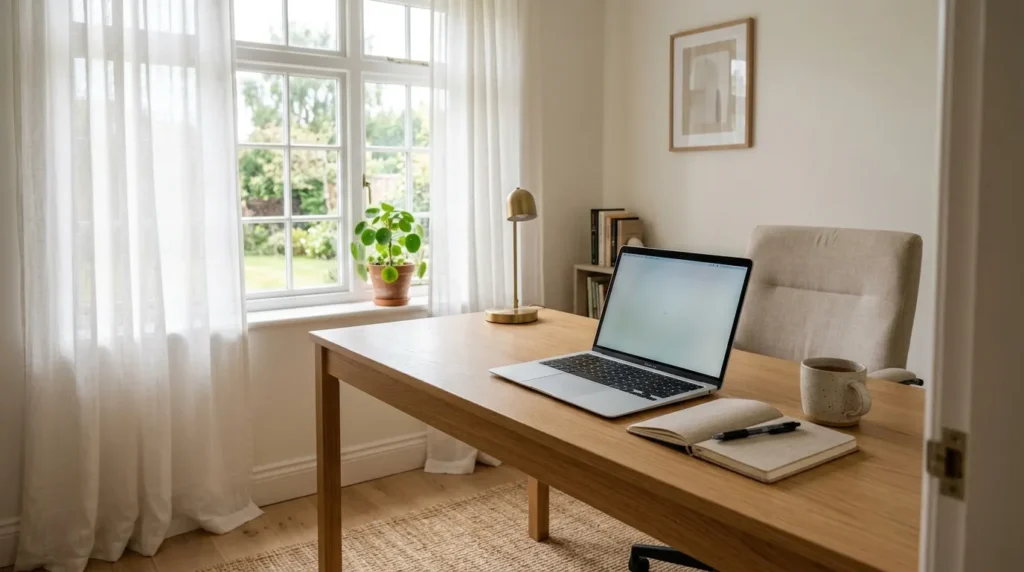
Where you position your desk relative to natural light has a bigger effect on your workday than most people realize. In my experience, working near a window genuinely improves mood and energy levels over the course of the day, and it also happens to create much more flattering, natural-looking lighting for video calls than relying on overhead fixtures alone. A mistake many homeowners make is placing the desk with a window directly behind them, which creates strong backlighting on camera and makes the person on screen appear dark or silhouetted.
How To Style It
Position your desk perpendicular to a window if possible, so natural light comes from the side rather than directly behind or in front of you, reducing glare on your screen while still providing good ambient light. If facing a window works better for your specific room layout, add a sheer curtain to soften direct glare while still allowing plenty of light through. For video calls specifically, natural light from the front or side tends to look most flattering, so consider this angle when finalizing your desk’s exact position. A small desk lamp with a warm bulb helps fill in shadows on darker days or during evening work sessions.
3. Curated Bookshelf Styling
Quick Benefits
- Adds personality and warmth to the workspace
- Provides functional storage for work materials
- Serves as an attractive video call backdrop
- Budget-friendly using books and items you already own
- Easy to update and rearrange over time
Why It Works
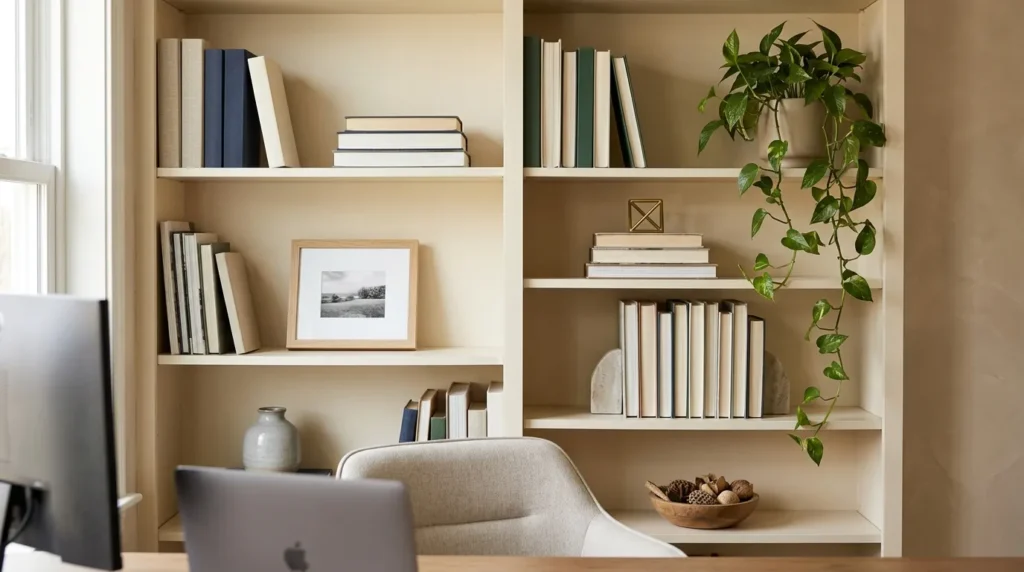
A well-styled bookshelf does double duty in a home office, providing genuine storage for books, binders, and work materials while also serving as one of the most effective backdrops for video calls. I’ve noticed that a bookshelf styled with a mix of books, a few personal objects, and some negative space reads as considerably more polished on camera than a bare wall or a cluttered, disorganized shelf. That’s why many designers recommend investing time in bookshelf styling specifically for anyone who spends significant time on video calls for work.
How To Style It
Arrange books both vertically and in small horizontal stacks, mixing in a few personal objects like a framed photo, a small plant, or a meaningful memento between groupings. Leave some negative space on each shelf rather than filling every inch, since a slightly curated, breathing arrangement reads as more intentional than an overstuffed shelf. Position functional storage, like binders or file boxes, on lower shelves where they’re accessible but less visually prominent than the styled upper shelves. If the bookshelf will appear on video calls, do a quick camera test to check what’s actually visible in frame and adjust styling accordingly.
4. Ergonomic Furniture Choices
Quick Benefits
- Supports comfort during long work sessions
- Reduces physical strain and fatigue over time
- Improves posture and long-term health outcomes
- Available at a range of price points
- Investment that pays off in daily comfort
Why It Works
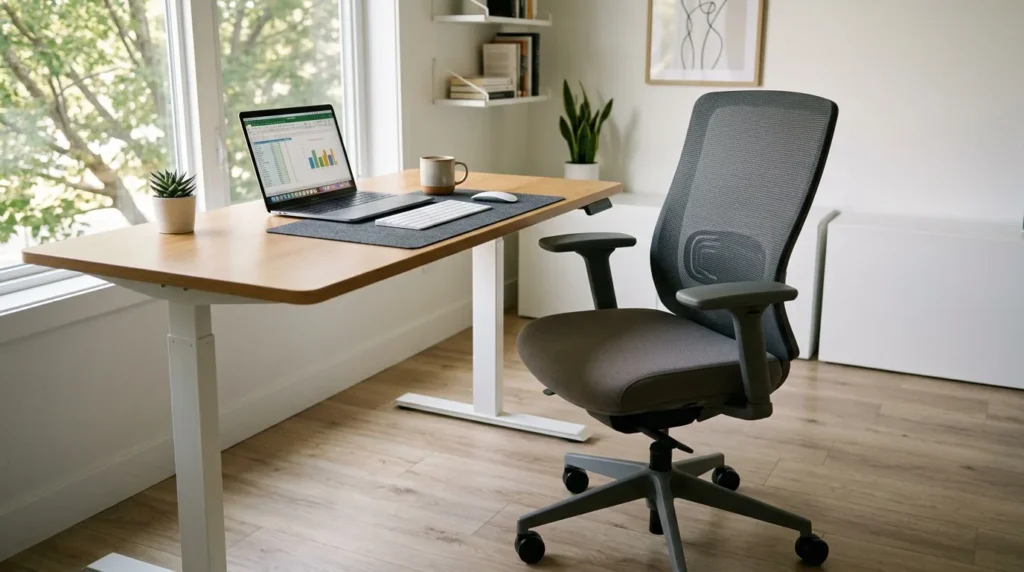
Ergonomic furniture is one of those home office investments that doesn’t always show up in a Pinterest-worthy photo, but it has an outsized impact on how sustainable your workday actually feels. A mistake many homeowners make is prioritizing a chair or desk purely on appearance, without considering how it will feel to sit in for six or eight hours a day, five days a week. In my experience, an ergonomic chair with proper lumbar support and a desk at the correct height genuinely reduces the back and neck discomfort that can build up over a long workweek.
How To Style It
Choose a chair with adjustable height, lumbar support, and armrests that allow your elbows to rest at roughly a 90-degree angle when typing. Set desk height so your forearms are parallel to the floor when working, adjusting with a standing desk converter or desk riser if your current desk height doesn’t quite fit. Position your monitor at eye level, roughly an arm’s length away, to reduce neck strain from looking up or down for extended periods. If budget allows, a chair with a fabric or leather finish in a neutral tone can blend ergonomic function with the room’s overall aesthetic rather than looking purely clinical.
5. Layered Task Lighting
Quick Benefits
- Reduces eye strain during focused work
- Supports both daytime and evening work sessions
- Adds warmth beyond a single overhead fixture
- Inexpensive to implement with lamps alone
- Improves video call lighting quality
Why It Works
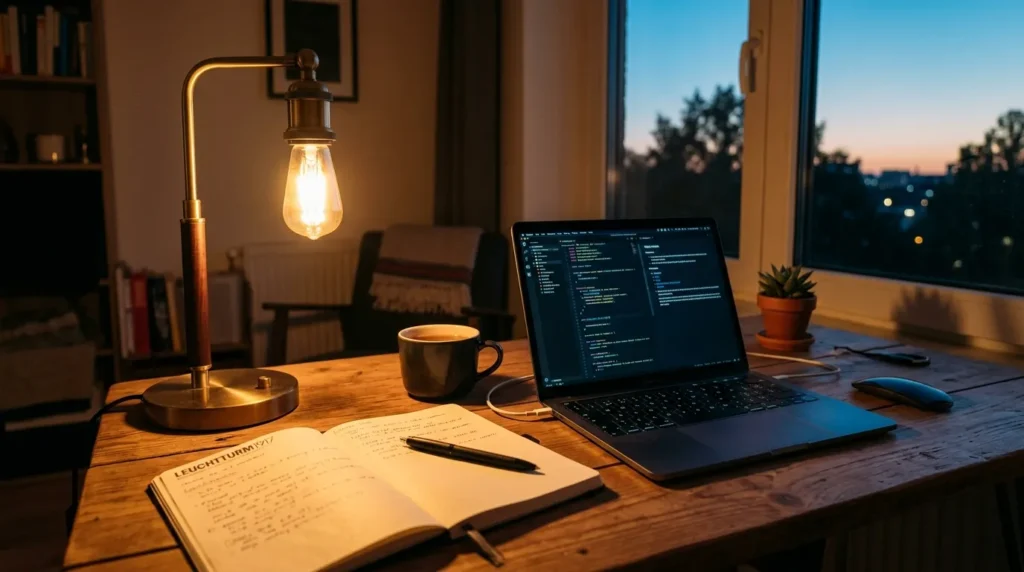
Relying on a single overhead light source in a home office often leaves the actual desk surface under-lit for detailed work, while also creating unflattering shadows for video calls. One simple trick I always suggest is layering in a dedicated desk lamp alongside any ambient overhead lighting, which provides brighter, more direct light exactly where you need it for reading, writing, or close screen work. This layered approach also gives you more flexibility to adjust brightness and warmth depending on the time of day or task at hand.
How To Style It
Add a task lamp with an adjustable arm positioned to the side of your dominant hand, which reduces shadows falling across your work surface as you write or type. Choose a warm-toned bulb for a cozier feel during long sessions, switching to a slightly cooler, brighter bulb if you find warm light makes you sleepy during focused work. A small lamp positioned just outside the camera frame can also improve your video call lighting significantly, filling in shadows that overhead light alone tends to leave on your face. Dimmable options add flexibility for transitioning between bright daytime work and a softer evening wind-down.
6. Video Call Backdrop Styling
Quick Benefits
- Creates a polished, professional appearance on camera
- Reduces reliance on virtual backgrounds or blur
- Doubles as everyday room decor
- Simple to set up with items you likely already own
- Builds confidence for frequent virtual meetings
Why It Works
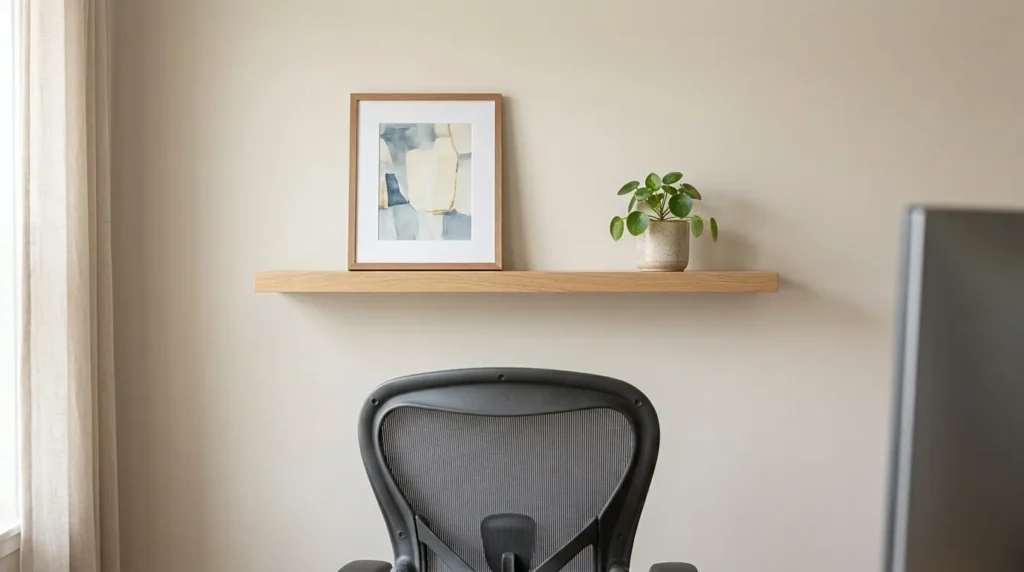
For many women working from home, video calls are a near-daily reality, which makes the specific area visible behind your desk worth genuine styling attention. A well-considered backdrop — a styled bookshelf, a piece of art, a simple textured wall — reads as considerably more professional and put-together than a blank wall, a cluttered corner, or a virtual background that can look artificial or distracting. A mistake many homeowners make is styling their entire office beautifully while neglecting the one specific angle that actually shows up on screen during calls.
How To Style It
Sit at your desk and check exactly what’s visible in your camera frame, since the styling that matters most is often a fairly narrow, specific slice of the room rather than the whole space. A single piece of art, a small styled shelf, or even a simple textured wall hanging can serve as an effective, intentional backdrop without requiring an elaborate setup. Keep the backdrop relatively simple and uncluttered, since a busy background can be distracting to call participants and compete with you for visual attention. Test your setup with the actual video platform you use most often, since lighting and framing can look different across different call software.
7. Hidden Storage Solutions
Quick Benefits
- Keeps clutter out of sight without sacrificing function
- Maintains a polished, professional appearance
- Works well in small or shared office spaces
- Available in a range of furniture styles
- Reduces visual stress from visible mess
Why It Works
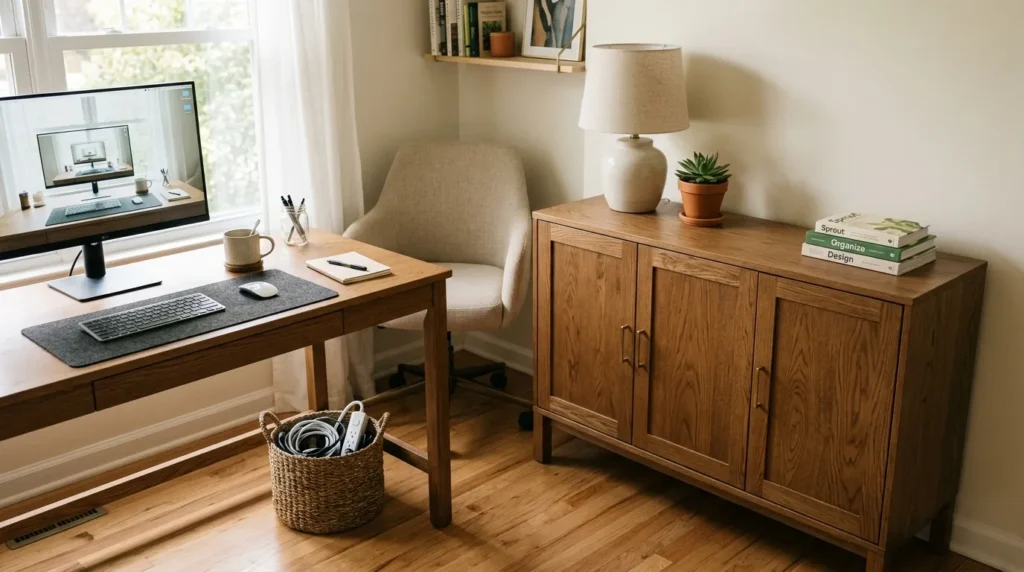
Paper clutter, cables, and office supplies tend to accumulate quickly, and hidden storage solutions let you keep everything functional and accessible while maintaining a calm, uncluttered look. I’ve seen this idea transform small home offices in particular, since concealed storage — a cabinet with doors, a drawer organizer, a decorative box for cables — allows the same amount of actual storage as open shelving without the visual noise. A mistake many homeowners make is displaying every supply and file openly in the name of accessibility, which can make even a well-designed office feel chaotic by midweek.
How To Style It
Choose a filing cabinet or storage cabinet with closed doors or drawers rather than open cubbies for items you use less frequently, like archived files or extra supplies. A decorative box or basket on your desk or a nearby shelf can corral cables, chargers, and small items that would otherwise clutter the surface. Label storage containers clearly, even attractive ones, so the system stays functional rather than becoming a catch-all that’s hard to navigate. Keep your most frequently used items in the most accessible storage, reserving less convenient spots for things you reach for only occasionally.
8. Personal Vision Board Wall
Quick Benefits
- Adds motivation and personal meaning to the workspace
- Creates a visually engaging focal point
- Budget-friendly using printed images and pins
- Easy to update as goals or interests evolve
- Personalizes an otherwise generic office space
Why It Works
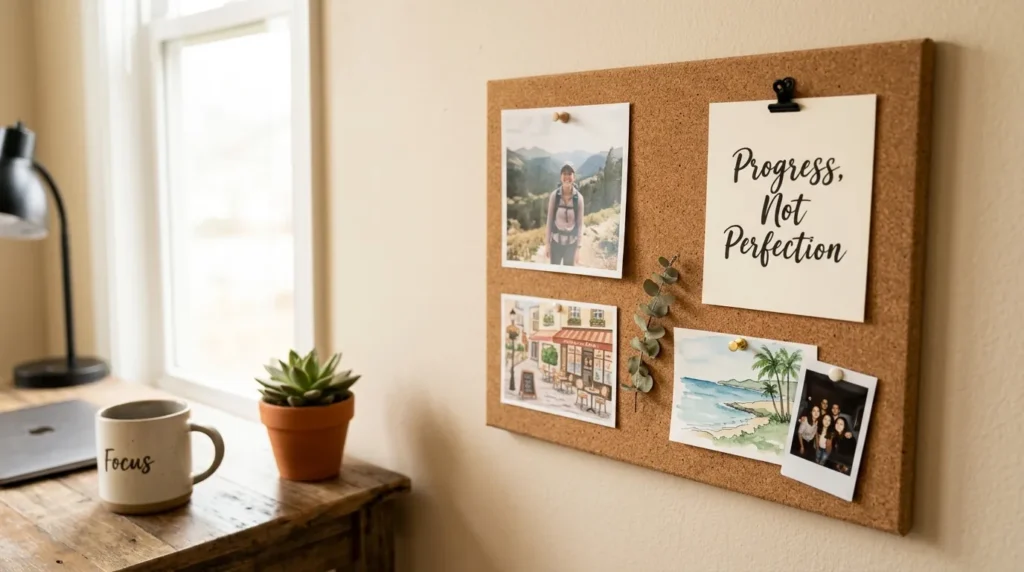
A dedicated vision board or inspiration wall brings a personal, motivating element into a home office, which can otherwise feel purely transactional and task-focused. That’s why many designers recommend a small, curated display of goals, inspiration images, or meaningful mementos specifically for home offices, since this personal touch is often what makes the difference between a space that feels like “just a desk” and one that feels genuinely yours. If you’re anything like me, you’ve noticed how a glance at a meaningful image or quote during a stressful workday can genuinely shift your mindset.
How To Style It
Choose a small section of wall, ideally within eyeline from your desk but outside the direct video call frame, for a curated collection of images, quotes, or mementos that feel personally motivating. A corkboard, a simple grid of washi tape, or small clip frames all work well for displaying and easily swapping out items over time. Keep the collection relatively small and curated rather than sprawling, since a focused display tends to feel more intentional and less cluttered than an overwhelming wall of images. Update the display periodically as your goals or interests shift, keeping the space feeling current rather than static.
9. Cozy Textile Layering
Quick Benefits
- Softens a typically hard-surfaced, functional room
- Adds comfort during long work sessions
- Inexpensive way to update the room’s feel seasonally
- Introduces texture without visual clutter
- Makes the space feel less clinical and corporate
Why It Works
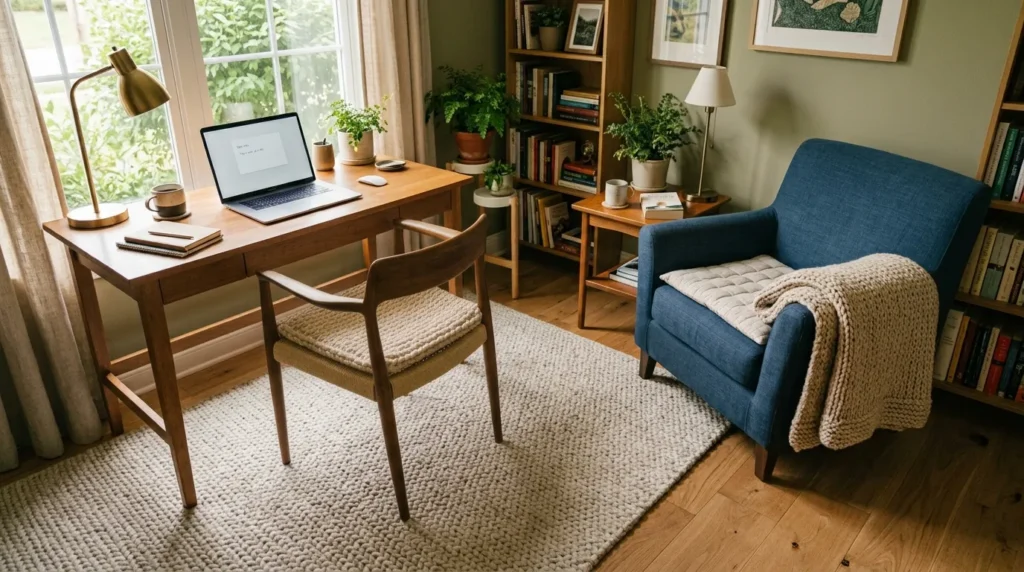
A home office filled entirely with hard surfaces — a desk, a chair, a bookshelf — can start to feel a bit sterile no matter how well it’s organized, which is where textiles come in. A soft rug underfoot, a cushion on your desk chair, or a small throw for cooler days all add warmth and comfort without requiring any additional furniture. In my experience, this kind of textile layering is often what separates an office that feels genuinely comfortable to work in from one that just looks nice in photos but feels a bit cold day to day.
How To Style It
Add a soft area rug beneath your desk chair, both for warmth underfoot and to help define the workspace within a larger room if needed. A seat cushion in a coordinating neutral tone adds comfort to a hard desk chair, while a small throw draped over a nearby reading chair extends the same soft, textural quality further into the room. Keep the textile palette within your established color scheme so the additions feel cohesive rather than randomly introduced. Rotate lighter and heavier textiles seasonally to keep the space feeling comfortable and appropriately cozy year-round.
10. Greenery for Focus
Quick Benefits
- Improves air quality and overall mood
- Adds natural texture to an otherwise hard-surfaced room
- Supports focus and reduces stress during work
- Inexpensive compared to most other decor categories
- Easy to source and low-maintenance options available
Why It Works
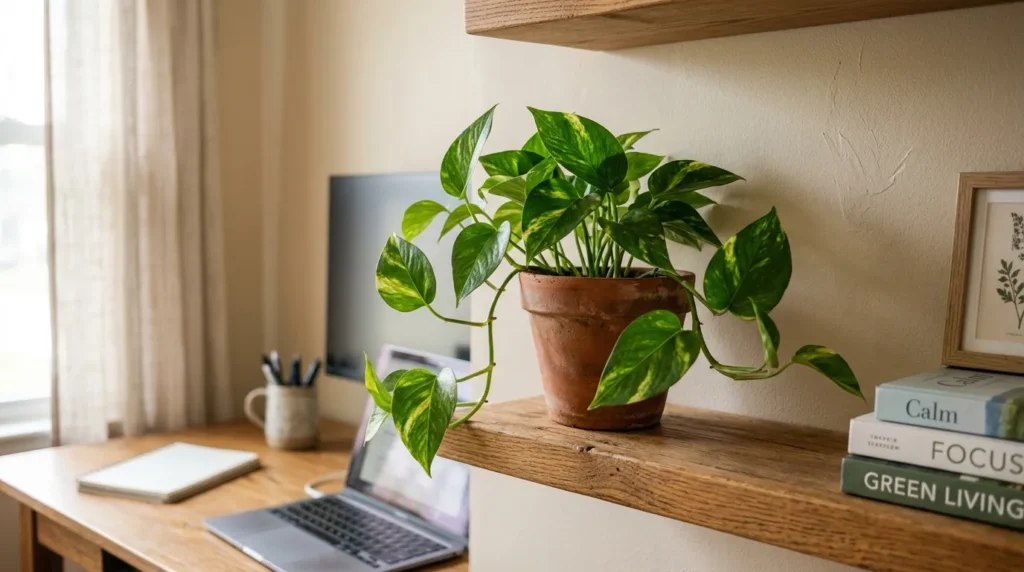
Plants bring genuine life to a home office, and beyond their visual appeal, research on workplace environments has generally supported the idea that greenery can positively influence mood and perceived air quality in indoor spaces. I’ve noticed that even a single well-placed plant on a desk or nearby shelf softens what can otherwise be a purely functional, hard-surfaced room. A mistake many homeowners make is skipping plants in the office specifically, assuming there’s no time to care for them, when several low-maintenance varieties thrive with minimal attention.
How To Style It
Choose a low-maintenance variety like a pothos, snake plant, or ZZ plant for a desk or nearby shelf, all of which tolerate a range of light conditions and infrequent watering. Position a plant within view of your desk, even if not directly on the desk surface itself, so you benefit from the visual softness without it becoming clutter on your actual workspace. A small trailing plant on a shelf or a taller floor plant in an empty corner both add greenery without competing for valuable desk space. If live plants genuinely aren’t practical for your routine, a quality faux plant in a simple ceramic pot still adds visual softness to the room.
11. Multi-Purpose Room Dividers
Quick Benefits
- Defines a workspace within a shared or open room
- Creates visual and psychological separation from personal space
- Available in a range of styles and price points
- Doesn’t require permanent construction or renovation
- Improves focus by minimizing surrounding distractions
Why It Works
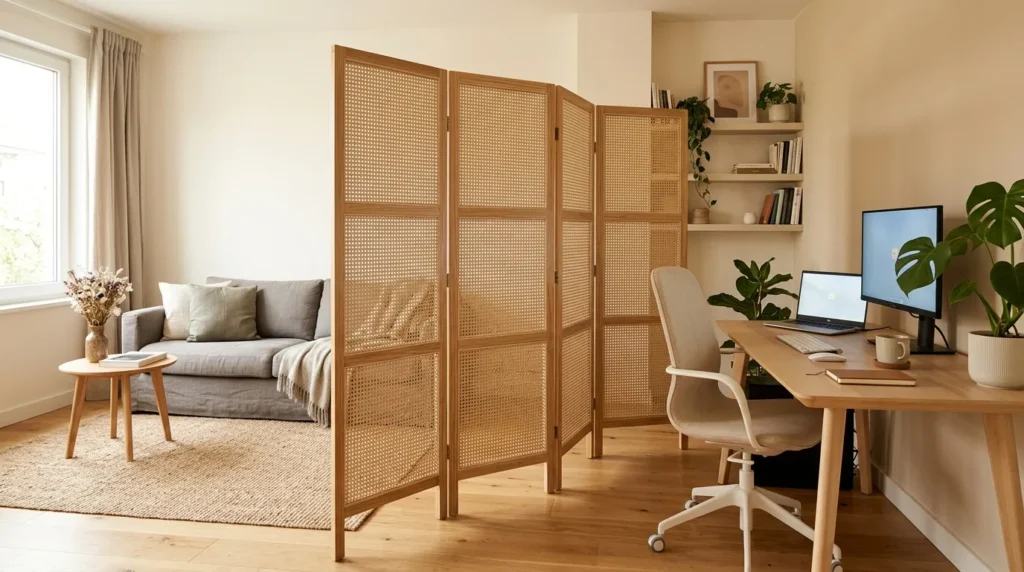
For anyone working out of a shared bedroom, living room corner, or open-concept space, a room divider creates a meaningful sense of separation between “work mode” and the rest of your day, even without a dedicated room. A mistake many homeowners make is assuming a divider is only useful for privacy, when it also plays an important psychological role in helping you mentally shift into and out of work mode at the start and end of the day. I’ve seen this idea help significantly with focus in shared spaces, since a visual boundary reduces the distraction of seeing unrelated parts of the room while working.
How To Style It
Choose a folding screen, a bookshelf positioned perpendicular to the room, or a curtain on a ceiling-mounted track to create a defined boundary around your workspace. A bookshelf divider does double duty, providing storage and display space on the office side while presenting a more finished look to the rest of the room on the other side. Position the divider so your desk faces into the newly defined workspace rather than out toward the rest of the room, reinforcing the sense of a distinct work zone. At the end of the workday, physically closing a curtain or folding screen can serve as a helpful ritual for mentally clocking out.
Frequently Asked Questions
What’s the best desk placement for a home office with limited space?
Position your desk perpendicular to a window when possible, which provides good natural light without the glare or backlighting issues that come from facing directly into or away from a window. In a very small space, a corner desk setup often makes the most efficient use of limited square footage. Prioritizing natural light and a clear video call backdrop matters more than fitting a large desk if space is genuinely limited.
How can I make my home office look good on video calls without a big budget?
Focus on what’s actually visible in your camera frame rather than styling the entire room, since a small styled shelf, a single piece of art, or even a simple textured wall hanging can serve as an effective backdrop. A basic desk lamp positioned to fill in facial shadows also improves video call appearance significantly and costs very little. Testing your setup with your actual call software helps you see exactly what participants will see.
What plants are best for a home office with limited natural light?
Snake plants, pothos, and ZZ plants are all well-suited to lower-light office environments and require relatively infrequent watering, making them practical choices for a busy work schedule. These varieties tolerate a range of light conditions better than many flowering plants, which typically need brighter, more consistent light. A quality faux plant is a reasonable alternative if even low-maintenance live plants don’t fit your routine.
How do I create a home office in a shared space?
A room divider, whether a folding screen, a perpendicular bookshelf, or a curtain, creates both visual and psychological separation within a shared room. Positioning your desk to face into this defined workspace, rather than out toward the rest of the room, helps reinforce the sense of a distinct work zone. Establishing a small ritual, like closing a curtain at the end of the workday, can also help with mentally transitioning out of work mode.
Is ergonomic furniture worth the investment for a home office?
Yes, ergonomic furniture is generally worth prioritizing if you spend significant hours at your desk each week, since proper chair support and correct desk height genuinely reduce physical strain over time. It doesn’t need to come at the expense of style, since many ergonomic chairs are now available in fabric finishes and neutral tones that blend well with a considered aesthetic. Starting with the chair, since it has the most direct daily impact on comfort, is a reasonable place to prioritize budget if you can’t upgrade everything at once.
What color palette works best for a productive home office?
Soft, calming neutral tones like warm white, soft sage, or pale greige tend to support focus better than bold or highly saturated colors, which can feel visually taxing over a full workday. These neutral tones also photograph well for video calls and pair easily with a range of furniture styles. Introducing personality through smaller accents, like a vision board or a single piece of art, keeps the space from feeling flat while maintaining a calm overall backdrop.
Conclusion
A home office that genuinely works for you combines thoughtful function with a look you actually enjoy sitting in every day, whether that’s a dedicated room or a defined corner within a shared space. From natural light desk placement and ergonomic furniture to a curated bookshelf and a bit of personal styling, each of these ideas contributes to a workspace that supports both your comfort and your focus.
If you’re setting up or updating your own home office, start with whichever idea addresses your most immediate need — better lighting for video calls, more comfortable seating, or simply a bit more personality on the walls. These changes build on each other, and gradually, your home office will feel like a space that genuinely supports how you work, not just how it photographs.
Start with one or two ideas and gradually build a space that reflects your style and supports everyday comfort.
Related Articles
- 10 Modern Bedroom Ideas That Feel Warm
- How to Decorate a Bedroom with Natural Materials
- Small Living Room Ideas with Budget-Friendly Decor
- Neutral Home Styling Tips
- Bedroom Wall Decor Ideas with Wood Accents