11 diy fall centerpieces for table at thanksgiving
Introduction to Thanksgiving Table Styling
Setting the stage for seasonal gatherings with creative table arrangements turns a standard meal into an extraordinary holiday experience, especially when you design custom fall centerpieces for table at thanksgiving celebrations. Achieving a polished look relies on tactile design and visual balance, mixing rough natural textures like dried pinecones and foraged foliage with sleek ceramics or brass containers.
This upcoming collection of handmade projects helps you create simple Thanksgiving table decor using accessible materials like florist foam and mini pumpkins. You will find eleven distinct ideas to elevate your dining room, ranging from asymmetrical floral layouts to minimalist botanical displays.
Gathering Thanksgiving Table Supplies
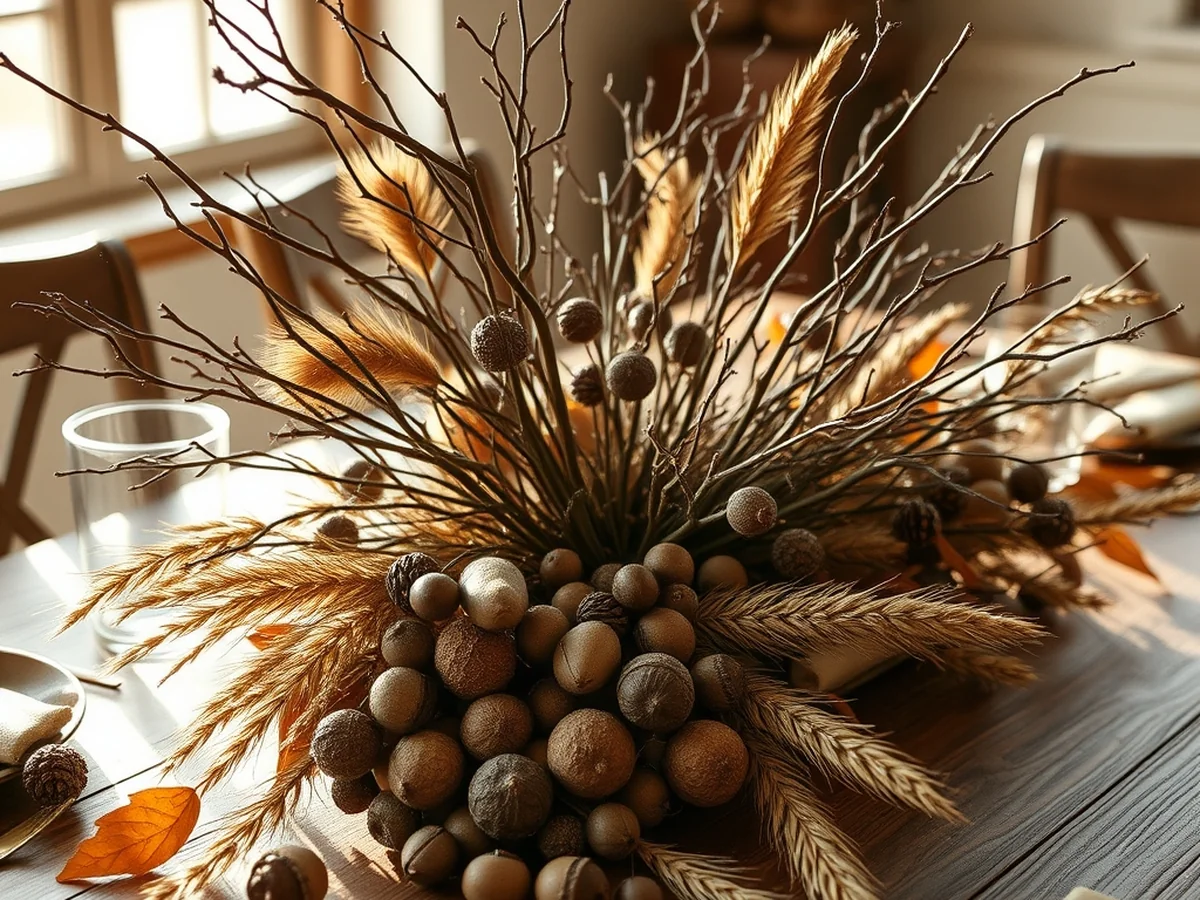
Designing fall centerpieces for table at thanksgiving requires a thoughtful approach to sourcing materials, balancing budgets, and preparing natural elements for display. Creating a memorable dining room setting often begins long before the meal, relying on a mix of foraged elements, structural vessels, and everyday containers to build your seasonal tablescape. Incorporating organic textures adds depth to simple Thanksgiving table decor, while proper preparation ensures your arrangements remain fresh and stable throughout the holiday gathering.
When selecting structural components, decorators frequently combine specialty pieces with items found around the home to keep DIY autumn centerpiece ideas both creative and cost-effective. Careful preparation of each component prevents premature wilting, keeps candles secure, and protects dining surfaces from moisture or sap.
- Florist foam can be used in a vase to secure floral arrangements and keep stems properly hydrated throughout the event.
- Succulents can be planted in potting soil within a bowl to create a living centerpiece that lasts well beyond the holiday meal.
- Wreaths are often placed flat on a table as a base to anchor pillar candles, glass cylinders, or smaller serving vessels.
- Small pumpkins can be balanced atop julep cups to create elevated bud vase displays, adding vertical dimension to natural fall table arrangements.
- Trimming stems at a sharp angle before assembly allows natural elements to absorb water more efficiently, extending the lifespan of fresh greenery.
- Washing foraged leaves and branches thoroughly removes unwanted dirt, debris, and microscopic pests prior to indoor decorating.
Crafting a Deconstructed Cornucopia Arrangement
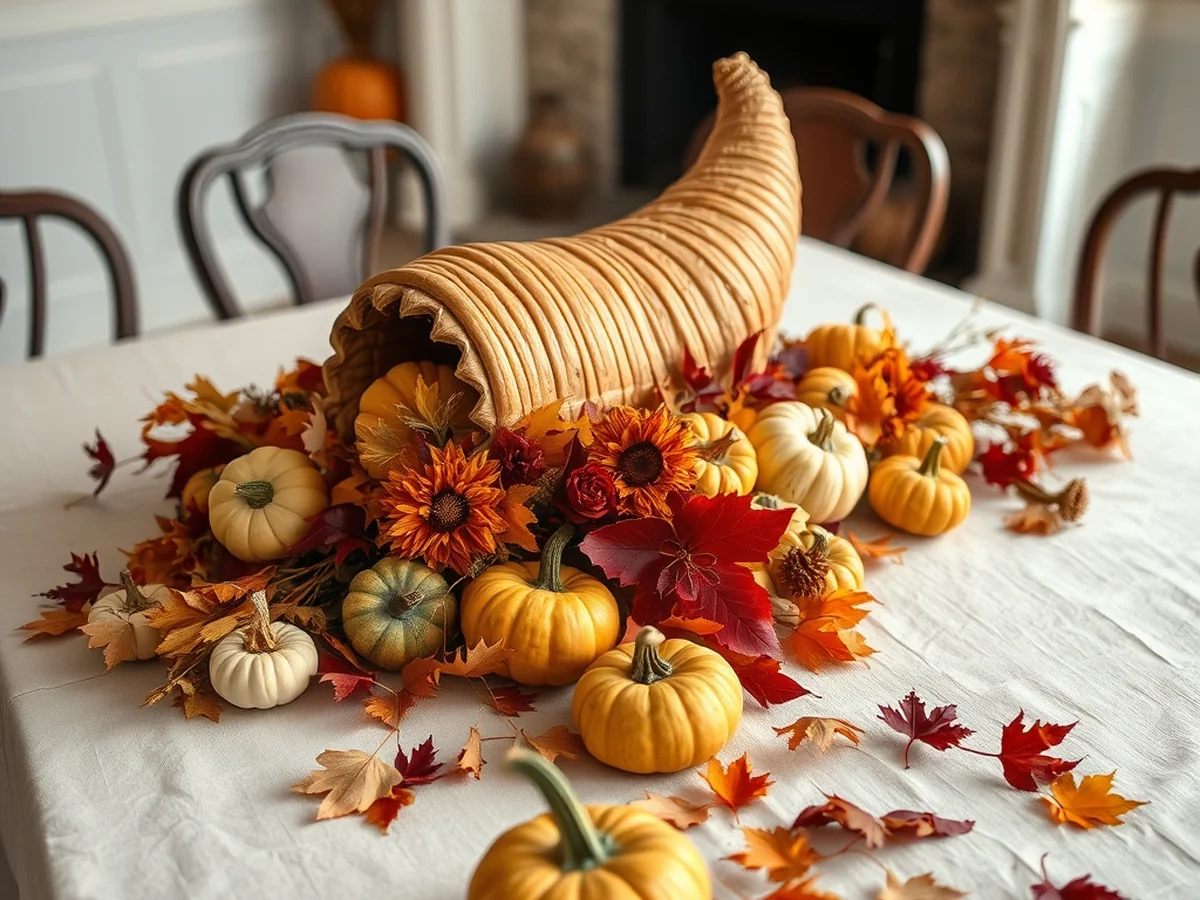
Crafting a deconstructed cornucopia arrangement involves spreading seasonal elements horizontally across the table instead of packing them into a traditional horn container. This approach re-imagines traditional seasonal styling with a modern silhouette that feels open and intentionally relaxed, making it one of the most compelling DIY autumn centerpiece ideas for a seasonal gathering. By breaking away from rigid containers, you create an expansive runner effect that serves as an inviting visual anchor for fall centerpieces for table at thanksgiving.
To build this display successfully, arrange organic produce and textures along the center of the surface. Gourds, squash, and foraged foliage should cascade outward in a loose, flowing path rather than sitting in a tight cluster. Incorporating asymmetrical floral design principles creates dynamic movement within the display. According to Clemson University extension specialists, florist foam can be used in a vase to secure floral arrangements if you want certain blooms to lean outward at striking angles. Additionally, Iowa State University extension experts note that succulents can be planted in potting soil within a bowl to create a centerpiece, introducing a living, low-profile element to the spreading runner.
When executing this style, home decorators often follow practical techniques to maximize visual impact without cluttering the surface. Small pumpkins can be balanced atop julep cups to create bud vase displays that add height variation without blocking guest views across the table. Furthermore, wreaths are commonly placed flat on a table as a centerpiece base to efficiently frame candles, lanterns, or extra gourds.
A common mistake when assembling a horizontal arrangement is packing the elements too densely, which eliminates the airy, intentional flow of a modern fall table centerpiece. Leave small gaps between items so the natural wood or linen of the table shows through. To fix shifting produce during assembly, anchor heavier squashes first before tucking delicate foliage and smaller accents around them.
Designing Horizontal Centerpieces with Wreaths
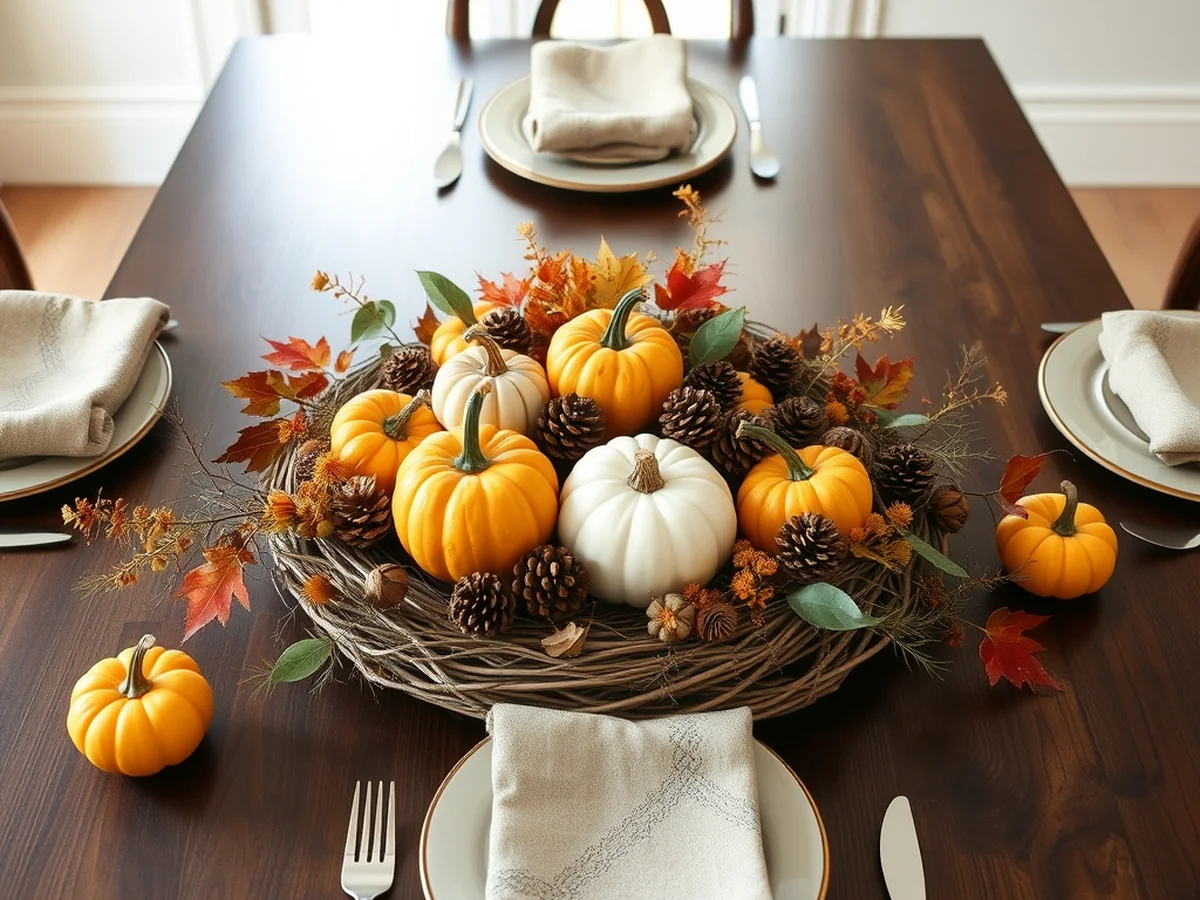
Placing wreaths flat on a dining surface is a common design approach that reimagines standard wall pieces as low profile focal points. This strategy creates an instant, structured foundation for natural fall table arrangements without requiring advanced floral design skills. Home decorators often utilize this method to anchor seasonal gatherings, especially when seeking simple Thanksgiving table decor that leaves sightlines open across the table.
To build a successful horizontal display, start by selecting a base wreath made of preserved foliage, twigs, or dried vines. Layering pillar candles or glass hurricanes in the open center brings warm illumination to the arrangement. Glassware protects surrounding greenery from open flames while adding a clean architectural element to the table. When assembling components like modern fall table centerpieces, consider how height variations interact with your lighting choices.
Combining dried pinecones with fresh or preserved greenery adds tactile depth and earthy texture. Tuck the pinecones securely among the foliage clusters to anchor the overall composition and build a rich seasonal look. If you are incorporating fresh elements that require hydration, florist foam can be used in a vase to secure floral arrangements within the wreath’s interior or alongside the base.
Common mistakes when styling horizontal wreaths include overcrowding the interior space and failing to secure loose botanical pieces. To avoid a cluttered appearance, maintain negative space around your candles or glassware. Additionally, ensure that any foraged elements are thoroughly cleaned and trimmed before placement so the display remains stable throughout your meal.
Assembling Floral Displays Using Professional Mechanics
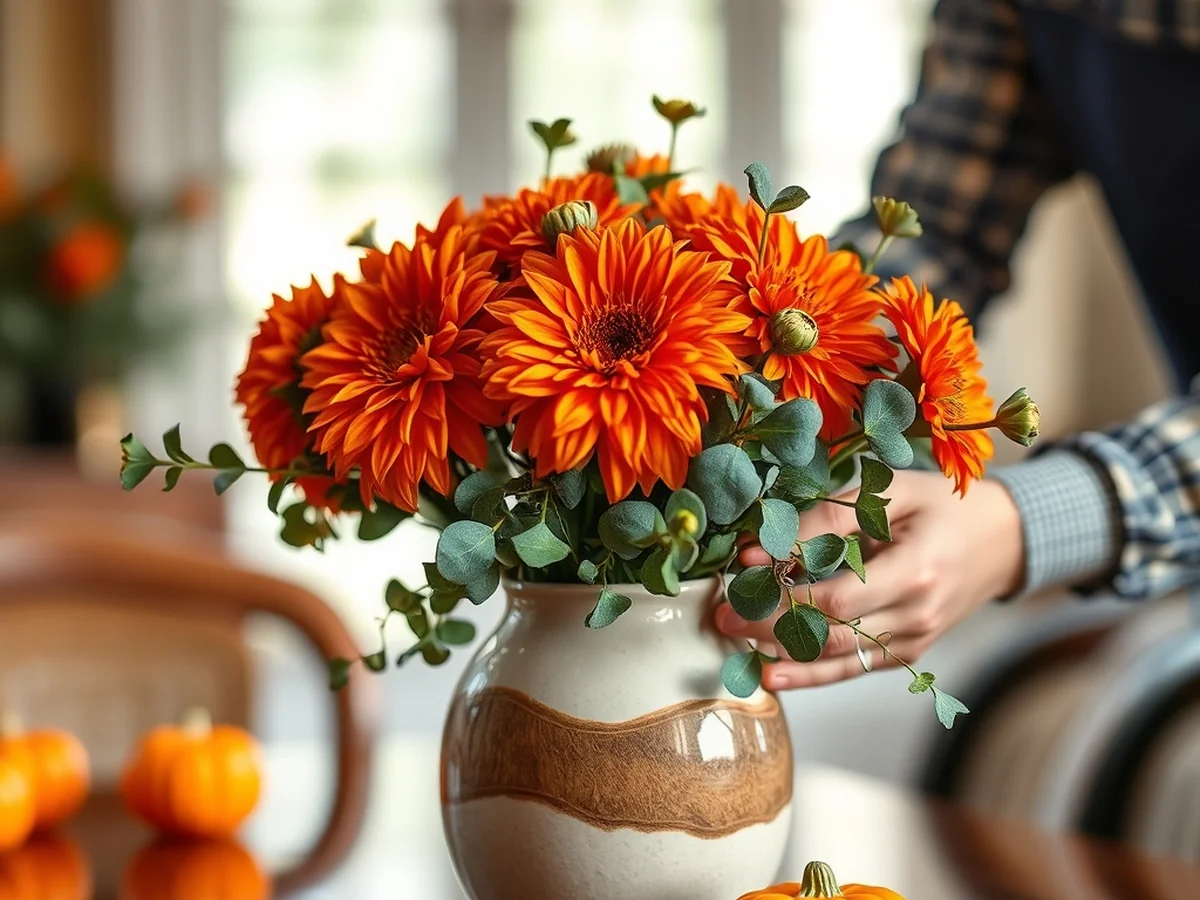
Creating a balanced centerpiece for your table at Thanksgiving requires more than just gathering seasonal stems. To achieve a professional look, you must establish a stable foundation. According to Clemson University, florist foam can be used in a vase to secure floral arrangements, providing the structural stability needed for complex designs. This mechanical support allows you to position stems at specific angles, which is essential for achieving an asymmetrical floral design that feels intentional rather than cluttered.
When assembling your modern fall table centerpieces, follow this professional sequence for the best results:
- Prepare the foundation: Soak your floral foam thoroughly in water before anchoring it firmly into the base of your vessel. A loose base is a common mistake that causes stems to shift and lean over time.
- Establish the silhouette: Insert your longest, sturdiest stems near the base first. These act as the boundary markers for the width and height of your display.
- Create visual depth: Vary stem heights deliberately. Avoid creating a perfectly symmetrical dome, as modern arrangements often thrive on the natural movement created by staggered heights.
- Softening the edges: Layer foraged foliage around the perimeter of the container to hide the mechanic points and the edge of the foam. This creates a lush, organic transition between the vessel and the stems.
- The final polish: Fill any remaining gaps with delicate blossoms, textured seed pods, or dried pinecones. These smaller elements provide the detail that elevates a simple bouquet into a sophisticated centerpiece.
Beyond traditional foam-based arrangements, you can explore other mechanics to add variety to your table. For instance, succulents can be planted in potting soil within a bowl to create a centerpiece that offers longevity well beyond the holiday meal. For those looking for height variations, common design guidance suggests that small pumpkins can be balanced atop julep cups to create charming, minimalist bud vase displays. Additionally, using a wreath as a horizontal base is a typical practice that instantly anchors an arrangement, providing a cohesive frame for candles or decorative gourds.
Creating Bud Vase Displays with Mini Pumpkins
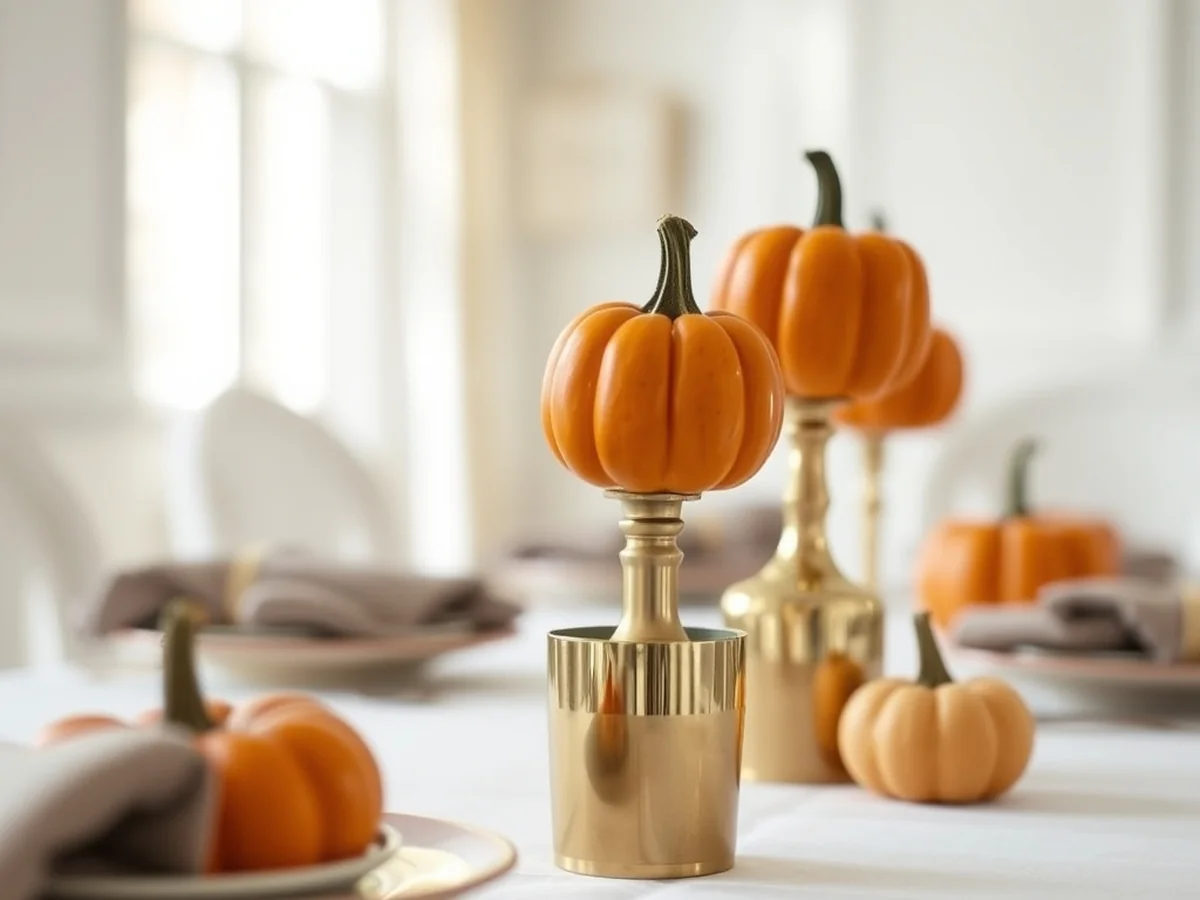
You can create sophisticated fall centerpieces for table at thanksgiving by using small vessels as elevated platforms. A common design practice suggests that balancing small pumpkins atop julep cups adds immediate height and charm to your dining space.
This approach transforms humble produce into structural elements. By choosing metallic or glass julep cups, you introduce texture that complements the smooth skin of the gourds. It serves as an effortless way to arrange your holiday table that feels both polished and intentionally curated.
To integrate greenery, incorporate delicate floral stems into miniature containers tucked between these pumpkin displays. Florist foam can be used in a vase to secure floral arrangements, which is a practical way to keep your stems upright and positioned exactly where you want them.
Consider the overall flow of your display by arranging multiple vessels down the length of the table for visual rhythm. This repetition creates a cohesive look rather than a single, crowded focal point. You might alternate between:
- Julep cups topped with miniature pumpkins.
- Small glass bud vases holding seasonal clippings.
- Taper candles of varying heights to add warmth.
Spacing these elements evenly allows the eye to travel across the entire table. Because the individual components are small and refined, the display remains open, leaving plenty of room for serving dishes. This method balances individual creativity with a structured, professional aesthetic that is easy to assemble at home.
Building Living Succulent Bowls for Lasting Decor
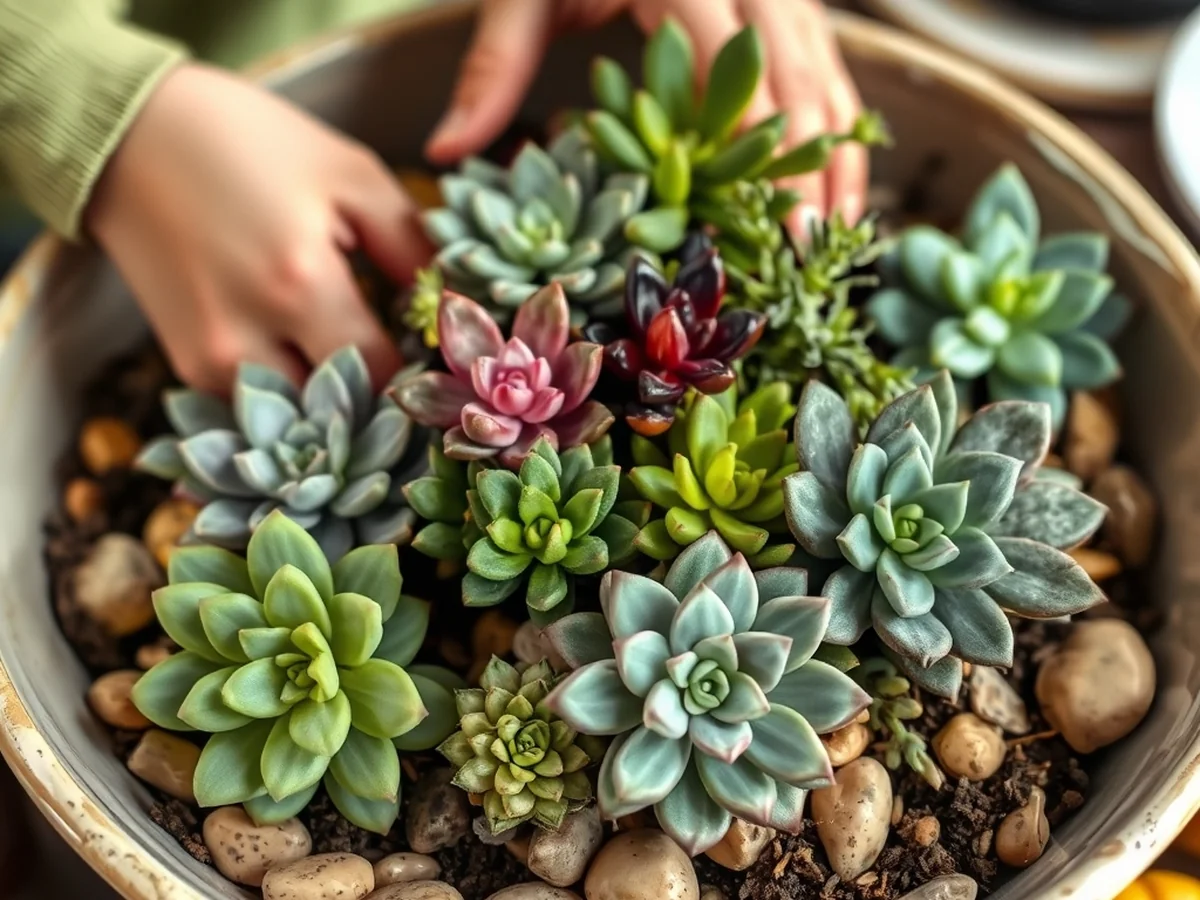
Succulents can be planted in potting soil within a bowl to create a centerpiece. This approach offers a sustainable alternative to cut flowers, allowing your arrangement to thrive well beyond the holiday season.
To begin, select a vessel with adequate drainage or be prepared to monitor moisture levels carefully. Use a high-quality, well-draining potting mix specifically designed for cactus or succulent varieties. Proper soil choice is essential to prevent root rot and ensure the health of your plants throughout the autumn months.
You can easily increase your collection through succulent propagation. Many varieties grow new plants from single leaves or stem cuttings placed in soil. This process allows you to expand your display over time or share small starts with friends, making these botanical bowls a versatile addition to your DIY autumn centerpiece ideas.
Ongoing plant care is straightforward but requires consistency. Follow these steps to maintain your living display:
- Place the bowl in a location that receives bright, indirect sunlight to prevent stretching.
- Water sparingly, ensuring the soil dries out completely between applications to avoid oversaturation.
- Clean the leaves gently with a soft brush to remove dust and maintain a vibrant appearance.
- Rotate the container occasionally to ensure even growth on all sides of the arrangement.
Because these plants are rooted in soil, they remain healthy long after your seasonal gatherings conclude. By selecting hardy varieties, you create a low-maintenance feature that transitions seamlessly from a festive focal point into a permanent piece of home decor. This living arrangement provides a sophisticated, natural touch that endures throughout the year, offering a longevity that cut arrangements simply cannot match.
Sculpting Mini Topiary Displays for Height
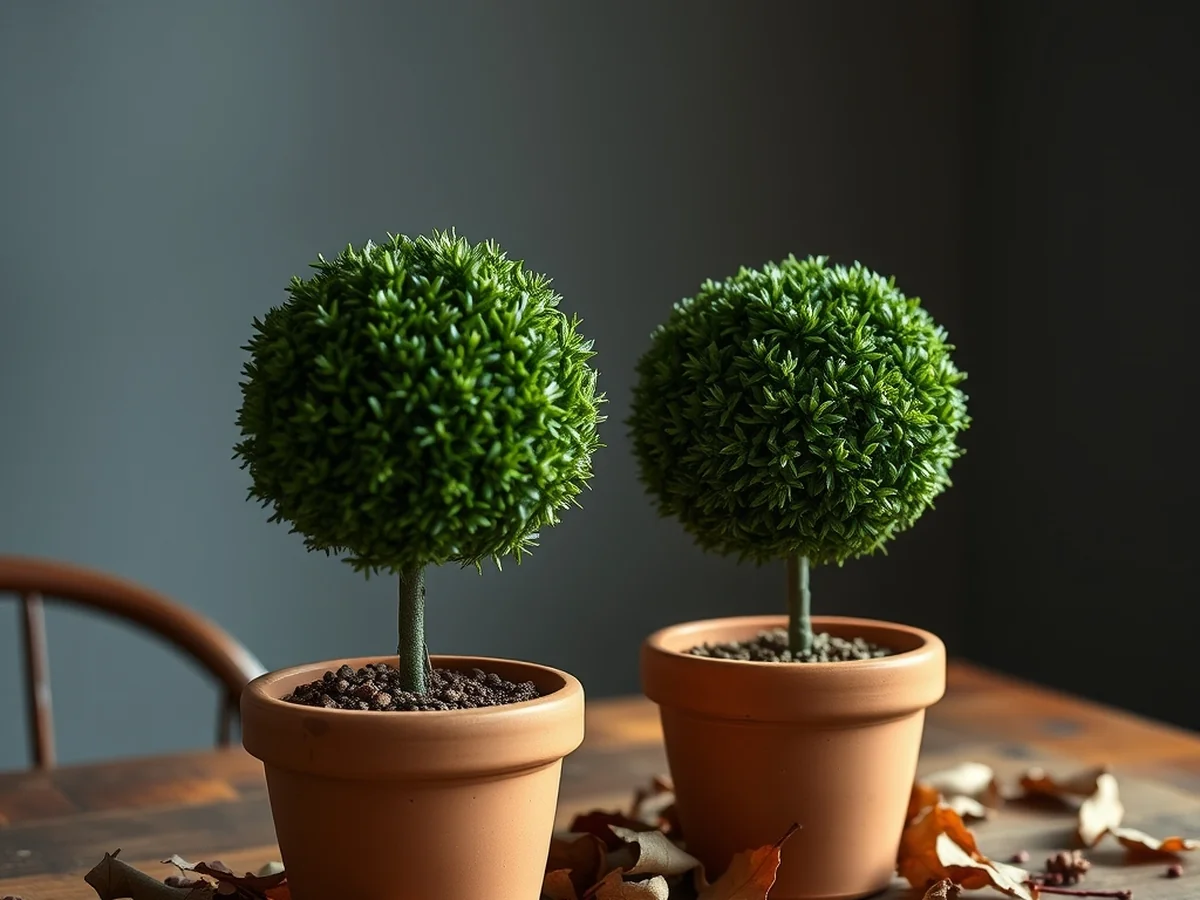
You can create vertical interest on your dining table by utilizing topiary forms, which provide a structured, architectural silhouette that draws the eye upward. These pieces act as anchors for modern fall table centerpieces, offering a sophisticated contrast to the typical low-lying decorations found in standard seasonal arrangements.
Start by selecting a central topiary form as your primary focal point. Incorporating moss and textured botanical elements around the base of these forms adds an organic, woodland aesthetic. This approach brings depth and softness to the rigid lines of the topiary, grounding the design in a natural, earthy palette.
To ensure your display remains functional, you must pair these tall elements with low profile vessels for balance. Placing the topiary inside a shallow decorative bowl or on a tiered platter prevents the arrangement from feeling top-heavy or obstructing the view across the table. Consider the following techniques for assembly:
- Use florist foam inside your chosen container to secure the topiary form firmly in place.
- Fill the base of your vessel with preserved reindeer moss to hide the mechanics and add a lush, textured foundation.
- Integrate foraged foliage or dried seed pods into the moss to bridge the gap between the structured topiary and the table surface.
- Maintain visual stability by surrounding the primary topiary with smaller accessories, such as mini pumpkins, to create a layered effect that feels intentional and curated.
By blending vertical height with grounded, low-level accents, you achieve a balanced look that elevates your holiday dining experience. This method allows you to play with scale, making even modest arrangements appear professionally styled. Always prioritize stability by using quality materials that hold their shape throughout the duration of your event, ensuring your sculpted display remains a beautiful highlight of the room.
Mixing Produce and Dried Botanicals
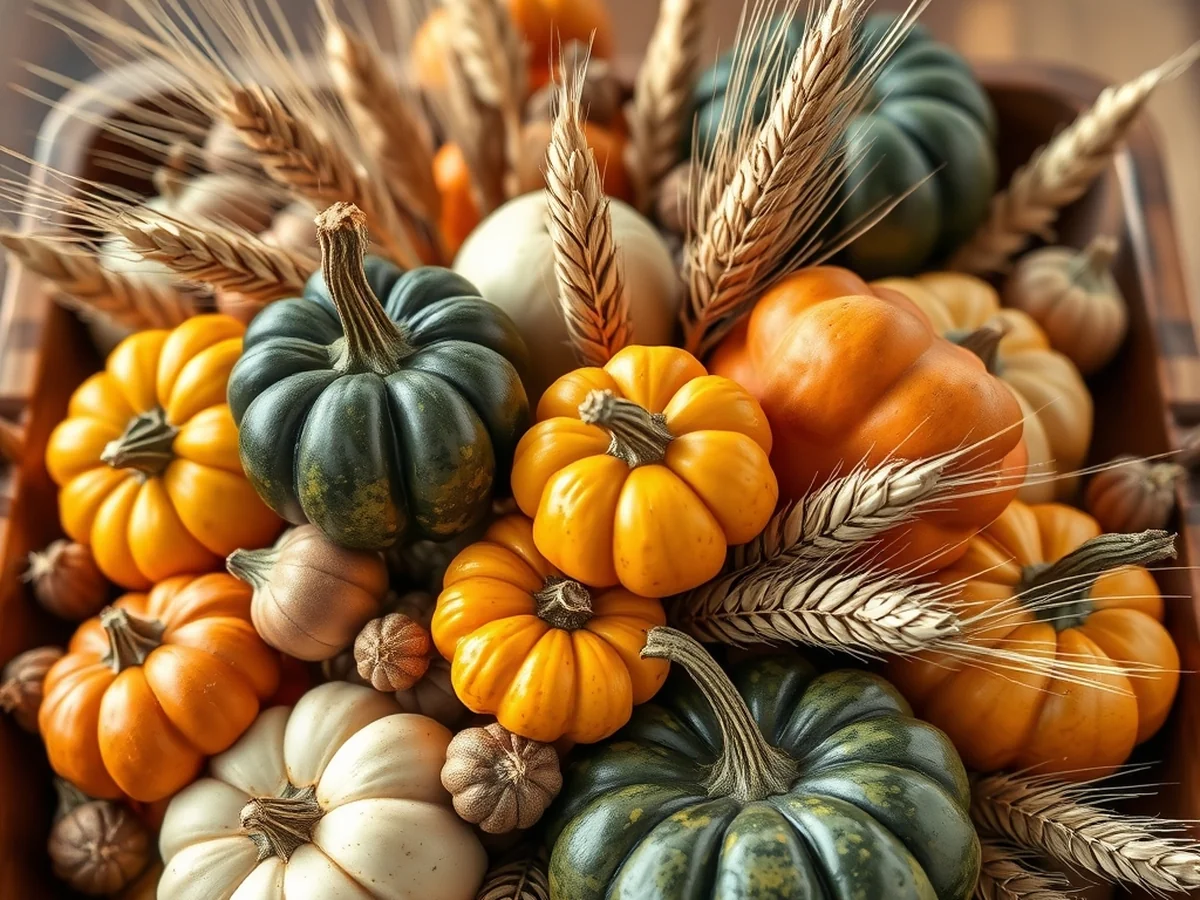
Fresh gourds offer a vibrant, temporary display that typically lasts through the holiday season, whereas dried elements provide a long-term decorative solution that remains intact for months. Balancing these materials requires an understanding of their moisture needs and structural integrity.
| Element Type | Longevity | Care Requirement |
|---|---|---|
| Fresh Gourds | Short-term | Keep dry and cool |
| Dried Seed Pods | Long-term | Avoid direct humidity |
| Foraged Foliage | Variable | Press or air-dry |
To preserve foraged leaves and seed pods, press them between heavy books for several days or hang them in a dark, well-ventilated space to prevent mold growth. Once fully dehydrated, these items can be integrated into natural fall table arrangements without the risk of wilting or decay. If you combine these with fresh produce, place the gourds on a protective base to keep moisture away from table surfaces.
Planning your crafting timeline is essential for a polished outcome. Start gathering and drying your botanical elements at least two weeks before your meal. Fresh items, such as mini pumpkins, should be purchased within a few days of the event to ensure they look their best. When assembling, remember that florist foam can be used in a vase to secure floral arrangements, providing a stable structure for your design. By staggering your preparations, you ensure that both the fresh and preserved components look pristine when it is time to host.
Adding Safe Candle Accents
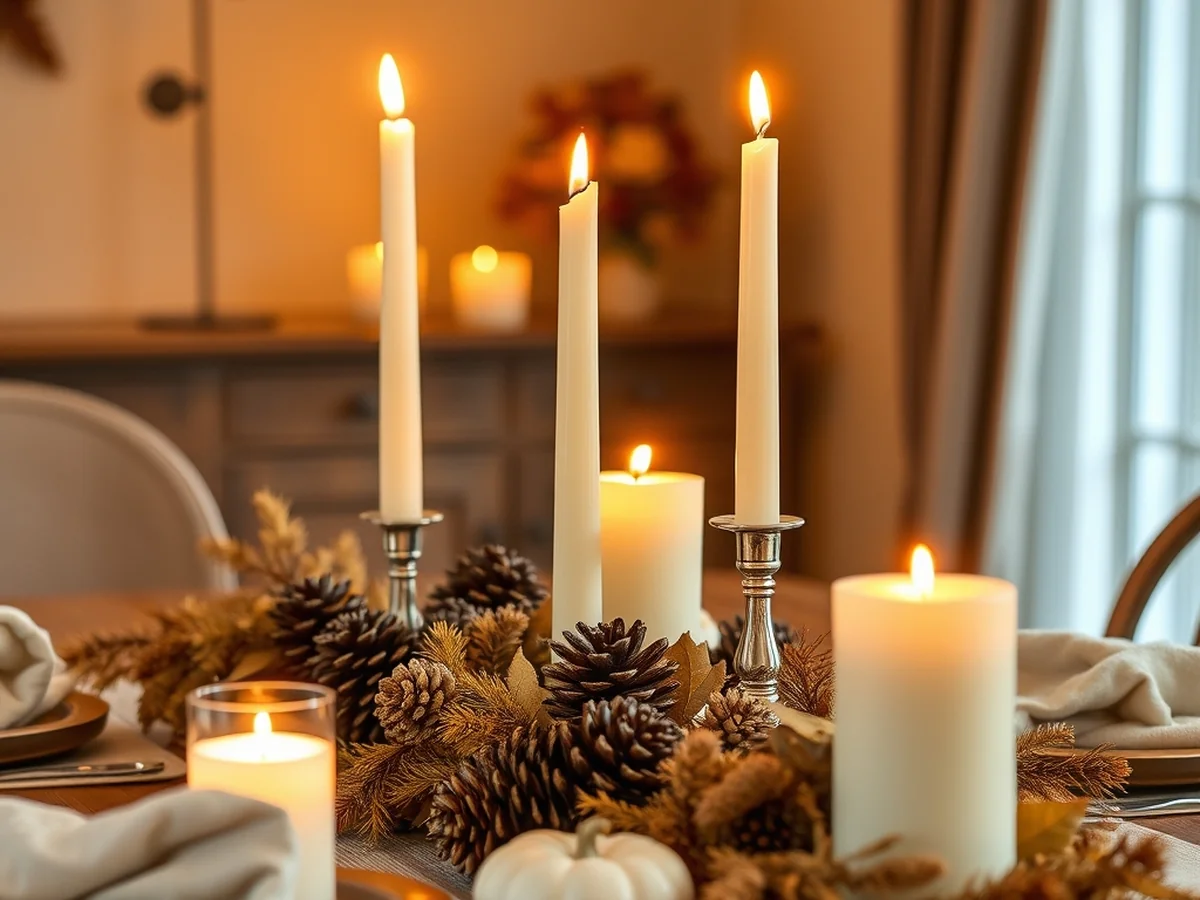
Prioritizing fire safety is essential when incorporating candles into your seasonal displays. Dried foliage, pinecones, and other natural textures are highly flammable and should be kept well away from any open flame.
Maintain a clear distance of at least one foot between your candles and any decorative elements. This clearance zone helps prevent accidental ignition if a flame flickers or if the arrangement is bumped during the meal. Always monitor lit candles closely, ensuring they are never left unattended in a dining room.
Choosing the right hardware is just as important for stability as it is for style. Select heavy, wide-based candleholders to keep tapers and pillars secure. These weighted vessels prevent tipping, which is a common risk in crowded settings. If you prefer a more minimalist look, ensure your candleholders feature a snug fit for your chosen wax size so the candles remain perfectly upright.
Consider these safety practices to enjoy your decor with peace of mind:
- Keep all decorative greenery, whether fresh or dried, at least twelve inches away from the perimeter of any candle.
- Place candles on non-flammable surfaces like stone, ceramic, or metal trays to contain potential wax drips.
- Check the stability of every candleholder on a flat surface before integrating it into your arrangement.
- Opt for LED or battery-operated candles if you plan to incorporate high volumes of delicate, dried materials into your budget-friendly Thanksgiving table decorations.
By following these steps, you create a beautiful atmosphere that remains secure for the duration of your holiday gathering. Focusing on stable, heat-resistant foundations allows your design to shine without unnecessary hazards.
Designing Effective Fall Centerpieces for Table at Thanksgiving
A successful centerpiece balances height, texture, and scale to create a focal point that does not obstruct conversation. The best fall centerpieces for table at Thanksgiving incorporate seasonal warmth through natural elements while maintaining a clean, intentional aesthetic that complements the overall dining room design.
You can re-imagine traditional Thanksgiving decor by moving away from standard cornucopias and toward more contemporary arrangements. It is common practice to use wreaths as a horizontal base to anchor your display, or you might embrace asymmetrical floral design to create a more organic, modern look. Many decorators also balance small pumpkins atop julep cups to create elevated bud vase displays, which offers a fresh take on classic harvest motifs without sacrificing the seasonal theme.
When gathering supplies for your own custom autumn projects, focus on a mix of durable and organic materials. Essential items include:
- Florist foam, which can be used in a vase to secure floral arrangements.
- Succulents, which can be planted in potting soil within a bowl to create a centerpiece.
- Foraged foliage and dried pinecones for added texture.
- Topiary forms for height and structural interest.
Frequently Asked Questions About Thanksgiving Table Decor
What are the best containers for fall table arrangements?
Vessels like brass urns, ceramic pitchers, or even metallic julep cups work well to provide a sturdy foundation for your design. Choose containers that reflect your personal style, ensuring they are low enough to allow guests to see across the table.
How do I make my centerpiece look more professional?
Incorporate varying heights by using different sized pumpkins or elevated pedestal trays to create visual interest. According to Clemson University, florist foam can be used in a vase to secure floral arrangements, which helps keep stems in place for a more deliberate and polished look.
Can I use live plants for my Thanksgiving table?
Succulents are an excellent choice. Iowa State University Extension and Outreach notes that succulents can be planted in potting soil within a bowl to create a centerpiece. These low-maintenance plants provide a modern touch that feels fresh and sophisticated compared to traditional cut flowers.
What is a budget-friendly way to decorate for Thanksgiving?
Utilizing foraged items like dried pinecones, fallen branches, and seasonal greenery is a cost-effective way to create festive displays using items found in your own yard. It is also common practice to repurpose items you already own, such as placing a wreath flat on the table as a base for your display.
Are there safety concerns with dining table centerpieces?
Keep your arrangement free of flammable materials if you plan to use taper candles or votives. Avoid placing dried foliage or paper decorations too close to open flames to ensure a safe dining environment for your guests.
Conclusion and Final Styling Inspiration
Successful centerpieces rely on balancing structural foundations, such as florist foam in a vase to secure floral arrangements or potting soil in a bowl for succulent displays, with personal touches like foraged foliage and seasonal produce. Transforming your space with handmade seasonal arrangements allows you to move beyond store-bought standards and embrace a look that feels uniquely yours. As you experiment with elegant holiday table styling, remember that hosting is an opportunity to showcase your creative expression and hospitality. Refining your creative arrangements for your Thanksgiving table is just the beginning of your seasonal design journey, so continue exploring our latest guides at neutralnesthome.com/blog/ to find more inspiration for every room in your home.
Sources: hgic.clemson.edu, yardandgarden.extension.iastate.edu
You might also like: 10 Autumn Decor Ideas for the Home