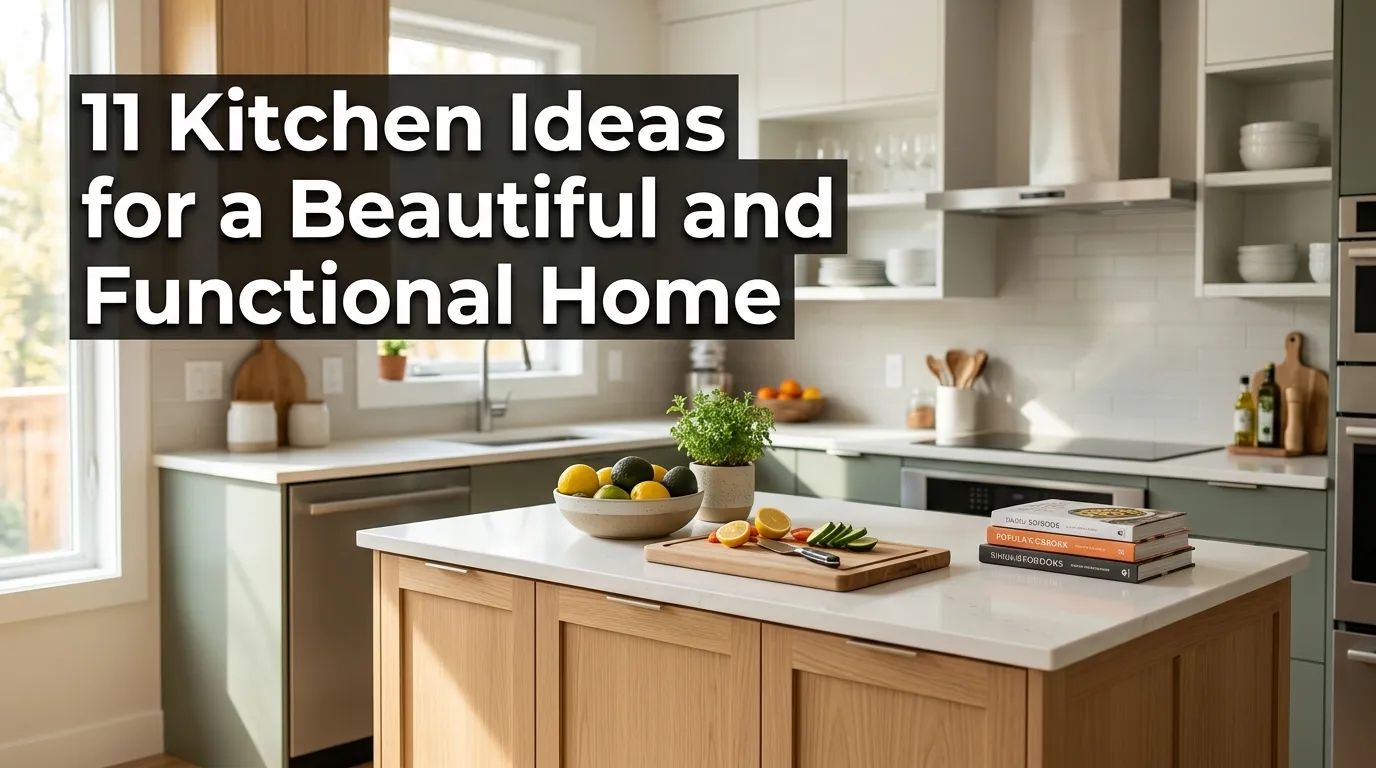
11 Kitchen Ideas for a Beautiful and Functional Home
The kitchen is often the heart of the home, but creating one that feels beautiful, comfortable, and practical can be surprisingly challenging. You may have plenty of cabinets but still struggle with counter clutter, or you may love your kitchen’s layout but feel that it lacks warmth and personality. Fortunately, you don’t always need a full renovation to make the space feel completely different.
Small decorating choices can have a surprisingly big impact. A warm pendant light, open shelving, natural wood accents, a carefully styled countertop, or a fresh color combination can change the atmosphere without requiring major construction. The best kitchen ideas are the ones that improve both appearance and everyday usability.
For a Pinterest-worthy kitchen, think beyond trends and focus on layers. Combine functional storage with attractive materials, introduce a few natural textures, and choose a color palette that makes the room feel inviting. Warm whites, soft beige, natural wood, muted green, gentle blue, and classic black accents can all create a timeless foundation.
In my experience, the most successful kitchen updates begin with identifying what isn’t working. If the counters feel crowded, improve organization. If the room feels dark, concentrate on lighting and reflective surfaces. If everything looks too plain, add texture through rugs, wood, ceramics, or greenery.
You can also make a kitchen feel more personalized through small details. Displaying a favorite cutting board, using attractive containers for frequently used ingredients, or adding artwork to an empty wall can make the room feel less generic.
Whether you’re working with a spacious kitchen, a small apartment kitchen, or an older space that simply needs refreshing, these 11 ideas can help you create a room that looks polished while still feeling comfortable enough for everyday life.
Table of Contents
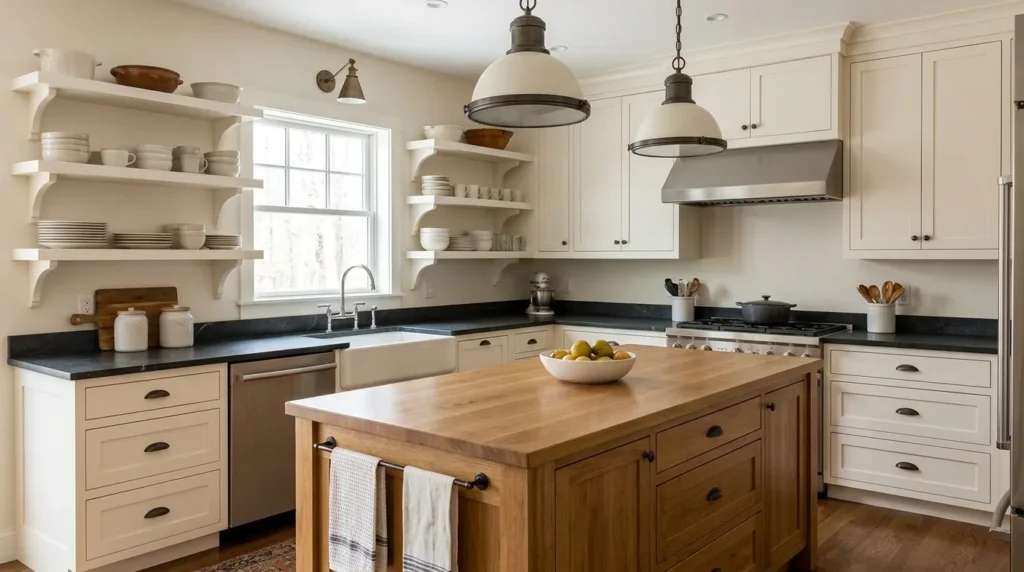
1. Warm Wood Accents
Use natural wood to soften cabinetry and create a welcoming kitchen atmosphere.
2. Open Shelf Styling
Display useful dishes and decorative pieces while adding visual interest to blank walls.
3. Statement Lighting
Use attractive fixtures to improve both function and the overall character of the room.
4. Neutral Color Layers
Build a timeless palette with warm whites, beige, wood, and subtle accent colors.
5. Functional Countertops
Keep frequently used items accessible while maintaining a clean, intentional appearance.
6. Greenery And Plants
Bring freshness and natural color into the kitchen with easy-care greenery.
7. Textured Kitchen Rugs
Add softness and visual warmth beneath work areas and around the sink.
8. Stylish Storage
Turn everyday organization into part of the kitchen’s decorative design.
9. Simple Wall Art
Use artwork and framed pieces to give empty kitchen walls personality.
10. Cozy Breakfast Nook
Create a comfortable spot for morning coffee, casual meals, or quiet reading.
11. Layered Counter Decor
Combine practical accessories and decorative details for a polished finish.
1. Warm Wood Accents
Quick Benefits
- Adds warmth to modern kitchens
- Softens white cabinetry
- Introduces natural texture
- Works with many design styles
- Creates a more inviting atmosphere
Why It Works
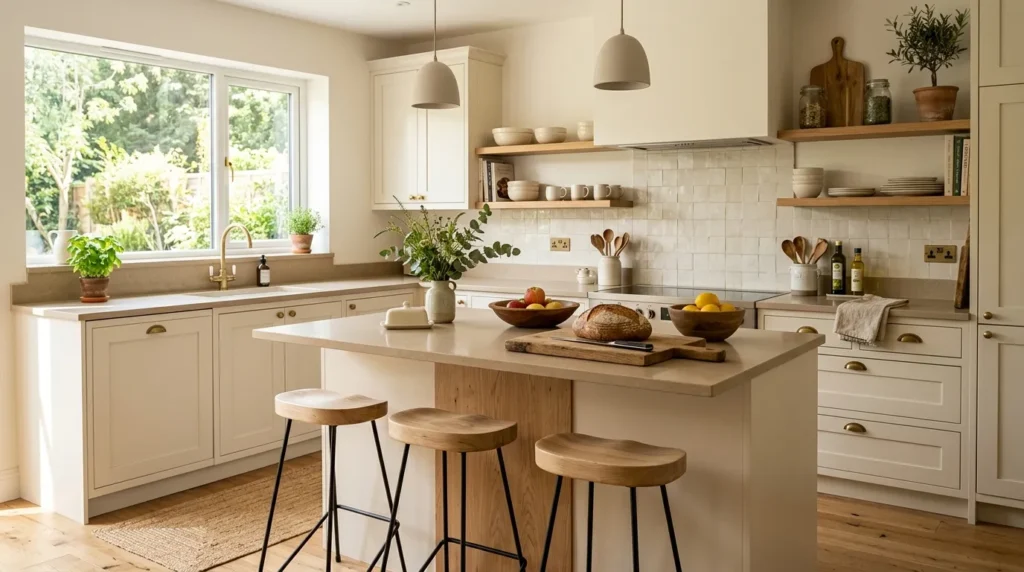
Natural wood is one of the easiest ways to make a kitchen feel warmer and less sterile. Kitchens often contain large areas of hard surfaces such as cabinetry, stone, tile, and stainless steel. Wood helps balance those materials with an organic texture and warmer visual tone. Even a few small pieces can make a noticeable difference.
You don’t need matching wood throughout the entire room. In fact, mixing slightly different natural finishes can create a more collected appearance. Cutting boards, stools, shelves, trays, cabinet details, and decorative bowls can all contribute to the effect.
One simple trick I always suggest is repeating the same wood tone in at least two or three areas. This creates visual connection without making the kitchen look overly coordinated.
How To Style It
Start with functional wood pieces. Lean several attractive cutting boards against the backsplash, place a wooden tray near the coffee station, or add a small wooden bowl to an open shelf.
If you have an island, consider natural wood counter stools to introduce warmth at eye level. For a larger change, floating wood shelves can replace a small section of upper cabinetry.
Pair wood with cream, white, beige, or muted green. If your kitchen has cool gray surfaces, choose warmer wood tones to prevent the space from feeling too cold.
Keep the wood finishes relatively natural rather than heavily glossy for a relaxed, timeless appearance.
2. Open Shelf Styling
Quick Benefits
- Adds visual openness
- Provides accessible storage
- Creates space for personality
- Makes dishes part of the decor
- Can brighten a small kitchen
Why It Works
Open shelving can make a kitchen feel lighter because it breaks up large areas of closed cabinetry. It also provides an opportunity to display everyday objects instead of hiding everything behind doors.
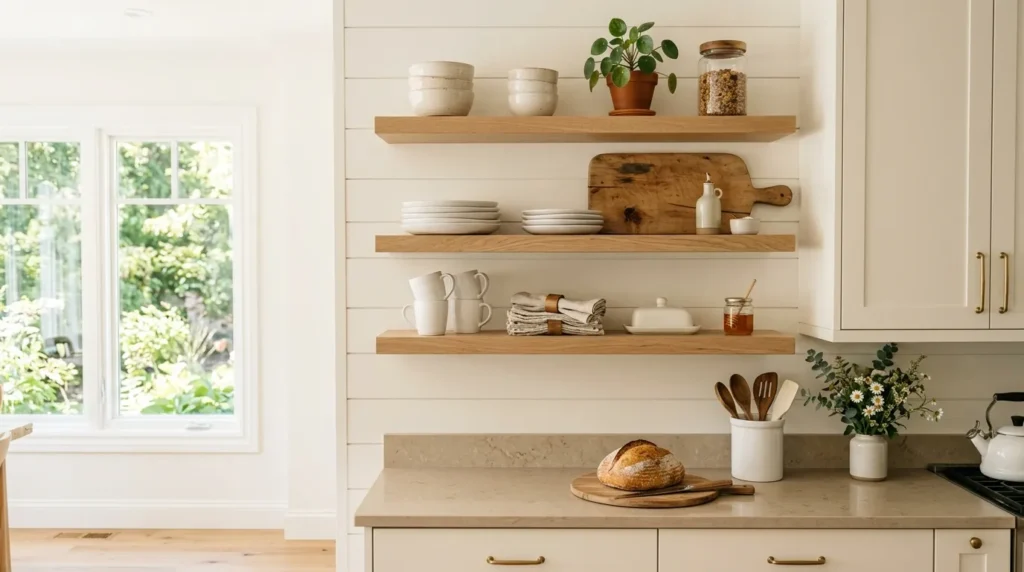
The challenge is keeping shelves from becoming cluttered. The most attractive arrangements combine useful kitchenware with a few decorative pieces. White plates, ceramic bowls, wooden boards, glass jars, small plants, and neutral artwork can create a cohesive look without feeling overly staged.
Open shelves are particularly useful for kitchens with a neutral palette because the objects themselves introduce color and texture.
I’ve noticed that shelves tend to look better when there is some empty space between groups of objects. You don’t need to use every inch.
How To Style It
Begin with your largest pieces, such as stacks of plates, serving boards, or bowls. Then add smaller objects around them.
Use a combination of horizontal and vertical shapes. Lean a cutting board against the wall, stack bowls nearby, and place a small vase or plant beside them.
Keep colors coordinated. White ceramics with natural wood and one muted accent color are easy to maintain.
If you have two shelves, avoid making them mirror images. Instead, repeat a few materials while varying the arrangement.
3. Statement Lighting
Quick Benefits
- Improves task visibility
- Creates a focal point
- Adds personality
- Can make an older kitchen feel updated
- Works with both large and small kitchens
Why It Works
Lighting can change the way an entire kitchen feels. A room with attractive cabinetry can still feel flat if the lighting is harsh or insufficient. Layering ambient, task, and decorative lighting creates a much more comfortable environment.
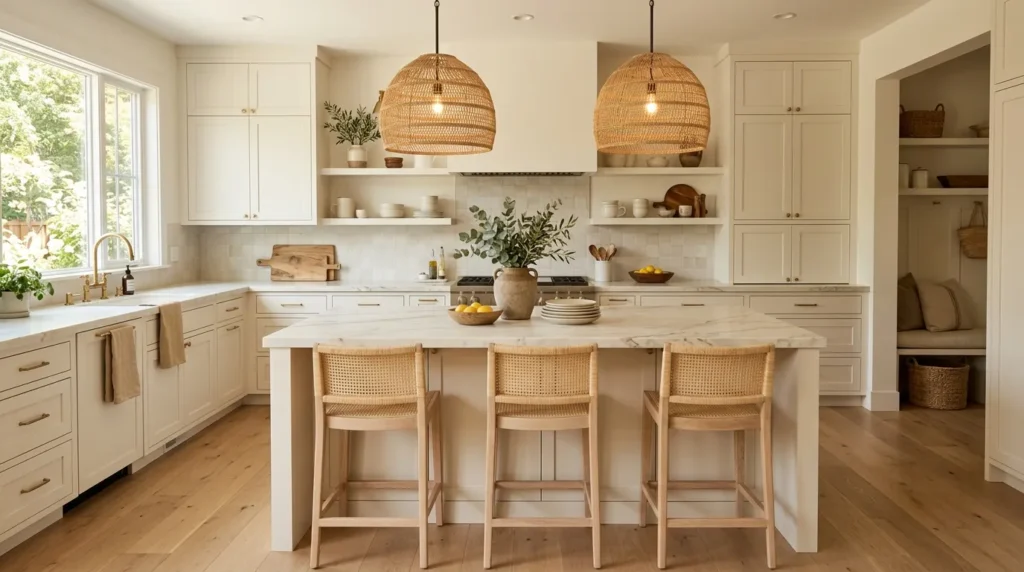
A statement pendant above an island or dining area can also function like a piece of sculpture. Woven pendants bring natural texture, while glass fixtures create an airy appearance. Black fixtures provide contrast and work particularly well with white or neutral kitchens.
The best choice depends on your kitchen’s scale. Oversized lighting can overwhelm a small space, while tiny fixtures may disappear above a large island.
How To Style It
For an island, use one large pendant or a balanced pair or trio depending on its size and layout. Keep the fixtures visually proportional to the island.
Choose warm-toned bulbs for areas where you want a cozy atmosphere. Under-cabinet lighting can provide useful task illumination without taking up counter space.
If your kitchen already contains several strong finishes, choose a simpler fixture. If the room feels plain, lighting can be an opportunity to introduce woven texture, aged metal, glass, or another distinctive material.
4. Neutral Color Layers
Quick Benefits
- Creates a timeless foundation
- Makes the kitchen feel brighter
- Works with changing trends
- Allows accessories to stand out
- Makes small spaces feel more open
Why It Works
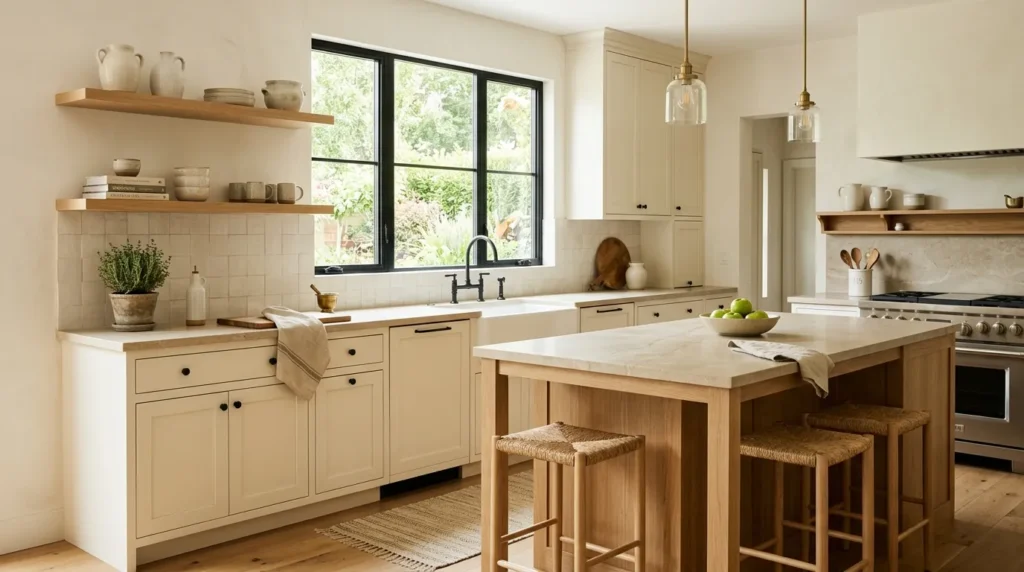
Neutral kitchens don’t have to be boring. The secret is layering different shades and textures instead of using one color everywhere. Warm white cabinetry, beige textiles, natural wood, cream ceramics, and soft gray or green accents can create plenty of visual interest without relying on bold colors.
A layered neutral palette also makes future decorating changes easier. You can switch seasonal accessories or artwork without having to redesign the entire room.
For homeowners who want a kitchen that feels calm and sophisticated, this approach is especially useful. The room becomes a backdrop for food preparation, entertaining, and everyday family life rather than competing for attention.
How To Style It
Choose one dominant neutral, one secondary neutral, and one accent. For example, warm white can be the foundation, natural wood the secondary tone, and muted sage green the accent.
Repeat those colors across textiles, ceramics, artwork, and small accessories.
Add texture through woven baskets, linen towels, wood cutting boards, stoneware, and a softly patterned runner.
Avoid using too many shades at once. A limited palette usually looks more intentional and is easier to maintain.
5. Functional Countertops
Quick Benefits
- Reduces visual clutter
- Keeps essentials accessible
- Makes cleaning easier
- Improves everyday workflow
- Creates a more polished appearance
Why It Works
Beautiful countertops are not necessarily empty countertops. A kitchen should be functional, and some of the objects you use every day deserve to remain visible. The goal is to display useful items in a deliberate way rather than allowing everything to accumulate randomly.
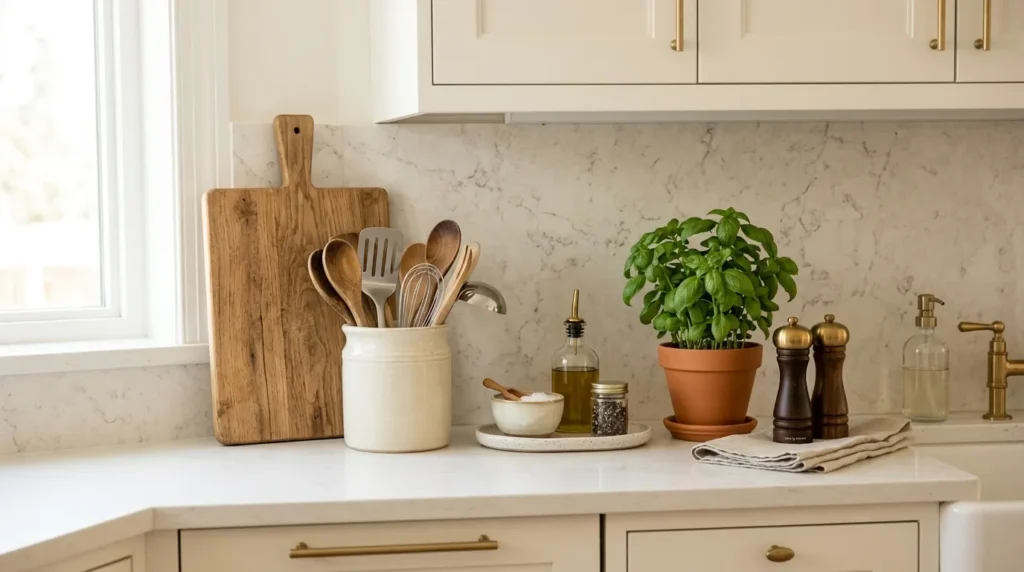
A wooden cutting board, attractive utensil crock, coffee maker, ceramic fruit bowl, or small tray can all become part of the design. Grouping objects together is one of the easiest ways to create visual order.
A mistake many homeowners make is decorating every available surface. Leaving some areas completely clear makes the objects you choose to display feel more intentional.
How To Style It
Choose one or two countertop zones for decorative-functional arrangements. Keep the main food-preparation area relatively open.
Place frequently used utensils in an attractive container near the cooking area. Keep a cutting board leaning against the backsplash and add a small ceramic bowl nearby.
At the coffee station, use a tray to group mugs, coffee supplies, and a small decorative item.
Try to keep appliances that you rarely use inside cabinets. This simple change can make even a busy kitchen feel significantly calmer.
6. Greenery And Plants
Quick Benefits
- Adds natural color
- Softens hard surfaces
- Makes the kitchen feel fresh
- Works in small spaces
- Can improve visual balance
Why It Works
Plants bring life into a kitchen filled with cabinets and hard materials. Even a small amount of greenery can soften straight lines and add a natural focal point.
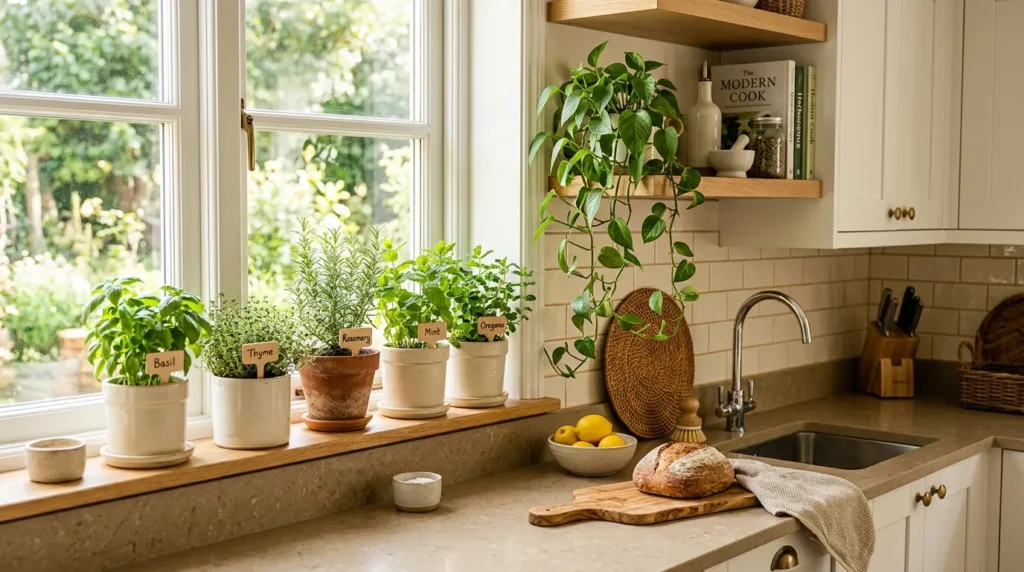
You don’t need a large collection of plants. A single herb pot near a window, a small trailing plant on a shelf, or a vase of fresh branches can be enough.
If your kitchen doesn’t receive enough natural light, realistic faux greenery can provide a similar decorative effect without creating maintenance issues.
Greenery also pairs beautifully with the neutral palettes that are common in modern kitchens. Sage, olive, eucalyptus, and deep leafy green all complement warm white, wood, and beige.
How To Style It
Place a small potted herb near a sunny window if your kitchen provides suitable light. Basil, rosemary, thyme, and mint can be both attractive and useful.
For open shelves, choose compact plants in simple ceramic pots.
A larger floor plant can fill an empty corner in a spacious kitchen. If floor space is limited, use hanging or countertop plants instead.
Keep plant containers simple. Cream ceramic, terracotta, woven baskets, or natural stone finishes work especially well.
7. Textured Kitchen Rugs
Quick Benefits
- Adds softness underfoot
- Makes the room feel warmer
- Introduces color and pattern
- Defines work zones
- Protects high-traffic flooring
Why It Works
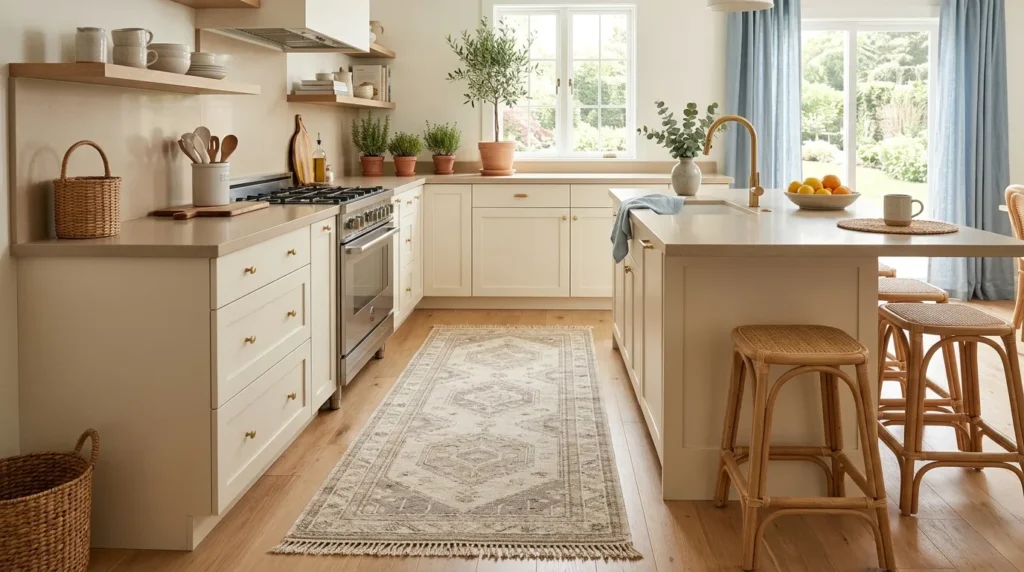
Kitchen rugs are often underestimated. Because kitchens contain so many hard surfaces, a textured runner can introduce softness and make the room feel more comfortable.
A runner is particularly useful along a long countertop or in front of the sink. It visually defines the work zone while adding another layer to the overall design.
Choose patterns that can handle everyday life. Subtle stripes, vintage-inspired motifs, geometric patterns, and muted organic designs can hide minor spills better than very light solid colors.
In my experience, the best kitchen rugs are attractive enough to contribute to the decor but practical enough that you don’t worry about using the kitchen normally.
How To Style It
For a galley kitchen, use a runner that follows the main walkway. In front of a sink or island, choose a smaller washable rug if the layout allows.
Coordinate the rug with existing colors rather than matching it exactly. For example, a beige and muted blue pattern can connect cream cabinetry with blue-gray accessories.
Keep the rug’s pattern moderate if your backsplash or countertops already contain strong visual movement.
Choose a size that allows doors and drawers to open freely.
8. Stylish Storage
Quick Benefits
- Hides everyday clutter
- Makes organization attractive
- Maximizes available space
- Adds texture
- Improves kitchen functionality
Why It Works
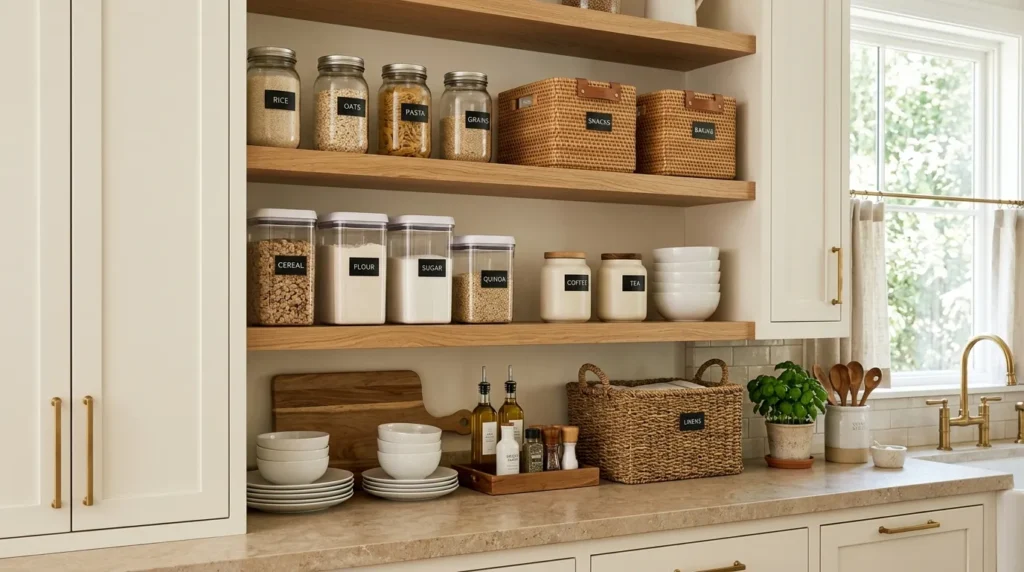
Storage becomes much more effective when it is designed around how you actually use the kitchen. Decorative containers, baskets, jars, and trays can turn everyday organization into part of the room’s design.
This is especially helpful for open shelving and countertops. Instead of displaying mismatched packaging, transfer frequently used ingredients into coordinated containers. The result is cleaner visually and often easier to manage.
Baskets can organize towels, produce, or less frequently used items. Trays can group small objects together so they don’t spread across the counter.
Good organization also supports a calmer kitchen. When everything has a logical place, maintaining the space becomes easier.
How To Style It
Use clear containers for dry ingredients if you enjoy a coordinated pantry look. For visible shelves, choose simple labels and neutral containers.
Place a woven basket above the refrigerator or on a shelf for lightweight items. Use drawer organizers for utensils and cooking tools.
On the counter, group oils, salt, pepper, and frequently used seasonings on a small tray.
Avoid buying storage containers before measuring your available space. The best organization system is one that fits your actual cabinets and routines.
9. Simple Wall Art
Quick Benefits
- Personalizes the kitchen
- Fills unused wall space
- Adds color without renovation
- Creates a focal point
- Makes the room feel more finished
Why It Works
Kitchen walls are often overlooked because so much attention goes toward cabinets, countertops, and appliances. Yet a blank wall can make an otherwise beautiful kitchen feel unfinished.
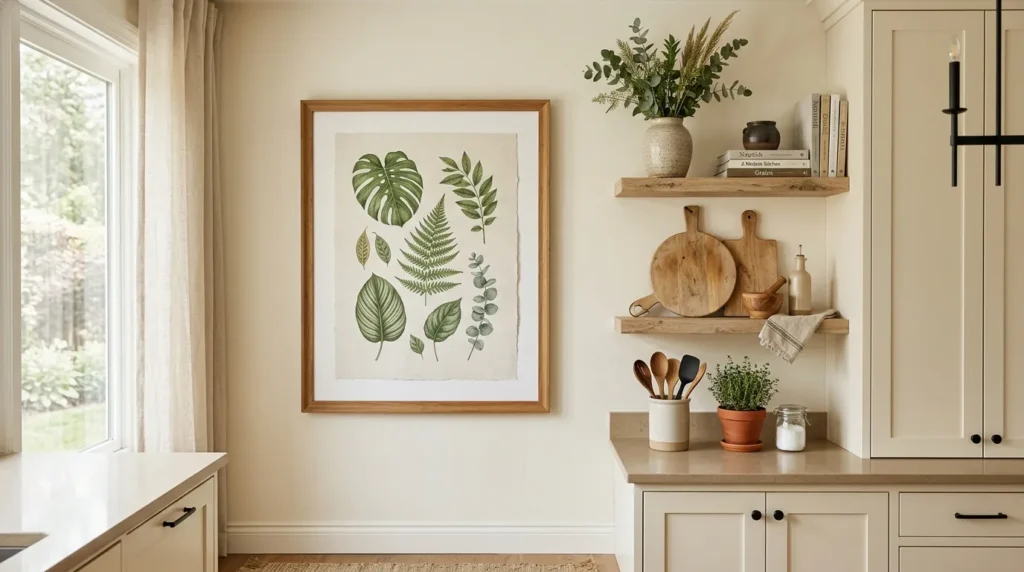
Artwork gives you an opportunity to introduce personality without changing permanent finishes. Botanical prints, food-inspired artwork, landscapes, abstract designs, and simple black-and-white photography can all work.
The most important consideration is scale. A tiny frame on a large wall can disappear. Conversely, several smaller pieces grouped together can create enough visual weight.
Choose artwork that complements the kitchen rather than competing with it.
How To Style It
Use one large framed piece on a blank wall near a dining area or breakfast nook. For smaller spaces, choose a pair of coordinated prints.
Natural wood frames work beautifully with neutral kitchens, while black frames can add contrast.
If your cabinetry already has strong color, keep artwork relatively simple. If the kitchen is mostly white, artwork can introduce muted blue, green, beige, or warm brown.
Avoid placing artwork too close to cooking surfaces where heat and grease could damage it.
10. Cozy Breakfast Nook
Quick Benefits
- Adds useful seating
- Creates a relaxed gathering space
- Makes unused corners functional
- Encourages slower mornings
- Can add charm to smaller kitchens
Why It Works
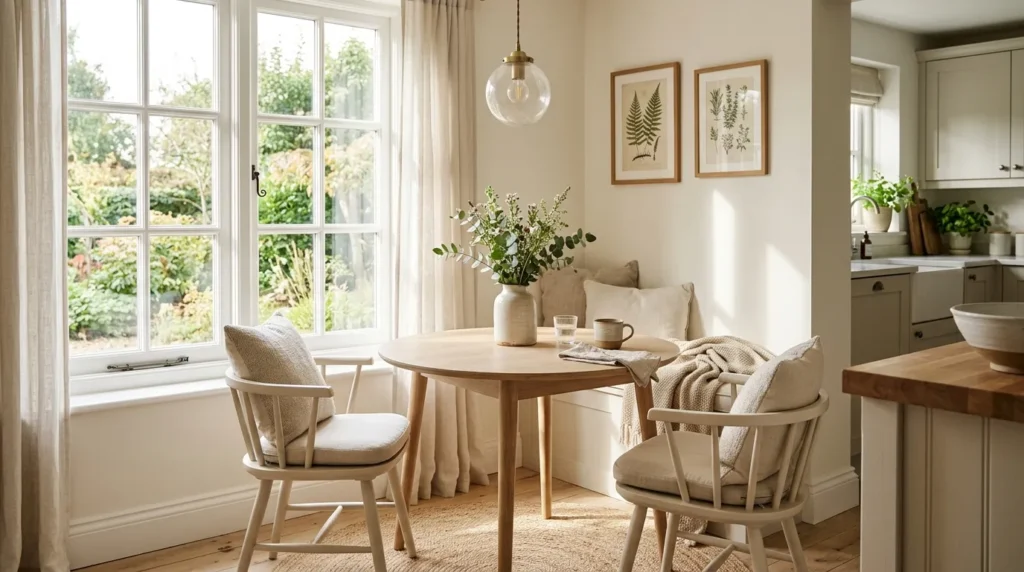
A breakfast nook can transform an underused corner into one of the most enjoyable areas in a kitchen. It doesn’t need to be large. Even a small table with two chairs can create a dedicated place for morning coffee, casual meals, homework, or reading.
The key is making the area comfortable without overcrowding it. A small round table can work especially well in tight spaces because it allows easier movement around the seating.
Soft textiles and natural materials help distinguish the nook from the harder surfaces of the kitchen.
How To Style It
Choose a compact table that leaves enough walking space around it. Pair it with comfortable chairs or a small upholstered bench.
Add a washable cushion or simple seat pad for extra comfort. A pendant light above the table can visually define the area.
Keep the tabletop simple. A small vase, bowl, or candle is enough for everyday styling.
If there is a nearby wall, add one piece of artwork or a small mirror to make the nook feel like a deliberate destination rather than leftover space.
11. Layered Counter Decor
Quick Benefits
- Creates a polished finish
- Adds personality
- Makes practical objects decorative
- Provides visual balance
- Easy to change seasonally
Why It Works
Once the functional parts of a kitchen are organized, a few carefully selected decorative layers can bring everything together. This is where small details make the room feel finished.
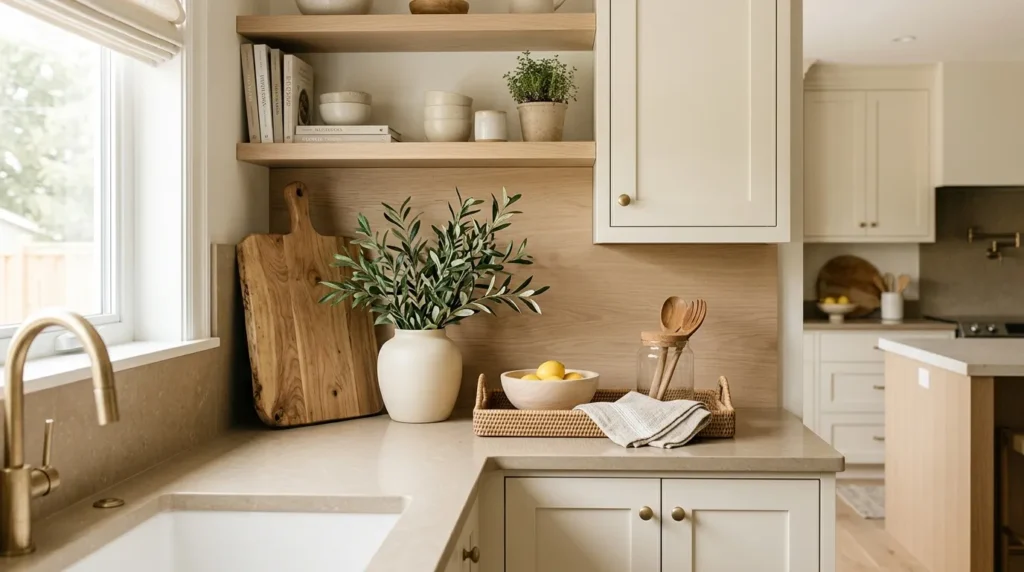
The strongest countertop arrangements usually combine different heights, materials, and shapes. A wooden cutting board, ceramic vase, small plant, and neutral tray can create enough variation without making the surface look crowded.
The goal isn’t to decorate every inch. Instead, think about creating small moments throughout the room.
That’s why many designers recommend editing rather than continually adding. If an arrangement feels busy, removing one or two objects may improve it more than adding another accessory.
How To Style It
Create small groupings rather than spreading individual objects randomly across the counter.
Near the sink, combine a ceramic soap dispenser with a small plant and folded towel. Near the stove, use a wooden board, utensil container, and small bowl.
For a coffee station, place mugs and supplies on a tray with one decorative accent.
Vary heights by combining low bowls with taller vases or cutting boards. Keep colors connected to the rest of the kitchen so the final look feels intentional.
FAQ
What makes a kitchen look beautiful without a renovation?
Small updates can have a significant visual impact. Try improving lighting, adding a runner, styling open shelves, introducing natural wood, displaying artwork, or reorganizing countertops. These changes can refresh the atmosphere without changing cabinets or countertops.
What colors make a kitchen feel warm?
Warm white, cream, beige, natural wood, muted sage, soft blue, and warm gray can all make a kitchen feel inviting. The combination of color and texture matters as much as the specific shade. Natural materials such as wood and woven fibers can prevent neutral kitchens from feeling cold.
How do I make a small kitchen look bigger?
Keep the color palette relatively light, reduce countertop clutter, use reflective surfaces where appropriate, maximize vertical storage, and avoid oversized furniture. Open shelving can also create visual openness when styled carefully.
How can I decorate kitchen countertops without creating clutter?
Choose a few useful items and group them together. A tray can organize cooking oils, a container can hold utensils, and a small plant can add greenery. Leave portions of the countertop completely clear so the kitchen still feels functional.
Are open shelves practical in a kitchen?
They can be practical if you display items you use regularly and keep the arrangement organized. Plates, bowls, glasses, cutting boards, and attractive containers work well. Open shelves require more visual maintenance than closed cabinets, so they are best used selectively.
What type of lighting works best in a kitchen?
A combination of ambient, task, and accent lighting usually provides the most flexibility. Pendant lights can work over islands, under-cabinet lighting can illuminate work surfaces, and warm ambient lighting can make the kitchen more comfortable in the evening.
How do I make my kitchen feel cozy?
Use warm lighting, natural wood, soft textiles, greenery, comfortable seating, and layered neutral colors. A runner, small breakfast nook, wooden accessories, and simple artwork can also make the kitchen feel more welcoming without sacrificing functionality.
Conclusion
A beautiful kitchen doesn’t have to be completely redesigned to feel fresh and inviting. Often, the biggest difference comes from the smaller choices: warmer lighting, better organization, natural wood, a textured runner, attractive storage, greenery, and a few pieces of artwork that reflect your personality.
The most important thing is to design around the way you actually use your kitchen. Keep frequently used items within reach, give everything else a sensible storage location, and leave enough open space for cooking and gathering. When function comes first, decorating becomes much easier.
If your kitchen feels cold, start by adding warmth through wood and lighting. If it feels cluttered, focus on storage and countertop editing. If it feels plain, introduce greenery, artwork, textiles, or an accent color.
You don’t need to tackle all 11 ideas at once. Pick two or three that solve the biggest problems in your kitchen and build from there. A few thoughtful changes can create a space that feels more organized, comfortable, personal, and ready for everyday life.