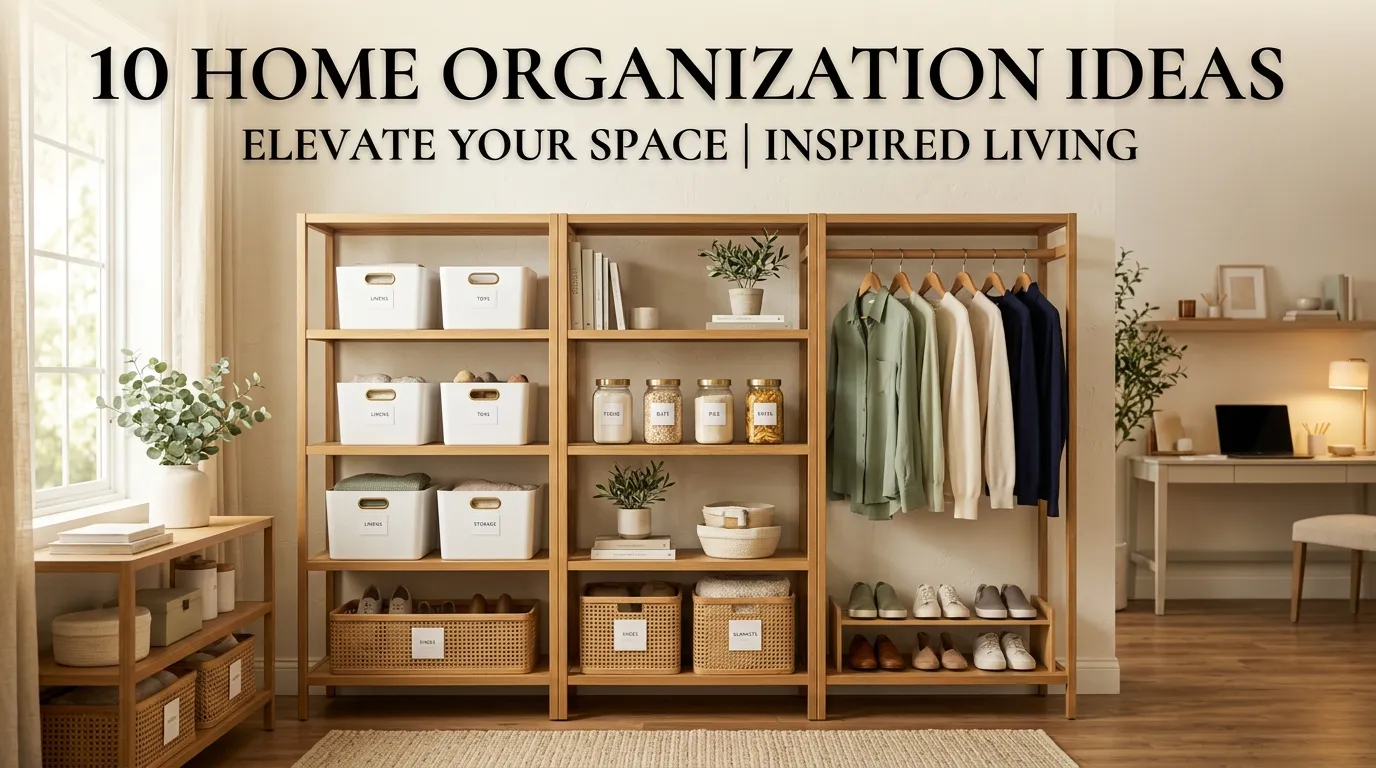
10 Home Organization Ideas
Clutter has a way of creeping back into a home no matter how many times you tidy up, and in my experience, that’s usually a sign that the organizing system itself isn’t quite working, not that you’re doing something wrong. A mistake many homeowners make is treating organization as a one-time weekend project rather than an ongoing system built around how the household actually lives day to day. The most successful organizing setups aren’t the most elaborate ones — they’re the ones that match how items actually get used.
I’ve noticed that the households that stay organized long-term tend to follow a few consistent principles: everything has a specific home, frequently used items stay accessible, and the system accounts for how things actually get put away in a rushed, real-life moment, not just how they’d be put away in an ideal world. That’s why many designers recommend starting with a smaller, high-traffic area rather than attempting to organize an entire home all at once, since a contained win tends to build momentum for tackling bigger spaces later.
This article covers ten home organization ideas that work across a range of rooms and household sizes, from entryways to closets to shared family spaces. Each idea includes the reasoning behind why it works, along with practical guidance on materials, layout, and maintenance so the system actually holds up over time rather than falling apart after a few weeks.
One thing that works especially well in organizing specifically is designing the system around your laziest, most tired version of yourself, not your most motivated one. If a system only works when everyone is feeling energetic and thorough, it won’t hold up during a busy week, which is exactly when organization matters most.
Table of Contents
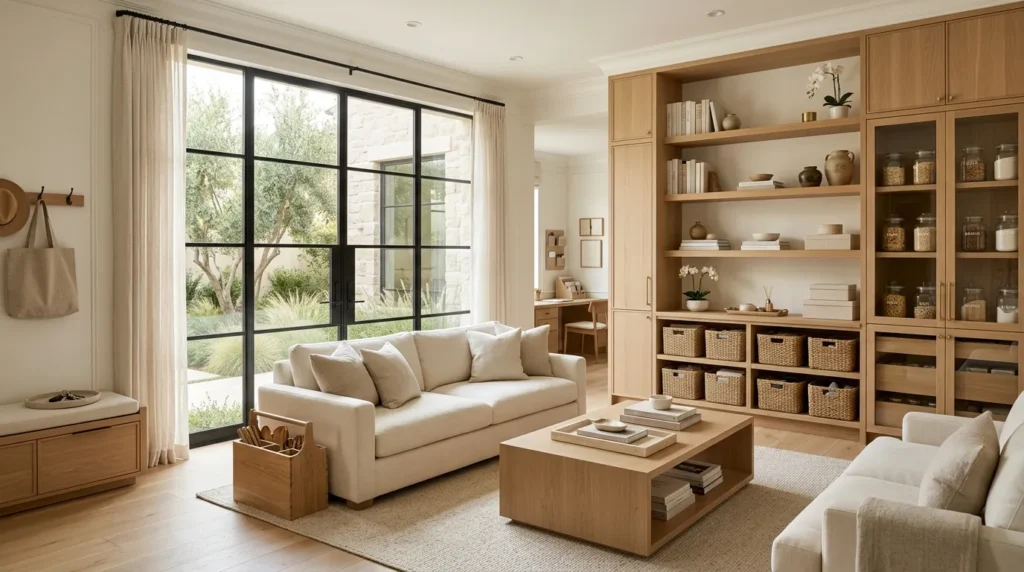
- Entryway Drop Zone Station — A dedicated spot for daily coming-and-going items.
- Labeled Bin Storage Systems — Clear categorization for shared spaces.
- Vertical Wall Storage Solutions — Using height instead of floor space.
- Closet Zone Organization — Grouping clothing and items by category.
- Kitchen Cabinet Categorizing — Practical systems for everyday cooking items.
- Digital and Paper Decluttering — Managing mail, documents, and clutter sources.
- Under-Bed Storage Solutions — Making use of an often-overlooked space.
- Drawer Divider Systems — Small-scale organization for daily items.
- Seasonal Rotation Storage — Managing items that only get used part of the year.
- Family Command Center Setup — A shared hub for schedules and daily items.
1. Entryway Drop Zone Station
Quick Benefits
- Reduces daily clutter from shoes, bags, and mail
- Creates a consistent routine for coming and going
- Works well for households of any size
- Budget-friendly to set up with existing furniture
- Prevents clutter from spreading into other rooms
Why It Works
The entryway is where most household clutter actually enters the home, which makes it one of the highest-impact areas to organize first. In my experience, a household without a designated entryway system tends to end up with shoes, bags, and mail scattered throughout the house simply because there was never a clear, convenient spot to put them down in the first place. A mistake many homeowners make is designing an entryway system that looks beautiful but isn’t actually convenient enough to use consistently, especially when arms are full or you’re in a hurry.
How To Style It
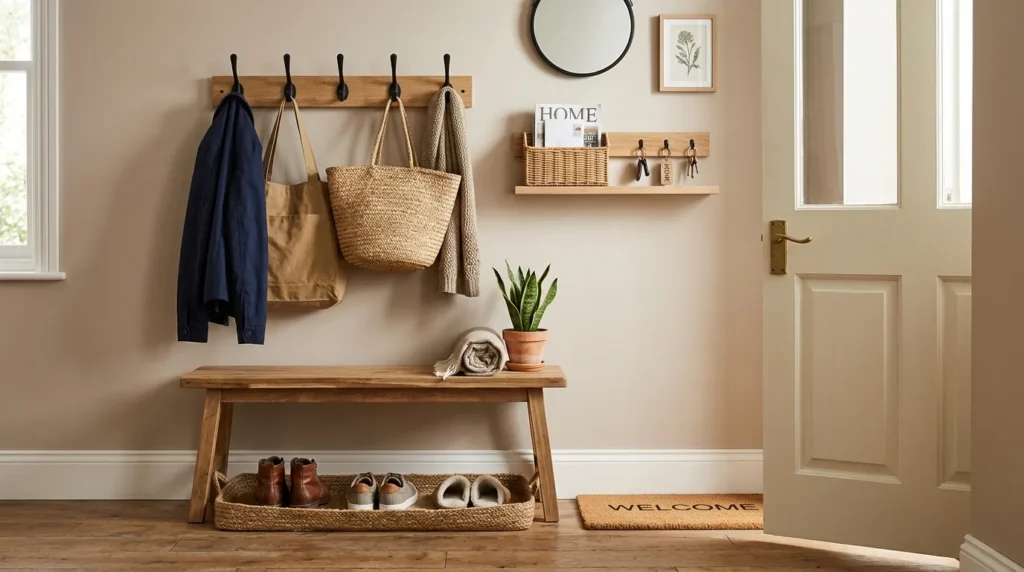
Set up a small bench or shelf near the main entry point with hooks for bags and coats positioned at an easy, grab-and-go height. Add a shoe tray or small shelf specifically for shoes, ideally right at the door so they don’t make it further into the house before being removed. A small tray or basket for mail and keys keeps these daily items from ending up scattered across kitchen counters. Keep the system simple enough that even a tired version of yourself will actually use it after a long day, since an overly elaborate system often gets abandoned within a few weeks.
2. Labeled Bin Storage Systems
Quick Benefits
- Provides clear, consistent categorization for shared spaces
- Reduces time spent searching for specific items
- Works well for pantries, closets, and playrooms alike
- Helps other household members maintain the system
- Available at a wide range of price points
Why It Works
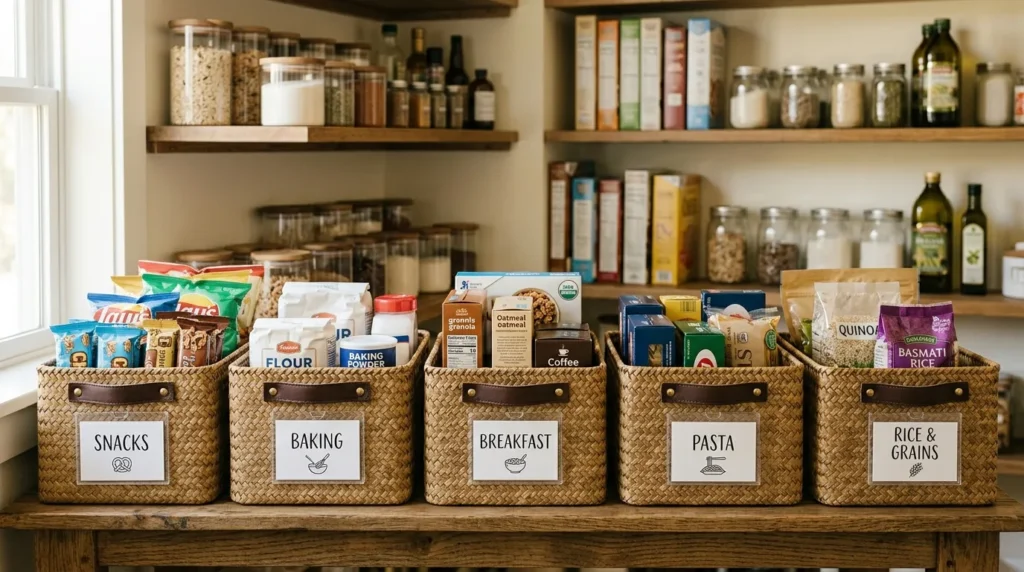
Labeled bins solve one of the most common organizing failures: a system that makes sense to the person who set it up but not to anyone else using the space. I’ve seen this idea transform shared spaces in particular, since a clear label removes any guesswork about where something belongs, which makes it far more likely that other household members will actually put things back correctly. A mistake many homeowners make is organizing a space without labels, relying purely on memory, which tends to break down quickly once more than one person uses that space regularly.
How To Style It
Choose bins in a consistent size and material for a cohesive look, whether that’s woven baskets for a living room or clear bins for a pantry where visibility matters most. Label each bin clearly with a simple word or category rather than an overly specific description, which keeps the system flexible as contents shift slightly over time. Position frequently used bins at the most accessible height, reserving higher or lower shelves for less commonly needed items. Involve other household members in setting up the labeling system when possible, since a system everyone helped create tends to get better buy-in for actually maintaining it.
3. Vertical Wall Storage Solutions
Quick Benefits
- Uses wall height instead of limited floor space
- Works especially well in small rooms and apartments
- Keeps frequently used items visible and accessible
- Budget-friendly compared to built-in cabinetry
- Adds a decorative element alongside its function
Why It Works
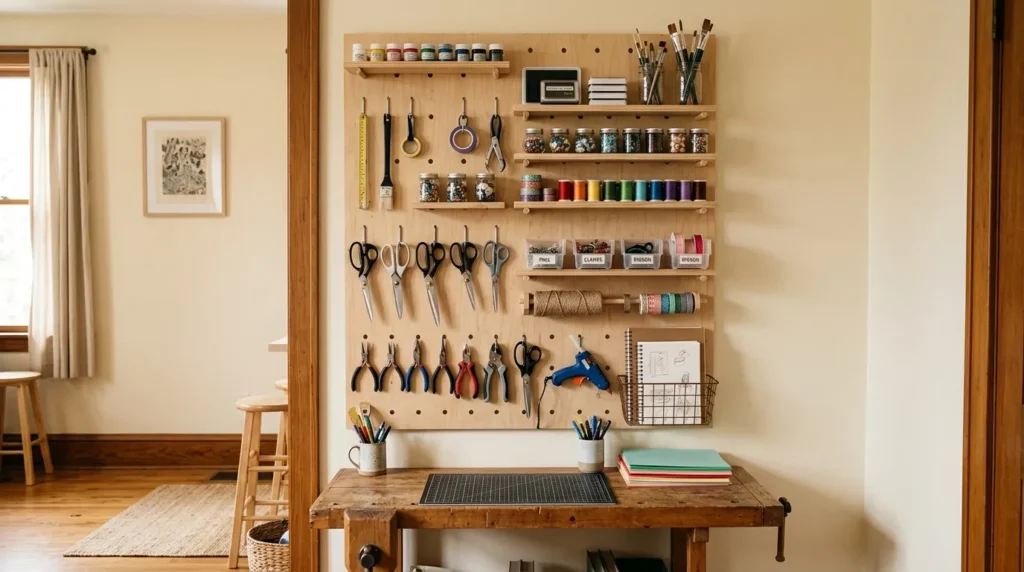
When floor space is limited, walls become one of the most underused storage resources in a home, and vertical solutions like pegboards, wall-mounted shelves, and hanging organizers can hold a surprising amount without taking up any additional square footage. A mistake many homeowners make is only considering floor-based storage furniture, missing the significant capacity that wall-mounted options offer, especially in smaller rooms where floor space is at a premium. One simple trick I always suggest is measuring your actual wall space honestly, since even a narrow stretch of wall can often accommodate more storage than people initially expect.
How To Style It
Install a pegboard in a garage, craft room, or kitchen for flexible, adjustable tool and supply storage that can be rearranged as your needs change. Wall-mounted shelves above a desk, dresser, or counter add both storage and display space without using any floor area. Hanging organizers on the back of closet or pantry doors make use of otherwise wasted space for smaller items like cleaning supplies or accessories. Choose a finish and style that complements your existing decor so the vertical storage feels intentional rather than purely utilitarian.
4. Closet Zone Organization
Quick Benefits
- Makes getting dressed faster and less stressful
- Reduces the appearance of clutter in a small space
- Helps maintain seasonal rotation more easily
- Works with existing closet infrastructure in most cases
- Improves visibility of what you actually own
Why It Works
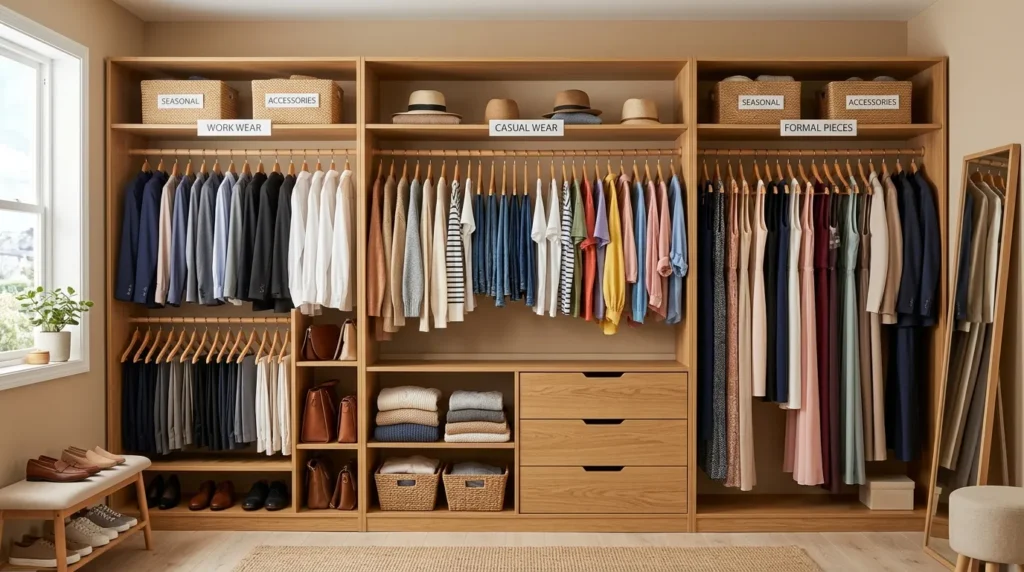
Organizing a closet into distinct zones — work clothes, casual wear, formal pieces, accessories — rather than one general mixed area makes it considerably easier to find what you’re looking for and to notice what you actually own. In my experience, closets organized by category rather than simply by what fits where tend to stay organized longer, since putting something back in its designated zone becomes a quick, automatic habit rather than a decision each time. A mistake many homeowners make is organizing a closet purely by color or aesthetic without considering functional categories, which can look beautiful initially but becomes harder to maintain in daily use.
How To Style It
Divide your closet into broad zones based on your actual lifestyle, such as work attire, casual clothing, athletic wear, and special occasion pieces, and dedicate a specific section of the closet to each category. Use matching hangers within each zone for a cleaner visual look, which also makes it easier to quickly scan a section and see what’s available. Store off-season items in a separate area or bin, whether that’s a top shelf, an under-bed container, or a separate closet, to keep the main daily zones from feeling overcrowded. Reassess the zones each season, since your actual clothing needs and quantities shift throughout the year.
5. Kitchen Cabinet Categorizing
Quick Benefits
- Speeds up daily cooking and meal prep tasks
- Reduces frustration searching for specific items
- Makes better use of available cabinet space
- Helps prevent food waste from forgotten items
- Works well with both new and existing cabinetry
Why It Works
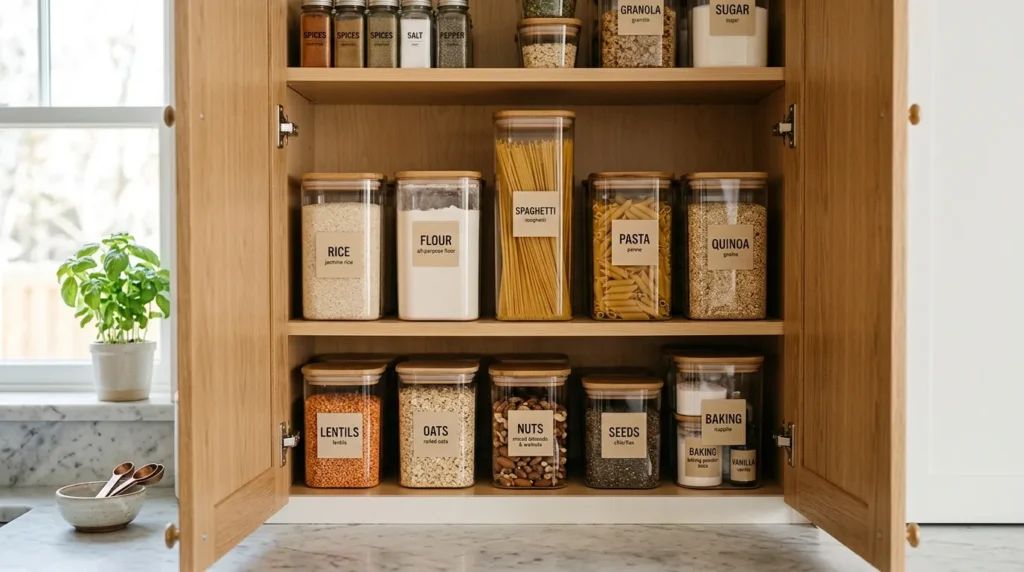
A kitchen organized by clear categories — baking supplies together, snacks together, cooking oils and spices together — significantly speeds up daily cooking tasks and reduces the frustration of searching multiple cabinets for a single ingredient. That’s why many designers recommend categorizing kitchen cabinets specifically by cooking function rather than simply by container size or shape, since function-based organization aligns much more closely with how people actually use the kitchen day to day. A mistake many homeowners make is organizing cabinets once and never reassessing as grocery habits or family needs change over time.
How To Style It
Group items by function rather than type of container, keeping all baking supplies together, for example, rather than separating flour, sugar, and baking pans into different cabinets based on their shape. Use clear containers for dry goods like flour, rice, and pasta, both for visibility and to keep pantry pests out of open packaging. Position everyday items like plates, glasses, and frequently used cooking tools at the most accessible height, reserving higher or lower cabinets for occasional-use items like large serving dishes. Do a quick reassessment every few months, since grocery and cooking habits often shift enough to warrant reorganizing certain sections.
6. Digital and Paper Decluttering
Quick Benefits
- Reduces the paper clutter that accumulates quickly
- Prevents important documents from getting lost
- Creates a clearer system for bills and mail
- Frees up physical storage space at home
- Reduces daily visual and mental clutter
Why It Works
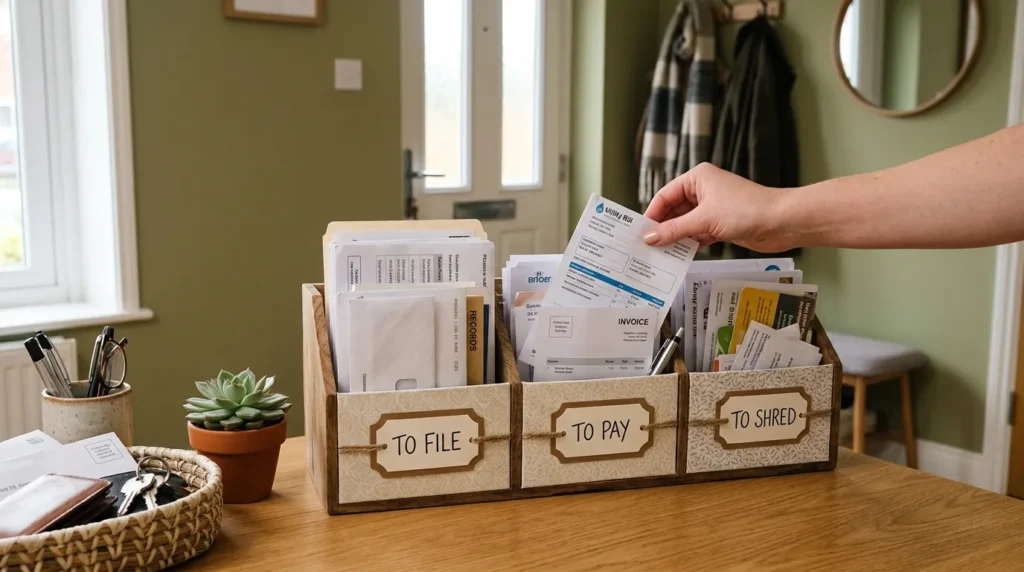
Paper clutter — mail, receipts, school documents, bills — tends to accumulate faster than almost any other category in a home, and without a clear system, it often ends up scattered across counters and drawers rather than properly filed or discarded. A mistake many homeowners make is keeping every piece of paper “just in case,” which quickly overwhelms whatever storage system is in place. I’ve noticed that households with a simple, consistent decision-making process for incoming paper — file, digitize, or discard — tend to keep this category under control far more successfully than those without a clear system.
How To Style It
Set up a simple sorting system near where mail typically enters the home, with clear categories like “to file,” “to pay,” and “to shred or recycle.” Digitize documents you need to keep but don’t need in physical form, scanning receipts, warranties, and similar paperwork into a labeled digital folder system rather than keeping the physical copies indefinitely. Establish a regular decluttering routine, even just fifteen minutes weekly, to keep the physical paper system from building up faster than you can process it. Shred sensitive documents you no longer need rather than simply discarding them, protecting personal information in the process.
7. Under-Bed Storage Solutions
Quick Benefits
- Makes use of an often-overlooked storage area
- Works well for seasonal or infrequently used items
- Available in a range of sizes and price points
- Keeps items out of sight while remaining accessible
- Particularly useful in smaller bedrooms with limited closet space
Why It Works
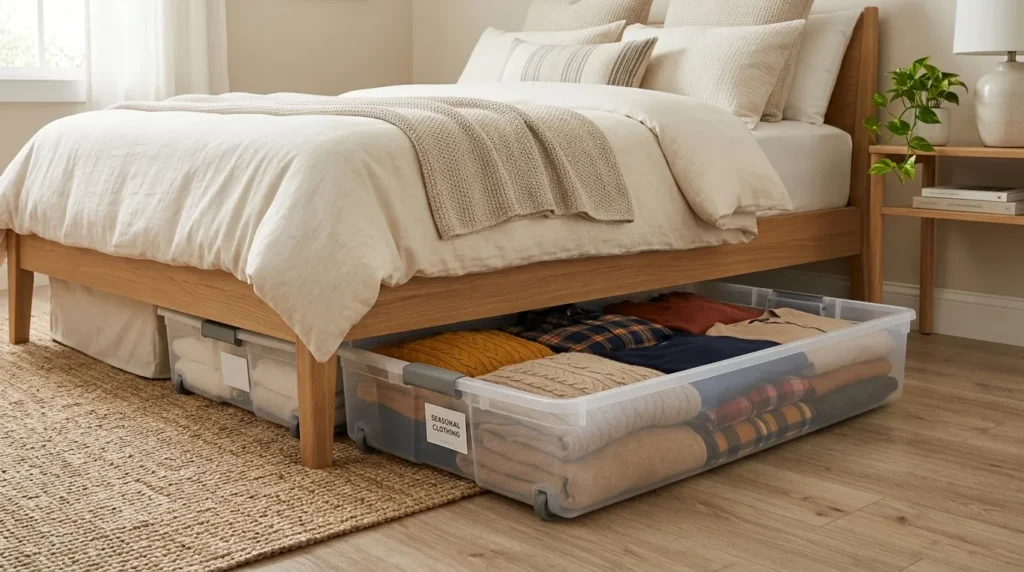
The space under a bed frame is one of the most overlooked storage opportunities in most bedrooms, and it’s particularly well-suited to items you need to keep but don’t need frequent access to, like off-season clothing, extra bedding, or seasonal decor. I’ve seen this idea help significantly in smaller bedrooms specifically, where closet space is limited and every additional storage option matters. A mistake many homeowners make is either ignoring this space entirely or using it for a disorganized pile of miscellaneous items rather than a structured, labeled system.
How To Style It
Choose flat, low-profile storage bins or bags specifically designed to fit under a standard bed frame, ideally with a lid to keep dust out and a handle for easy pulling in and out. Reserve this space for items you access infrequently, such as seasonal clothing, extra linens, or holiday decor, rather than daily-use items that would require constant bending and pulling. Label or use clear bins so you can identify contents without having to pull everything out and search. Vacuum-seal bags work particularly well for bulky seasonal items like out-of-season bedding, since they compress the contents to maximize the limited under-bed space.
8. Drawer Divider Systems
Quick Benefits
- Keeps small daily items organized and easy to find
- Prevents drawers from becoming a catch-all for clutter
- Works well in kitchens, bathrooms, and bedrooms alike
- Inexpensive to implement with adjustable dividers
- Maintains organization with minimal ongoing effort
Why It Works
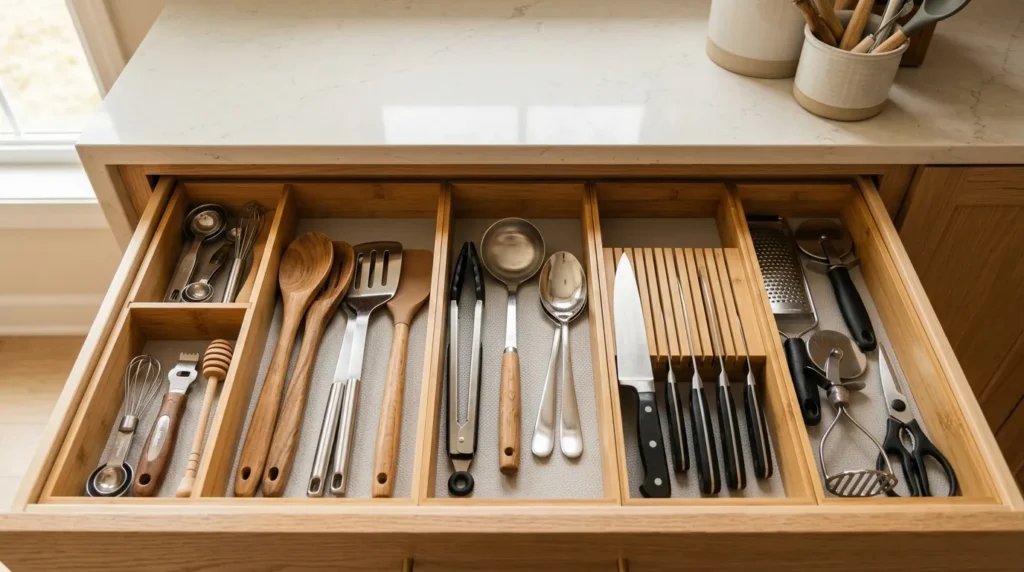
Drawers are especially prone to becoming disorganized catch-alls, since it’s easy to toss a small item in without a specific designated spot, and drawer dividers solve this by creating clear, defined sections for different categories of small items. That’s why many designers recommend dividers specifically for kitchen utensil drawers, bathroom vanity drawers, and bedroom dresser drawers, since these are the areas most prone to accumulating loose, uncategorized clutter. One simple trick I always suggest is choosing adjustable dividers rather than fixed ones, since your specific item sizes and categories will vary by drawer and may shift over time.
How To Style It
Choose expandable or adjustable drawer dividers that can be customized to fit your specific drawer dimensions and item sizes, rather than a fixed-size organizer that may not fit well. Group similar items together within the divided sections, such as keeping all cooking utensils of a similar type together in a kitchen drawer, or grouping hair accessories separately from skincare items in a bathroom vanity. Reassess drawer contents periodically, removing items that no longer belong or have gone unused for an extended period, since dividers work best with a reasonably curated set of contents rather than an overstuffed drawer. Clean drawer liners or dividers periodically, since small item storage tends to accumulate dust and debris over time.
9. Seasonal Rotation Storage
Quick Benefits
- Reduces daily clutter from out-of-season items
- Frees up prime storage space for current needs
- Extends the life of seasonal clothing and decor
- Creates a natural annual decluttering checkpoint
- Works well alongside other storage systems
Why It Works
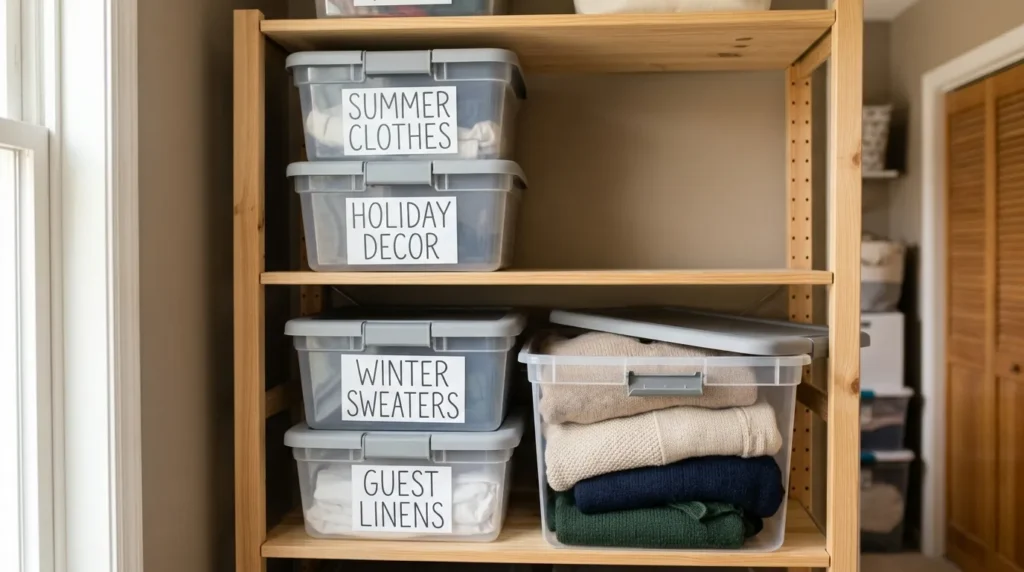
Seasonal items — winter coats in summer, holiday decorations most of the year, summer sports equipment in winter — take up valuable everyday storage space if they’re not rotated out when not in use. A seasonal rotation system, where off-season items move to less accessible storage and current-season items move to prime, easy-access spots, keeps daily storage spaces from becoming overcrowded with things you won’t need for months. In my experience, this rotation also creates a natural, built-in opportunity to reassess and declutter each season, since you’re already handling these items and can easily set aside anything that no longer fits or gets used.
How To Style It
Designate specific storage zones for seasonal rotation, such as a basement shelf, an attic space, or under-bed bins, reserved specifically for whichever season’s items aren’t currently in active use. Rotate items at clear, consistent points in the year, such as at the change of each season, rather than leaving the task open-ended and easy to postpone indefinitely. Use this rotation as a natural checkpoint to declutter, setting aside anything that wasn’t used the previous season or no longer fits current needs. Label seasonal storage bins clearly by season and general contents, so future you doesn’t have to guess or dig through multiple containers to find a specific item.
10. Family Command Center Setup
Quick Benefits
- Centralizes schedules, mail, and daily items for the household
- Reduces miscommunication about shared responsibilities
- Works well for families with multiple schedules to track
- Available in a range of styles from simple to elaborate
- Creates a single reliable reference point for the household
Why It Works
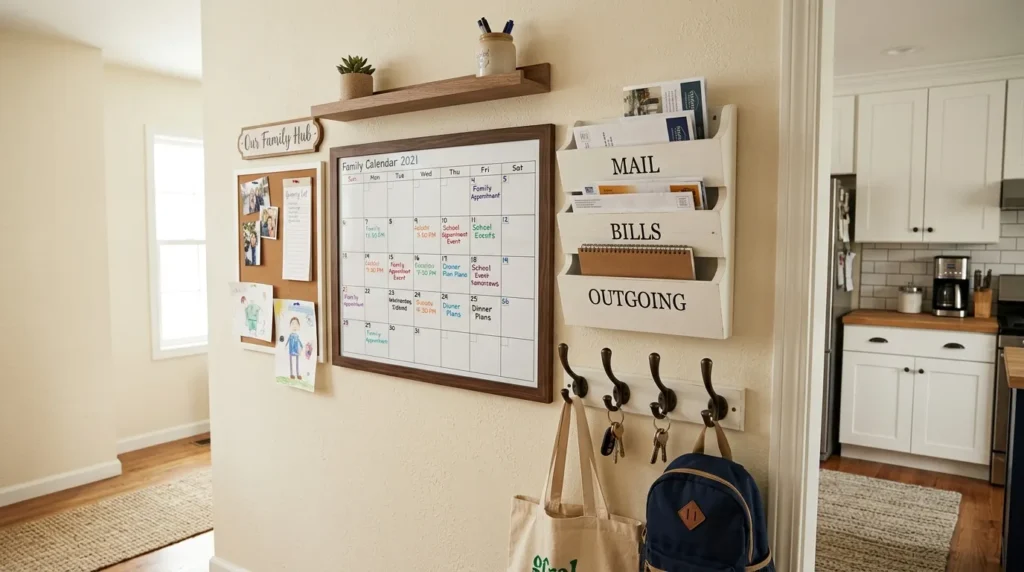
A family command center — typically a dedicated wall or area combining a calendar, a mail sorting system, and hooks or storage for daily items like keys and bags — solves the common household problem of information and items being scattered across multiple rooms. A mistake many homeowners make is relying purely on verbal communication or individual memory for shared schedules and responsibilities, which tends to break down as a household gets busier or as children get involved in more activities. I’ve noticed that even a simple command center significantly reduces the daily friction of “did you see the note about…” or “where did I put…” that busy households often experience.
How To Style It
Choose a central, high-traffic location for the command center, such as a spot near the kitchen or main entryway, where household members naturally pass by multiple times a day. Include a shared calendar, whether a physical wall calendar or a whiteboard, for tracking appointments, activities, and deadlines that affect multiple household members. Add a mail sorting system and hooks for keys, bags, and frequently needed items directly at the command center, consolidating several small organizational needs into one central spot. Keep the system simple enough for every household member, including children, to use and maintain independently, since a system requiring constant adult oversight tends to break down over time.
Frequently Asked Questions
Where should I start when organizing an overwhelming house?
Start with a small, high-traffic area like the entryway or a single kitchen cabinet rather than attempting the whole house at once. A contained early win tends to build motivation and momentum for tackling larger, more complex spaces later. Choosing an area you interact with daily also means you’ll notice and appreciate the improvement immediately, which helps sustain the effort.
How do I get my family to actually maintain an organization system?
Involve household members in setting up the system, including the labeling and category decisions, since people are generally more likely to maintain a system they had a hand in creating. Keep the system as simple as possible, designed around the least motivated version of each household member rather than an ideal, highly organized version. Clear labels and consistent, accessible placement of frequently used items also make it easier for everyone to participate correctly.
What’s the most cost-effective way to organize a home?
Many effective organizing solutions use items you likely already own, such as repurposed containers, existing baskets, or simple labeling with a marker and painter’s tape before investing in matching bins. Prioritizing a few key problem areas, rather than purchasing organizing products for the entire house at once, keeps costs manageable. Clear, inexpensive bins and adjustable drawer dividers tend to offer strong value relative to their cost across a range of rooms.
How often should I declutter and reorganize?
A seasonal check-in, roughly four times a year, works well for most households, aligning naturally with rotating seasonal items and reassessing what’s no longer needed. High-traffic areas like entryways and kitchen counters may benefit from a quicker weekly tidy in addition to the larger seasonal reset. The right frequency ultimately depends on your household’s pace and how quickly clutter tends to accumulate in specific areas.
What’s the best way to organize a small home with limited storage?
Vertical wall storage and under-bed solutions are particularly valuable in smaller homes, since they add storage capacity without using additional floor space. Multi-functional furniture with built-in storage, like a storage ottoman or a bed with drawers, can also help maximize a limited footprint. Regular decluttering becomes especially important in smaller spaces, since there’s less room to absorb excess items before things start to feel cramped.
Should I organize by category or by room?
Both approaches have value, but organizing by category first, such as gathering all your books or all your kitchen tools from throughout the house before deciding where they belong, often reveals how much you actually own and helps prevent duplicate storage systems in different rooms. Once you understand your total quantity in each category, organizing that category within its most logical room tends to create a more cohesive, functional system than tackling one room fully in isolation.
Conclusion
Home organization works best as an ongoing system rather than a one-time project, built around how your household actually uses each space day to day. From an entryway drop zone and labeled bins to closet zones and a family command center, each of these ideas addresses a specific, common source of clutter with a system designed to hold up over time, not just look good for a single afternoon.
If you’re ready to start, pick the one area causing you the most daily frustration right now, whether that’s a chaotic entryway or an overstuffed junk drawer, and build a simple system there first. These wins tend to build on each other, and gradually, your whole home will feel more manageable and considerably less stressful to live in.
Start with one or two ideas and gradually build a space that reflects your style and supports everyday comfort.
Related Articles
- 11 Home Office Ideas for Women
- Renter-Friendly Storage Hacks
- Small Living Room Ideas with Budget-Friendly Decor
- Neutral Home Styling Tips
- Bedroom Wall Decor Ideas with Wood Accents