

10 Dining Room Decor Ideas for a Welcoming, Designer-Approved Space
If you have ever walked past your dining room on an ordinary Tuesday afternoon and felt like the room was just sitting there, unused and disconnected from the rest of your home, you are definitely not alone. For years, traditional interior design treated the dining room like a formal museum—a space reserved exclusively for Thanksgiving dinner, fancy china, and polite conversation under harsh chandelier lighting. In my experience styling family homes, suburban bungalows, and city apartments across the country, this outdated approach leaves homeowners with a room that feels stiff, uninviting, and completely detached from how modern families actually live.
A dining room should be a hardworking, beautiful anchor in your floor plan. Whether you are serving casual weeknight takeout, hosting lively weekend dinner parties, helping kids with craft projects, or working remotely from the head of the table, this room deserves intentional design. Finding thoughtful 10 dining room decor ideas that balance effortless warmth with real-life durability can feel overwhelming when your Pinterest feed is filled with staged, unrealistic showrooms.
You do not need an endless budget or a full structural renovation to transform an uninspired dining zone into a breathtaking focal point. By layering tactile organic materials, balancing lighting scale, selecting forgiving performance fabrics, and curating art that sparks conversation, you can create a high-end, comfortable room where people naturally linger long after dessert.
Table of Contents
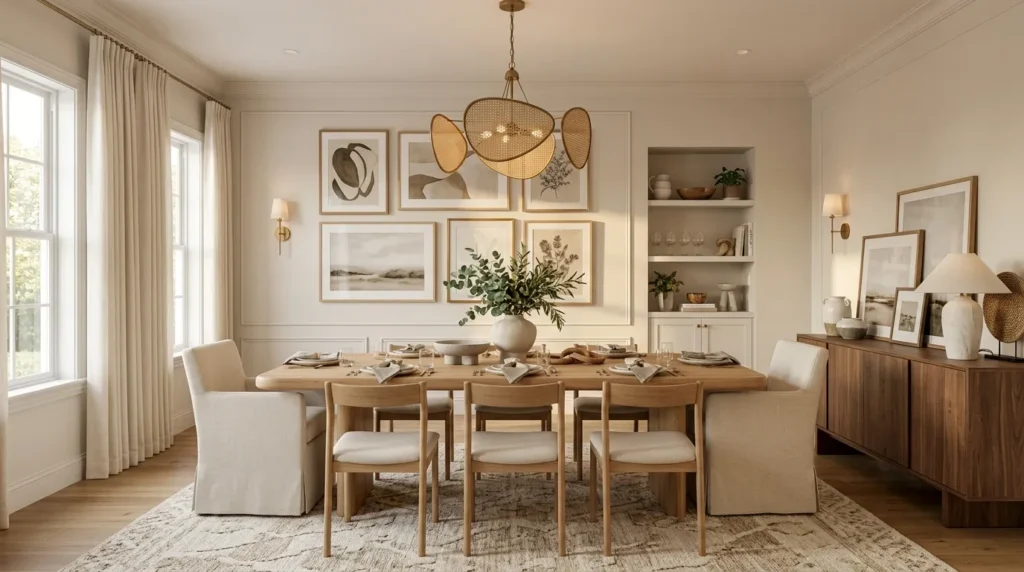
- Textured Bouclé Dining ChairsSoft, tactile upholstered seating instantly softens hard architectural lines and provides deep comfort for lingering dinner parties.
- Oversized Organic Rattan PendantsStatement woven light fixtures add sculptural drama overhead while casting warm, golden ambient light across the entire table.
- Solid White Oak Trestle TablesDurable, warm-toned natural timber anchors the room with timeless craftsmanship that handles everyday family wear effortlessly.
- Curated Ceramic Centerpiece VignettesMatte earthenware vases and seasonal botanical branches offer relaxed, effortless dimension without blocking across-the-table conversation.
- Vintage Low-Pile Runner RugsFaded Turkish or distressed flat-weave floor coverings define the seating area, add historic warmth, and hide everyday crumbs.
- Floor-to-Ceiling Linen Drapery PanelsBreezy, neutral linen curtains soften harsh natural glare, elevate ceiling height visually, and bring fluid movement to walls.
- Fluted Wood Storage SideboardsArchitectural tambour credenzas conceal dinnerware clutter while providing a versatile surface for entertaining and seasonal decor displays.
- Asymmetrical Gallery Wall ArrangementsMismatched antique frames, sketches, and oil landscape paintings create a layered, collected-over-time character with soulful personality.
- Antiqued Brass Wall SconcesWarm secondary accent lighting at eye level adds intimate dimension and eliminates cold shadows cast by overhead fixtures.
- Rich Moody Painted CeilingsA dark, enveloping shade on the fifth wall draws the eye upward, cocooning the room in dramatic architectural coziness.
1. Textured Bouclé Dining Chairs
- Quick Benefits
- Softens hard rectilinear dining tables with rounded, tactile curves.
- Extends guest comfort for hours during dinner parties and holiday hosting.
- Introduces high-end boutique hotel elegance on a practical budget.
- Pairs seamlessly with both modern minimalist and rustic farmhouse woods.
- Masks subtle fabric tension wear better than flat, smooth linen weaves.
Why It Works
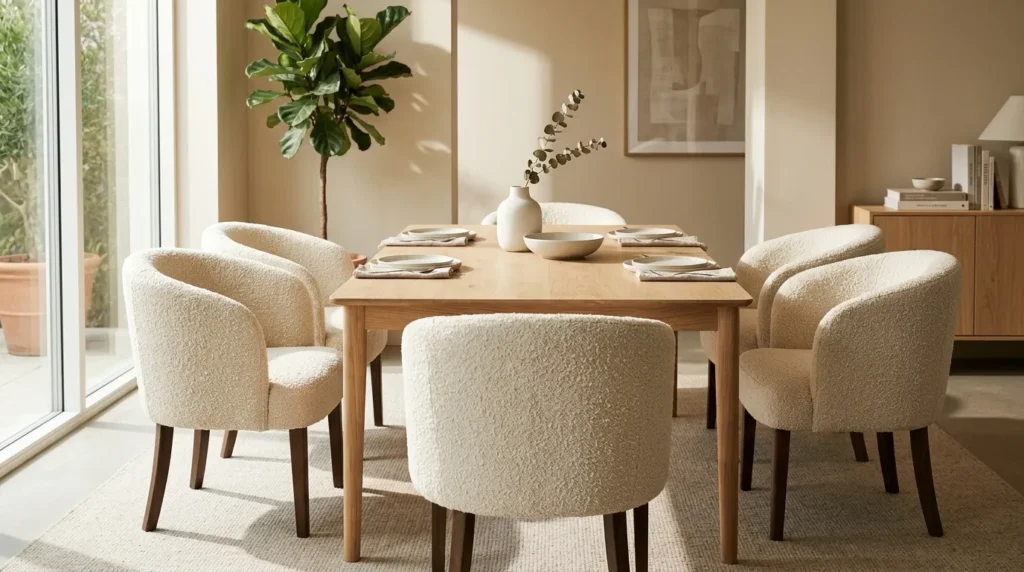
Nothing ruins a lively dinner party faster than hard, rigid seating that leaves your guests squirming after forty-five minutes. Bouclé chairs solve this by wrapping comfortable foam cushioning in looped, heavy-textured yarn that feels cozy and sophisticated. I’ve noticed that homes with open-concept layouts often suffer from too many flat, hard surfaces—drywall, hardwood flooring, quartz countertops, and glass sliders. Bouclé breaks up that visual monotony by introducing an inviting tactile element that begs to be touched. Because the nubby texture catches natural light from multiple angles, it adds depth to neutral color palettes without relying on loud, distracting patterns.
How To Style It
Choose low-profile barrel chairs or curved tub armchairs upholstered in creamy ivory, oatmeal, or soft taupe bouclé. If you have young children or pets, look for treated performance polyester bouclé blends that resist staining and clean up easily with warm water and mild dish soap. Pair four to six bouclé chairs with a clean-lined rectangular dining table made of matte black iron or dark walnut to create high-contrast modern balance. Keep the surrounding flooring simple with a flat-weave wool rug so the chair upholstery remains the primary textural star of the room.
2. Oversized Organic Rattan Pendants
- Quick Benefits
- Establishes a bold architectural focal point directly above the dining table.
- Casts patterned, warm ambient shadows that elevate evening dinners.
- Brings earthy, outdoor elements indoors for relaxed, coastal-modern warmth.
- Weighs visually less than heavy wrought iron or solid brass chandeliers.
- Works beautifully in both high vaulted ceilings and standard eight-foot rooms.
Why It Works
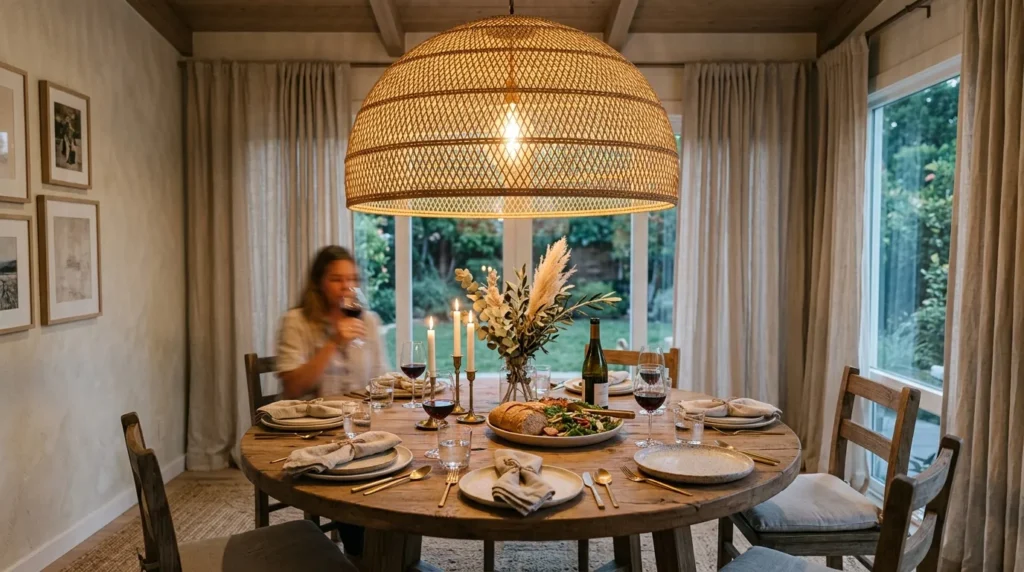
A mistake many homeowners make is choosing a light fixture that is far too small for their dining table, leaving the upper half of the room feeling cavernous and empty. An oversized rattan or woven cane pendant commands attention through expansive volume without feeling visually heavy or claustrophobic. The open, porous weave allows air and light to circulate freely while softening the glare of exposed bulbs. In my experience, natural fiber lighting bridges the gap between formal dining rooms and casual living spaces, immediately setting a relaxed, welcoming mood that encourages family members to sit down and unwind.
How To Style It
Hang a single wide-dome woven pendant (approx. 28 to 36 inches in diameter) centered approximately 30 to 34 inches above the surface of a round or square dining table. For long rectangular tables extending eight feet or more, install a pair of matching medium-sized woven bell shades spaced evenly along the center line. Pair the warm honey tones of rattan with a neutral linen table runner, ceramic stoneware dishes, and matte black dining chairs to keep the organic texture grounded in refined, modern design.
3. Solid White Oak Trestle Tables
- Quick Benefits
- Provides rock-solid structural stability for heavy everyday household use.
- Trestle base design eliminates corner legs, maximizing guest legroom.
- Light, natural wood grain brightens dining spaces without feeling sterile.
- Develops a beautiful, soft patina over decades of family gatherings.
- Easily adapts to changing decor trends from Scandinavian to Modern Farmhouse.
Why It Works
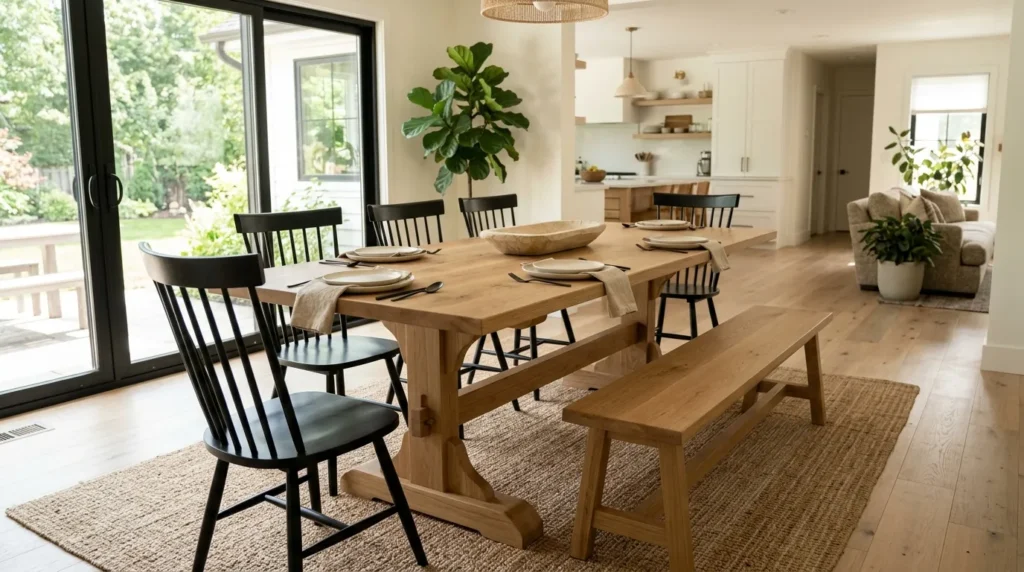
The dining table is the emotional and functional foundation of the room, and selecting the right material determines how comfortably the space functions day-to-day. Solid white oak is dense, durable, and naturally resistant to everyday dings and scratches compared to softer woods like pine. The trestle base is particularly practical because the central support structure keeps table corners wide open, allowing you to tuck extra chairs or benches around the perimeter when unexpected guests arrive without anyone bumping their knees on outer table legs.
How To Style It
Select a table finished in a clear, ultra-matte water-based polyurethane sealer that highlights the natural blonde grain rather than an artificial yellow-toned stain. Pair the table with a mix of upholstered side chairs and two statement leather end chairs to prevent the room from looking like a matching catalog set. Maintain the raw beauty of the wood surface by keeping everyday styling minimal: a long, shallow carved dough bowl or a low stone tray filled with pillar candles keeps the wood grain visible while serving as an easy, functional centerpiece.
4. Curated Ceramic Centerpiece Vignettes
- Quick Benefits
- Keeps sightlines completely open across the table for effortless conversation.
- Offers an affordable way to update room styling with changing seasons.
- Adds handmade, sculptural artistry to flat tabletop surfaces.
- Utilizes foraged branches for zero-cost, high-impact organic greenery.
- Can be quickly moved to a sideboard when serving family-style meals.
Why It Works
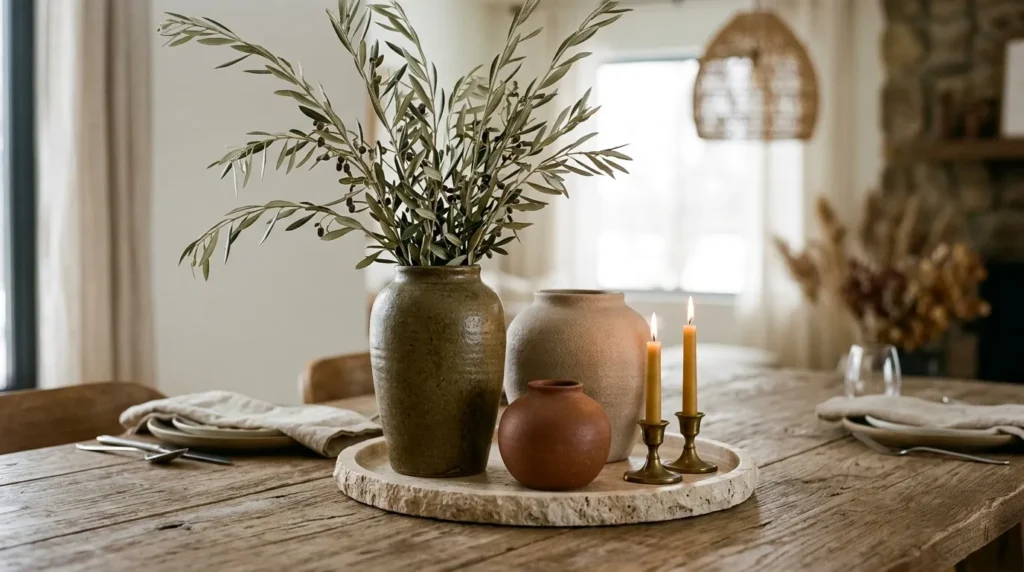
Massive floral arrangements might look stunning in wedding magazines, but in an everyday dining room, they create an awkward visual barrier that isolates guests across the table. One simple trick I always suggest to clients is grouping varying heights of organic ceramic vessels that offer sculptural interest below eye level. Unglazed stoneware, terracotta, and hand-thrown pottery bring earthy, grounded texture to smooth table surfaces. When filled with a few structural branches, the vignette feels dynamic, airy, and effortlessly curated rather than stiff or formal.
How To Style It
Group three ceramic vases of varying heights and organic silhouettes together slightly off-center on a low round marble or dark wooden tray. Fill the tallest vase with three to four tall, arching foraged branches—such as olive stems, silver dollar eucalyptus, or sculptural bare magnolia clippings. In the medium vase, leave it empty as a sculptural form or add a single dried seed pod, and place a small brass match striker or small tea-light holder in front. This asymmetrical cluster feels natural, balanced, and instantly elevates the entire tablescape.
5. Vintage Low-Pile Runner Rugs
- Quick Benefits
- Flat-weave construction prevents chairs from catching or snagging on rug edges.
- Intricate, time-worn patterns naturally camouflage everyday spills and dust.
- Introduces rich, heritage colors like terracotta, navy, and moss green.
- Grounds long, narrow dining spaces or open-concept dining nooks cleanly.
- Adds an authentic, collected-over-time character to newly constructed homes.
Why It Works
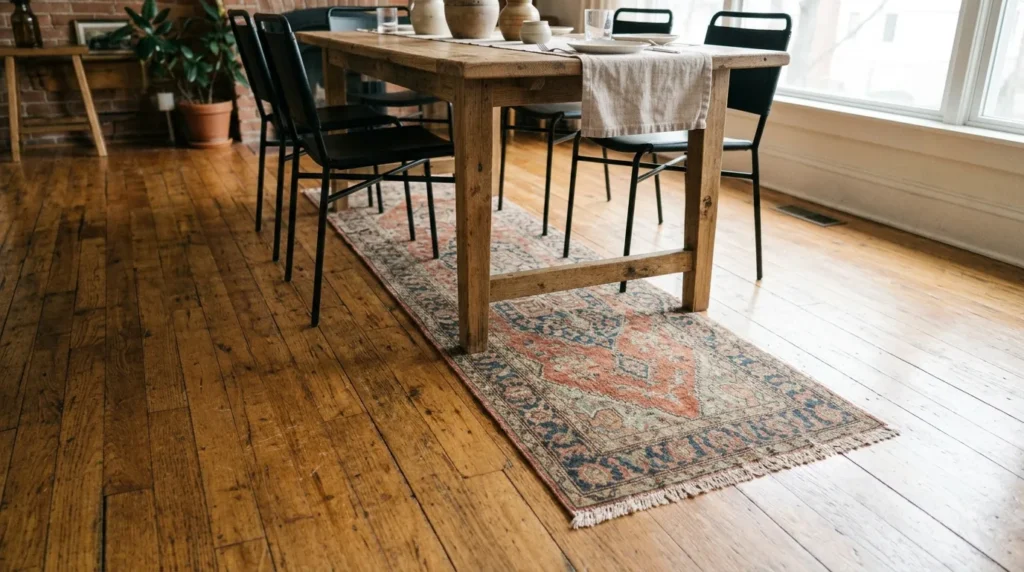
Many homeowners avoid putting rugs in dining rooms because they fear inevitable food spills, trapped pet hair, and chairs getting stuck on high-pile shag fibers. A vintage or vintage-inspired low-pile flat weave completely eliminates these headaches. Wool flat-weave rugs and printed low-pile distressed textiles are naturally resilient, simple to vacuum, and durable enough to withstand heavy foot traffic. The rich, nuanced color variations found in vintage patterns also disguise minor stains far better than solid, light-colored carpets ever could.
How To Style It
Ensure your dining rug extends at least 24 to 30 inches beyond all sides of the table perimeter so that chair legs remain firmly on the rug even when pulled back for guests to sit. If you are styling a smaller dining nook or narrow banquette, a long vintage runner placed along the walkway adds instant warmth. Complement the faded jewel tones of the rug by echoing its accent colors in linen napkins, wall art, or decorative ceramic pottery displayed on nearby open shelving.
6. Floor-to-Ceiling Linen Drapery Panels
- Quick Benefits
- Dramatically increases perceived ceiling height by drawing eyes upward.
- Diffuses harsh afternoon sunlight into a soft, warm interior glow.
- Absorbs room echo and improves acoustics during lively dinner conversations.
- Frames scenic outdoor window views with relaxed, breezy texture.
- Instantly transforms bare, builder-grade windows into finished architectural features.
Why It Works
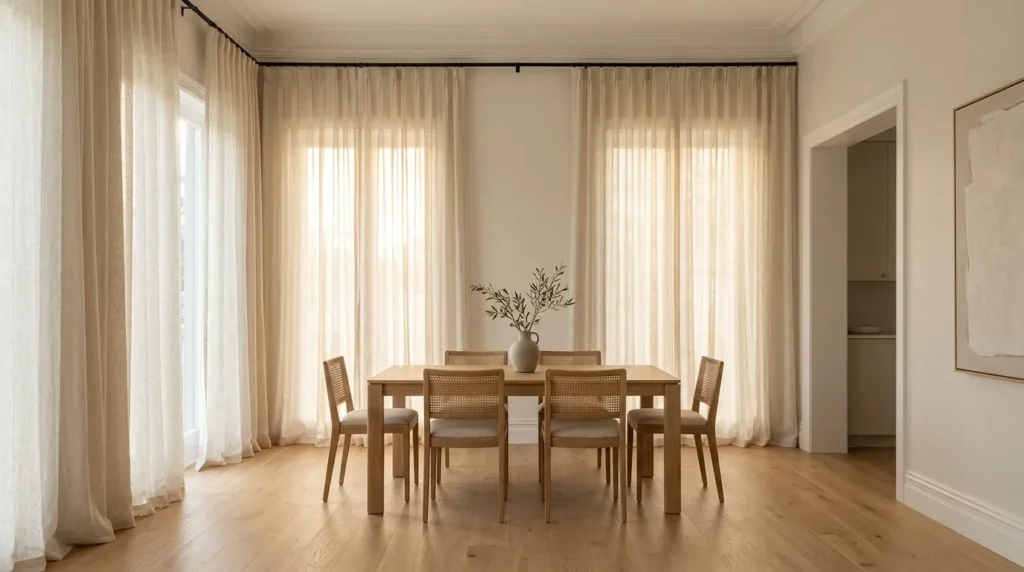
Hard floors, wooden tables, and drywall create an echo chamber that makes dining spaces feel cold, noisy, and uninviting. Hanging substantial linen curtains brings essential acoustic softness and visual warmth into the room. When drapery rods are mounted high and wide beyond the window trim, the panels trick the eye into perceiving the entire room as taller and more expansive than it actually is. Linen’s natural slub texture drapes with relaxed elegance, avoiding the stiff, formal look of shiny synthetic drapes.
How To Style It
Mount a minimalist 1-inch matte black or antique brass curtain rod just 2 to 3 inches below your ceiling crown moulding, extending the rod 8 to 12 inches wider than the window frame on both sides. Choose unlined or semi-sheer linen drapery panels in warm sand, soft flax, or warm ivory with tailored pinch pleats. Let the fabric gently brush or “kiss” the floor with a 0.5-inch break. When opened, the curtains should rest entirely outside the glass perimeter, framing the window and maximizing the intake of natural daylight.
7. Fluted Wood Storage Sideboards
- Quick Benefits
- Conceals seasonal linens, extra dinnerware, and entertaining supplies out of sight.
- Vertical fluting details add rich textural rhythm and shadow play to bare walls.
- Serves as an ideal staging station for holiday buffet serving and cocktail bars.
- Balances the visual weight of large rectangular dining tables across the room.
- Offers an elevated display surface for table lamps, framed art, and florals.
Why It Works
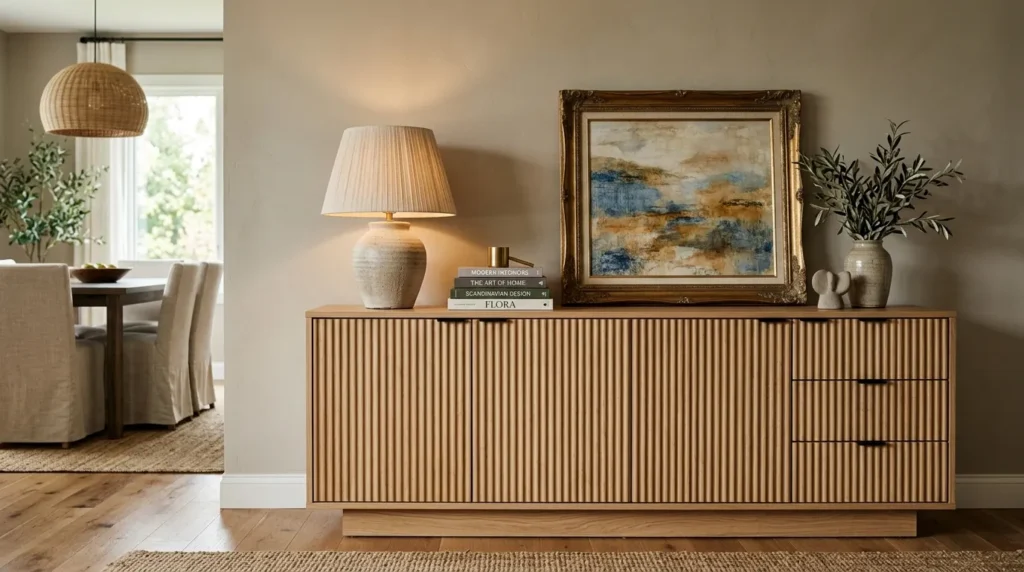
A dining room quickly feels chaotic when extra wine glasses, table runners, and specialty serving platters have nowhere to hide. A fluted wood sideboard or credenza combines functional storage with high-end architectural appeal. The repetitive vertical ridges of fluted wood catch changing directional light throughout the day, transforming a simple box cabinet into a piece of functional wall sculpture. That’s why many designers recommend investing in a substantial storage credenza to anchor the secondary wall of any dining layout.
How To Style It
Place the fluted credenza against the largest open wall in your dining room, allowing at least 36 inches of clearance between the sideboard and your dining chairs for comfortable traffic flow. Anchor the top surface using balanced asymmetry: place a medium ceramic table lamp with a pleated linen shade on one end, lean a large framed oil landscape against the wall in the center, and group a stack of design books topped with a scented candle and a small marble bowl on the opposite end.
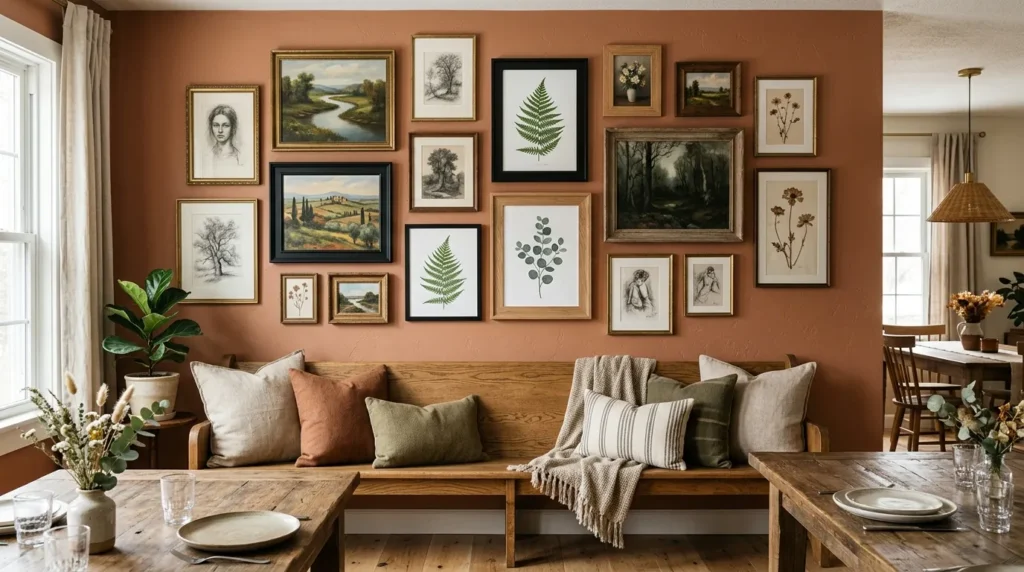
8. Asymmetrical Gallery Wall Arrangements
- Quick Benefits
- Infuses your personality and travel memories into a traditionally sterile room.
- Dynamic, asymmetrical layouts feel relaxed and effortlessly collected over time.
- Mixes multiple art mediums including sketches, oil paintings, and charcoal prints.
- Allows you to easily swap, rearrange, or add new pieces as your art collection grows.
- Balances formal dining furniture with casual, creative visual storytelling.
Why It Works
Symmetrical grid gallery walls can sometimes feel overly corporate and rigid. An organic, asymmetrical art gallery creates movement, curiosity, and an intimate bistro-like atmosphere that makes dinner guests feel immediately at home. By blending varied frame finishes—such as tarnished gilt wood, slim matte black metal, and warm natural oak—you tell a visual story that feels curated over decades rather than purchased in a single afternoon from a big-box store.
How To Style It
Select five to seven pieces of art in varying sizes, focusing on a cohesive underlying color palette such as muted earth tones, warm charcoals, and sepia washes. Begin by hanging your largest anchor piece slightly off-center at eye level (around 57 to 60 inches from the floor). Build outward with smaller framed sketches, abstract watercolor studies, and vintage landscape oil paintings, maintaining roughly 2 to 3 inches of breathing room between frames. Mix thick linen mats with un-matted vintage oil boards for rich visual depth.
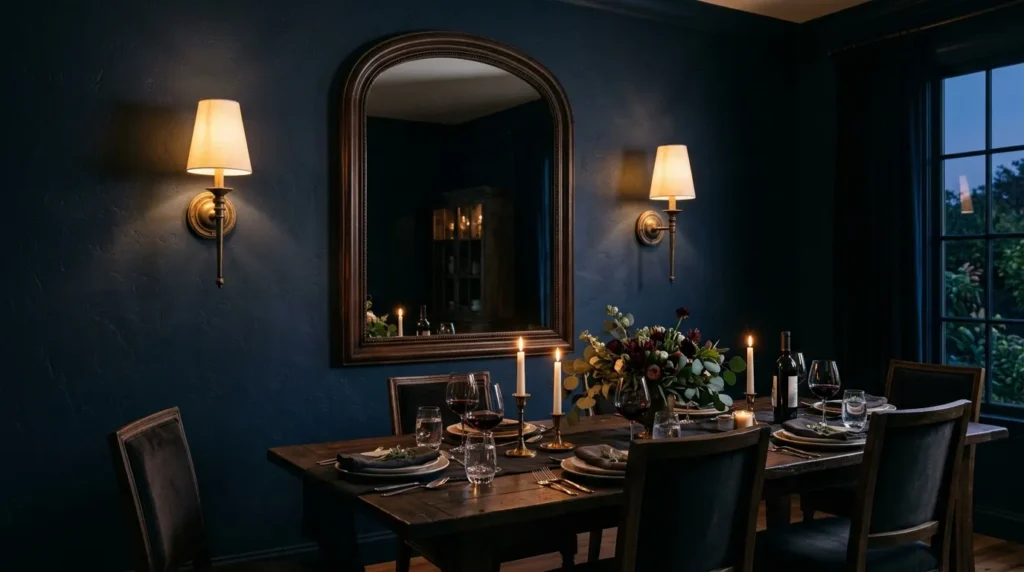
9. Antiqued Brass Wall Sconces
- Quick Benefits
- Provides warm, flattering secondary accent lighting at seated eye level.
- Clears up precious tabletop and sideboard surface area by utilizing wall space.
- Adds classic architectural permanence to plain drywall surfaces.
- Creates an intimate, moody restaurant ambiance during evening dinner parties.
- Bridges traditional metal accents with contemporary furniture silhouettes.
Why It Works
Relying entirely on a single overhead chandelier creates harsh downward shadows across guests’ faces and leaves the corners of your dining room feeling dark and neglected. Professional lighting design always relies on layering light at three distinct heights: overhead ambient light, eye-level accent light, and low-level mood lighting. Antiqued brass sconces flank walls with a soft, warm glow that bounces gently across vertical surfaces, making the entire dining room feel broader, cozier, and significantly more inviting after dusk.
How To Style It
Install a pair of hardwired or plug-in sconces flanking a large wall mirror, central artwork, or fluted sideboard, positioning the backplate roughly 60 to 66 inches above the finished floor. Look for fixtures with unlacquered or aged brass finishes paired with tapered linen, pleated fabric, or frosted glass shades. Always equip your wall sconces with warm 2700K dimmable LED bulbs wired to an independent dimmer switch so you can dial down the brightness to an intimate, candlelit flicker during dinner parties.
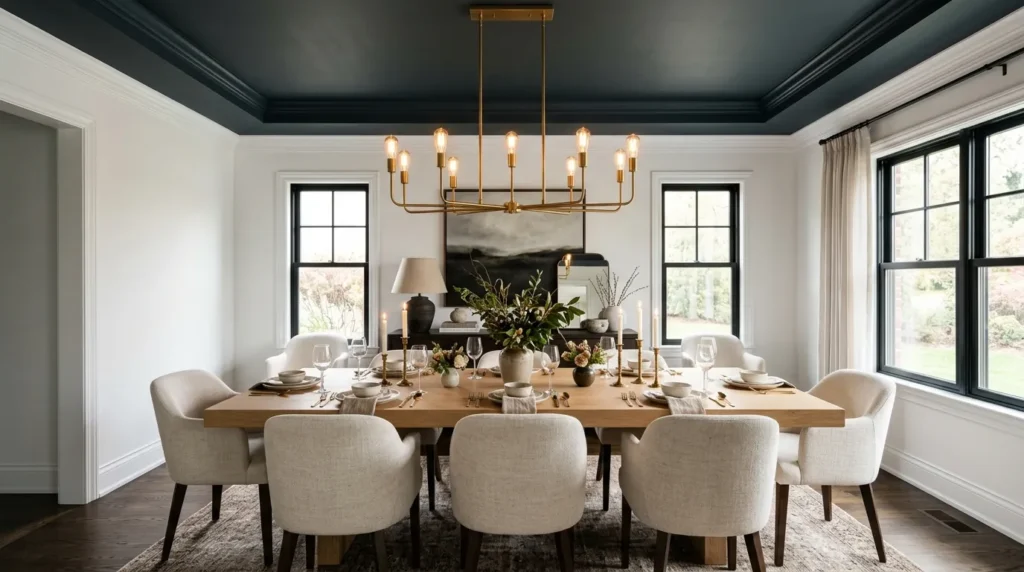
10. Rich Moody Painted Ceilings
- Quick Benefits
- Envelops the dining space in dramatic, intimate boutique restaurant coziness.
- Accentuates existing crown moulding and architectural ceiling millwork.
- Draws the eye upward, giving standard rectangular rooms distinctive personality.
- Balances light-toned oak tables, cream rugs, and pale upholstered seating.
- Transforms an overlooked surface into an unforgettable designer focal point.
Why It Works
The ceiling is often referred to as the “fifth wall,” yet in most homes, it is left covered in flat, builder-grade white paint. In a dining room—where people are seated for extended periods—painting the ceiling in a deep, saturated tone creates an enveloping canopy effect that instantly fosters intimacy. Rich hues like deep olive green, warm charcoal, midnight navy, or dark chocolate brown visually lower cavernous ceilings and create a moody backdrop that makes brass chandeliers and warm candlelight glow with breathtaking intensity.
How To Style It
If your dining room features crisp white walls, choose a rich, heritage shade like deep slate, muted forest green, or espresso for the ceiling plane, carrying the color right up to your white crown moulding for a sharp architectural transition. For a truly luxurious color-drenched look, paint the ceiling, crown moulding, and walls in the exact same moody hue using a dead-flat or eggshell finish on the ceiling and a durable satin on the trim. Balance the dark upper canopy by keeping your dining table natural oak and layering light cream bouclé seating beneath.
Practical Dining Room Design & Layout Tips
When putting these 10 dining room decor ideas into practice, keep a few fundamental spatial rules in mind to ensure your dining room remains as practical as it is gorgeous:
- Maintain Adequate Clearance: Always leave at least 36 to 42 inches of open walking space between the edge of your dining table and any adjacent walls, sideboards, or doorways. This allows guests to push back their chairs comfortably and walk past seated diners without squeezing.
- Proportion Your Chandelier: To determine the ideal chandelier diameter for your room, add the room’s length and width in feet together, and convert that sum to inches (for example, a 12′ x 14′ room looks best with a fixture approximately 26 inches wide).
- Layer Your Color Palette: Aim for a balanced ratio of 60% dominant base neutrals (walls, large rugs), 30% secondary structural tones (wood dining table, large credenza), and 10% high-contrast accent details (brass sconces, matte black accents, dark ceramic vases).
- Prioritize Wipeable & Performance Fabrics: If your dining room serves as a daily hub for family meals, choose performance-treated textured fabrics, top-grain leather, or solid wood seating that can handle occasional food spills without staining.
Frequently Asked Questions
What are the best dining room decor ideas for small spaces?
For small dining rooms, choose a round pedestal dining table that eliminates corner legs and maximizes foot traffic flow. Pair it with an oversized woven pendant hung low over the table, armless low-profile dining chairs, and a large wall mirror hung opposite a window to reflect daylight and visually double the perceived size of the room.
How do I make a formal dining room feel more casual and cozy?
To soften a stiff dining room, replace matching showroom furniture sets with mixed materials. Combine a rustic white oak trestle table with textured bouclé chairs, lay down a soft vintage flat-weave rug, hang floor-to-ceiling linen drapes, and display foraged branches in matte ceramic vases instead of polished silver or stiff floral arrangements.
What is the ideal height to hang a dining room light fixture?
In rooms with standard eight-foot ceilings, the bottom of your chandelier or pendant light should hang between 30 and 36 inches above the surface of the dining table. If your ceilings are higher than eight feet, raise the fixture by approximately 3 inches for each additional foot of ceiling height to maintain balanced visual proportions.
Should all the dining chairs match the dining table wood?
No, matching all wood tones exactly can make a dining room feel flat, outdated, and uninspired. Interior designers recommend mixing materials: pair a natural blonde oak table with matte black metal chairs, woven cane seats, or fully upholstered linen and bouclé dining armchairs to create rich, layered visual interest.
What size rug should I buy for my dining table?
Your dining room rug should be large enough so that all dining chairs remain completely on the rug even when guests pull them out to sit down. As a general rule, choose a rug that extends at least 24 to 30 inches beyond every edge of your dining table on all sides.
Related Articles
- Cozy Modern Living Room Layouts on a Budget
- Timeless Neutral Kitchen Styling & Cabinet Hardware Ideas
- How to Layer Organic Modern Home Decor in Every Room
- Small Breakfast Nook Decorating & Built-In Banquette Tips
- DIY Architectural Accent Walls: Board, Batten & Fluted Paneling
Final Thoughts on Styling Your Dining Room
Transforming your dining room into a warm, soulful space does not require gutting your floor plan or buying an entire matching showroom set. The most memorable, inviting homes are designed slowly and intentionally by layering rich tactile textures, warm eye-level lighting, functional storage, and handcrafted accents that make everyday meals feel like a special occasion.
Start by picking one or two updates that solve your current pain points—whether that is swapping out an undersized overhead fixture for an organic rattan pendant, rolling out a forgiving vintage runner, or introducing cozy bouclé seating. Gradually build a layered space that reflects your personal style, welcomes your favorite people, and supports relaxed everyday living.