

11 Baby Nursery Ideas for Girls
Preparing a nursery for your baby girl is one of the most exciting milestones of nesting, but it can quickly become an overwhelming design challenge. Between scrolling through endless curated social feeds and trying to fit bulky baby gear into a standard bedroom, it is easy to get caught between two extremes: overly saturated, theme-heavy baby rooms that feel dated within months, or minimalist spaces so sterile they lack warmth and comfort.
In my experience designing spaces for growing families, the most successful baby rooms are grounded in longevity. You want a soothing environment that feels magical during late-night feedings today, yet effortlessly transitions into a playful toddler bedroom without requiring a complete gut renovation.
Whether you love vintage floral aesthetics, earthy organic neutrals, or subtle pops of color, these 11 baby nursery ideas for girls combine durable materials, smart storage layouts, and designer-approved styling tricks.
Timeless floral wallpaper with wainscoting. Source: Livettes Wallpaper
Table of Contents
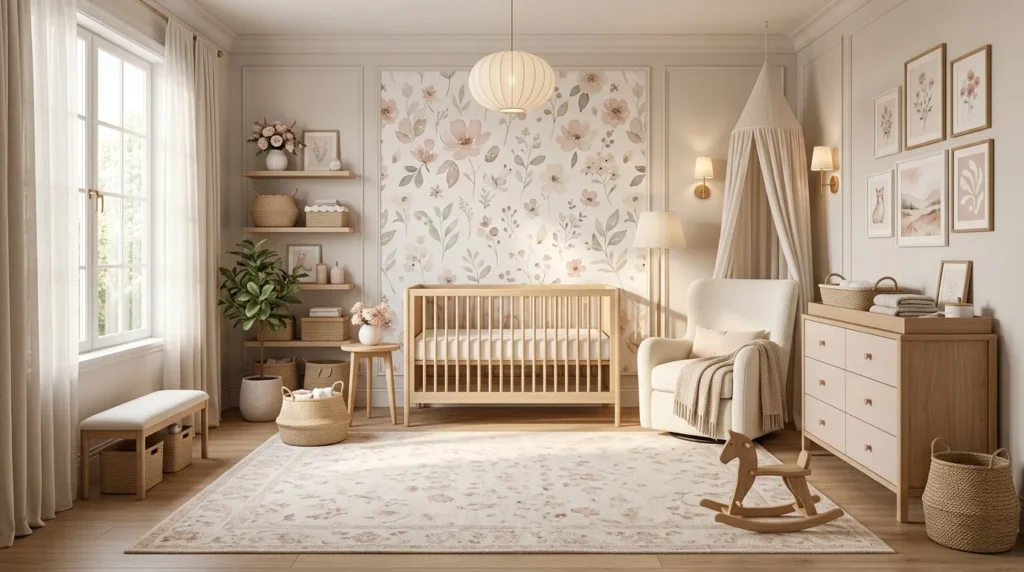
- Vintage Watercolor Floral MuralsOversized, soft botanical wallpaper creates an instant romantic focal point that grows gracefully from infancy into early childhood.
- Warm Oat Bouclé GlidersTactile, ergonomic upholstered nursery seating provides deep lumbar comfort for midnight feedings and snuggly bedtime stories.
- Muted Sage Green WainscotingClassic half-wall wood panelling grounds pale floral accents with soothing, gender-neutral architectural elegance.
- Natural Woven Rattan CribsLightweight, open-air wicker and woven wood accents introduce airy bohemian texture without overwhelming small footprints.
- Dimmable Brass Sconce LightingGentle eye-level accent lighting keeps the room soft and slumber-ready without harsh overhead glare during nighttime diaper changes.
- Dual-Purpose Dresser Changing StationsA solid wood 6-drawer chest topped with a removable changer tray maximizes storage while eliminating single-use nursery furniture.
- Floating Acrylic Picture LedgesClear wall rails turn colorful children’s picture books and heirloom wooden toys into rotating, functional vertical wall art.
- Plush Layered Moroccan RugsThick high-pile wool floor coverings cushion tiny crawling knees, muffle room echoes, and introduce subtle geometric warmth.
- Blackout Linen Pinch-Pleat DrapesHigh-mounted thermal window panels block midday sun for restorative naps while lending a tailored, breezy aesthetic to nursery windows.
- Scalloped Architectural Wall DetailsCharming scalloped board trims or painted accent arches infuse sweet, vintage storybook personality into plain drywall.
- Heirloom Antique Gilt MirrorsA vintage-inspired gold ornate mirror bounces natural daylight, opens up compact spaces, and adds collected-over-time character.
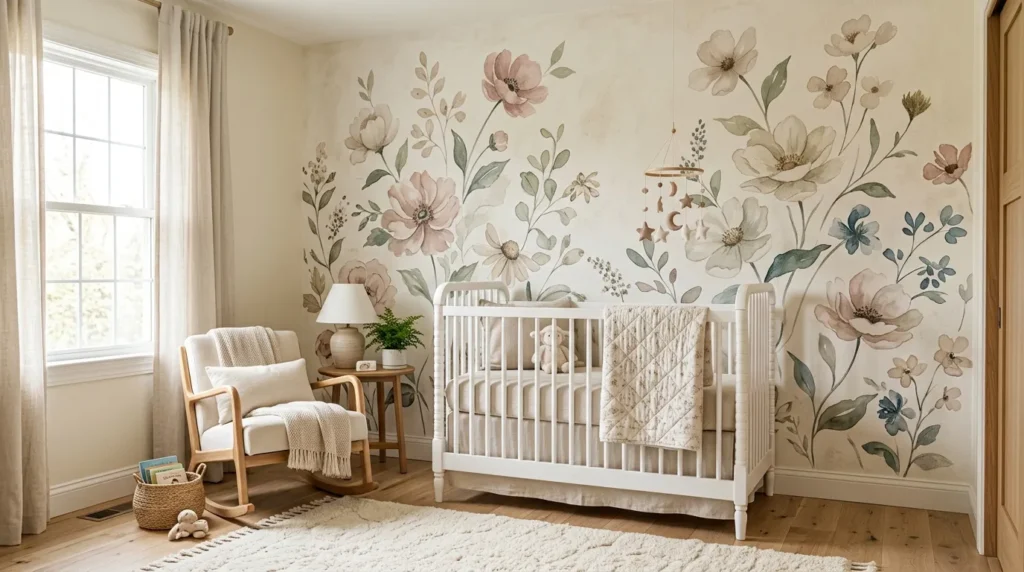
1. Vintage Watercolor Floral Murals
- Quick Benefits
- Establishes a breathtaking, artistic focal wall without needing heavy wall decor.
- Muted color tones prevent visual overstimulation for newborns.
- Transitions seamlessly from a baby girl’s nursery to a sophisticated big-kid room.
- Peel-and-stick options provide renter-friendly installation and easy removal.
- Ties together disparate bedding, rug, and furniture accent tones effortlessly.
Why It Works
Traditional nursery designs often relied on intense bubblegum pinks that parents grew tired of after twelve months. Modern vintage florals use soft watercolor washes—such as dusty mauve, faded taupe, sage, and pale peach—to create a dreamy, romantic atmosphere. I’ve noticed that placing an oversized mural on the main crib wall creates a stunning focal point upon walking through the door, immediately grounding the space while keeping the remaining three walls calm in complementary warm whites.
How To Style It
Apply a peel-and-stick or paste-the-wall botanical mural behind the crib. To keep the pattern looking elevated rather than chaotic, select soft linen crib sheets in a solid cream or muted blush that pulls a subtle secondary tone from the wallpaper. Pair the wall with clean-lined natural wood or soft off-white furniture to let the delicate floral artistry take center stage.
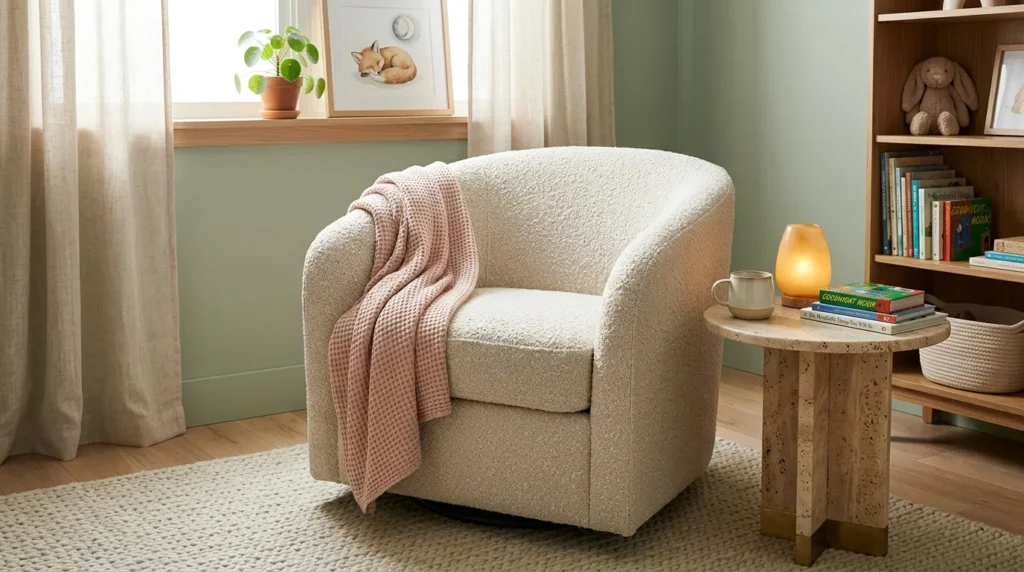
2. Warm Oat Bouclé Gliders
- Quick Benefits
- Nubby, looped fabric texture hides subtle surface wear and fabric stretching.
- High-back support prevents neck strain during long late-night feeding sessions.
- Neutral oat color easily transitions into a living room or reading corner later.
- Adds cozy, modern texture that softens angular cribs and rectangular dressers.
- Swivel-and-glide mechanisms allow gentle, silent rocking without floor scraping.
Why It Works
You will spend countless hours in your nursery chair, making ergonomics and comfort non-negotiable. Traditional microfiber rockers often look bulky and dated, while stiff modern chairs lack the necessary head and arm support. A curved glider upholstered in oat-toned bouclé offers the perfect middle ground: cloud-like tactile softness paired with a chic, sculptural silhouette. The looped yarn construction adds depth to neutral nursery palettes while standing up well to daily friction.
How To Style It
Place the glider near a window or corner away from the main door path, ensuring there is enough clearance behind the chair for a full swivel and recline. Pair it with a small round marble or travertine side table just tall enough to set down a nursing water bottle and a dim nightlight. Drape a soft waffle-knit blush throw over the arm and tuck a lumbar pillow behind your back for added posture support.
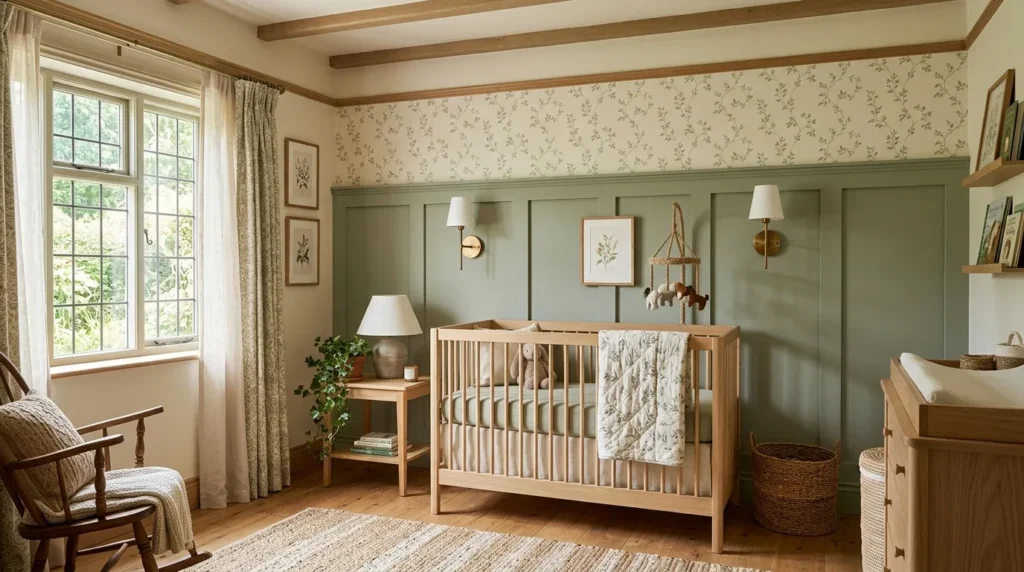
3. Muted Sage Green Wainscoting
- Quick Benefits
- Protects lower drywall from inevitable scuffs, toy marks, and toddler hands.
- Sage green creates a biologically calming, nature-inspired nursery mood.
- Balances delicate pink, peach, and floral elements with grounded contrast.
- Adds permanent architectural value and character to standard builder-grade rooms.
- The top rail ledge provides a display narrow enough for mini framed art.
Why It Works
A mistake many homeowners make is assuming a baby girl’s nursery must be exclusively pink. Incorporating muted greens—such as eucalyptus, soft olive, or silvery sage—introduces a timeless, organic balance. Installing board and batten or beadboard panelling on the lower third of the room anchors the space physically and visually, giving the room high-end craftsmanship while serving as a sturdy barrier against scuffs.
How To Style It
Install wainscoting roughly 36 to 48 inches from the floor, finishing the woodwork in an easy-to-clean satin or semi-gloss paint in a muted sage hue. Keep the upper walls a creamy warm ivory or layer a delicate vine-print wallpaper above the rail. Pair the green wainscoting with unlacquered brass hardware on dressers and natural light oak flooring for a fresh, English-cottage-inspired aesthetic.
4. Natural Woven Rattan Cribs
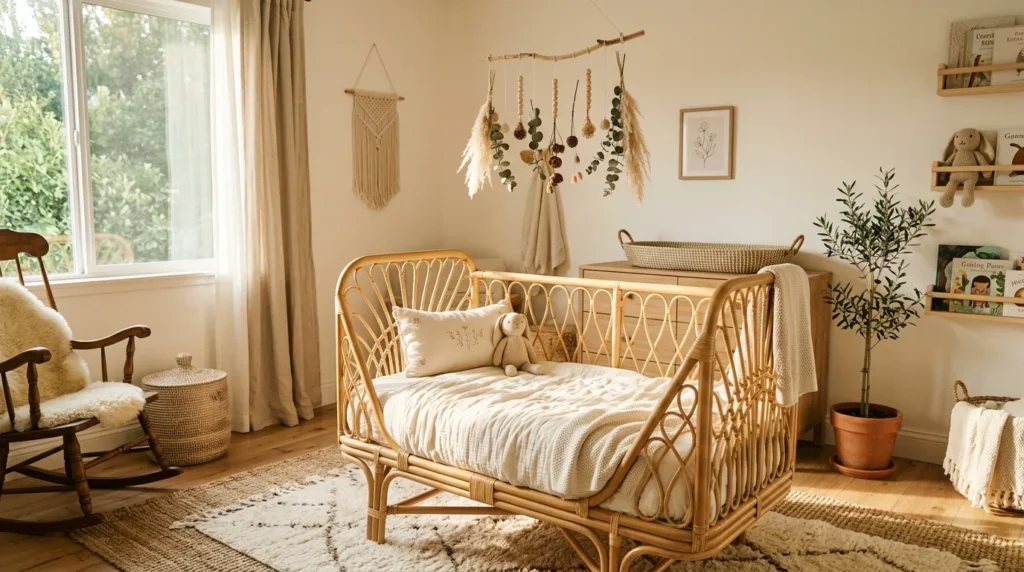
- Quick Benefits
- Open, breathable weave keeps the room feeling light, airy, and uncluttered.
- Warm honey rattan tones add natural organic warmth to cool white spaces.
- Rounded spindle shapes eliminate sharp corners around the sleep zone.
- Complements a wide range of styles from coastal to earthy bohemian.
- Certified non-toxic natural finishes protect curious teething gums.
Why It Works
Bulky solid wood or painted spindle cribs can sometimes overwhelm smaller nursery floor plans. Rattan and woven cane cribs solve this by maintaining an open, lightweight visual footprint that allows natural light to flow across the entire room. In my experience, incorporating woven botanical fibers prevents a nursery from feeling overly staged or formal, introducing a relaxed, grounded warmth that feels effortlessly welcoming.
How To Style It
Center the rattan crib against a solid painted or subtly wallpapered accent wall. Pair the natural cane frame with a breathable, organic cotton mattress dressed in a neutral ivory muslin sheet. Keep the floor beneath soft by layering a plush jute-and-wool rug underneath the front legs, and hang a lightweight woven leaf mobile overhead to mirror the crib’s organic materials.
5. Dimmable Brass Sconce Lighting
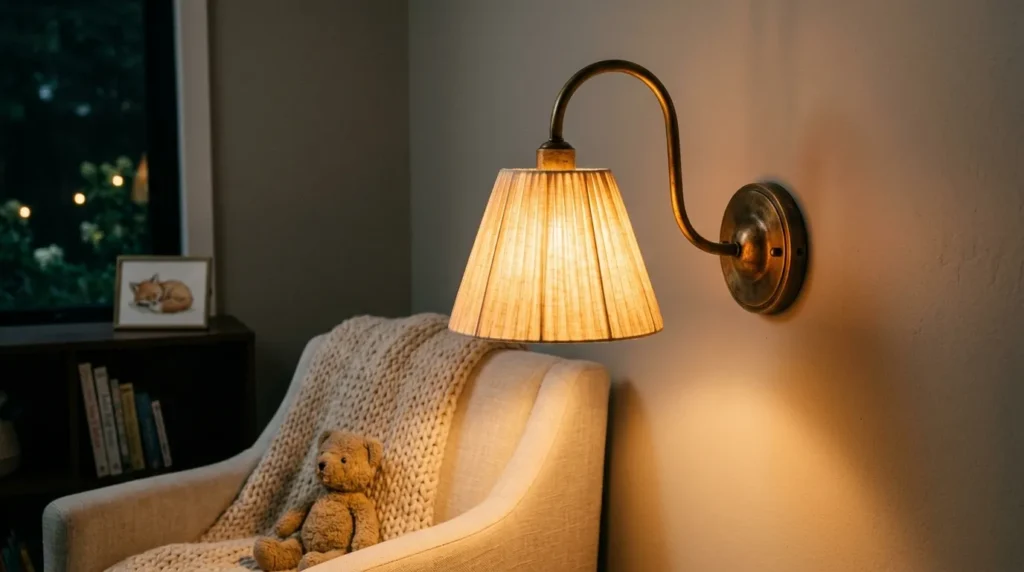
- Quick Benefits
- Eliminates harsh overhead lighting that disrupts infant sleep cycles.
- Clears up surface space on bedside and changing tables.
- Hardwired or plug-in dimmer switches allow precise light level adjustment.
- Adds warm, vintage jewelry-like metallic accents to painted drywall.
- Directs illumination downward toward task areas like gliders and changing pads.
Why It Works
Sudden bright overhead light stimulates a baby’s nervous system, making it much harder to settle back to sleep after 2:00 AM wake-ups. Installing dimmable wall sconces at eye level allows parents to dial down ambient light to a soft, amber glow. Antiqued brass finishes warm up pastel walls and bring timeless charm that endures long past the nursery stage.
How To Style It
Mount a pair of brass gooseneck or articulated sconces with pleated fabric shades flanking the changing station, or install a single reading sconce directly above the glider at roughly 55 to 60 inches from the floor. Always use warm 2700K dimmable LED bulbs. If hardwiring is not an option, select a plug-in sconce featuring a decorative twisted fabric cord and an integrated inline dimmer switch.
6. Dual-Purpose Dresser Changing Stations
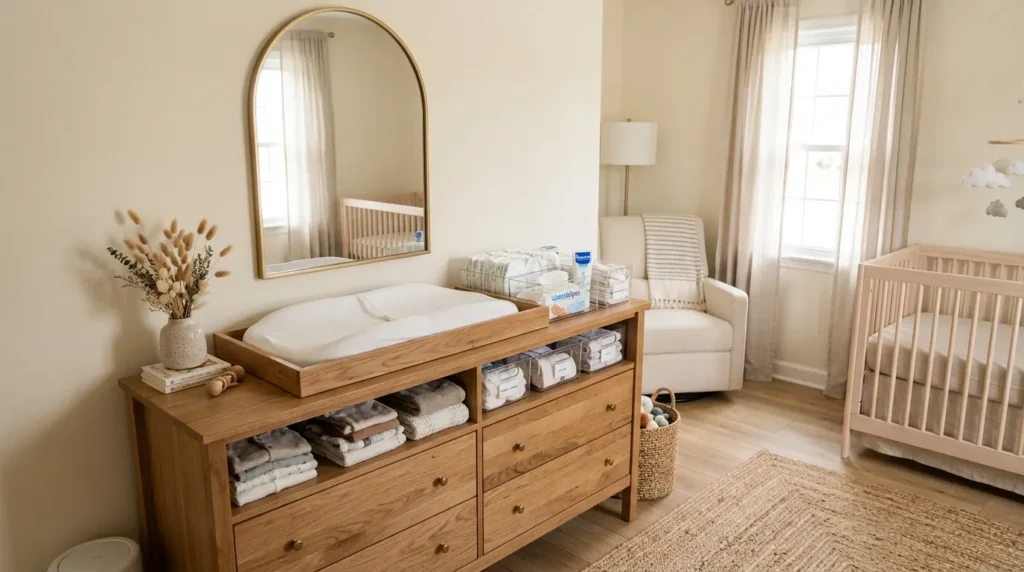
- Quick Benefits
- Saves valuable floor space by combining two essential furniture pieces into one.
- Grows with your child: simply remove the changing tray for a lifetime bedroom dresser.
- Deep drawers provide concealed organization for diapers, creams, and extra onesies.
- Sturdy wide base offers superior anti-tip stability compared to flimsy changer stands.
- Allows you to customize hardware pulls to match your room’s design accents.
Why It Works
Dedicated changing tables are notoriously short-lived pieces of furniture that end up cluttering storage spaces once potty training begins. Using a standard solid-wood six-drawer double dresser topped with a secure, removable changing tray gives you ample tabletop room for supplies while maximizing long-term utility. One simple trick I always suggest to new parents is outfitting the top drawer with customizable acrylic divider bins to keep diapering essentials organized and accessible with one hand.
How To Style It
Choose a dresser finished in warm natural oak or painted in soft mushroom taupe. Secure a low-profile wood changing tray to the back using non-marring safety brackets. Replace standard builder hardware with brushed brass ring pulls or carved wooden knobs. To finish the station, hang an arched mirror or charming framed watercolor print centered above the dresser at adult eye level.
7. Floating Acrylic Picture Ledges
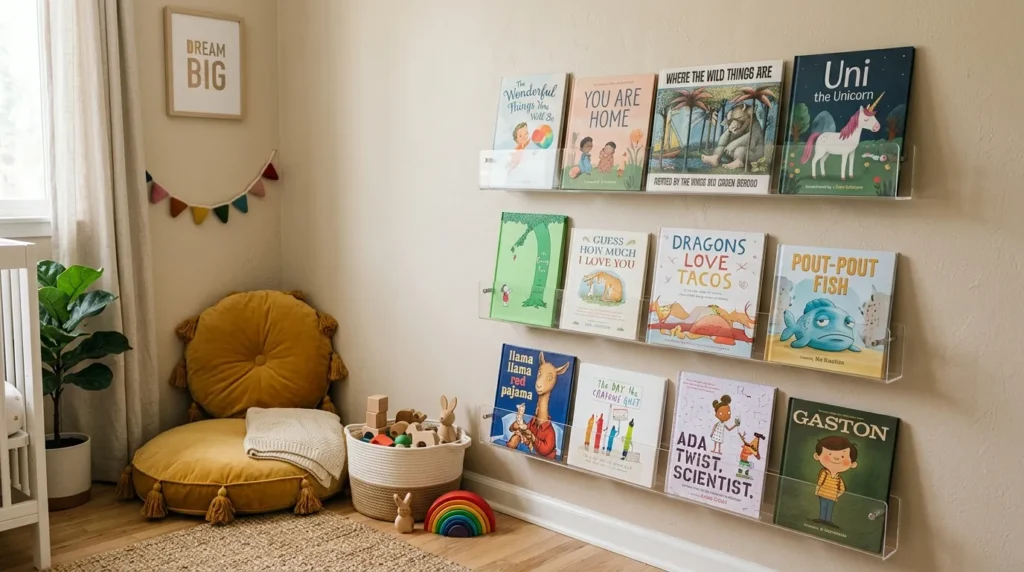
- Quick Benefits
- Turns beautiful storybook covers into colorful, interchangeable wall decor.
- Ultra-slim profile fits easily into awkward narrow corners or behind doors.
- Clear transparent fronts keep book titles completely visible for toddlers.
- Encourages early reading habits by putting books within child-accessible reach.
- Keeps heavy bookshelves off the floor to maximize open play areas.
Why It Works
Traditional bookshelves take up valuable square footage and hide illustrated book covers behind narrow spines. Floating clear acrylic ledges display books face-out, transforming everyday nursery board books into vibrant, dynamic art. Because the ledges have a depth of only 2 to 3 inches, they can be installed on narrow return walls or beside the glider where traditional furniture simply cannot fit.
How To Style It
Stack three to four 24-inch or 36-inch acrylic ledges vertically on an open wall, leaving roughly 10 to 12 inches of clearance between each rail. Mount the lowest ledge around 18 inches off the floor so your toddler can safely reach for her favorite bedtime books as she grows. Curate the ledges with a blend of illustrated classic tales, soft fabric softies, and small wooden heirlooms.
8. Plush Layered Moroccan Rugs
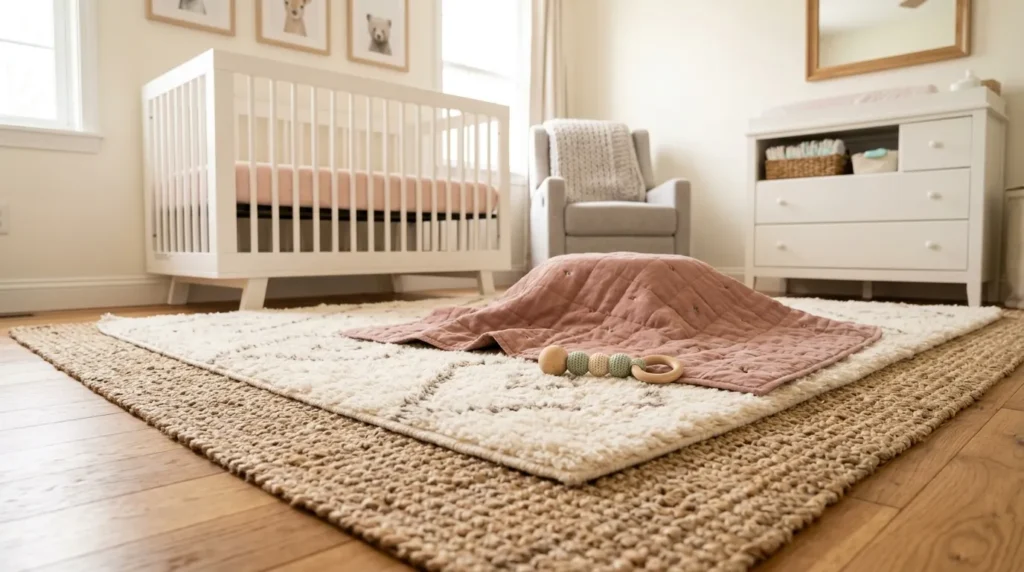
- Quick Benefits
- Thick, high-pile wool fibers cushion little knees and elbows during tummy time.
- Absorbs ambient sound and footsteps, keeping the nursery whisper-quiet.
- Neutral cream backgrounds with subtle geometric lines complement any color theme.
- Natural wool lanolin provides built-in stain resistance against minor spills.
- Adds immediate hygge-style coziness to cold hardwood or laminate flooring.
Why It Works
Hardwood floors look stunning, but they offer zero sound dampening and can feel cold and slippery during floor play. A plush Moroccan-style wool rug introduces thick, cloud-like softness underfoot. The subtle diamond or broken-line tribal patterns add just enough visual structure to break up solid flooring without competing with wallpaper or patterned drapery.
How To Style It
Choose a rug size that allows at least the front legs of the crib, glider, and dresser to rest securely on top (typically 8’x10′ for average bedrooms). For extra boho dimension, layer a soft, high-pile 5’x7′ Berber rug centered diagonally over a larger, flat-weave natural jute rug. Always place a thick non-slip felt rug pad underneath to provide extra joint cushioning and prevent dangerous bunching.
9. Blackout Linen Pinch-Pleat Drapes
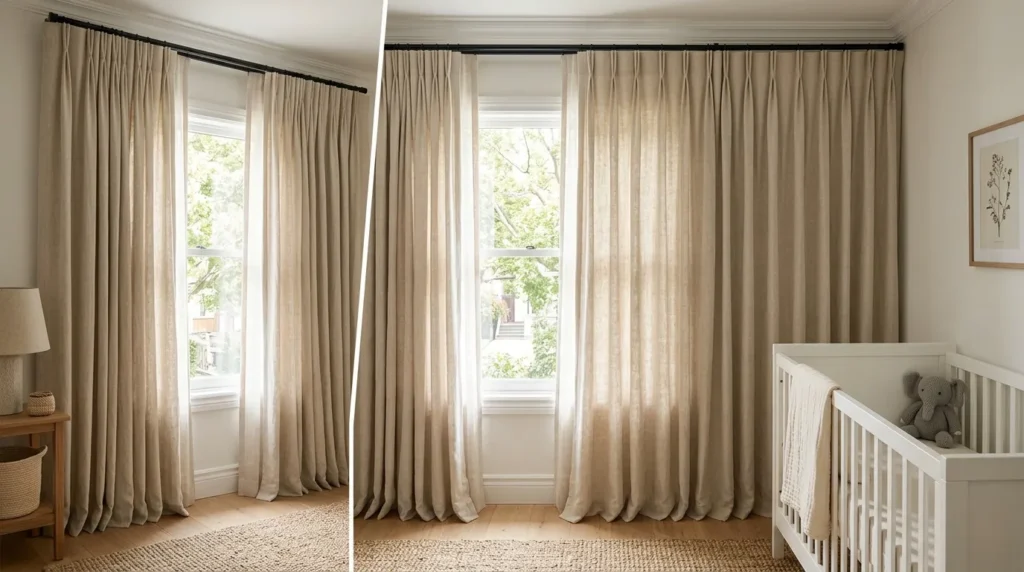
- Quick Benefits
- Blocks 99% of outside daylight to establish healthy infant daytime nap routines.
- Linen face fabric provides an upscale, tailored look without stiff synthetics.
- Thermal blackout backing insulates windows against drafts and summer heat.
- Pinch-pleat headers slide effortlessly along metal tracks during naptime transitions.
- Hanging curtains high and wide makes nursery windows look grand and expansive.
Why It Works
Quality daytime naps are the cornerstone of a well-rested baby, making light control one of the most critical functional aspects of nursery design. However, heavy synthetic blackout curtains often look stiff and cheap. High-end custom-look linen drapes with hidden thermal blackout lining offer the best of both worlds: relaxed organic texture on the room side, with complete light blockage underneath.
How To Style It
Mount an iron or brass drapery rod 3 to 4 inches below the ceiling moulding, extending the brackets 8 to 10 inches past the window trim on either side. Choose drapes in warm ivory, oat, or dusty rose with custom pinch pleats. Ensure the curtain panels are wide enough to cover the window with generous fold fullness, letting the hem lightly graze the floor for a polished finish.
10. Scalloped Architectural Wall Details
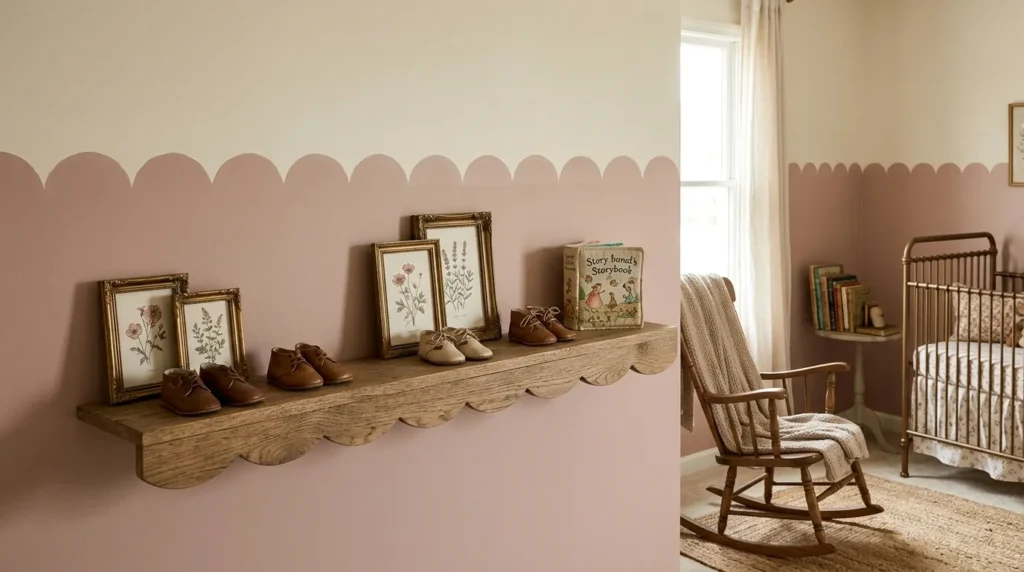
- Quick Benefits
- Brings whimsical storybook charm without feeling overly cartoonish.
- Easy DIY upgrade using precut wooden trim or simple painted edge templates.
- Softens sharp geometric room lines with feminine, undulating curves.
- Perfect for framing floating display shelves, headboard walls, or baseboards.
- Works on small accents (like picture frames) or large wall transitions.
Why It Works
Scalloped details have made a major resurgence in high-end children’s design because they channel vintage nostalgia while remaining modern and playful. Incorporating gentle, wave-like trim along wall mouldings or shelving softens the hard, boxy angles of a bedroom. It adds an artisanal, handcrafted personality that makes the nursery feel truly special and bespoke.
How To Style It
Add a scalloped wood trim moulding to the bottom edge of floating nursery display shelves or along the top rail of your beadboard wainscoting. If you prefer paint, use a cardboard cup template to paint a scalloped border separating two-tone painted walls—such as a warm blush lower half transitioning into a creamy white upper wall. Echo the shape across small room accents, like scalloped wicker storage baskets or wavy picture frames.
11. Heirloom Antique Gilt Mirrors
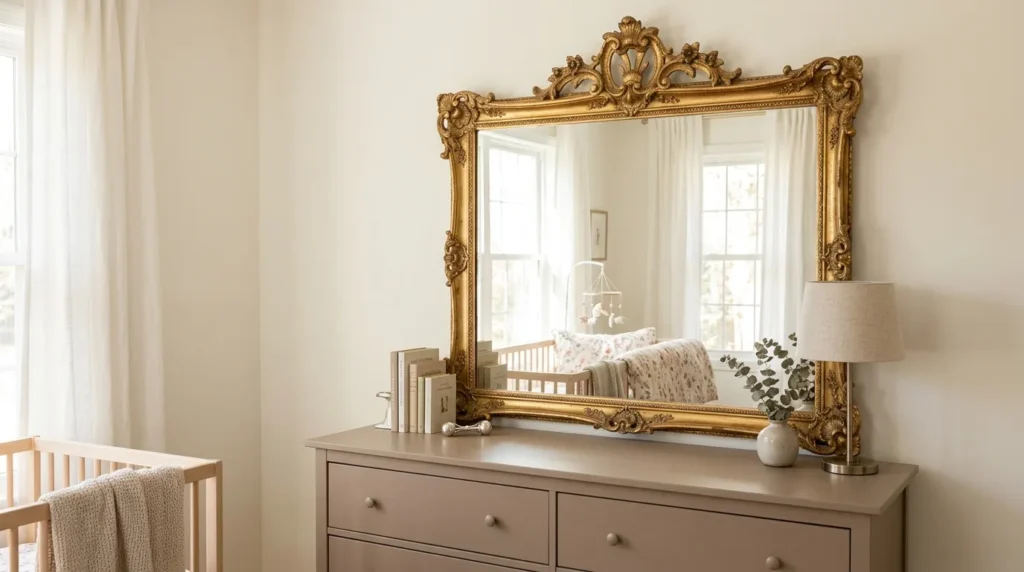
- Quick Benefits
- Reflects natural daylight into shadowy corners to brighten the room.
- Ornate vintage gold patina adds soulful, collected-over-time character.
- Visually expands compact nursery footprints and creates depth.
- Provides visual stimulation for babies discovering their reflections during play.
- A timeless heirloom piece that stays with your child through every bedroom stage.
Why It Works
All-new furniture straight from a single store can leave a nursery feeling sterile, like a staged showroom display. Mixing in a single antique or vintage-inspired piece—such as an ornate gilded mirror—instantly introduces warmth, history, and soul. Positioned safely on the wall, the mirror bounces soft morning light around the room and serves as a gorgeous visual anchor above a changing dresser.
How To Style It
Hang a 28-to-36-inch arched antique gold mirror securely centered above your changing dresser or adjacent to a reading corner. Ensure you anchor the mirror directly into wall studs using heavy-duty safety hardware to guarantee it remains completely immovable. Pair the vintage gold frame with modern ceramic lamps and raw linen textures to strike an effortless balance between historic charm and fresh modern styling.
Essential Nursery Safety & Layout Guidelines
When styling these 11 baby nursery ideas for girls, safety and functional workflow should always lead your design decisions:
- Strict Crib Clearance: Keep cribs situated away from windows, dangling drapery cords, and direct radiator heat. Never hang heavy framed art or unanchored floating shelves directly above the crib sleep area.
- Anchor Heavy Furniture: Every dresser, bookcase, and tall storage cabinet must be secured directly to wall studs using heavy-duty metal anti-tip safety brackets, regardless of how stable the piece feels.
- Streamline the Nighttime Triangle: Arrange your glider, changing dresser, and diaper disposal unit within an easy three-step triangle so you can navigate late-night routines smoothly in low light.
- Choose Non-Toxic Finishes: Look for furniture certified as GREENGUARD Gold and select low- or zero-VOC paints to maintain healthy indoor air quality for developing lungs.
Frequently Asked Questions
How do I make a girl’s nursery look timeless instead of babyish?
Focus on foundational furniture in natural wood tones or warm neutrals, and introduce whimsy through easily swappable accents like wallpaper murals, textured rugs, and wall art. Incorporating mature design elements like brass sconces, antique mirrors, and linen drapes ensures the room evolves naturally into a toddler and big-kid space without a full redesign.
What are the best calming colors for a baby girl’s nursery?
Soft, muted nature-inspired tones work best to foster sleep and relaxation. Consider dusty mauves, soft oat, warm ivory, pale peach, and muted sage green. Avoid high-saturation, neon pinks or stark cool whites, which can create harsh contrast and visual overstimulation.
What furniture is truly essential for a baby nursery?
The only non-negotiable nursery pieces are a safety-certified crib with a firm mattress, an ergonomic glider or rocking chair for feedings, and a sturdy dresser outfitted with a secure, removable changing topper. Everything else—from decorative armoires to open book ledges—can be added gradually based on your room’s footprint and storage needs.
How can I make a small nursery feel larger?
Maximize vertical wall space with floating acrylic book ledges and high-mounted curtains that draw the eye toward the ceiling. Use dual-purpose furniture like a dresser-changer combo, choose open-frame rattan cribs that allow light through, and hang a large wall mirror opposite a window to reflect daylight and create visual depth.
When should I finish decorating the nursery?
Aim to have the primary nursery furniture, painting, and wallpaper completed around 32 to 34 weeks of pregnancy. This gives the room ample time to air out any paint or furniture packaging odors while leaving you plenty of energy to wash baby linens, organize clothes by size, and stock diapering stations before baby arrives.
Related Articles
- 10 Dining Room Decor Ideas for a Welcoming, Designer-Approved Space
- Cozy Modern Living Room Layouts on a Budget
- Timeless Neutral Home Styling: How to Layer Organic Textures
- Small Space Nursery Organization & Closet Storage Hacks
- DIY Board & Batten Accent Wall Step-by-Step Guide
Final Thoughts on Creating a Soothing Nursery
Designing your baby girl’s nursery is about creating a calm, loving sanctuary where you and your baby can bond, rest, and make lifelong memories. You do not need to follow every fleeting trend or purchase expensive matching showroom suites to create a breathtaking space.
Focus on layering rich tactile textures, warm low-level lighting, functional dual-purpose storage, and thoughtful vintage accents. Pick two or three foundational ideas that speak to your home’s aesthetic, and enjoy the nesting journey as you build a gentle, cozy haven for your growing family.