11 Coffee Table Decor Ideas
A coffee table may be one of the smallest pieces of furniture in your living room, but it has a surprisingly big impact on how the entire space feels. When it is thoughtfully styled, it can make the room look finished, layered, and welcoming. When it becomes a catch-all for remotes, cups, mail, and random objects, even a beautifully decorated living room can quickly feel cluttered.
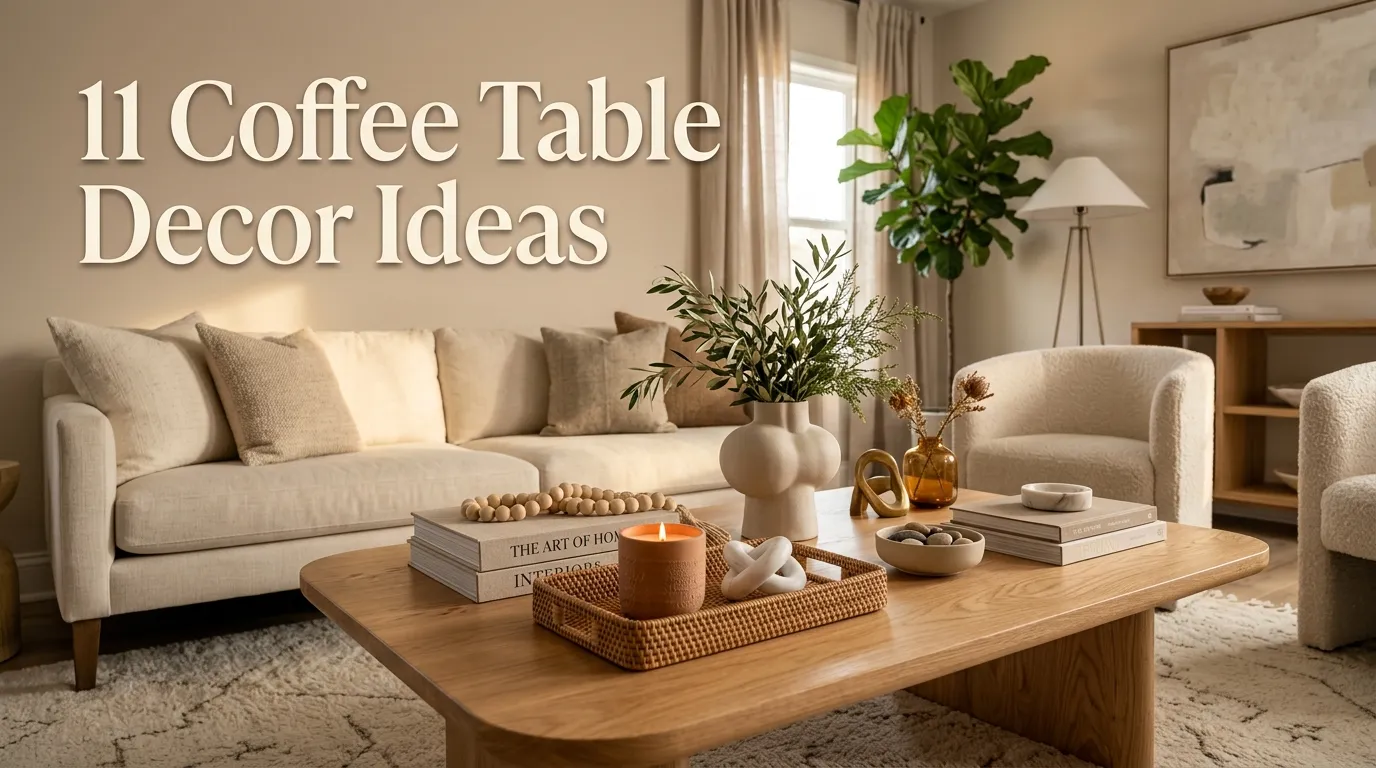
The good news is that decorating a coffee table does not require a huge collection of accessories or an expensive shopping trip. The most attractive arrangements usually combine a few simple elements with different heights, textures, shapes, and materials. A stack of books, a decorative tray, a small vase, or a sculptural object can completely change the look.
In my experience, the best coffee table styling also leaves enough empty space for real life. Your living room should still be comfortable enough for morning coffee, movie nights, family gatherings, and everyday use. The goal is not to make the table look like a showroom display that you are afraid to touch.
Whether you have a round table, rectangular table, glass top, wood finish, or a small table in an apartment, these ideas can help you create a balanced arrangement that feels intentional without being overly formal.
From layered coffee table books to natural greenery and simple seasonal accents, you can mix and match these ideas to create a centerpiece that complements your existing living room style.
Table of Contents
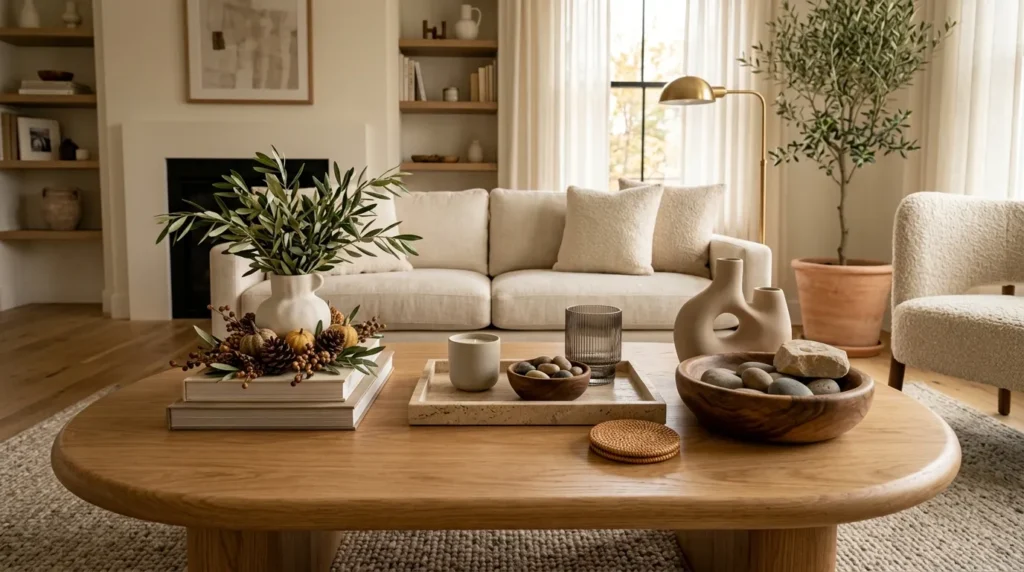
1. Stacked Coffee Books
Create height and visual interest with carefully selected books arranged in simple layers.
2. Decorative Tray
Use a tray to organize smaller accessories while creating a defined styling zone.
3. Fresh Greenery
Bring natural color and organic texture to the coffee table with plants and fresh branches.
4. Sculptural Objects
Add personality with artistic objects that create shape and dimension.
5. Candle And Vase
Combine soft candlelight with a decorative vase for an elegant layered display.
6. Natural Wood Accents
Use wood bowls, beads, and trays to introduce warmth and organic texture.
7. Minimal Neutral Styling
Keep the arrangement simple with a few neutral pieces for a calm, sophisticated look.
8. Seasonal Details
Refresh the table throughout the year with subtle seasonal colors and natural elements.
9. Bowl Centerpiece
Use a large decorative bowl as a practical and stylish focal point.
10. Layered Textures
Combine glass, ceramic, linen, wood, and metal to create visual depth.
11. Collected Arrangement
Mix meaningful objects, books, greenery, and decorative accents for a personal finish.
1. Stacked Coffee Books
Quick Benefits
- Adds height to a flat surface
- Creates an instant focal point
- Works with almost any decorating style
- Provides a place to display favorite books
- Makes small accessories more noticeable
Why It Works
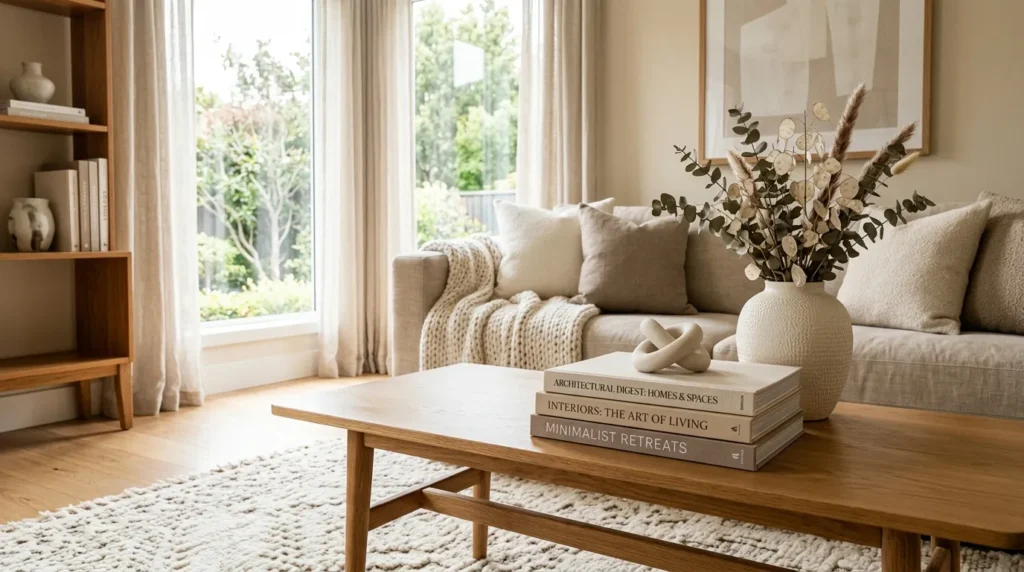
Coffee table books are one of the easiest ways to create a polished arrangement because they naturally introduce layers. Instead of placing several accessories directly on the tabletop, stacking two or three books gives smaller objects a visual platform. Large photography, architecture, travel, fashion, gardening, and design books can also reinforce the personality of your living room. The key is choosing books that complement the room rather than simply collecting the largest titles you own. A restrained stack often feels more sophisticated than a tall pile. The pages, covers, and subtle colors also add texture without making the table feel crowded.
How To Style It
Start with two or three large hardcover books and stack them from largest to smallest. Place a small ceramic object, candle, or decorative bowl on top. If your table is rectangular, position the stack slightly off-center and balance it with another object on the opposite side. For a round table, keep the arrangement more centralized. Neutral covers work beautifully in calm interiors, while colorful books can introduce a subtle accent color. Leave part of the tabletop open so the arrangement remains functional. If you use the books regularly, choose titles you genuinely enjoy rather than books selected only for their appearance.
2. Decorative Tray
Quick Benefits
- Keeps accessories organized
- Creates a defined visual grouping
- Makes cleaning easier
- Works on large and small tables
- Can add color and texture
Why It Works
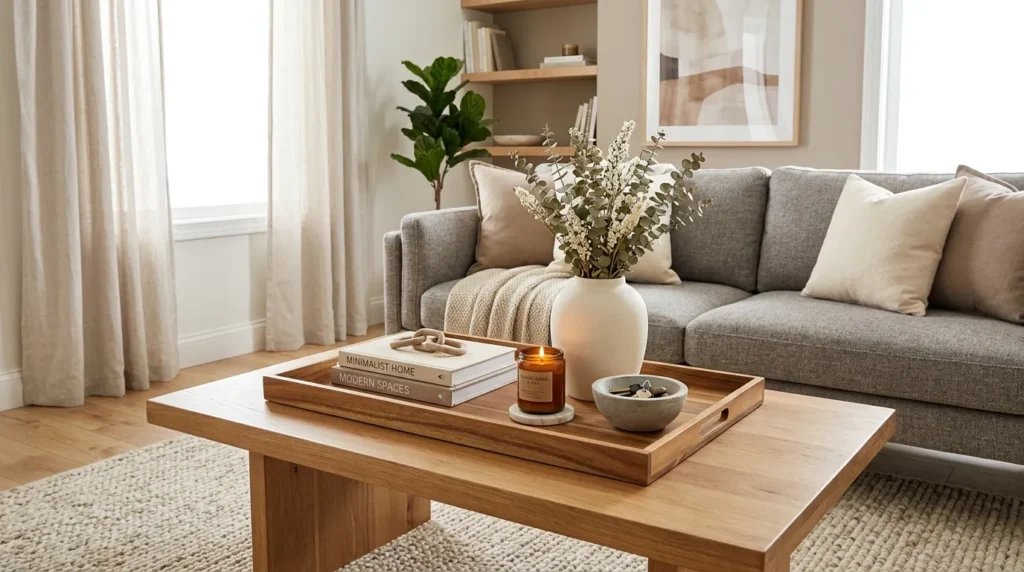
A tray is especially useful when you want your coffee table to look decorated without appearing cluttered. It visually groups several small objects into one intentional arrangement. This is particularly helpful in busy family rooms where remotes, candles, coasters, and other everyday items need a home. I’ve noticed that a tray can make even a very simple collection of objects look more deliberate. It also provides an easy way to clear the table when you need more space. Choose a tray that complements the table rather than competing with it.
How To Style It
Place a rectangular tray on a rectangular coffee table, or use a round tray on a circular table to echo the furniture’s shape. Add a small vase, candle, decorative bowl, and a couple of books inside. Avoid filling every corner. A little empty space helps the arrangement feel intentional. Wood trays work well with modern farmhouse and organic interiors, while marble, metal, or lacquered trays can feel more contemporary. For everyday use, include practical items such as coasters or a small container for remotes so the tray is both attractive and functional.
3. Fresh Greenery
Quick Benefits
- Adds natural color
- Softens hard furniture lines
- Creates a fresh atmosphere
- Works with neutral interiors
- Adds organic texture
Why It Works
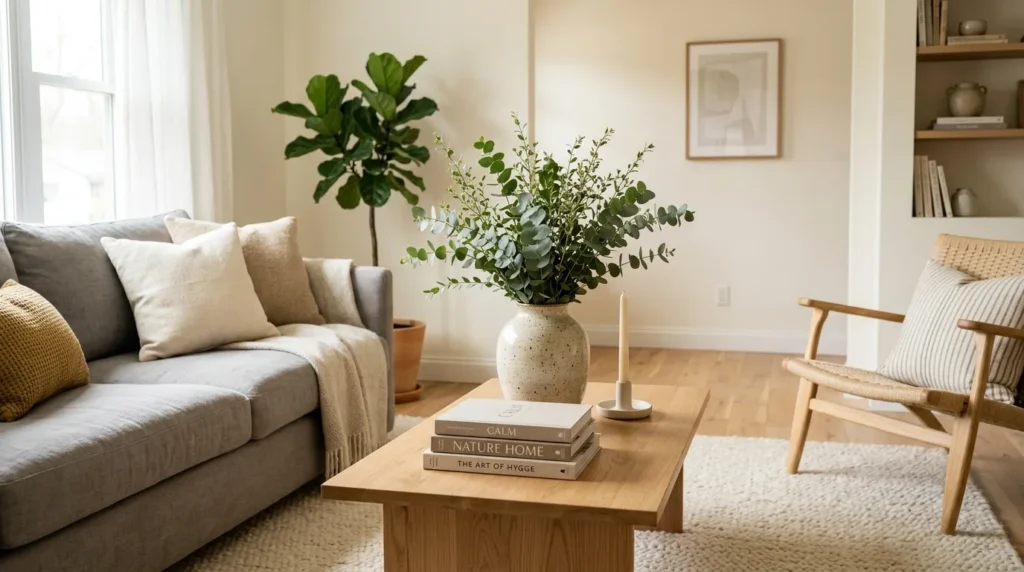
Greenery can make a coffee table feel instantly more alive. Plants and branches introduce irregular shapes that contrast beautifully with the straight edges of books and trays. They also add color without requiring a strong decorative palette. A simple vase of eucalyptus, olive branches, seasonal foliage, or fresh flowers can become the focal point of the table. If your living room already contains several neutral furnishings, greenery can provide just enough contrast to keep the space from feeling flat.
How To Style It
Choose a vessel that fits the scale of the table. A low arrangement works well when you want to preserve visibility across the room, while a slightly taller arrangement can add drama. For everyday styling, faux stems can be practical if you prefer low maintenance. Combine greenery with a stack of books or a small tray rather than placing several plant arrangements together. A ceramic vase works beautifully in a neutral living room, while a glass vase can create a lighter appearance. Keep the foliage slightly loose and natural instead of arranging every stem perfectly.
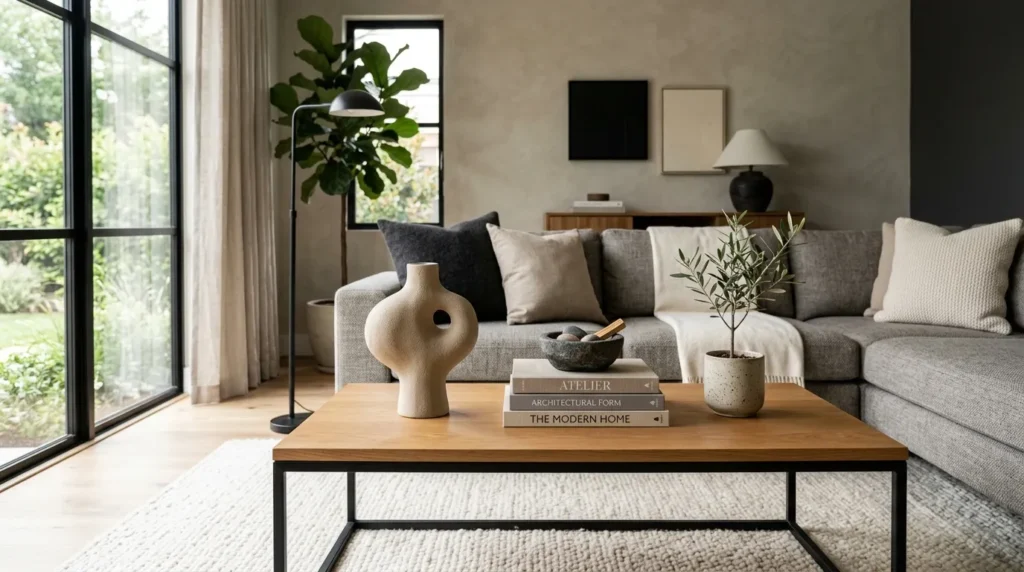
4. Sculptural Objects
Quick Benefits
- Adds personality
- Introduces interesting shapes
- Creates visual height
- Works well in modern interiors
- Makes the arrangement feel curated
Why It Works
Sculptural accessories can turn an ordinary coffee table into a small design moment. Unlike functional objects such as books or trays, sculptural pieces exist primarily to create shape and visual interest. Think stone forms, abstract ceramic pieces, metal loops, wooden objects, or handmade pottery. Because coffee tables are generally viewed from several angles, three-dimensional objects work especially well. The trick is restraint. One distinctive sculptural object can have more impact than a collection of unrelated decorative pieces competing for attention.
How To Style It
Choose one sculptural object as the focal point and build around it with simpler accessories. A curved ceramic form can sit on top of two neutral books, while a small bowl or candle balances the opposite side. If your coffee table has a glass top, consider a heavier stone or wood accessory to provide visual grounding. For a contemporary room, black metal or matte ceramic can look sophisticated. In a warmer space, carved wood or handmade pottery can introduce organic character. Avoid using too many similarly shaped objects, which can make the display feel repetitive.
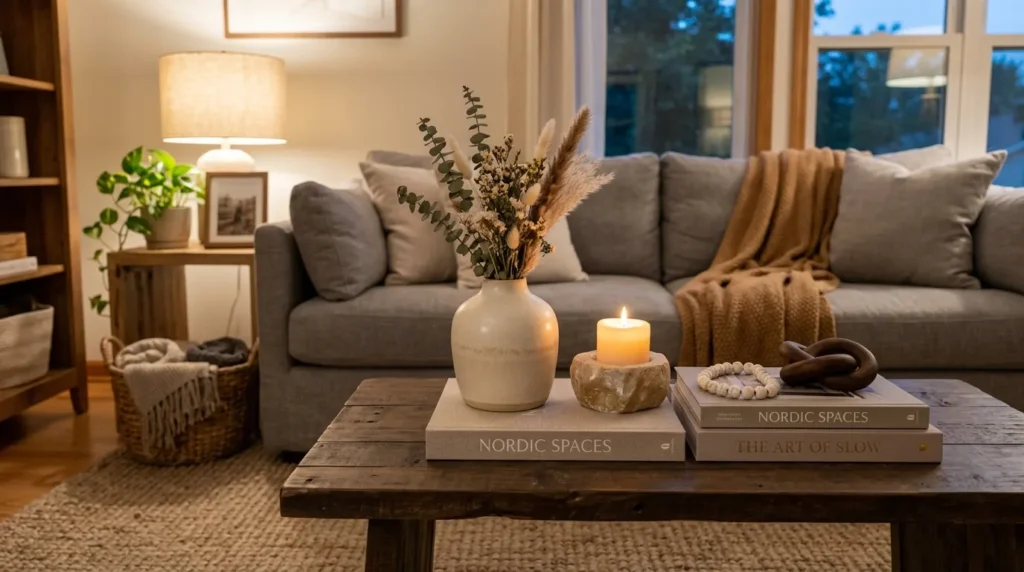
5. Candle And Vase
Quick Benefits
- Creates an elegant focal point
- Adds height variation
- Introduces fragrance and ambiance
- Works across decorating styles
- Easy to change seasonally
Why It Works
A vase and candle create a simple but effective combination because they provide different heights and functions. The vase brings vertical interest, while the candle provides a lower visual layer and a warm atmosphere. Together they can make an otherwise empty table feel finished without requiring many accessories. This pairing is especially useful if you prefer a classic or understated look. In the evening, candlelight also changes the atmosphere of the room, making the coffee table feel more intimate and inviting.
How To Style It
Use a medium-height vase with a lower candle placed nearby rather than lining everything up at the same height. Add a small stack of books underneath the candle if you need another layer. Choose colors that coordinate with your living room: ivory, beige, muted green, soft brown, or black are versatile options. For a family home, use flameless candles when appropriate. Glass hurricanes, ceramic vessels, and stone candleholders can add different textures. Leave enough room around the arrangement so the table still has usable space.
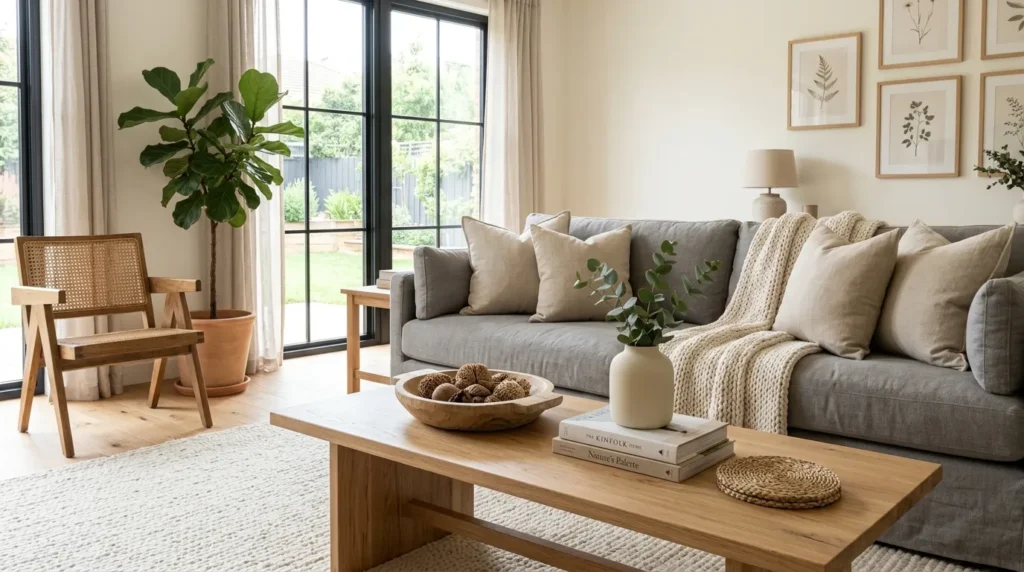
6. Natural Wood Accents
Quick Benefits
- Adds warmth
- Creates organic texture
- Complements neutral rooms
- Works with farmhouse and modern styles
- Helps balance metal and glass furniture
Why It Works
Natural wood brings warmth and visual softness to a coffee table arrangement. This is particularly useful when the table itself is made from glass, metal, or a cool-toned material. Wood bowls, trays, beads, carved objects, and small boxes introduce grain and natural variation. A mistake many homeowners make is relying entirely on smooth ceramic and glass accessories. Without texture, the arrangement can look flat. Wood creates an immediate contrast and works beautifully with greenery, linen, and neutral ceramics.
How To Style It
Try a shallow wooden bowl filled with decorative beads, pinecones, or a small collection of natural objects. Alternatively, use a wood tray as the foundation for a candle, vase, and books. Choose natural finishes rather than overly glossy surfaces if you want an organic look. Light oak suits Scandinavian and contemporary interiors, while darker walnut can create a richer traditional feel. If your coffee table is already wooden, use one or two wood accessories rather than filling the surface with matching pieces. Contrast usually creates a more interesting arrangement.
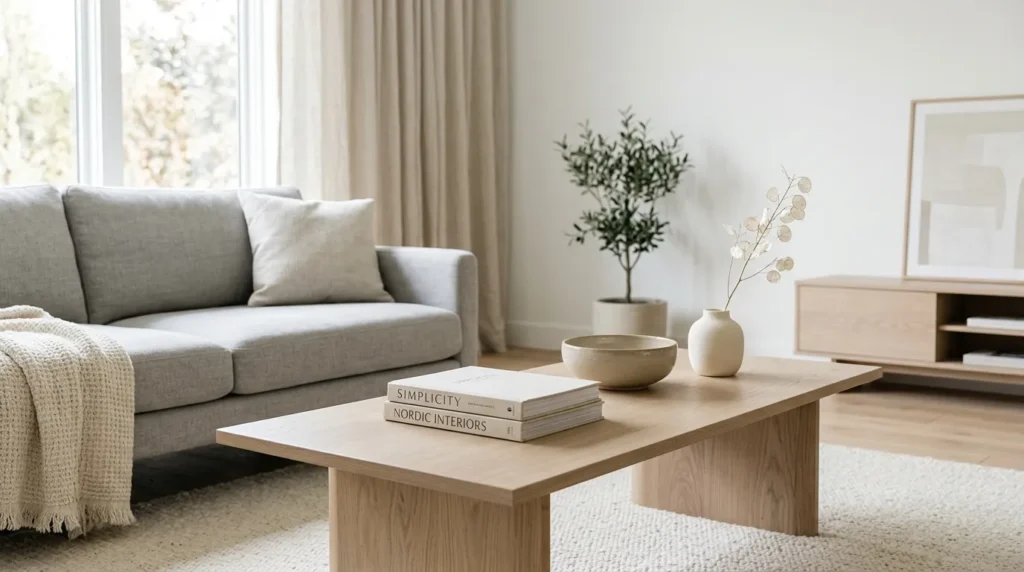
7. Minimal Neutral Styling
Quick Benefits
- Keeps the room visually calm
- Makes small spaces feel open
- Easy to maintain
- Works with modern decor
- Creates a timeless appearance
Why It Works
Sometimes the most beautiful coffee table is the one that is not overly decorated. A small collection of neutral accessories can create an elegant focal point while allowing the rest of the living room to breathe. This approach works especially well in smaller rooms where too many objects can quickly become visual clutter. Cream, beige, taupe, white, gray, and natural wood provide enough variation without introducing strong contrast. The goal is not to make the table empty but to be selective about what earns a place on it.
How To Style It
Choose three to five pieces in complementary tones. A stack of two books, a low ceramic bowl, and a small vase may be enough. Vary the heights and shapes so the display does not look flat. If your coffee table is dark wood, light ceramics can create contrast. If the table is pale, darker beige or gray accessories can provide definition. Keep decorative objects relatively simple and avoid excessive patterns. This style is particularly effective when the surrounding living room already has statement artwork, patterned upholstery, or a bold rug.
8. Seasonal Details
Quick Benefits
- Keeps the room feeling fresh
- Allows easy seasonal updates
- Adds subtle color
- Encourages creativity
- Does not require a full room makeover
Why It Works
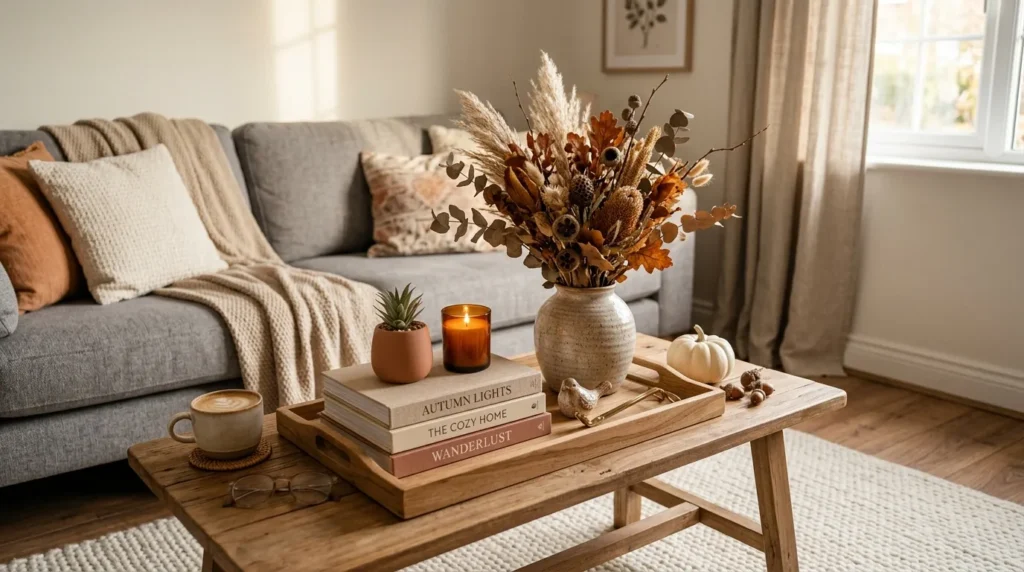
Your coffee table is an ideal place to experiment with seasonal decorating because the accessories can be changed quickly. You do not need to fill the room with themed decorations. A few natural, seasonal elements can create the feeling of a new season without making the space look overly themed. In fall, warm foliage and wood tones work beautifully. During winter, evergreen branches and candles add coziness. Spring can bring fresh flowers and soft greens, while summer suits lighter ceramics and natural textures.
How To Style It
Keep your main foundation neutral so seasonal accessories are easy to swap. Use the same tray or stack of books throughout the year, then change the vase contents and one or two decorative objects. For autumn, add a small ceramic pumpkin or dried branches. For winter, use evergreen stems and warm candles. In spring, choose tulips or delicate branches. During summer, try a glass vase, woven bowl, and lighter textiles. The best seasonal arrangements feel subtle and connected to the existing decor.
9. Bowl Centerpiece
Quick Benefits
- Provides a strong focal point
- Can hide small everyday items
- Adds shape and dimension
- Works on large tables
- Offers practical storage
Why It Works
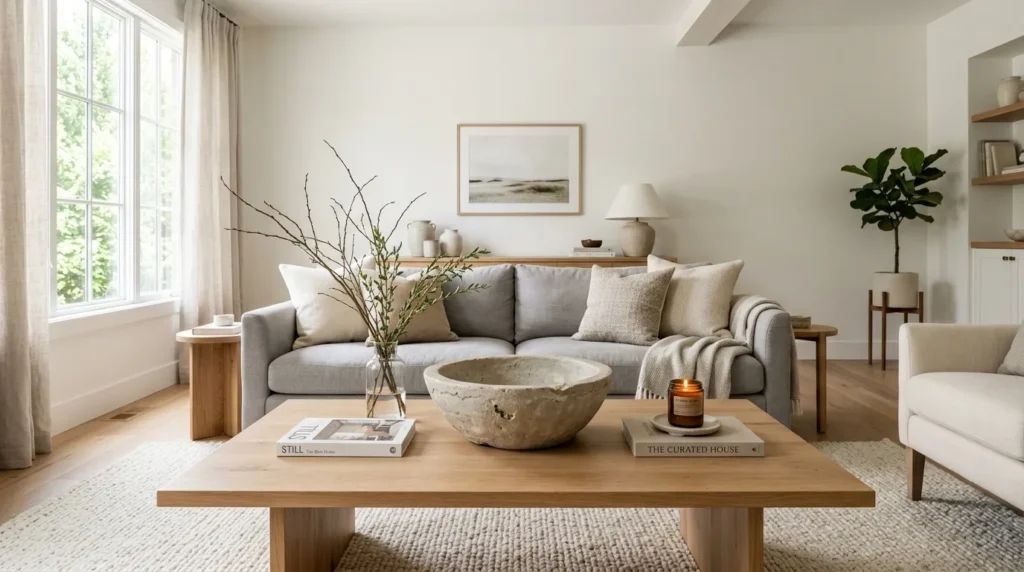
A decorative bowl combines style and function, making it one of the most useful coffee table accessories. It can hold remotes, coasters, decorative beads, or other small items while still looking intentional. Large bowls also provide a strong visual shape that can anchor an arrangement. The material you choose influences the mood. Ceramic feels classic, wood feels organic, stone can look sophisticated, and glass creates a lighter effect. A bowl is particularly effective when the rest of the arrangement is relatively simple.
How To Style It
Choose a bowl large enough to be noticeable but not so large that it dominates the table. Place it slightly off-center and add a small stack of books or a low vase nearby. For an organic interior, use a handmade ceramic or carved wooden bowl. Fill it sparingly with decorative objects if desired. Avoid turning it into a storage container for every loose item in the room. The purpose is to provide useful containment while preserving the polished appearance of the coffee table.
10. Layered Textures
Quick Benefits
- Creates visual depth
- Makes neutral rooms more interesting
- Adds tactile appeal
- Prevents accessories from looking flat
- Works with almost any decorating style
Why It Works
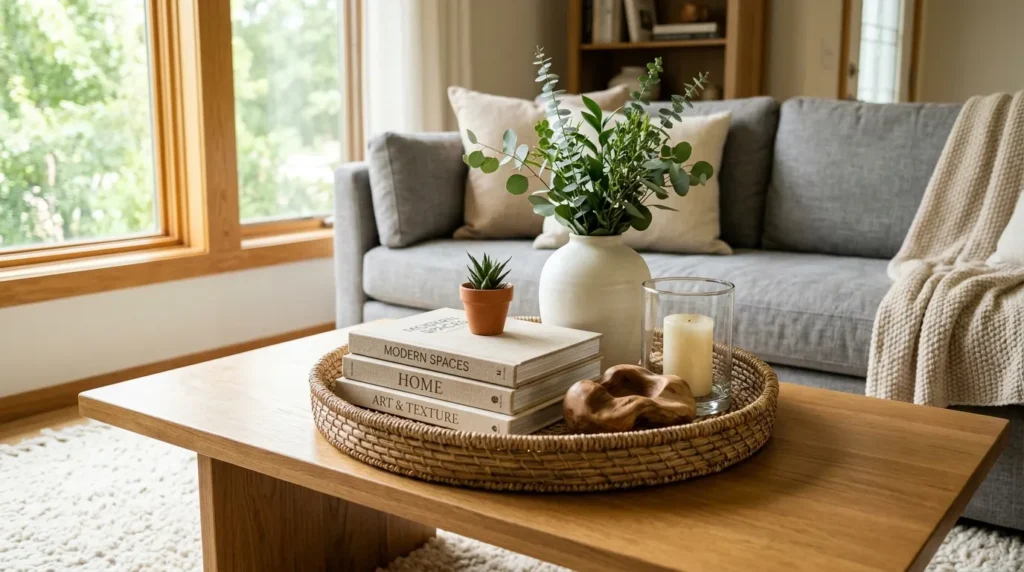
Texture is often what separates a basic coffee table arrangement from one that looks thoughtfully designed. Smooth glass, rough stone, soft linen, warm wood, glossy ceramic, and matte metal each reflect light differently. When these materials are combined, the arrangement becomes visually richer without needing bright colors or complicated patterns. I’ve noticed that texture is especially effective in neutral living rooms because it creates variation without disrupting a calm palette. You can keep the colors nearly identical while still making the table look layered and interesting.
How To Style It
Start with a wooden or woven tray, then add a stack of books with a linen-covered or matte finish. Place a ceramic vase beside a glass candleholder and finish with a small stone or metal object. Do not use every texture available. Three or four contrasting materials are usually enough. Repeat one material elsewhere in the room to create cohesion. For example, if you use a wood tray, repeat wood in a nearby side table or picture frame. This creates subtle continuity without making everything look matched.
11. Collected Arrangement
Quick Benefits
- Feels personal
- Adds character
- Works with eclectic interiors
- Encourages meaningful decorating
- Creates a naturally layered appearance
Why It Works
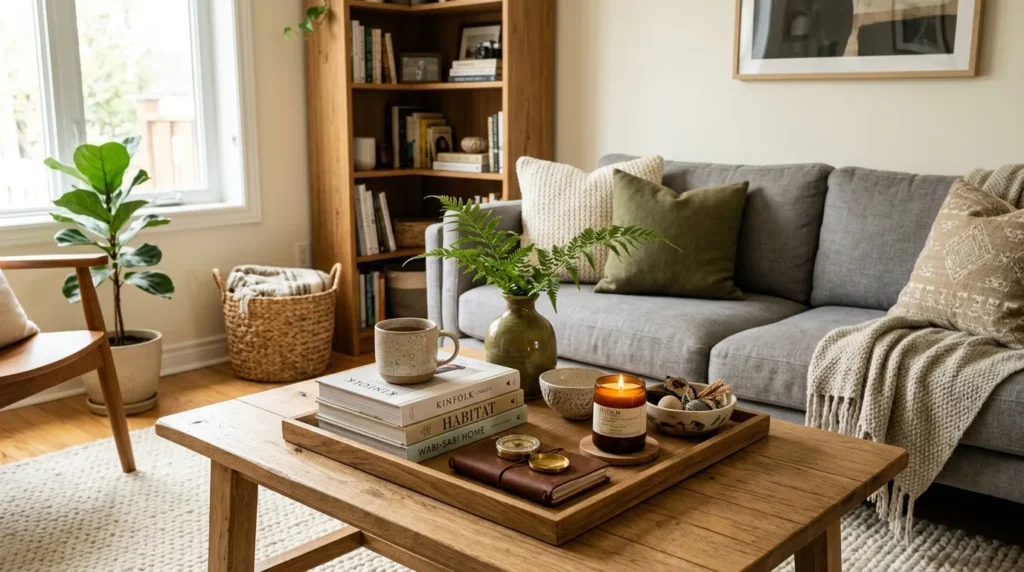
A collected coffee table arrangement feels less like a decorative formula and more like a reflection of the people who live in the home. Favorite books, travel finds, handmade pottery, family photographs, plants, and small objects can all become part of the display. The key is giving the collection enough structure that it does not become clutter. A simple tray or book stack can provide an anchor while more personal pieces create character around it. This approach works especially well when you want your living room to feel warm and lived-in rather than perfectly staged.
How To Style It
Begin with one anchor item, such as a large bowl, tray, or stack of books. Add two or three meaningful objects with different heights and shapes. Include something organic, such as a small plant or branch, to soften the arrangement. If you have a favorite souvenir or handmade object, give it enough space to be noticed instead of hiding it among dozens of accessories. Step back and view the table from different angles. Remove anything that feels unnecessary. The final arrangement should look as though it evolved naturally over time.
How To Make A Coffee Table Look Expensive
You do not need expensive accessories to make a coffee table look polished. The biggest difference usually comes from scale, spacing, and layering.
Start with one substantial item instead of many tiny decorations. A large tray, bowl, or stack of books creates a strong foundation. Then add smaller pieces around it.
Use materials that feel substantial, such as ceramic, stone, natural wood, glass, or metal. Mixing finishes often looks more sophisticated than using accessories from the same material.
Finally, leave negative space. An expensive-looking arrangement rarely fills every inch of the tabletop. Empty space allows individual pieces to stand out.
Coffee Table Styling Formula
A simple formula can make decorating much easier:
1 large anchor + 1 medium-height piece + 1 small accessory + 1 natural element.
For example:
- Large wooden tray
- Medium ceramic vase
- Small candle
- Greenery
Or:
- Three coffee table books
- Decorative bowl
- Small sculptural object
- Dried branches
This formula can be adapted to virtually any decorating style.
Coffee Table Decor For Small Spaces
Small living rooms require a slightly different approach. Instead of using many accessories, choose pieces that provide both beauty and function.
A shallow tray can keep remotes organized. A small bowl can hold coasters. A stack of two books can create height without taking up much space. A low vase provides greenery without blocking the view across the room.
If the coffee table is very small, choose one strong centerpiece and leave the rest of the surface open. This creates the illusion of more space while still giving the room a finished look.
Round coffee tables can be particularly useful in compact rooms because their curved edges create easier circulation around furniture.
Coffee Table Decor For Families
A family-friendly coffee table should look beautiful without becoming fragile or impractical.
Choose sturdy accessories and avoid placing delicate objects directly along the edges. Decorative trays can keep small items contained, while bowls provide a convenient place for remotes and coasters.
If young children use the room, consider rounded furniture edges and shatter-resistant accessories. Flameless candles can provide the decorative effect of candlelight without an open flame.
The best family-room styling is flexible. Keep the arrangement easy to move when you need more table space for snacks, games, or activities.
Common Coffee Table Styling Mistakes
One of the most common mistakes is using too many small objects. Tiny accessories scattered across the tabletop can create visual noise.
Another is using objects that are all the same height. Varying heights creates dimension and makes the arrangement easier to look at.
A third mistake is ignoring the size of the coffee table. A tiny centerpiece can disappear on a large table, while an oversized arrangement can overwhelm a small one.
Finally, remember that your coffee table is functional furniture. Leave enough space for people to put down a drink or book. Beautiful styling should support everyday living rather than interfere with it.
Frequently Asked Questions
What should I put on my coffee table?
A balanced coffee table can include books, a decorative tray, a bowl, vase, candle, greenery, or sculptural object. Choose a few pieces with different heights and textures rather than filling the entire surface. Leave some empty space so the table remains functional.
How many items should be on a coffee table?
There is no strict number, but three to seven carefully selected pieces can create a balanced arrangement. The size of the table matters. A large rectangular table can accommodate multiple groupings, while a small round table may look best with just a few objects.
How do I make my coffee table look cozy?
Use warm materials and tactile accessories such as wood, linen, ceramic, woven baskets, candles, books, and greenery. Layering different textures creates a softer, more inviting appearance without requiring lots of decorative objects.
Should a coffee table be decorated symmetrically?
It does not have to be. Asymmetrical arrangements often feel more relaxed and natural. You can balance a larger object on one side with two smaller pieces on the other. The goal is visual balance rather than perfect symmetry.
How do you decorate a round coffee table?
Keep the arrangement relatively centralized and use curved or organic shapes when possible. A round tray, decorative bowl, vase, and small stack of books can work beautifully. Avoid spreading too many objects around the perimeter.
How do you decorate a rectangular coffee table?
Divide the surface into one or two visual zones. For example, place a tray or stack of books toward one side and a bowl or vase toward the other. Keep enough open space between groupings so the table does not feel overcrowded.
How often should coffee table decor be changed?
You can keep the main arrangement for months and simply refresh small details seasonally. Changing flowers, greenery, candles, or one decorative object can make the room feel new without requiring a complete redesign.
Conclusion
A beautifully decorated coffee table does not need to be complicated. The most successful arrangements usually rely on a simple combination of height, texture, shape, and negative space.
Start with one anchor piece, such as a tray, bowl, or stack of books. Add something with height, bring in a natural element, and finish with one or two smaller accessories. From there, step back and look at the entire living room rather than judging the table by itself.
Remember that your coffee table is part of your everyday home. It should have enough open space for drinks, books, conversations, and family life. If an arrangement looks beautiful but makes the table difficult to use, simplify it.
You can also change your styling throughout the year without starting over. Swap fresh flowers for greenery, add warm accents in fall, introduce evergreen branches during winter, or use lighter natural textures during summer.
The best coffee table decor is ultimately the arrangement that feels like it belongs in your home. Start with one or two ideas from this list, use pieces you already love, and build from there. A few thoughtful details can make your entire living room feel more finished, welcoming, and personal.
Related Articles
- 11 Gray Sofa Living Room Ideas for a Cozy Space
- 10 Cozy Living Room Ideas for a Warm and Inviting Home
- 11 Neutral Living Room Ideas for a Timeless Look
- 10 Modern Living Room Decor Ideas
- 11 Small Living Room Ideas to Maximize Your Space