

11 Amazon Coastal Home Decor Ideas for a Fresh & Relaxed Space
There is something effortlessly inviting about coastal home decor. It brings to mind sun-filled rooms, sandy walks, ocean breezes, natural textures, and that wonderfully relaxed feeling you get in a beach house. But creating that look at home does not mean covering every surface with seashells or filling a room with obvious nautical decorations. The most beautiful coastal spaces usually feel lighter and more collected, with subtle references to the shoreline woven into everyday pieces.
That is what makes Amazon such a useful place to shop for this decorating style. You can find woven baskets, linen-look textiles, ceramic accents, rattan pieces, coastal artwork, neutral throw pillows, table accessories, and plenty of small details that can completely change the atmosphere of a room without requiring a major renovation.
The trick is knowing what to look for and how to combine those pieces. A coastal room needs balance. Too much blue can make it feel themed, while too many natural textures can make it look unfinished. The goal is to create a comfortable mix of soft neutrals, ocean-inspired colors, organic materials, and uncomplicated furniture.
In my experience, the easiest way to achieve this aesthetic is to begin with a calm neutral foundation and then layer in a few coastal details. Think sandy beige, warm white, soft blue, pale wood, woven fibers, cotton, linen, glass, and weathered finishes.
Below, you’ll find 11 decorating ideas that can help you create a relaxed coastal atmosphere using accessible pieces and simple styling techniques. Whether you’re refreshing a living room, bedroom, entryway, dining area, or small apartment, these ideas can be adapted to your space and budget.
Table of Contents
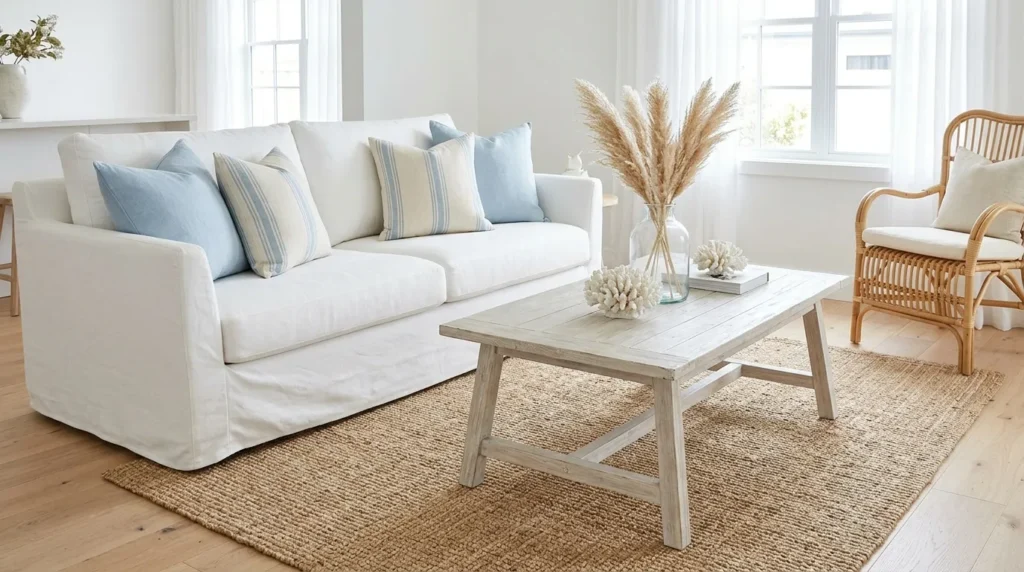
1. Woven Basket Layers
Bring warmth and texture into coastal rooms with baskets made from natural-looking woven materials.
2. Soft Blue Accents
Introduce ocean-inspired color through pillows, throws, artwork, and small decorative accessories.
3. Rattan Furniture Pieces
Use rattan or cane furniture to give the room an airy, vacation-inspired character.
4. Coastal Wall Art
Create a visual focal point with calm artwork inspired by beaches, waves, landscapes, or marine colors.
5. Linen-Look Textiles
Layer relaxed fabrics to make sofas and beds feel comfortable, casual, and naturally elegant.
6. Natural Wood Details
Add pale or weathered wood to create warmth while keeping the coastal palette light.
7. Ceramic Ocean Accents
Use pottery and ceramic accessories for understated coastal character without creating a themed room.
8. Seashell Styling
Incorporate shells sparingly as small decorative details for an authentic seaside reference.
9. Glass And Light
Use translucent and reflective accents to make the room feel brighter and more open.
10. Coastal Bedroom Layers
Combine neutral bedding, soft blue accents, natural textures, and simple accessories for a restful retreat.
11. Entryway Coastal Touches
Give your home’s first impression a relaxed coastal feeling with practical baskets, mirrors, and decorative accents.
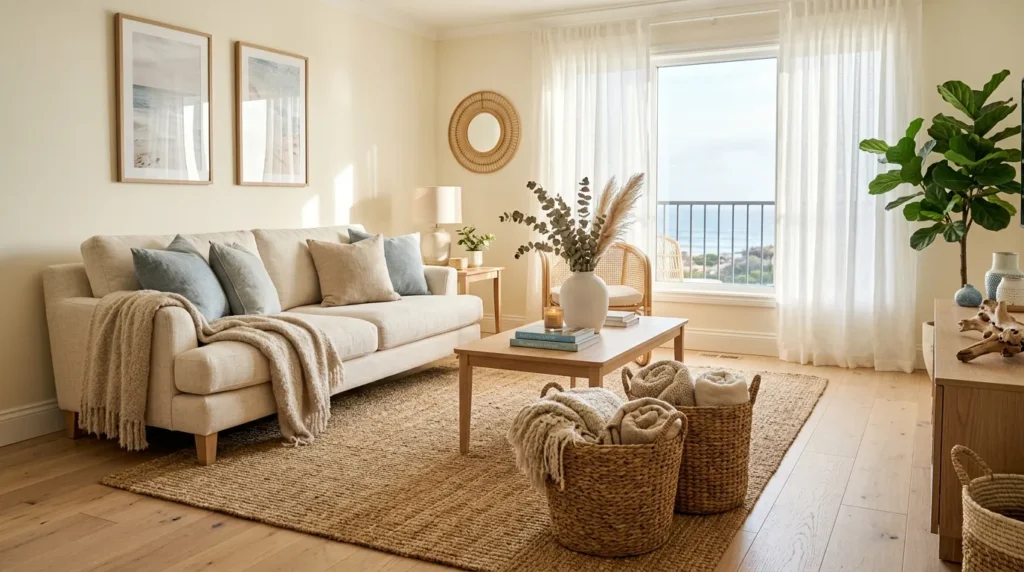
1. Woven Basket Layers
Quick Benefits
- Adds natural texture without overwhelming the room
- Provides attractive everyday storage
- Works with coastal, modern, farmhouse, and transitional interiors
- Helps balance smooth furniture surfaces
- Makes a room feel warmer and more collected
Why It Works
Woven baskets are one of the easiest ways to bring a relaxed coastal feeling into a home because they introduce the organic texture associated with beach houses and natural environments. Their slightly imperfect surfaces soften rooms filled with upholstery, painted furniture, glass, and metal. They also provide practical storage, which is especially useful in family rooms and smaller homes.
Look for baskets in natural beige, tan, ivory, seagrass, jute, or lightly washed finishes. The most versatile designs are simple rather than heavily decorated. A large basket beside a sofa can hold blankets, while smaller baskets can organize shelves, towels, toys, or accessories. This combination of beauty and function is what makes woven storage such a strong decorating choice.
How To Style It
Start with one larger basket rather than filling the entire room with them. Place it beside a sofa or accent chair and fill it loosely with a cotton or linen throw. In an entryway, a wider basket can hold shoes, bags, or lightweight accessories while still looking decorative.
For shelving, use baskets of different sizes but keep their colors within the same natural family. A mixture of pale seagrass and warm beige can look more interesting than identical pieces. If your room already contains plenty of wood, choose a slightly lighter basket to prevent the space from becoming visually heavy.
For a bedroom, consider a tall woven hamper or basket near the dresser. The result should feel useful rather than staged.
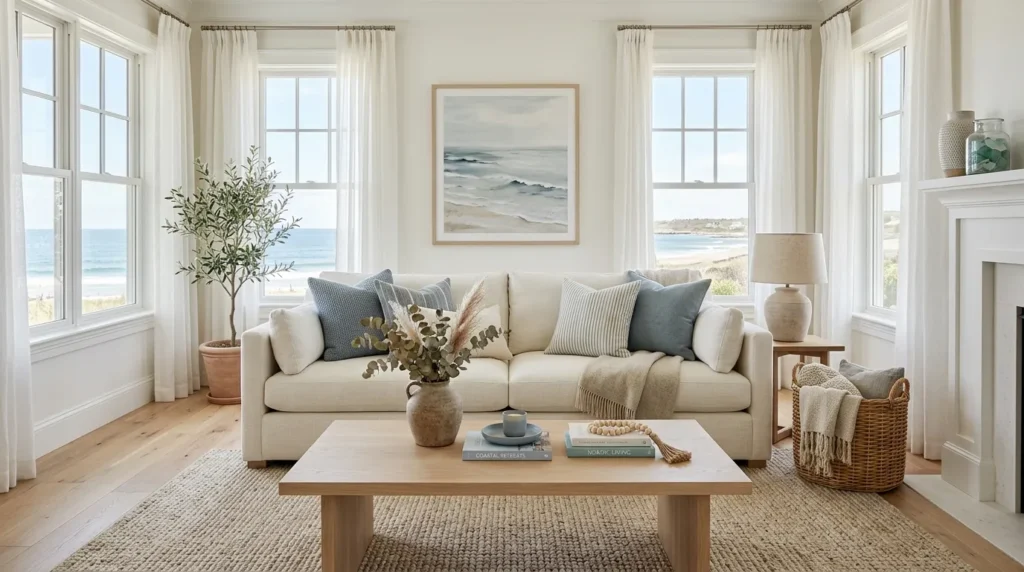
2. Soft Blue Accents
Quick Benefits
- Adds an immediate coastal color connection
- Works beautifully with white and beige
- Easy to change seasonally
- Suitable for renters
- Creates a fresh and calming atmosphere
Why It Works
Blue is closely associated with the ocean and sky, making it an obvious choice for coastal interiors. However, the most sophisticated rooms usually avoid using one strong shade everywhere. Instead, combine several softer variations such as dusty blue, pale aqua, muted navy, faded denim, or blue-gray.
These shades can add personality while keeping the room peaceful. Soft blue is particularly effective against warm white walls, natural wood, woven textures, and cream upholstery. It can also help visually connect different parts of an open-plan living area.
One simple trick I always suggest is using blue in small layers rather than making it the dominant color. A pillow, throw, ceramic vase, and artwork can create enough repetition to establish the palette without making the room feel overly themed.
How To Style It
Begin with your largest neutral pieces, such as a cream sofa, beige rug, or light wood coffee table. Then introduce blue through two or three smaller accessories. For example, combine a faded blue throw pillow with a blue-gray ceramic vase and a piece of coastal artwork.
If your room is small, choose pale blue because it can maintain an open, airy appearance. Deeper navy works better when used as an accent against a mostly neutral background.
For bedrooms, try blue pillowcases or a lightweight throw at the end of the bed. In dining spaces, blue napkins, serving pieces, or artwork can provide the same effect without requiring permanent changes.
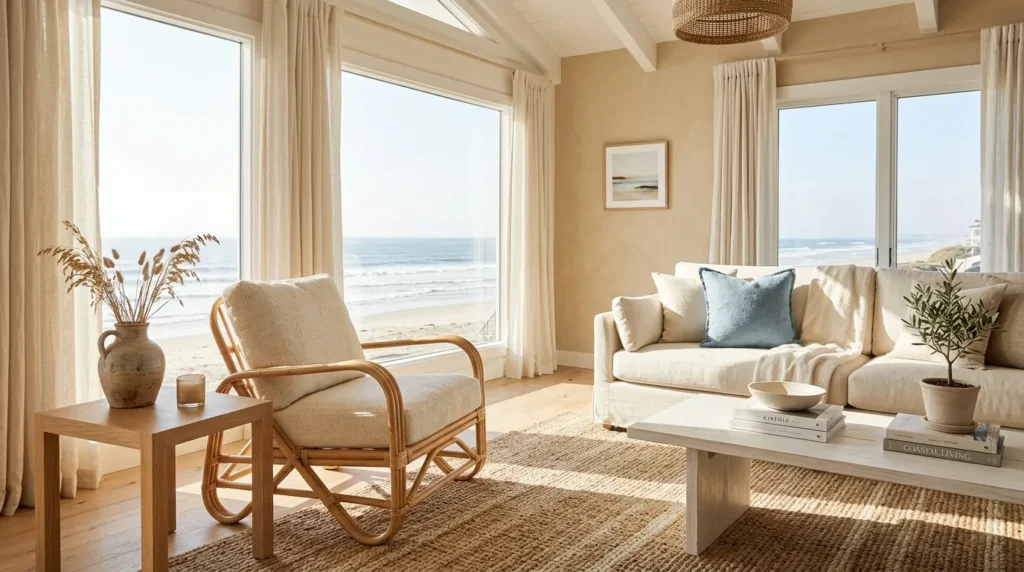
3. Rattan Furniture Pieces
Quick Benefits
- Creates an airy, casual atmosphere
- Adds organic texture
- Works well with neutral interiors
- Gives rooms a vacation-inspired quality
- Can be used in many different spaces
Why It Works
Rattan has a natural connection to relaxed warm-weather interiors, which makes it especially useful when creating a coastal-inspired home. Its open woven construction allows furniture to feel visually lighter than many solid wood alternatives. This can be particularly helpful in smaller living rooms, bedrooms, and apartments where bulky furniture can quickly make the space feel crowded.
Rattan does not have to dominate the room. A single accent chair, stool, side table, mirror, or headboard can establish the material story. Combining it with cotton, linen, pale wood, and soft upholstery creates a layered look that feels relaxed rather than overly coordinated.
The beauty of rattan is that it can also transition into other decorating styles, so you do not have to completely redecorate if your preferences change.
How To Style It
If you have a neutral sofa, consider adding a rattan accent chair nearby. Keep the upholstery simple and choose cushions in ivory, beige, or soft blue. A small rattan side table can be another easy entry point.
In the bedroom, a woven headboard can become the focal point while the rest of the furniture stays understated. Add white or cream bedding and one or two blue accents.
For an entryway, a rattan bench paired with a simple mirror creates a practical coastal-inspired landing zone. Avoid matching every piece of furniture. One or two woven elements are usually enough to create visual interest.
4. Coastal Wall Art
Quick Benefits
- Creates an instant focal point
- Helps establish the color palette
- Personalizes an otherwise neutral room
- Works in living rooms and bedrooms
- Can make blank walls feel finished
Why It Works
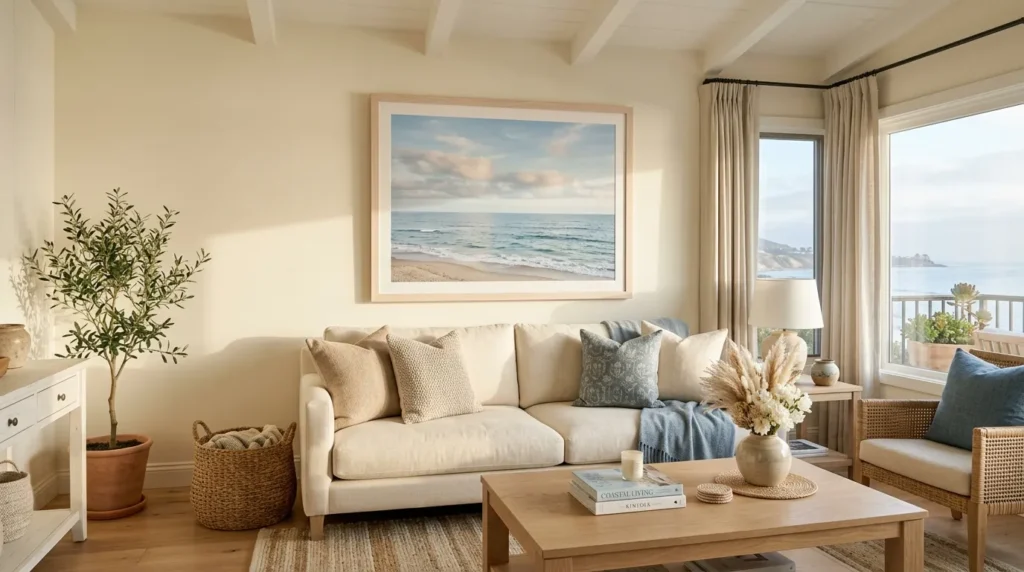
Artwork can communicate a decorating style more quickly than almost any other accessory. Coastal artwork is particularly effective because it can introduce color, movement, and a sense of place without requiring themed furniture.
Instead of automatically choosing pictures filled with anchors or signs, consider artwork featuring ocean horizons, sandy beaches, abstract waves, coastal landscapes, shells, boats, or softly painted marine scenes. Abstract designs can be especially versatile because they suggest the coast through color and movement without being too literal.
Large artwork can also visually anchor a sofa or bed. Meanwhile, a small framed print can fill an empty shelf or narrow wall. The important thing is to choose artwork that complements your existing colors rather than forcing you to redecorate around it.
How To Style It
For a living room, place one larger coastal-inspired artwork above the sofa or console. Choose a frame in pale wood, natural oak, white, or a simple neutral finish.
If you’re working with several smaller prints, create a relaxed gallery wall using artwork with related colors but slightly different subjects. Leave enough breathing room between pieces so the arrangement feels intentional.
In a bedroom, a horizontal ocean landscape above the headboard can create a peaceful focal point. For a hallway, use smaller prints arranged vertically.
If your room is already heavily decorated, choose artwork with a restrained palette of ivory, sand, gray-blue, and muted beige.
5. Linen-Look Textiles
Quick Benefits
- Makes furniture look softer and more relaxed
- Adds subtle texture
- Complements neutral color palettes
- Works throughout the home
- Easy to layer and replace
Why It Works
Textiles are what make a room feel comfortable rather than simply decorated. Linen and linen-look fabrics are especially useful for coastal interiors because their relaxed texture suggests casual living. They do not need to look perfectly pressed. In fact, a slightly rumpled appearance can make the room feel more natural.
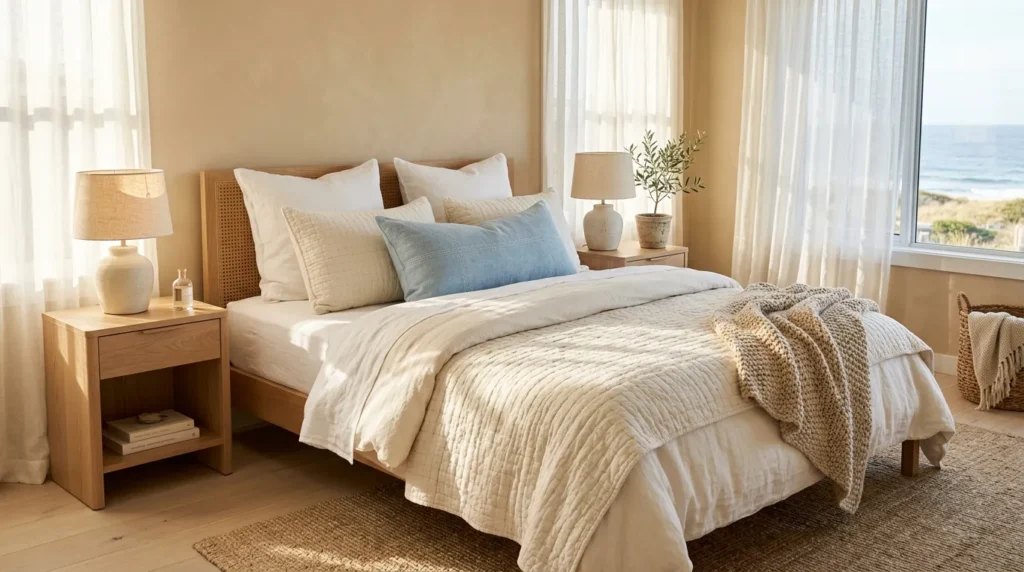
Layering textiles also helps prevent neutral spaces from becoming flat. A cream sofa can look much richer when paired with pillows in ivory, sandy beige, faded blue, and natural tan. Similarly, a bedroom with white bedding becomes more inviting when you add a textured throw and several softly patterned pillows.
I’ve noticed that rooms often feel more expensive when their colors are simple but their textures are varied.
How To Style It
Choose two or three related textile colors and repeat them throughout the room. In a living room, combine cream, beige, and faded blue pillows on the sofa. Add a lightweight throw folded casually over one arm.
For a bedroom, start with white or warm ivory bedding. Layer a textured coverlet or quilt, then add a soft blue lumbar pillow and a neutral throw.
Curtains can also contribute to the look. Lightweight white or natural-colored panels allow plenty of light through while maintaining a soft appearance.
Avoid using too many contrasting patterns. One subtle stripe or organic print can be enough when the surrounding fabrics are mostly solid.
6. Natural Wood Details
Quick Benefits
- Adds warmth to pale rooms
- Balances white and blue
- Creates an organic foundation
- Works with many decorating styles
- Makes spaces feel less sterile
Why It Works
Coastal rooms can easily become too white or too cool if every major surface is pale. Natural wood provides the warmth needed to keep the space inviting. Light oak, pale pine, washed wood, bamboo, and weathered finishes can all complement a beach-inspired palette.
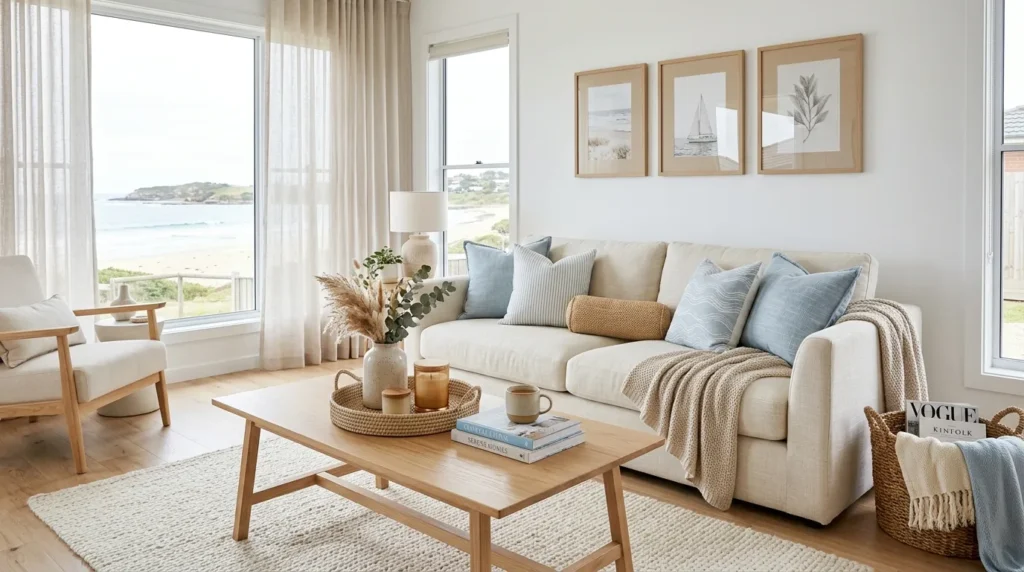
Wood also reinforces the connection between coastal decorating and natural surroundings. A wooden coffee table, stool, picture frame, tray, or decorative bowl can add warmth without requiring a major furniture purchase.
The key is to choose finishes that look relaxed. Extremely glossy dark wood may overpower a light coastal palette, while pale and medium natural finishes generally blend more easily with cream, sand, and blue.
How To Style It
Use wood in functional pieces whenever possible. A light wood coffee table can anchor a living room, while a wooden tray on top provides a convenient surface for candles, books, and a small vase.
For bedrooms, try pale wood nightstands or simple picture frames. In kitchens, wooden cutting boards and serving trays can add warmth while remaining practical.
If you already have dark furniture, don’t feel that you need to replace it. Balance it with lighter textiles, woven baskets, white accessories, and pale artwork. Coastal style is about the overall atmosphere, not matching every finish perfectly.
7. Ceramic Ocean Accents
Quick Benefits
- Adds handcrafted-looking texture
- Introduces subtle coastal character
- Works on shelves and tables
- Easy to rearrange
- Complements natural materials
Why It Works
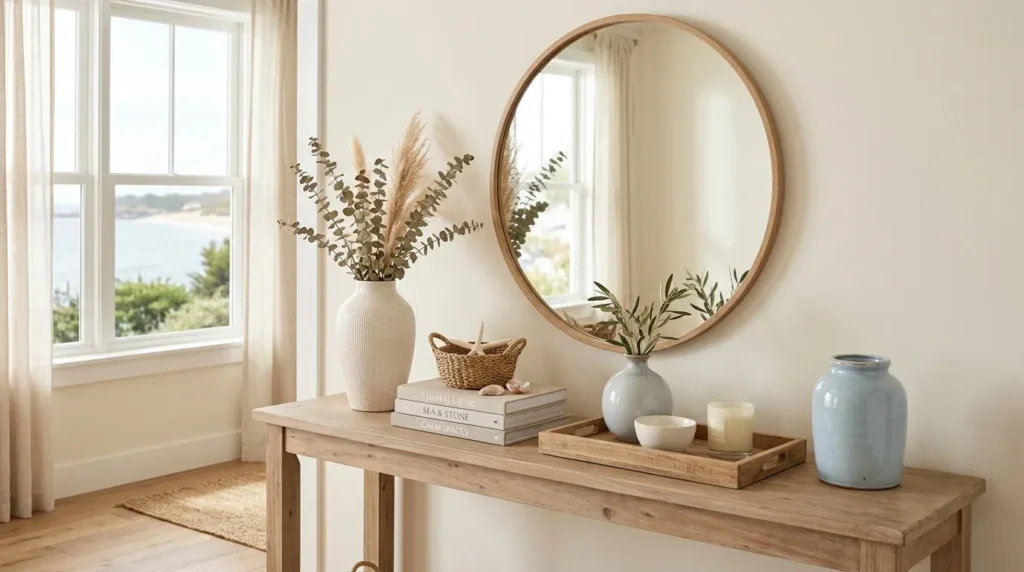
Ceramic accessories can provide the small details that make a neutral coastal room feel finished. Their appeal comes from shape and texture rather than simply color. Rounded vases, organically shaped bowls, small pitchers, candleholders, and decorative vessels can add visual softness to shelves and tables.
Choose ceramics in shades such as ivory, sandy beige, pale blue, soft gray, or sea-glass-inspired tones. Matte and lightly textured finishes often work particularly well because they feel relaxed and handcrafted.
One advantage of ceramics is their versatility. A coastal-inspired vase can remain useful even if you later move toward modern farmhouse, Mediterranean, or transitional decor.
How To Style It
Use odd-numbered groupings on consoles, coffee tables, and shelves. For example, combine a medium ceramic vase with a smaller bowl and a candle.
Vary the heights and shapes instead of buying several identical accessories. This creates a more collected appearance.
A pale blue ceramic piece can become an accent against a neutral background. If you want a more sophisticated look, keep most of the ceramics ivory or beige and introduce just one blue item.
On open shelving, combine ceramics with books, woven baskets, small plants, and natural wood pieces for a balanced arrangement.
8. Seashell Styling
Quick Benefits
- Adds an authentic seaside reference
- Works well as a small accent
- Creates interesting texture
- Can be inexpensive
- Easy to incorporate without redecorating
Why It Works
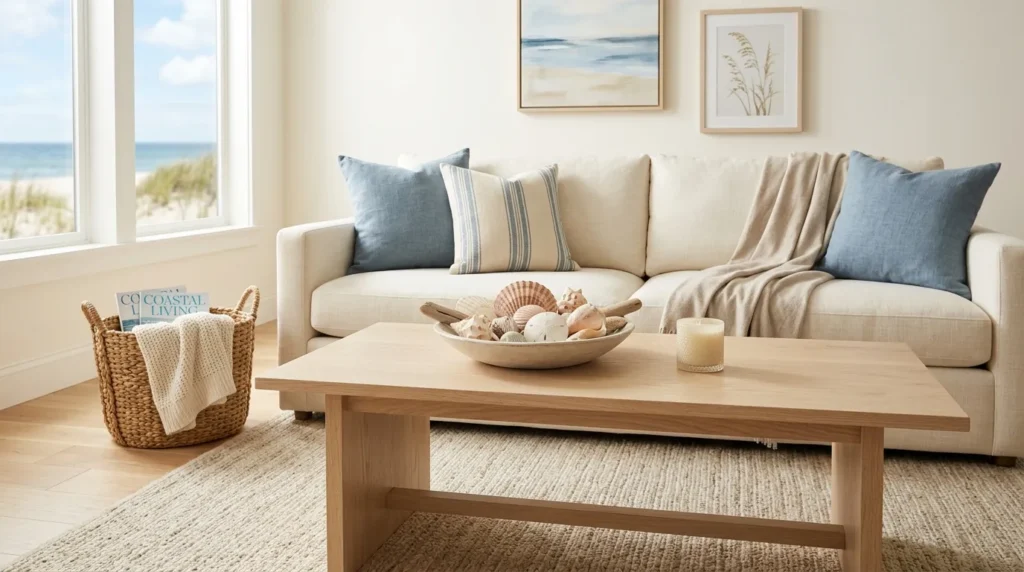
Seashells are a classic coastal decorating element, but they work best when used with restraint. A room filled with shells can quickly feel like a themed beach rental, while a few carefully selected pieces can look elegant and natural.
Think of shells as punctuation rather than the entire sentence. A small shell-filled bowl, framed shell artwork, shell-shaped ceramic, or subtle decorative object can add the coastal reference you need.
The most sophisticated approach is to combine shell-inspired pieces with other natural materials. Woven fibers, pale wood, ceramics, linen, and glass help create a layered environment where no single element feels overwhelming.
How To Style It
Place a small collection of shells in a shallow ceramic or glass bowl on a coffee table or console. Keep the arrangement loose and natural rather than making it perfectly symmetrical.
You can also use shell-inspired artwork in a bathroom, hallway, or bedroom. If you prefer a subtle look, choose one decorative object rather than multiple shell accessories.
For bathrooms, shells can work particularly well alongside woven baskets, white towels, light wood, and simple glass containers.
The goal is to suggest the ocean rather than recreate a souvenir shop.
9. Glass And Light
Quick Benefits
- Makes rooms appear brighter
- Creates a breezy atmosphere
- Reflects natural light
- Works well in small spaces
- Adds visual variety
Why It Works
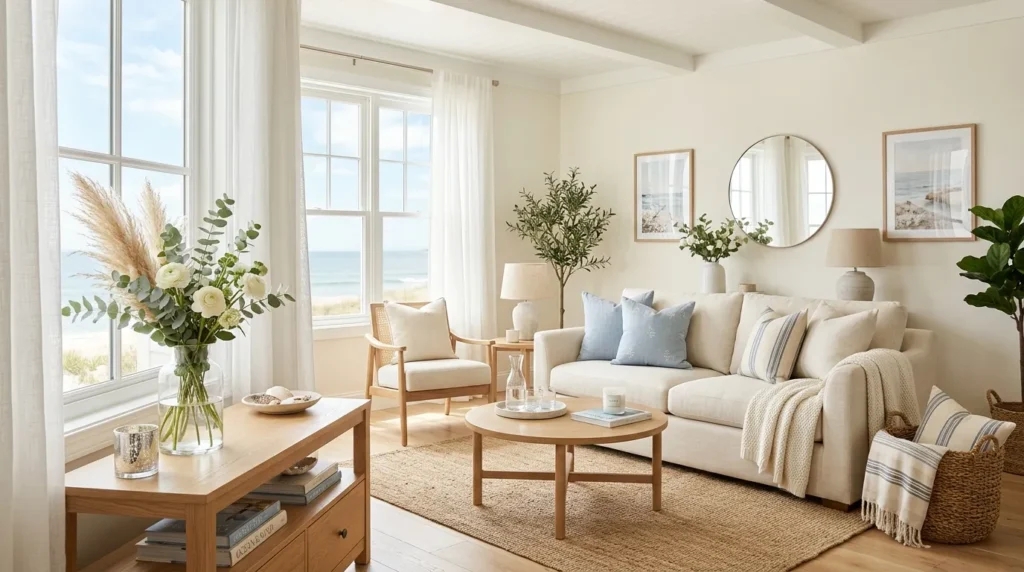
Light is one of the defining characteristics of a beautiful coastal interior. Glass accessories can help reinforce that feeling because their translucent surfaces reflect and transmit light rather than visually closing off the room.
Glass vases, lamps, candleholders, decorative bottles, and framed pieces can add brightness without introducing another heavy color. Sea-glass-inspired shades are particularly effective when you want a hint of blue or green.
This approach works especially well in homes with good natural light, but it can also help brighten rooms that receive less sunlight when combined with warm whites and reflective surfaces.
How To Style It
Place a clear or lightly tinted glass vase near a window where daylight can catch it. Fill it with simple branches, dried stems, or fresh greenery.
On a dining table, use glass candleholders with neutral candles. In a living room, a glass lamp base can provide lighting without creating visual heaviness.
Mirrors can also support the same principle. A large simple mirror opposite or near a window can help bounce light through the room.
Keep window treatments lightweight and avoid blocking natural light with overly heavy fabrics.
10. Coastal Bedroom Layers
Quick Benefits
- Creates a peaceful sleeping environment
- Makes bedding look fuller and more inviting
- Uses simple color combinations
- Easy to refresh without replacing furniture
- Works for master and guest bedrooms
Why It Works
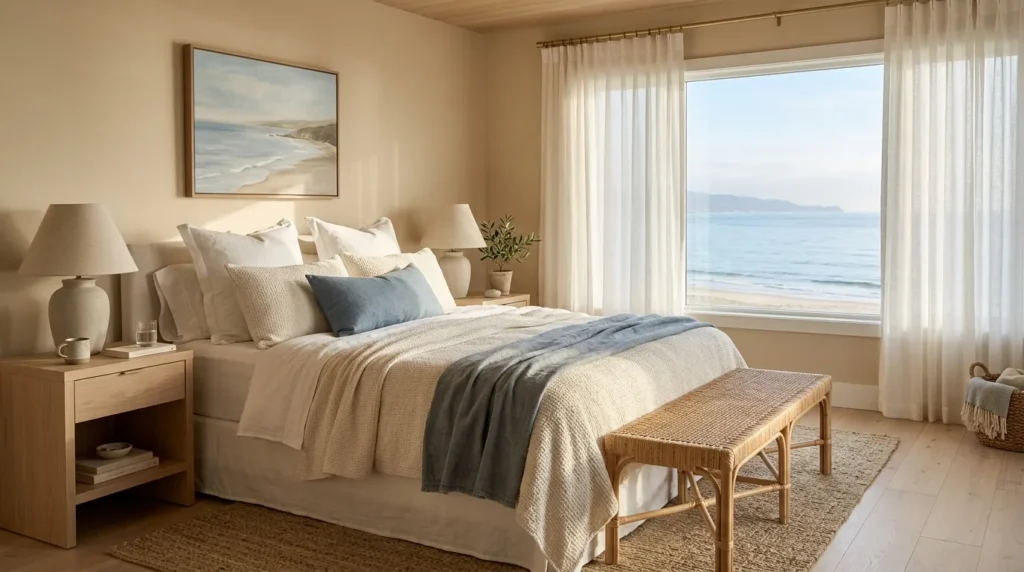
The bedroom is one of the easiest places to introduce coastal style because the palette naturally works with restful colors. Soft white bedding, sandy neutrals, pale blue accents, woven textures, and light wood create an environment that feels calm without looking bland.
The secret is layering. A completely white bed can sometimes look unfinished, while a combination of different textures gives it depth. A quilt, coverlet, throw, lumbar pillow, and standard pillows can create a comfortable composition without requiring bold patterns.
For a guest bedroom, this approach is particularly effective because the neutral palette feels welcoming to different tastes.
How To Style It
Begin with white or warm ivory sheets and bedding. Add a textured quilt or coverlet in a soft neutral shade. Fold a lightweight blue-gray or beige throw across the bottom third of the bed.
Use pillows sparingly. Two or three decorative pillows can provide enough color and texture without creating unnecessary clutter.
For the nightstands, choose simple ceramic lamps, small vases, or natural wood accessories. A woven basket beside the bed can hold extra blankets.
Keep the walls light and let one piece of coastal artwork provide the visual focal point.
11. Entryway Coastal Touches
Quick Benefits
- Creates a welcoming first impression
- Combines beauty with practical storage
- Works in small entryways
- Introduces coastal style immediately
- Easy to update with accessories
Why It Works
The entryway sets the tone for the rest of the home. A few carefully chosen elements can make it feel organized and welcoming without requiring a large space.
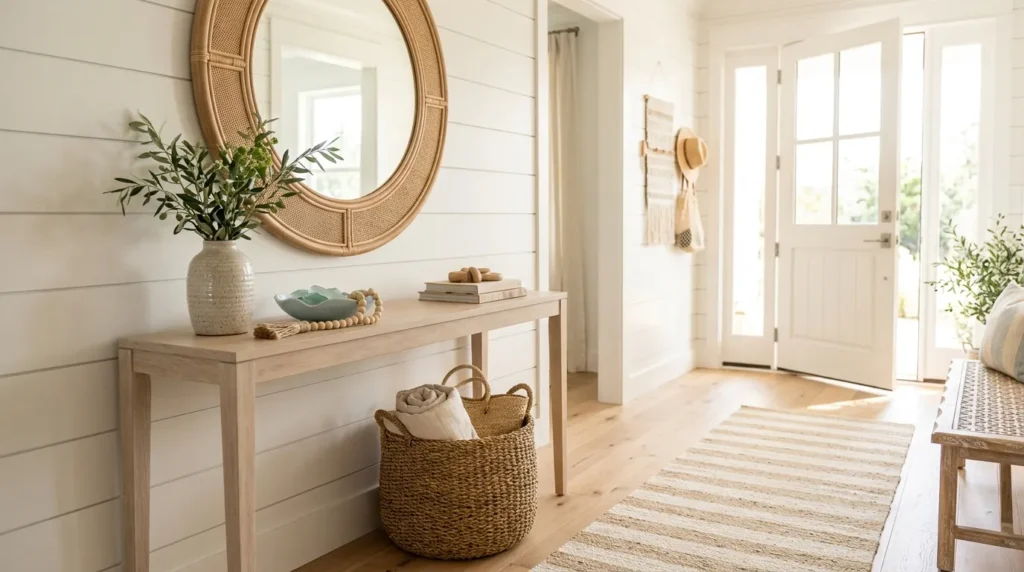
Coastal entryways benefit from a combination of function and natural texture. A woven basket, pale wood bench, simple mirror, soft runner, and small ceramic accent can create a relaxed arrangement that feels intentional.
The mirror is especially useful because it can make a narrow entryway feel larger while reflecting available light. Meanwhile, baskets provide a place for everyday items that might otherwise create visual clutter.
A mistake many homeowners make is trying to decorate every inch of a small entryway. Leaving some negative space can actually make the room feel brighter and more sophisticated.
How To Style It
Start with one practical anchor, such as a slim console table or narrow bench. Add a large round or rectangular mirror above it to create height and reflect light.
Place a woven basket underneath the bench or beside the console for shoes, bags, or seasonal accessories. On the tabletop, use a ceramic vase, small bowl, or coastal-inspired decorative object.
A runner in ivory, beige, faded blue, or a subtle stripe can connect the elements.
If your entryway is very narrow, skip bulky furniture and focus on wall-mounted hooks, a mirror, one small basket, and a simple piece of artwork.
FAQ
What colors work best for coastal home decor?
The most versatile coastal colors include warm white, ivory, sand, beige, pale blue, blue-gray, muted aqua, soft gray, and natural wood tones. You can also use navy as a smaller accent. The goal is usually to create a light foundation and then introduce ocean-inspired colors in controlled layers.
How do I make coastal decor look elegant instead of themed?
Use coastal references sparingly. Instead of filling the room with anchors, shells, and nautical signs, focus on natural textures, soft colors, light wood, linen, rattan, glass, and simple artwork. This creates the relaxed feeling associated with the coast without making the room look overly themed.
Can coastal decor work in a small apartment?
Yes. Coastal style can work particularly well in smaller spaces because its light colors and visually open materials can make rooms feel airy. Choose multifunctional baskets, lightweight furniture, mirrors, pale textiles, and a limited color palette. Avoid filling small rooms with too many decorative objects.
What materials are common in coastal interiors?
Natural and relaxed materials work especially well, including rattan, cane, seagrass, jute, linen, cotton, light wood, ceramic, glass, and woven fibers. Combining several textures is more effective than relying on one material throughout the room.
Is blue necessary for coastal decorating?
No. Blue is popular because it connects naturally with the ocean and sky, but a coastal room can be almost entirely neutral. Warm white, beige, sand, pale wood, and natural textures can create a coastal atmosphere without using much blue. If you want color, introduce a small amount through artwork or textiles.
How can I update my home with coastal decor without replacing furniture?
Focus on accessories and textiles first. Replace or layer throw pillows, add a textured blanket, introduce woven baskets, change artwork, add a ceramic vase, use a natural wood tray, or place a mirror strategically. These smaller changes can alter the overall atmosphere without requiring expensive furniture purchases.
What makes a coastal living room feel cozy?
Texture is the key. Combine soft upholstery with woven baskets, cotton or linen pillows, a comfortable throw, natural wood, a textured rug, and warm lighting. Keep the palette light but include enough variation in texture and tone to prevent the room from feeling cold.
Conclusion
Creating a coastal-inspired home does not require a complete makeover or a house by the water. The look is much more about atmosphere than geography. With the right combination of natural textures, relaxed fabrics, soft colors, light wood, woven materials, and a few carefully chosen seaside details, an ordinary room can feel considerably more open and inviting.
Amazon can make the process easier because you can shop for many of these smaller decorating elements in one place. Start with the areas that will have the biggest visual impact, such as pillows, artwork, baskets, lighting, or bedding. You don’t need to purchase everything at once.
If your home already has a neutral foundation, you’re halfway there. Add texture first, then introduce one or two ocean-inspired colors. From there, layer in natural materials and personal accessories until the space feels comfortable rather than overly styled.
In my experience, the best coastal rooms are not the ones with the most decorations. They’re the ones where every element contributes to a feeling of lightness, comfort, and easy living.
Start with one or two ideas from this list and build gradually. The result should feel like your home—just a little brighter, calmer, and more relaxed.