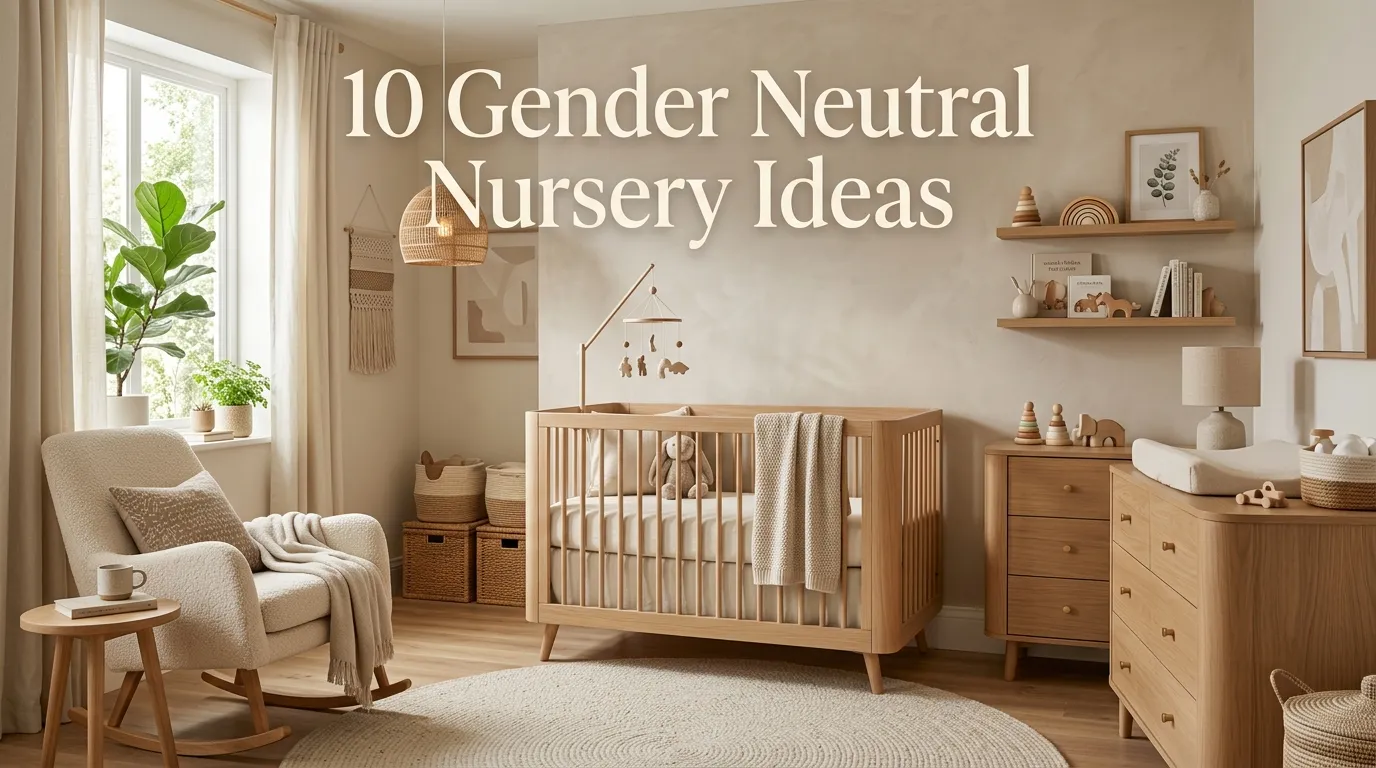
10 Gender Neutral Nursery Ideas
Creating a nursery that feels beautiful, calming, and welcoming does not require a traditional pink or blue color palette. A gender-neutral nursery can be just as charming while giving you more freedom to experiment with warm neutrals, earthy colors, playful patterns, natural materials, and timeless furniture.
One of the biggest advantages of a gender-neutral nursery is flexibility. You can create a room that feels appropriate before the baby’s arrival, then personalize it later with books, artwork, keepsakes, and favorite colors as your child grows. Instead of designing around a specific theme, you can focus on creating a comfortable environment with practical storage, soft lighting, and plenty of texture.
In my experience, the most successful nurseries balance visual beauty with everyday functionality. A beautiful rocking chair is wonderful, but it should also be comfortable during late-night feedings. Open shelves can display adorable books and toys, but closed storage is invaluable when you need to quickly tidy the room.
Whether you’re decorating a small nursery, sharing a room, or starting with a completely empty space, these ideas can help you create a room that feels warm and personal without relying on gender-specific colors.
From earthy woodland details to minimalist neutrals, these nursery ideas are designed to be adaptable, cozy, and easy to personalize over time.
Table of Contents
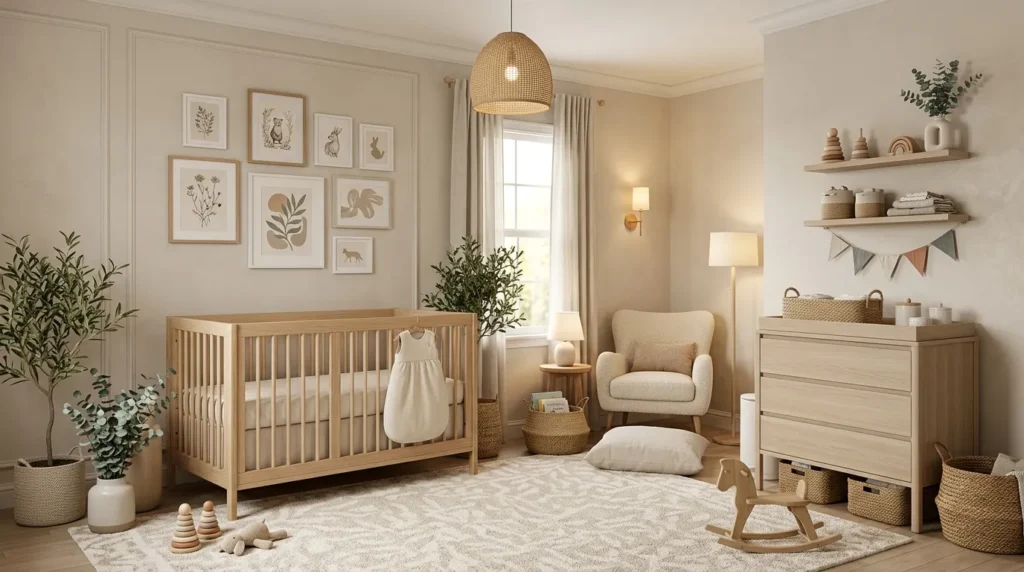
1. Warm Neutral Palette
Build a peaceful foundation with cream, beige, taupe, and soft brown shades.
2. Woodland Inspired
Bring the outdoors inside with natural textures, woodland artwork, and gentle earthy colors.
3. Sage Green Accents
Use muted sage as a calming accent that adds color without overwhelming the room.
4. Natural Wood Furniture
Introduce warmth and character with wood cribs, shelves, dressers, and decorative details.
5. Minimalist Nursery
Keep the design simple and uncluttered with carefully selected furniture and accessories.
6. Soft Earthy Tones
Create a cozy atmosphere with clay, caramel, olive, cream, and warm beige accents.
7. Playful Animal Theme
Add personality through charming animal artwork, toys, and subtle themed accessories.
8. Boho Textures
Layer woven materials, soft textiles, natural fibers, and handmade-looking decor.
9. Neutral Wall Art
Personalize the nursery with artwork that adds character without dominating the room.
10. Cozy Reading Corner
Create a comfortable little area for books, cuddles, and quiet time.
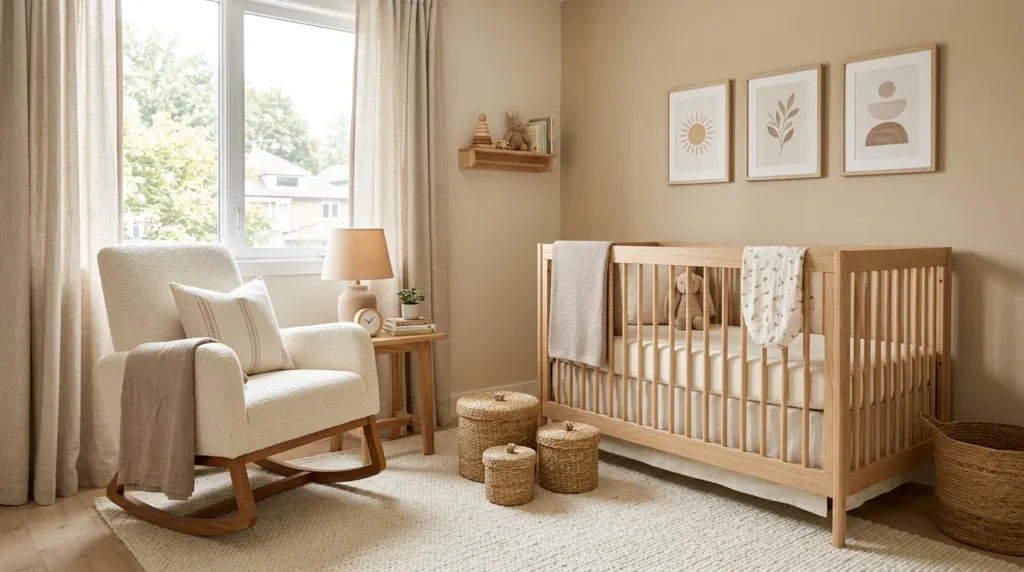
1. Warm Neutral Palette
Quick Benefits
- Creates a calm atmosphere
- Works for any nursery style
- Easy to personalize
- Makes small rooms feel brighter
- Grows with the child
Why It Works
Warm neutrals are one of the easiest ways to create a timeless nursery. Cream, ivory, beige, taupe, oatmeal, and soft brown can make the room feel peaceful without becoming visually boring. The key is layering several shades and textures instead of using one neutral color everywhere. A completely white room can sometimes feel stark, while warm neutrals create a softer appearance. This palette also gives you plenty of flexibility later. As your child grows, you can introduce colorful toys, artwork, bedding, or accessories without needing to redesign the entire room.
How To Style It
Start with warm ivory or soft beige walls and pair them with natural wood furniture. Add a cream rug, linen curtains, and a comfortable upholstered rocking chair. Layer the crib with a simple fitted sheet and use removable textiles for decorative touches. Woven baskets can provide practical storage while adding texture. For artwork, choose simple botanical prints, abstract shapes, or gentle animal illustrations. Keep the largest pieces neutral and introduce personality through smaller accessories. This creates a nursery that feels finished but still leaves room for colorful books and toys.
2. Woodland Inspired
Quick Benefits
- Adds playful personality
- Works beautifully with natural materials
- Creates an organic atmosphere
- Easy to personalize
- Suitable for many decorating styles
Why It Works
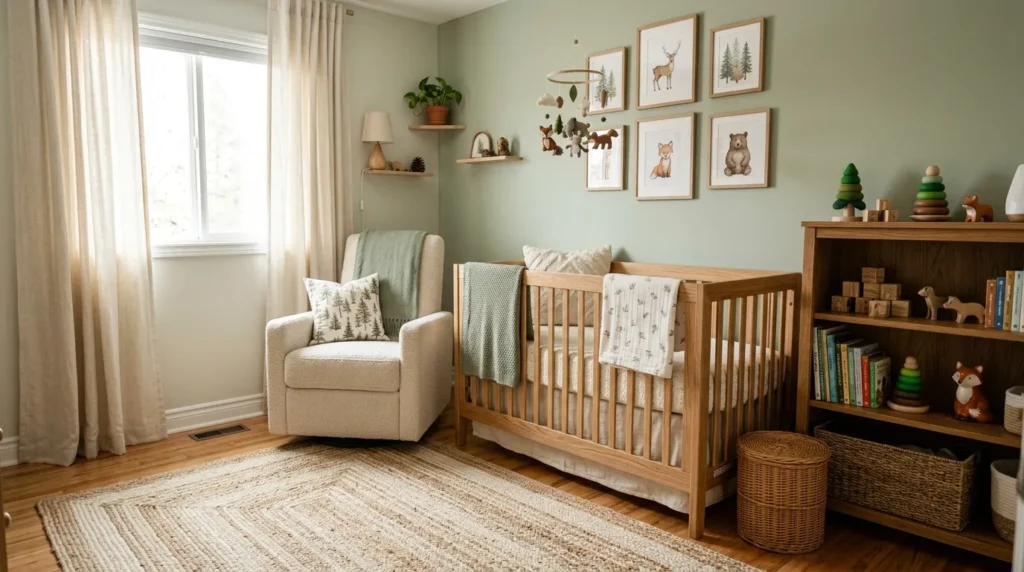
A woodland-inspired nursery brings a gentle sense of nature into the room without feeling overly themed. Forest animals, trees, mountains, mushrooms, leaves, and natural landscapes can provide inspiration without requiring every accessory to feature the same pattern. The combination of earthy greens, warm browns, cream, and natural wood creates a cozy environment. I’ve noticed that subtle themes tend to have more staying power than highly specific nursery themes because they can easily evolve as the child grows.
How To Style It
Choose a natural wood crib and pair it with cream or sage textiles. Add framed artwork featuring woodland animals or simple forest illustrations. A tree-shaped bookshelf or small wooden animal figures can provide playful details without overwhelming the room. Use woven baskets for toys and blankets. If you want a stronger focal point, consider a forest-inspired mural or removable wallpaper on one wall. Keep the remaining walls and furniture simple so the feature wall remains the star. Finish with soft lighting and a cozy rug.
3. Sage Green Accents
Quick Benefits
- Adds gentle color
- Feels calm and natural
- Pairs well with wood
- Works in modern nurseries
- Easy to update
Why It Works
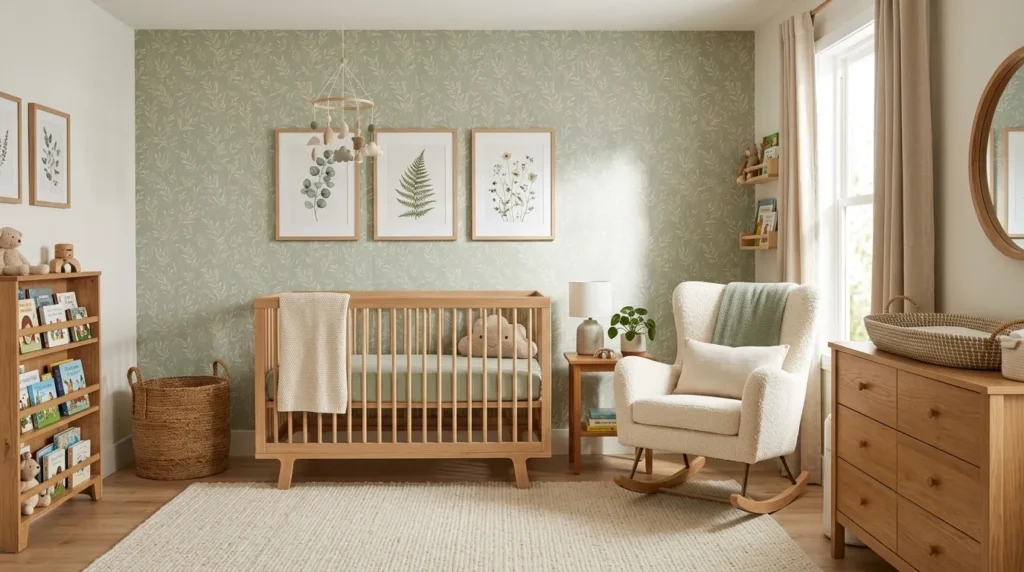
Sage green has become a favorite for neutral interiors because it provides color while remaining soft and understated. In a nursery, it can create a peaceful connection to nature without becoming visually overwhelming. Sage works especially well with warm white, beige, natural oak, and cream. Because it is relatively muted, you can use it in several small places without making the room feel too colorful. It also gives you an easy color foundation if you want to add stronger colors later through books, toys, or artwork.
How To Style It
Use sage through one primary feature and several smaller repetitions. For example, choose sage removable wallpaper behind the crib, then repeat the shade in a throw pillow for the rocking chair, storage bins, artwork, or rug details. Keep large furniture pieces in natural wood or white so the room remains balanced. Warm cream textiles can soften the green. Brass or matte black hardware can provide subtle contrast depending on the overall style. Avoid using sage on every surface; a few well-placed accents usually have more impact.
4. Natural Wood Furniture
Quick Benefits
- Adds warmth
- Creates an organic feeling
- Provides timeless appeal
- Works with many color palettes
- Can transition into future rooms
Why It Works
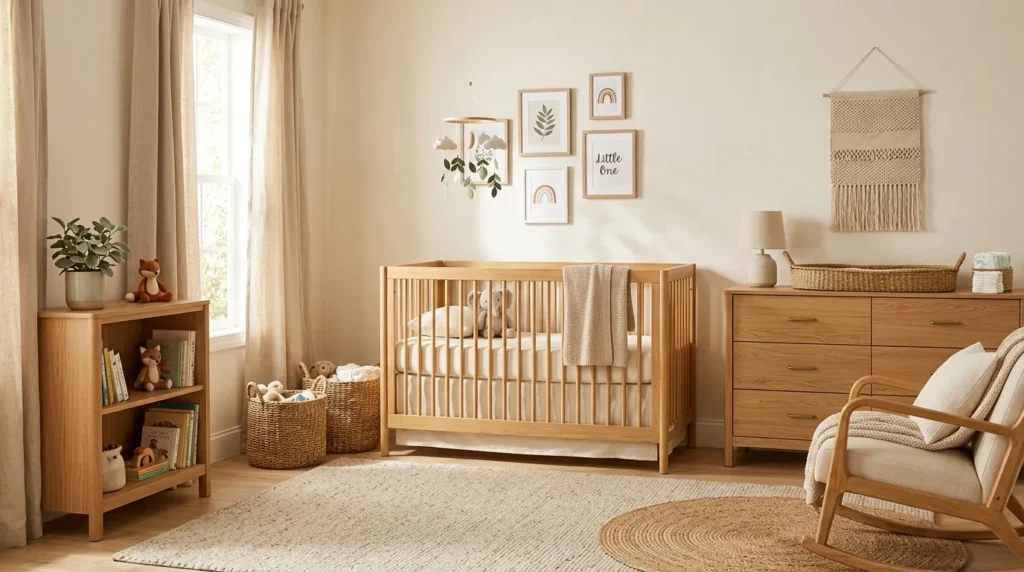
Natural wood furniture brings warmth and character to a nursery while creating a strong foundation for almost any color scheme. Oak, maple, birch, and other light wood finishes work beautifully with cream, sage, beige, and earthy tones. Wood also introduces natural grain, which gives the room texture without relying on busy patterns. A nursery filled with white furniture can feel crisp, but adding wood often makes the space feel softer and more grounded.
How To Style It
Choose one or two primary wood tones and repeat them throughout the room. A wood crib can coordinate with a dresser, bookshelf, or side table. You do not need every piece to match perfectly. Slight variations can make the room feel more collected. Pair wood furniture with cream textiles, woven storage baskets, and a neutral rug. If the room has dark flooring, lighter wood can brighten the space. For a small nursery, choose furniture with clean lines and avoid oversized pieces that restrict movement.
5. Minimalist Nursery
Quick Benefits
- Reduces visual clutter
- Makes small rooms feel spacious
- Simplifies organization
- Creates a calm atmosphere
- Easier to maintain
Why It Works
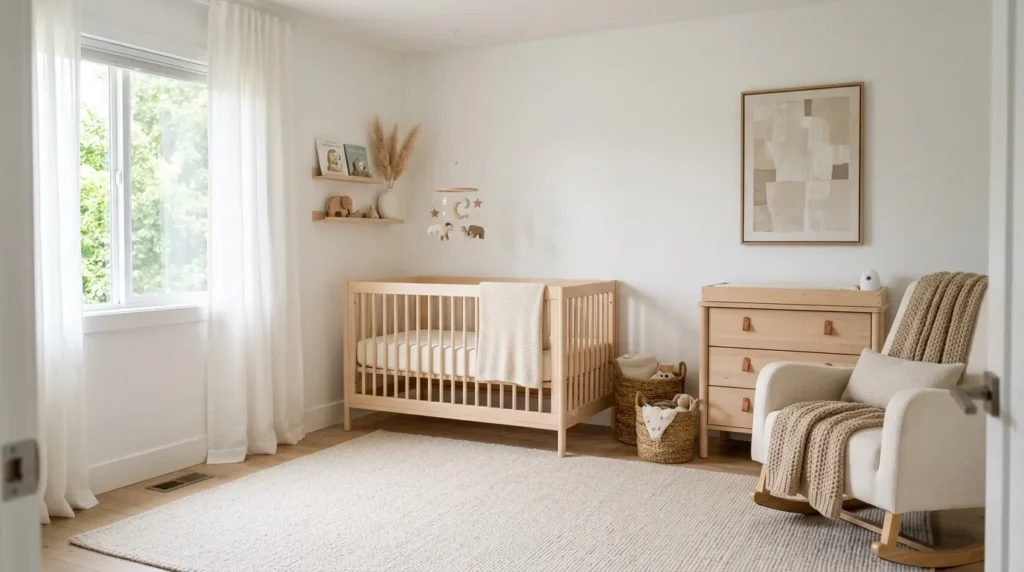
A minimalist nursery focuses on what the room actually needs rather than filling every corner with decoration. This can be especially helpful in smaller homes where storage and floor space are limited. The minimalist approach does not mean the nursery has to look cold or empty. Soft textiles, warm wood, gentle lighting, and a few meaningful accessories can create plenty of personality. The emphasis is on choosing fewer pieces that work well together. This also makes it easier to keep the room organized once toys and baby essentials start accumulating.
How To Style It
Start with the essential furniture: crib, changing station, comfortable chair, and practical storage. Choose a simple palette of cream, beige, warm gray, or soft green. Instead of several small decorations, choose one large artwork piece or a single statement wall. Use baskets and drawers to hide everyday supplies. Keep the floor relatively open to make movement easier. A soft rug can add comfort and warmth without creating visual clutter. Choose furniture with simple silhouettes so the room feels timeless rather than tied to one short-lived trend.
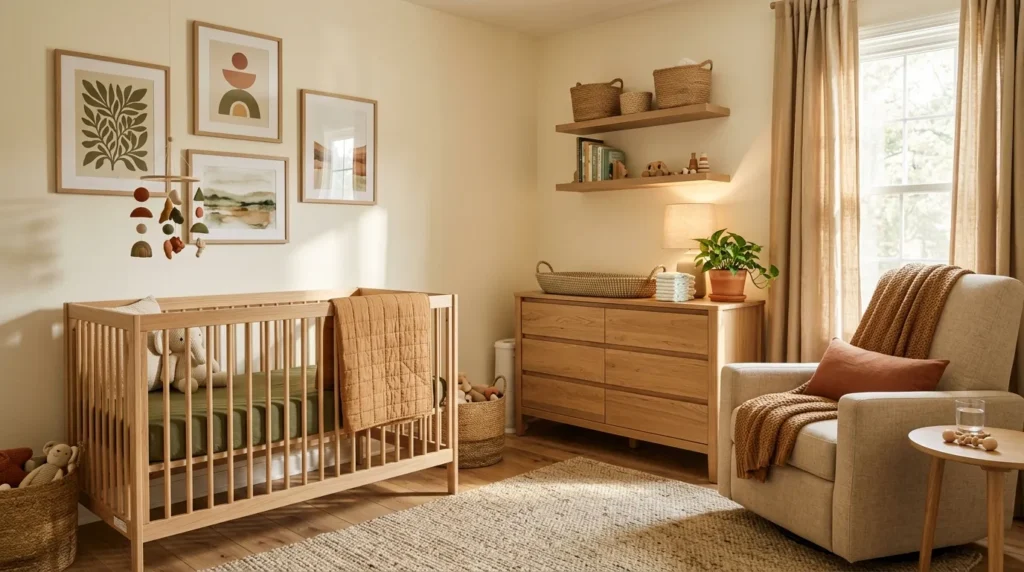
6. Soft Earthy Tones
Quick Benefits
- Creates a cozy atmosphere
- Adds warmth
- Works with neutral furniture
- Feels natural and sophisticated
- Easy to layer
Why It Works
Earthy colors can make a nursery feel warm and inviting without relying on traditional gendered shades. Think muted clay, caramel, olive, sand, warm beige, terracotta, and soft brown. These colors connect naturally with wood, woven materials, and greenery. The trick is using muted versions rather than highly saturated colors. A soft clay accent can feel playful while remaining sophisticated. These shades also transition well as the child gets older, meaning you can keep much of the room intact while changing only a few accessories.
How To Style It
Choose cream as your base and introduce one or two earthy accent colors. A terracotta rug detail, caramel rocking chair, olive artwork, or clay-colored blanket can provide warmth. Add natural wood furniture and woven storage. Handmade-looking ceramics, baskets, and textured textiles can enhance the organic character. Keep the ceiling and larger wall areas relatively light to maintain brightness. If you want more color, add it through artwork and accessories rather than permanent furniture pieces so the room remains easy to update.
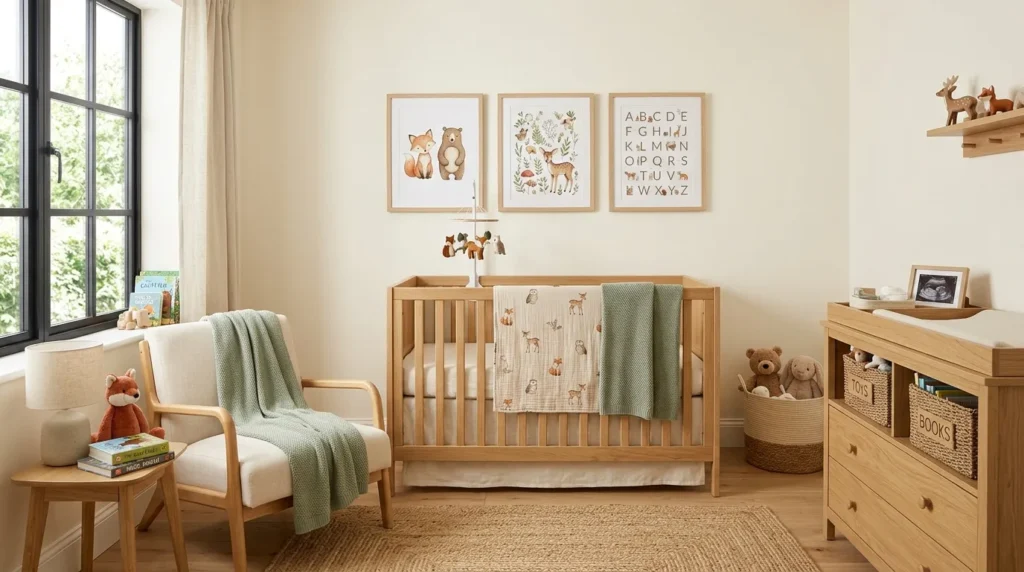
7. Playful Animal Theme
Quick Benefits
- Creates a fun focal point
- Encourages visual interest
- Works for babies and toddlers
- Easy to personalize
- Can be subtle or colorful
Why It Works
Animal-inspired decor is naturally playful and works beautifully in a gender-neutral nursery. Bears, elephants, rabbits, whales, woodland creatures, birds, and safari animals can all provide inspiration. The important thing is avoiding an overly coordinated theme. Instead of putting animals on every wall, use a few thoughtful pieces to create a cohesive story. This allows the nursery to feel playful without looking like a themed retail display. Animal artwork can also remain appealing as the child grows.
How To Style It
Choose one animal direction, such as woodland, safari, ocean, or forest, and keep the artwork within that family. Pair animal prints with neutral walls and natural wood furniture. A soft animal-shaped rug or plush toy can add personality. Use books featuring animals as both entertainment and decoration. If you want a stronger visual statement, use removable animal wallpaper on one wall and keep everything else simple. Avoid placing small decorative objects within the crib or sleeping area; keep nursery styling separate from the baby’s safe sleep space.
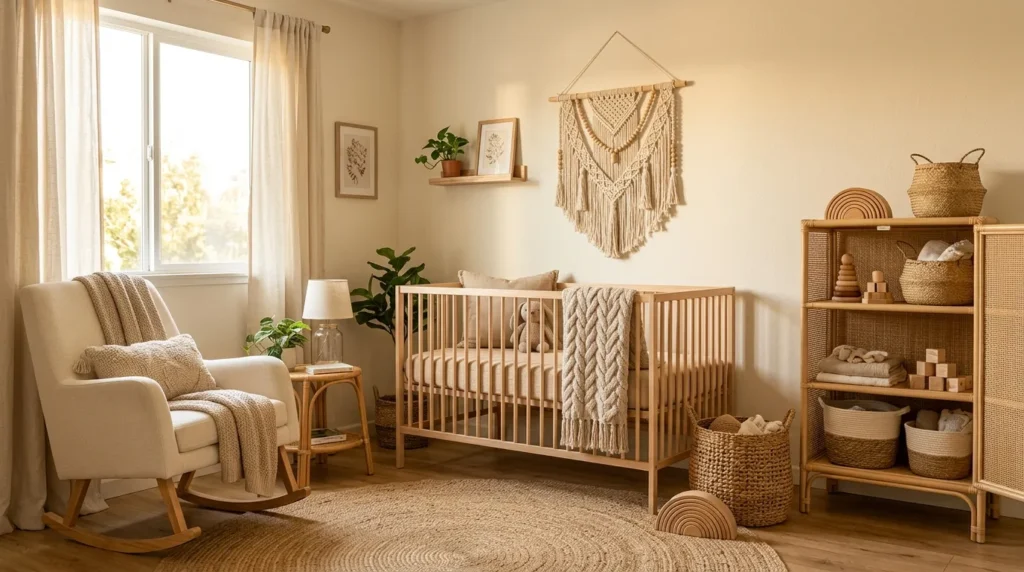
8. Boho Textures
Quick Benefits
- Adds warmth
- Creates visual depth
- Works with neutral colors
- Feels relaxed and cozy
- Easy to personalize
Why It Works
Boho-inspired nursery decor works particularly well with a gender-neutral palette because the style relies heavily on texture and natural materials rather than specific colors. Woven baskets, rattan, jute, linen, cotton, wood, and soft knits create a layered atmosphere. Instead of using lots of decorative colors, you can make the room interesting through tactile materials. This is especially useful if you prefer a calm nursery but still want plenty of visual character.
How To Style It
Use a woven basket for blankets, a rattan storage unit, and a natural fiber rug to establish the foundation. Add a linen curtain and textured chair cushion for softness. Macramé-inspired wall art can work as a decorative accent, but keep hanging items securely installed and away from the crib. Choose warm cream, beige, muted sage, and natural brown as the main palette. A few handmade-looking pieces can give the nursery personality without creating unnecessary clutter.
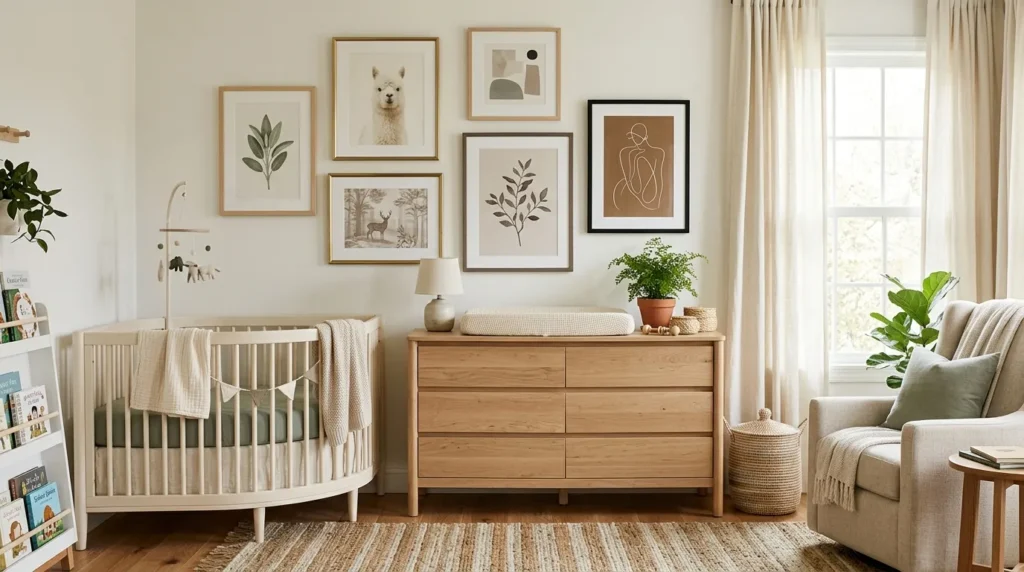
9. Neutral Wall Art
Quick Benefits
- Personalizes the room
- Adds color and pattern
- Easy to change
- Creates a focal point
- Works with many styles
Why It Works
Artwork is one of the simplest ways to personalize a nursery without making permanent changes. Neutral artwork can introduce animals, landscapes, botanical shapes, abstract forms, letters, or gentle illustrations while keeping the overall room adaptable. A small collection of coordinated prints can create a gallery wall, while one oversized piece can provide a strong focal point. Because artwork is easy to replace, it gives you the freedom to experiment as your child’s personality develops.
How To Style It
Choose artwork that repeats colors already found in the room. If you have sage textiles and natural wood furniture, look for prints featuring soft green, beige, cream, and brown. For a modern nursery, try simple abstract artwork or line drawings. For a playful space, use animal illustrations or colorful shapes. Hang artwork securely and thoughtfully, particularly around furniture. Keep decorative pieces away from areas where they could fall into the crib. A picture ledge can also provide flexibility, but make sure it is securely installed and safely positioned.
10. Cozy Reading Corner
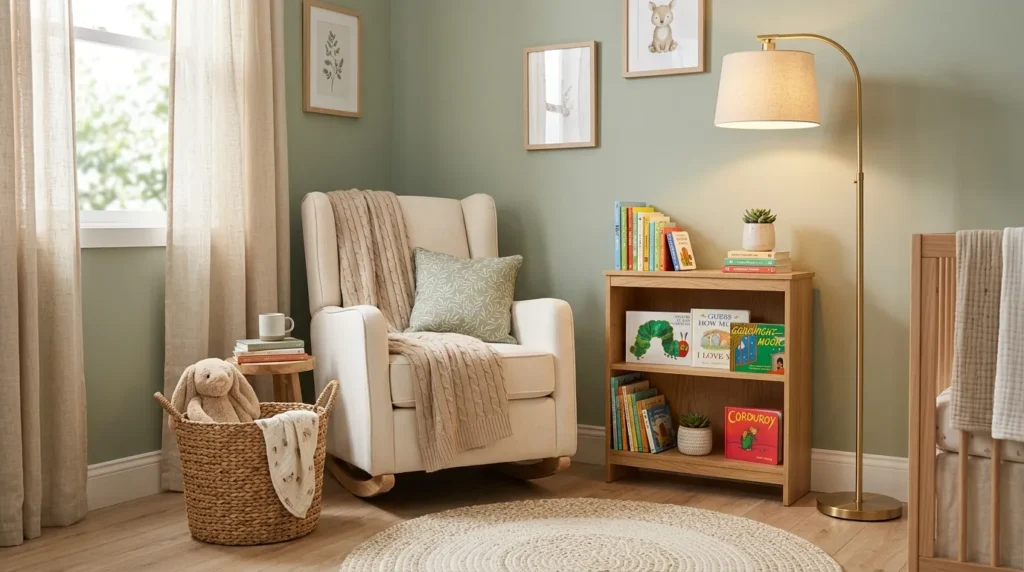
Quick Benefits
- Creates a useful parent-child space
- Encourages early reading
- Adds personality
- Makes use of an empty corner
- Can evolve over time
Why It Works
A small reading corner can become one of the most meaningful parts of a nursery. It gives you a comfortable place to read, cuddle, feed, or simply spend quiet time together. Even if your baby is too young to understand stories, creating a dedicated reading area establishes a routine that can grow with them. A comfortable chair, small bookshelf, and soft rug can also make an empty corner feel intentional. The space does not need to be large to be useful.
How To Style It
Start with a comfortable chair or rocker that provides good support. Add a small side table for a water bottle, reading lamp, or personal items. Place a low bookshelf nearby for easy access to board books and picture books. A soft rug can define the corner and make it feel separate from the rest of the room. Use warm lighting rather than relying entirely on the main ceiling fixture. Keep books and accessories organized at a height that makes sense for your family and avoid creating unnecessary climbing hazards.
Choosing A Gender-Neutral Nursery Color Palette
A gender-neutral nursery does not have to mean beige everywhere. You can use almost any color when you choose the right tone and balance.
Some versatile combinations include:
Cream + sage + natural wood for a nature-inspired room.
Beige + terracotta + warm brown for an earthy nursery.
Ivory + gray + muted green for a modern, calming space.
White + oak + soft black for a contemporary nursery.
Taupe + caramel + cream for a warm, sophisticated room.
A good rule is to choose one primary neutral, one supporting color, and one accent material such as wood or rattan.
Nursery Storage Ideas
Storage becomes increasingly important once clothes, diapers, books, blankets, toys, and baby equipment begin filling the room.
Use a combination of closed and open storage. Closed drawers and cabinets can hide everyday essentials, while a few open shelves can display favorite books and decorative items.
Woven baskets are particularly useful because they can hold blankets, stuffed animals, or extra clothing while blending into the decor.
If the nursery is small, look vertically. Tall shelving, wall-mounted storage, and furniture with built-in drawers can provide more capacity without taking up too much floor space.
Keep frequently used supplies easy to reach while storing less-used items higher or farther away.
Making A Small Nursery Feel Bigger
Light colors can help a small nursery feel more open, but furniture scale is equally important.
Choose a crib and dresser with clean silhouettes and avoid overcrowding the room with decorative furniture. A comfortable chair is useful, but it should not consume most of the available floor space.
Mirrors can reflect natural light and make the room feel more spacious, provided they are securely installed and placed safely.
Use curtains mounted close to the ceiling to emphasize vertical height, and keep the floor relatively clear.
A simple rug can visually define the room without making it feel crowded.
Nursery Safety And Practicality
A beautiful nursery also needs to be practical and safe.
Follow current safe-sleep guidance for the crib and keep loose pillows, blankets, toys, and decorative items out of the baby’s sleep space. Secure dressers, bookshelves, and other heavy furniture appropriately to prevent tipping.
Keep cords from lamps, blinds, and other equipment safely managed and away from the crib.
Choose washable textiles where possible, especially for rugs and seating areas. Babies and toddlers create plenty of spills and messes, so easy-care materials can make daily life significantly easier.
When decorating, always prioritize safety over appearance. Decorative choices should complement a safe environment rather than interfere with it.
Common Gender-Neutral Nursery Mistakes
One common mistake is assuming gender-neutral means completely colorless. Soft greens, muted yellows, earthy browns, clay, dusty blue, and other gentle shades can all work beautifully.
Another is choosing a theme and applying it to every surface. A few coordinated details usually feel more sophisticated.
Overcrowding is another problem. Babies need surprisingly little furniture, and too many decorative items can make everyday routines harder.
Finally, avoid buying every item as part of one matching collection. Mixing furniture, textiles, and accessories from different sources often creates a warmer, more personal result.
Frequently Asked Questions
What colors are best for a gender-neutral nursery?
Popular choices include cream, beige, sage green, warm gray, taupe, muted yellow, earthy brown, terracotta, and soft olive. The best palette depends on the atmosphere you want. Warm neutrals create a cozy look, while sage and muted greens provide a gentle connection to nature.
How do I make a nursery gender neutral?
Start with a versatile color palette and choose furniture in neutral finishes such as natural wood, white, or soft gray. Add personality through artwork, textiles, books, plants, and accessories rather than relying on gender-specific themes or colors.
Is sage green good for a gender-neutral nursery?
Yes. Sage green is a particularly versatile nursery color because it is soft, calming, and easy to pair with cream, beige, white, and natural wood. It can be used on walls, furniture, textiles, wallpaper, or small decorative accents.
What furniture does a nursery need?
The essentials typically include a safe crib, changing area, clothing storage, and a comfortable chair or rocker. Depending on the room and your needs, you may also want a bookshelf, small side table, rug, and additional storage.
How can I decorate a small gender-neutral nursery?
Use light colors, appropriately scaled furniture, vertical storage, and a limited number of decorative accessories. Choose pieces that serve multiple purposes and keep the floor as open as possible. A mirror and light window treatments can also help the room feel more spacious.
What theme works best for a gender-neutral nursery?
Nature-inspired themes such as woodland, animals, botanical designs, stars, mountains, and simple abstract patterns are versatile choices. The theme does not need to appear everywhere; a few coordinated details can establish the look without overwhelming the room.
How can I make a neutral nursery feel less boring?
Layer texture rather than relying on lots of color. Add woven baskets, natural wood, linen curtains, a textured rug, soft artwork, greenery, and cozy textiles. A small amount of muted color can also give the room personality while preserving the neutral foundation.
Conclusion
A gender-neutral nursery can be warm, playful, stylish, and deeply personal without relying on traditional pink or blue decorating schemes. The key is creating a flexible foundation and then layering in the details that make the room feel special.
Warm neutrals, natural wood, sage green, earthy colors, playful artwork, and textured materials all provide beautiful ways to create a nursery that feels calm and welcoming. You can also choose a subtle theme, such as woodland animals or nature, without turning every surface into part of the theme.
Most importantly, design the room around real life. Choose a comfortable chair for those long nighttime moments, practical storage for everyday essentials, washable textiles, and furniture that leaves enough room to move around easily.
You do not need to finish everything at once. Start with the essential furniture, establish your color palette, and gradually add artwork, books, baskets, textiles, and meaningful pieces.
The result should be more than a beautiful room. It should be a comfortable little space where everyday routines, quiet moments, story time, and countless memories can unfold.
Related Articles
- 11 Baby Nursery Ideas for a Cozy and Stylish Space
- 10 Small Nursery Ideas That Maximize Every Inch
- 11 Neutral Nursery Decor Ideas for a Timeless Room
- 10 Nursery Organization Ideas for New Parents
- 11 Cozy Kids’ Room Ideas for a Warm and Playful Space