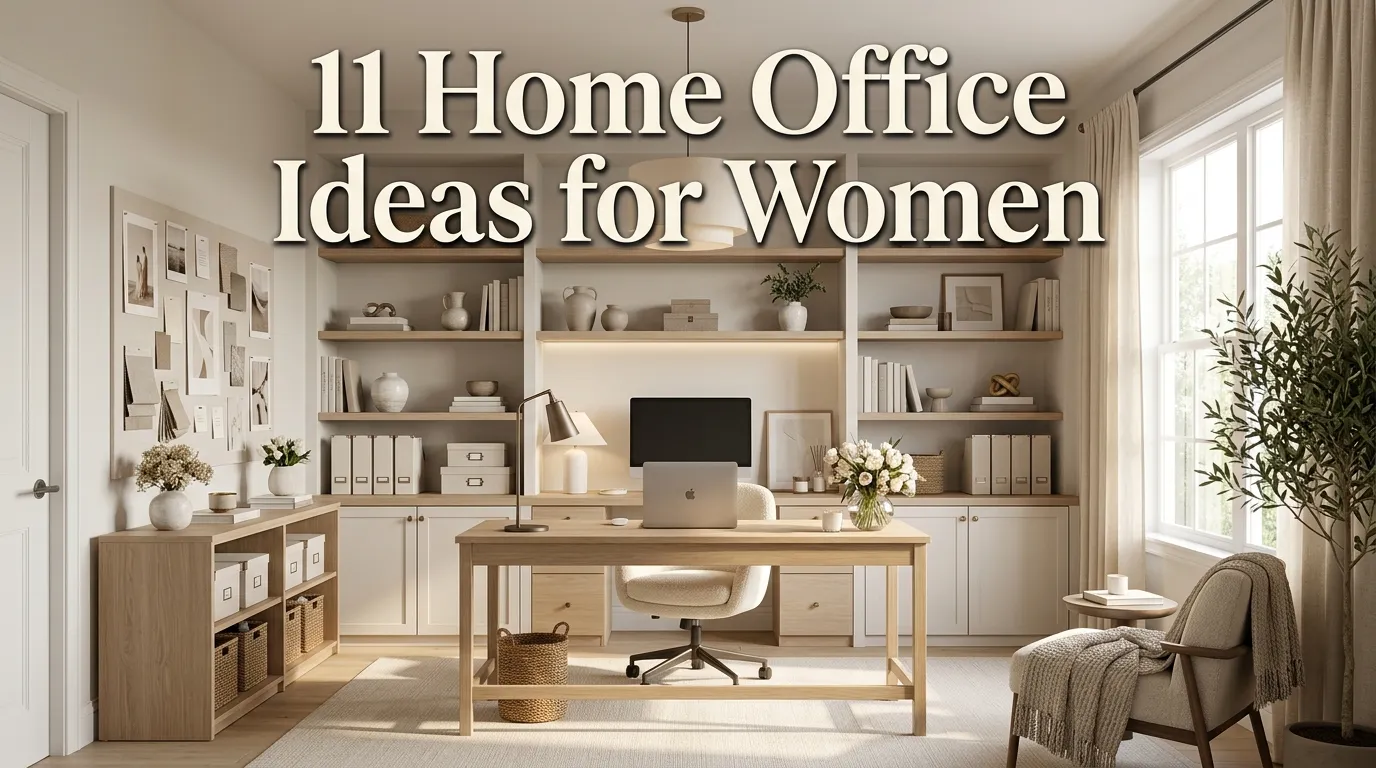
11 Home Office Ideas for Women
A home office should do more than give you a place to put a laptop. When you work from home, this space can influence your productivity, organization, and even how you feel throughout the day.
The good news is that a functional workspace doesn’t have to look cold or overly corporate. Soft colors, attractive furniture, natural textures, artwork, plants, and thoughtful storage can create an office that feels polished while still being comfortable enough for everyday work.
In my experience, the best home offices balance beauty with practicality. A pretty desk is great, but it needs enough surface area for your computer and daily essentials. Decorative baskets are useful, but they should also help control clutter. Comfortable seating matters just as much as the color scheme.
You also don’t need an entire room. A small corner of a bedroom, living room, guest room, or even a wide hallway can become a productive workstation when the layout is planned carefully.
Whether your style is feminine, modern, minimalist, cozy, traditional, or boho, these ideas can help you create a home office that feels personal without sacrificing function.
Table of Contents
- Choose a Pretty Desk
- Add a Comfortable Chair
- Create a Soft Color Palette
- Use Stylish Storage
- Add a Gallery Wall
- Bring in Natural Elements
- Create a Vanity-Style Workspace
- Use Floating Shelves
- Add Cozy Lighting
- Design a Small Office Nook
- Personalize Your Workspace
1. Choose a Pretty Desk
Quick Benefits
- Creates a workspace foundation
- Provides essential surface area
- Defines the office zone
- Adds personality
- Works with many decorating styles
Why It Works
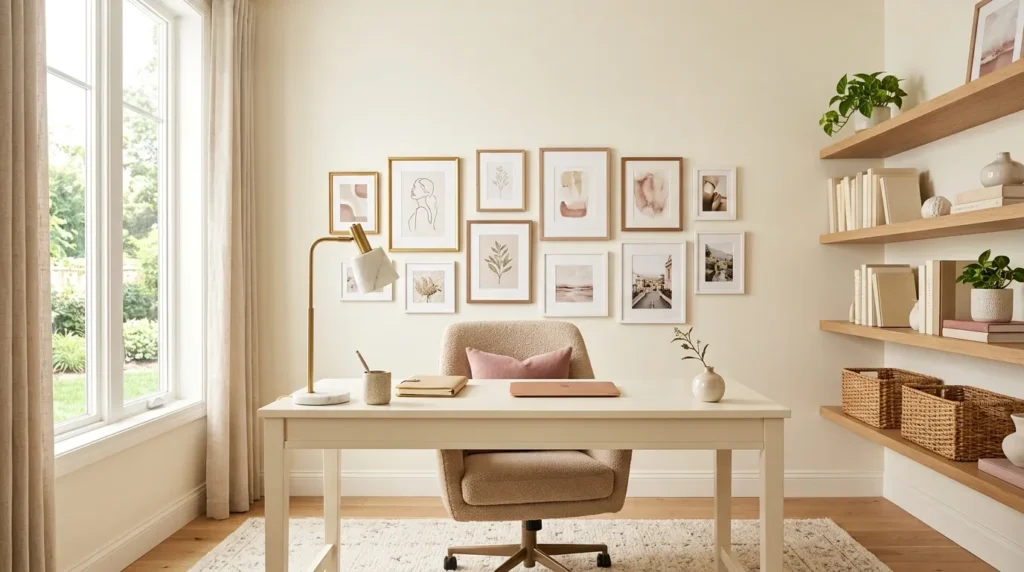
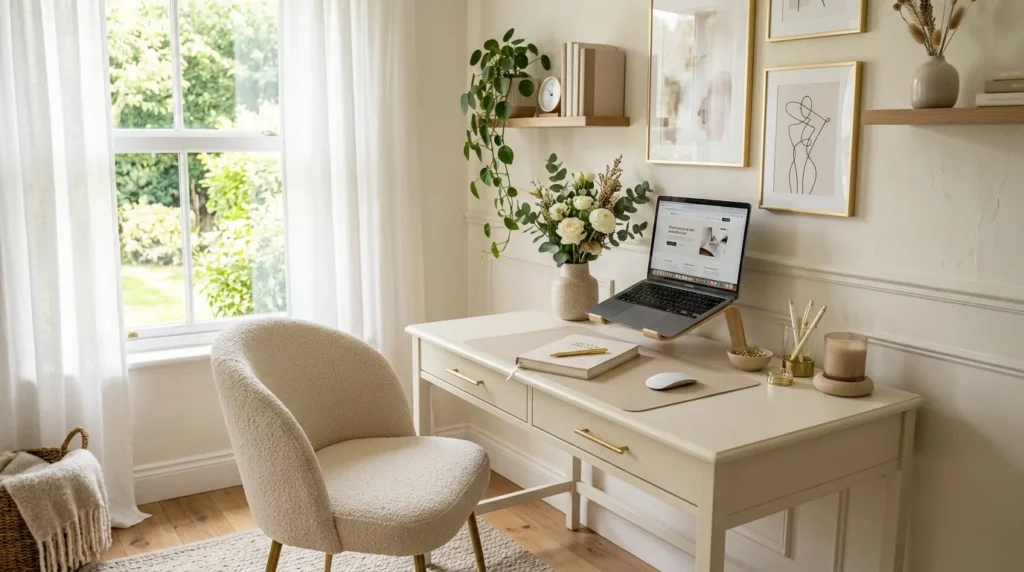
The desk is usually the visual and functional center of a home office, so choosing one that works for both your needs and your style can make a significant difference.
A simple white desk can create a bright feminine look, while natural wood introduces warmth. A glass or streamlined modern desk can work beautifully in smaller rooms because it has a lighter visual presence.
In my experience, the most important consideration is proportion. A desk that is too large can overwhelm a small room, while one that is too small may quickly become frustrating.
How To Style It
Keep the desktop practical rather than filling it with decorations.
Use a desk organizer, small lamp, notebook, and one or two decorative pieces to create a polished workspace without sacrificing usable surface area.
2. Add a Comfortable Chair
Quick Benefits
- Improves comfort
- Adds visual personality
- Supports longer work sessions
- Complements the desk
- Creates a finished look
Why It Works
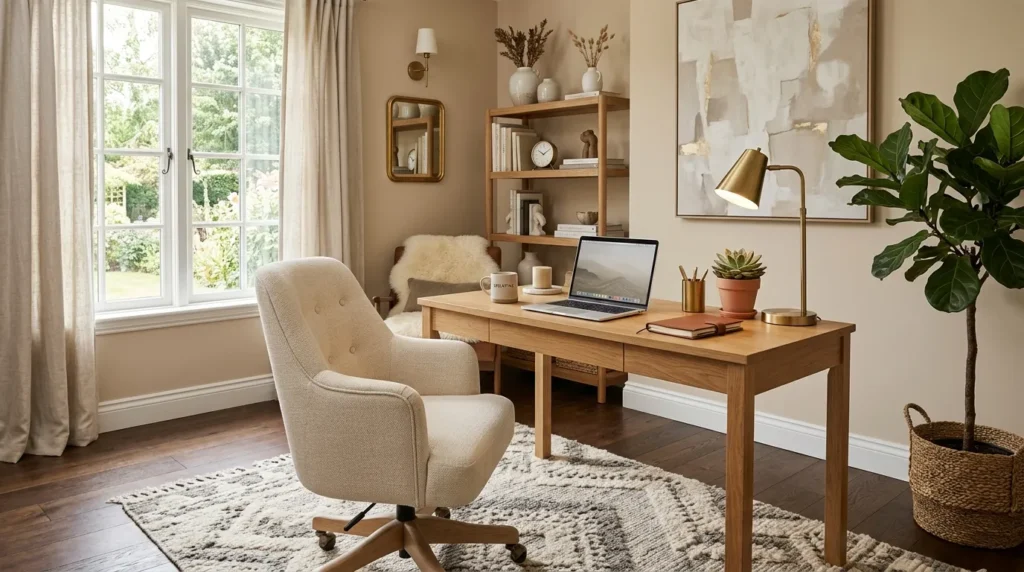
A home office chair doesn’t have to look like traditional office furniture. There are plenty of stylish options that can complement the rest of your home’s décor while still providing appropriate support.
An upholstered chair can soften a modern office, while a streamlined ergonomic chair can keep a minimalist workspace looking polished.
Comfort should come first, especially if you spend several hours working at the desk.
How To Style It
Choose a chair that fits comfortably beneath or around the desk.
If the room has a neutral palette, consider adding personality through a soft upholstered chair, subtle pattern, or warm wood frame.
3. Create a Soft Color Palette
Quick Benefits
- Creates a calming atmosphere
- Makes decorating easier
- Supports visual cohesion
- Can brighten small rooms
- Works with feminine styles
Why It Works
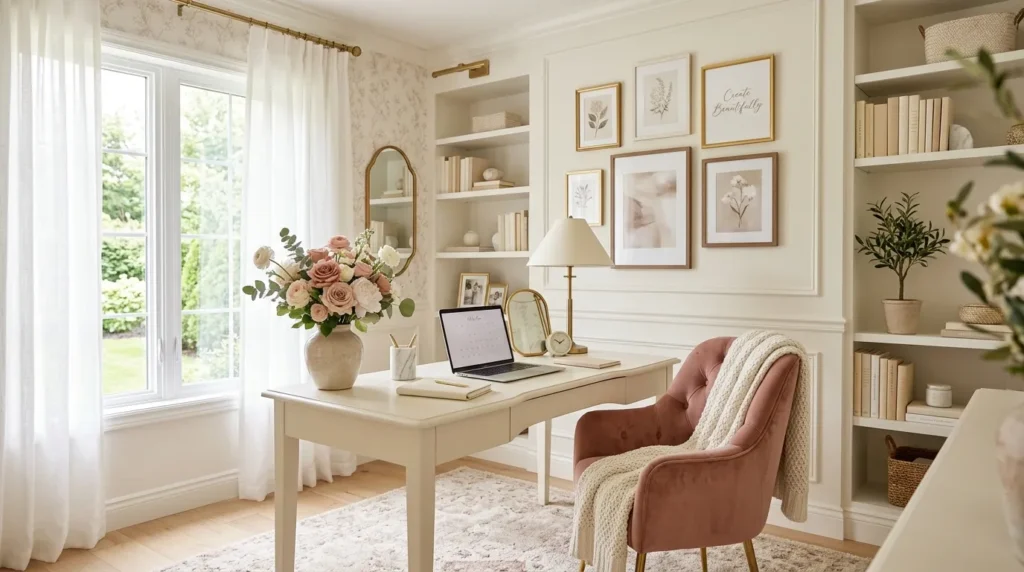
Color can strongly influence how a workspace feels. Soft neutrals, warm whites, blush tones, muted sage, dusty blue, beige, and soft gray can create a calm environment without feeling overly formal.
A restrained palette also makes it easier to coordinate furniture and accessories.
I’ve found that adding one subtle accent color is often more effective than introducing several unrelated shades.
How To Style It
Start with a neutral base such as ivory, cream, beige, or soft gray.
Then introduce one or two accent colors through artwork, a chair, cushions, stationery, or small decorative objects.
4. Use Stylish Storage
Quick Benefits
- Reduces clutter
- Keeps supplies accessible
- Adds decorative texture
- Maximizes small spaces
- Makes the office easier to maintain
Why It Works
A beautiful workspace can quickly become stressful when paperwork, chargers, notebooks, and office supplies accumulate on every surface.
Storage keeps those items contained while allowing the room to maintain its decorative style.
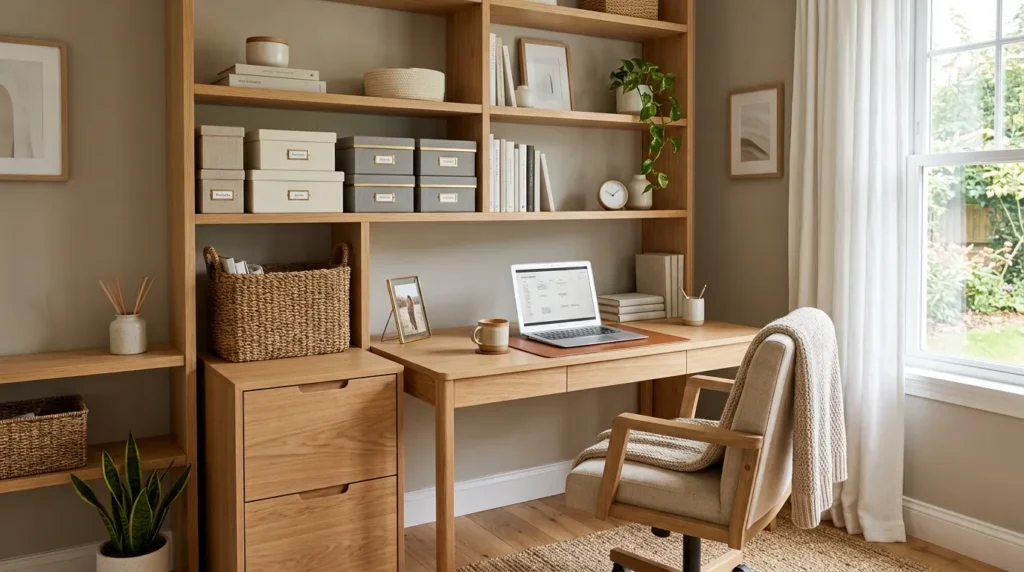
Baskets, decorative boxes, filing cabinets, drawers, and shelving can all contribute to a more organized workspace.
How To Style It
Choose storage that coordinates with the room rather than treating organization as an afterthought.
Use baskets for larger supplies, small containers for desk accessories, and closed storage for items that don’t need to remain visible.
5. Add a Gallery Wall
Quick Benefits
- Personalizes the room
- Creates a focal point
- Fills blank walls
- Adds color and texture
- Makes the office feel finished
Why It Works
Artwork can transform a basic workstation into a space that feels genuinely personal.
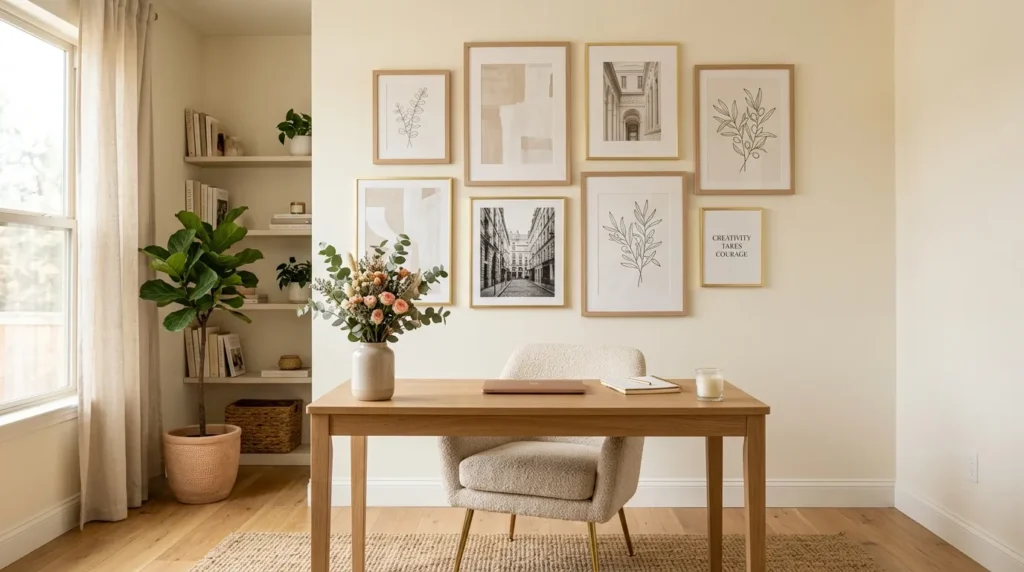
A gallery wall doesn’t need to contain expensive artwork. Framed prints, photographs, line drawings, inspirational typography, botanical illustrations, or personal pieces can all work together.
In my experience, repeating one or two frame finishes helps a gallery wall feel intentional rather than chaotic.
How To Style It
Arrange artwork above the desk while keeping enough breathing room around the workspace.
Use a consistent color family so the gallery wall connects naturally with the rest of the office.
6. Bring in Natural Elements
Quick Benefits
- Adds warmth
- Softens hard surfaces
- Creates visual interest
- Introduces organic texture
- Makes the office feel inviting
Why It Works
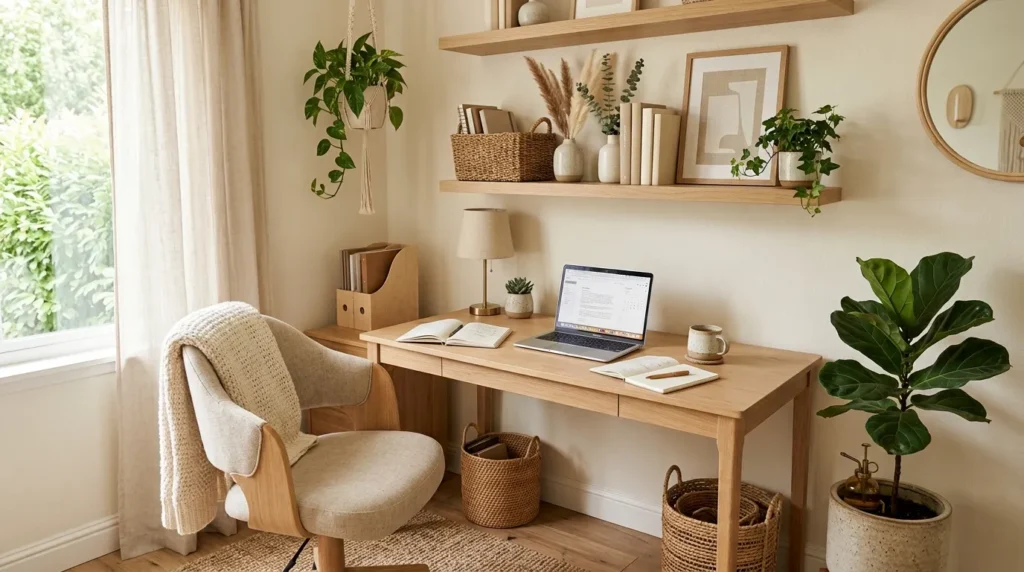
Natural materials can make a home office feel less sterile. Wood, rattan, woven baskets, linen, stone, and greenery introduce texture while complementing a wide range of interior styles.
Plants can also bring a refreshing touch of nature to a workspace.
I’ve found that even a few natural elements can dramatically change the atmosphere of an otherwise simple office.
How To Style It
Add a small plant to the desk, a woven basket underneath it, or a natural wood shelf above the workspace.
Keep the materials coordinated so the room feels layered rather than visually busy.
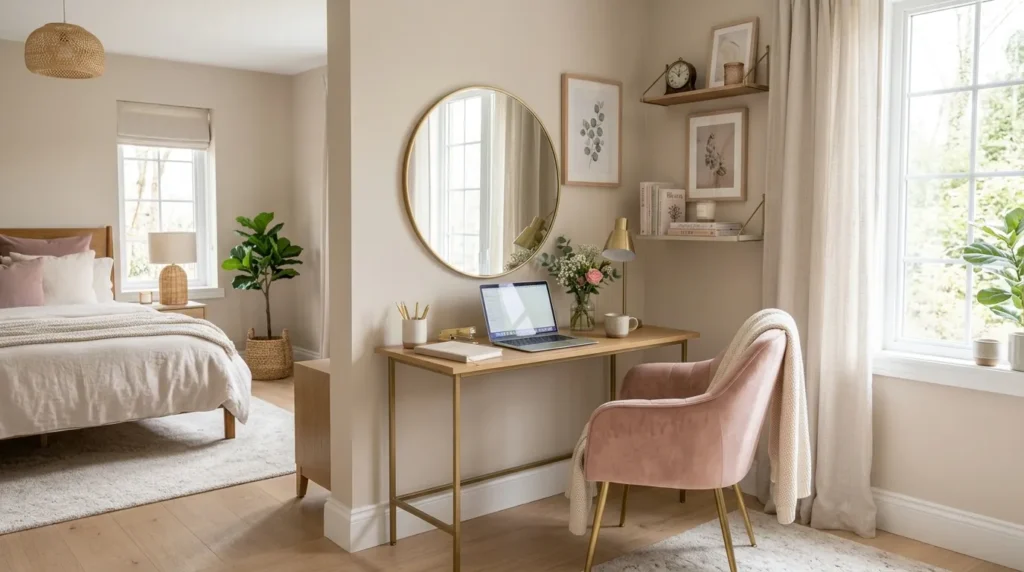
7. Create a Vanity-Style Workspace
Quick Benefits
- Combines beauty and function
- Works well in bedrooms
- Saves space
- Creates a feminine aesthetic
- Provides flexible use
Why It Works
If you don’t have a dedicated office room, a compact desk can double as a vanity or personal getting-ready station.
This approach is especially useful in bedrooms where every piece of furniture needs to serve a purpose.
A slim desk with a mirror, drawer storage, and comfortable chair can function as both a workspace and personal station.
How To Style It
Choose furniture with a clean silhouette and enough storage to keep office supplies and personal items separate.
Add a small mirror, lamp, tray, and minimal decorative accessories without overcrowding the surface.
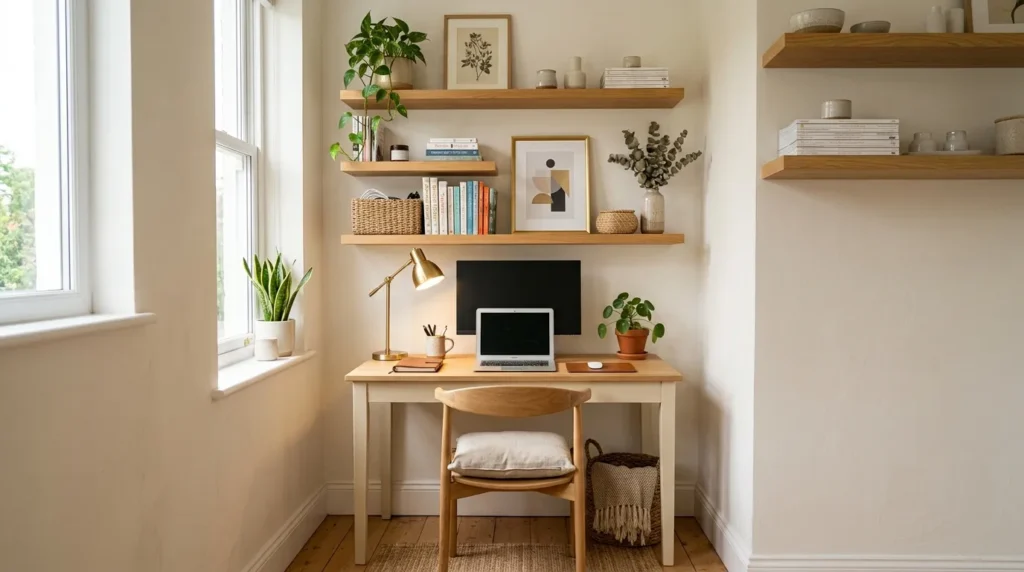
8. Use Floating Shelves
Quick Benefits
- Saves floor space
- Adds vertical storage
- Displays décor
- Keeps supplies accessible
- Works in small offices
Why It Works
Walls are valuable in a compact home office. Floating shelves can provide storage and display space without requiring another bulky piece of furniture.
They can hold books, baskets, plants, framed artwork, and small office accessories.
In my experience, floating shelves are particularly useful above narrow desks because they take advantage of otherwise unused wall space.
How To Style It
Avoid filling every inch of the shelves.
Mix useful objects with decorative pieces and leave some open space so the arrangement feels intentional.
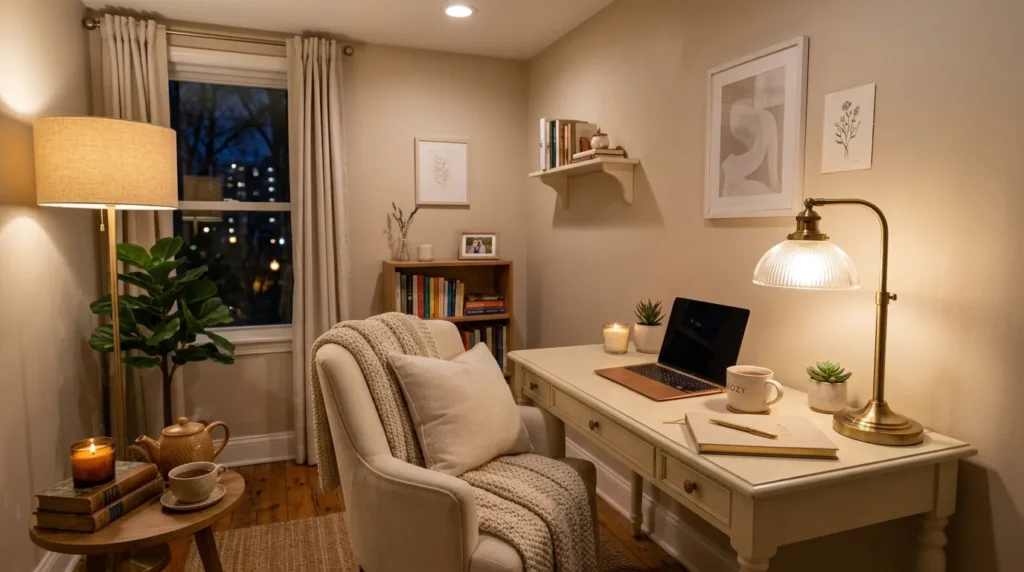
9. Add Cozy Lighting
Quick Benefits
- Improves ambiance
- Supports task lighting
- Adds warmth
- Creates visual depth
- Makes the office more inviting
Why It Works
A single overhead fixture rarely creates the most comfortable workspace.
A desk lamp provides focused illumination while a nearby floor lamp, wall light, or decorative fixture can create additional layers.
Lighting also provides an opportunity to introduce personality through the shape and material of the fixture.
How To Style It
Place a task light where it won’t create distracting shadows on your work surface.
Combine practical lighting with a warmer ambient source to make the room feel comfortable beyond working hours.
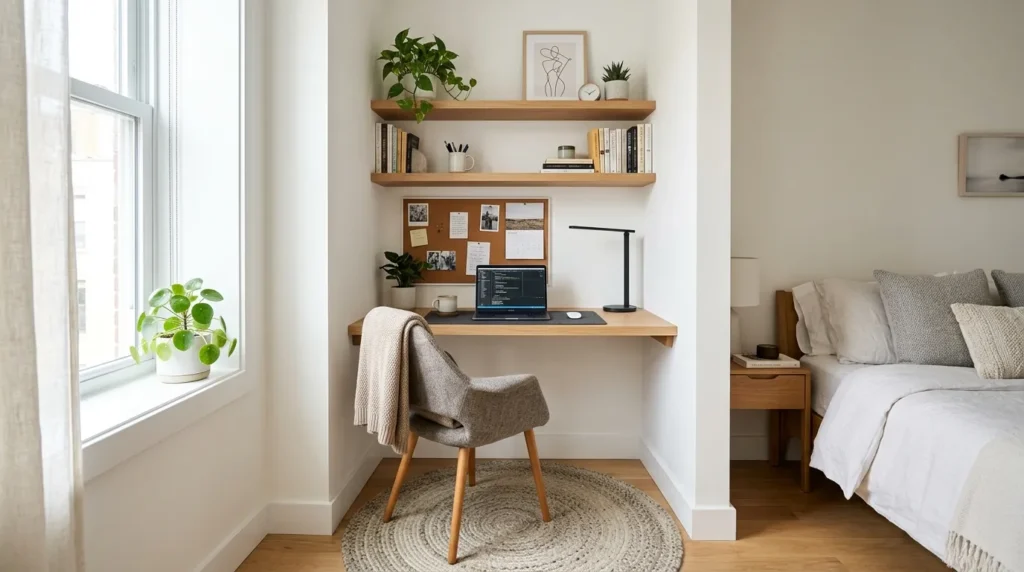
10. Design a Small Office Nook
Quick Benefits
- Works in limited space
- Uses overlooked areas
- Defines a work zone
- Requires little furniture
- Fits apartments and small homes
Why It Works
You don’t need a separate room to create a functional office.
An unused corner, alcove, landing, or section of a bedroom can become a dedicated workstation with a narrow desk and vertical storage.
The key is making the area feel visually separate from the rest of the room.
How To Style It
Use a rug, artwork, lighting, or a different wall color to visually define the workspace.
Choose slim furniture and keep the surrounding area uncluttered to preserve the feeling of openness.
11. Personalize Your Workspace
Quick Benefits
- Makes the office feel unique
- Improves emotional connection
- Adds personality
- Creates inspiration
- Makes the space feel complete
Why It Works
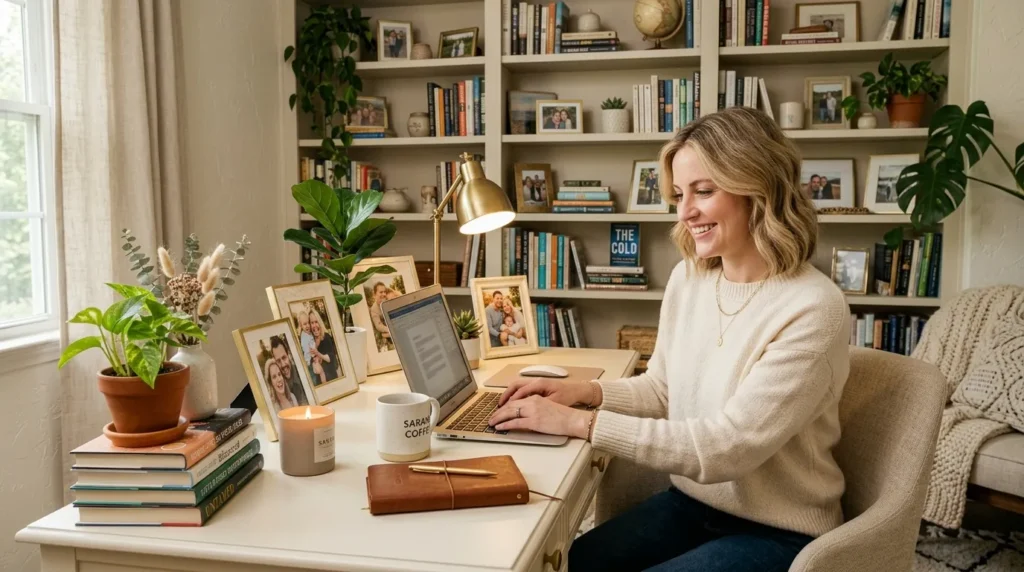
The most enjoyable home offices usually contain a few personal details. These might include family photographs, favorite artwork, travel souvenirs, meaningful books, flowers, or objects connected to hobbies.
The goal isn’t to fill the room with decorations. A few intentional pieces can make the workspace feel much more like your own.
In my experience, personalization is what turns a generic office into a space you actually enjoy using.
How To Style It
Choose a handful of meaningful pieces and display them where you’ll see them throughout the day.
Keep functional areas organized so personal décor enhances the workspace rather than competing with it.
Frequently Asked Questions
How can I make a home office feel more feminine?
Use soft colors, textured fabrics, elegant lighting, artwork, natural materials, and a few carefully selected decorative accessories. Feminine doesn’t have to mean overly pink or ornate.
What colors work well for a woman’s home office?
Cream, ivory, beige, blush, muted sage, dusty blue, soft gray, and warm wood tones can all create a stylish and calming workspace.
How do I decorate a small home office?
Prioritize a properly scaled desk, comfortable seating, vertical storage, good lighting, and limited décor. Floating shelves can be particularly useful when floor space is limited.
How can I make my home office look expensive?
Focus on cohesion rather than expensive individual pieces. Coordinated colors, quality-looking materials, attractive lighting, framed artwork, and organized surfaces can create a polished appearance.
What should I put on my office desk?
Keep essentials such as your computer, notebook, lamp, and organizer. Add one or two decorative pieces, such as a small plant or vase, without sacrificing usable workspace.
How can I organize a home office without making it look cluttered?
Use closed storage for less attractive supplies and decorative baskets or boxes for items that need to remain accessible. Keep the desktop relatively clear.
Conclusion
A beautiful home office can be both productive and personal. You don’t have to choose between practical organization and stylish décor.
Start with a properly sized desk and comfortable chair, then build the room around a calming color palette. Add storage that keeps everyday supplies under control, followed by artwork, natural textures, greenery, and warm lighting.
If space is limited, think vertically. Floating shelves and wall-mounted lighting can provide function without consuming valuable floor space.
Most importantly, make the office reflect you. A few meaningful details can turn even a small workstation into a place that feels inspiring, comfortable, and genuinely yours.